Day 14: Salzburg (Austria) –> Frankfurt (Germany)
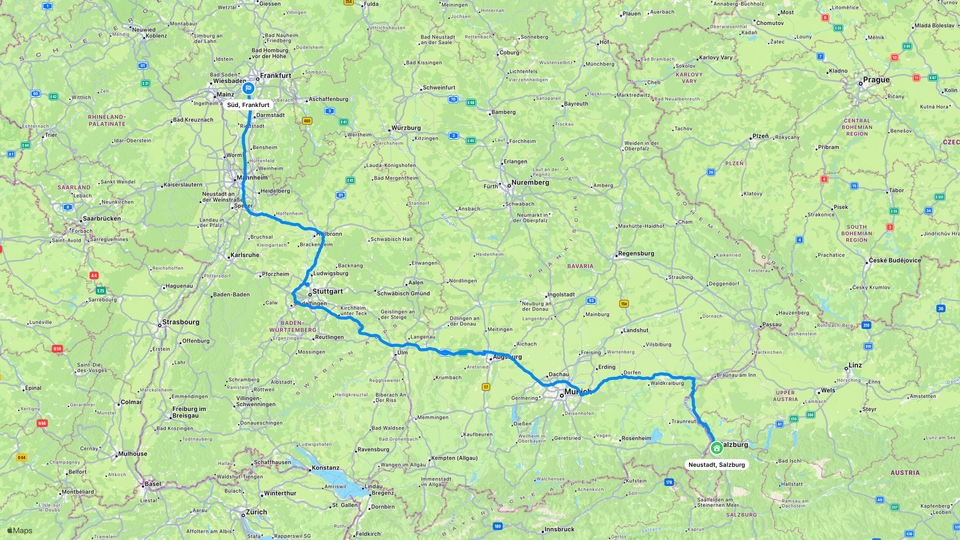
This morning we start our long journey northwards back towards Ireland. We have to drag our luggage about 800 metres along the cobblestone streets to the public parking garage.
Unlike yesterday, today is bright, dry and relatively warm. There is not a cloud to be seen in the sky. Had this not been an autobahn day, we would have the roof down on our Targa.
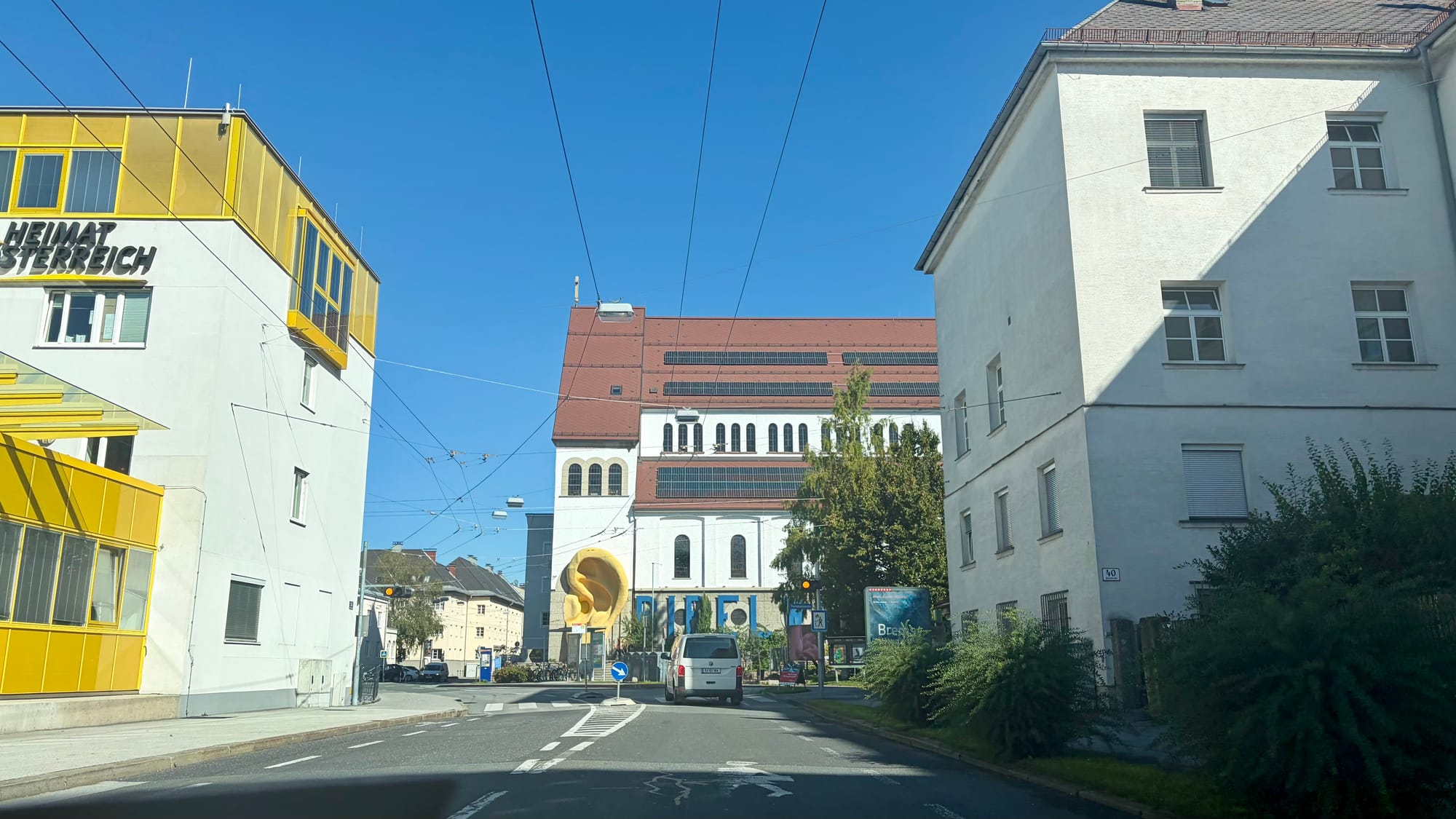
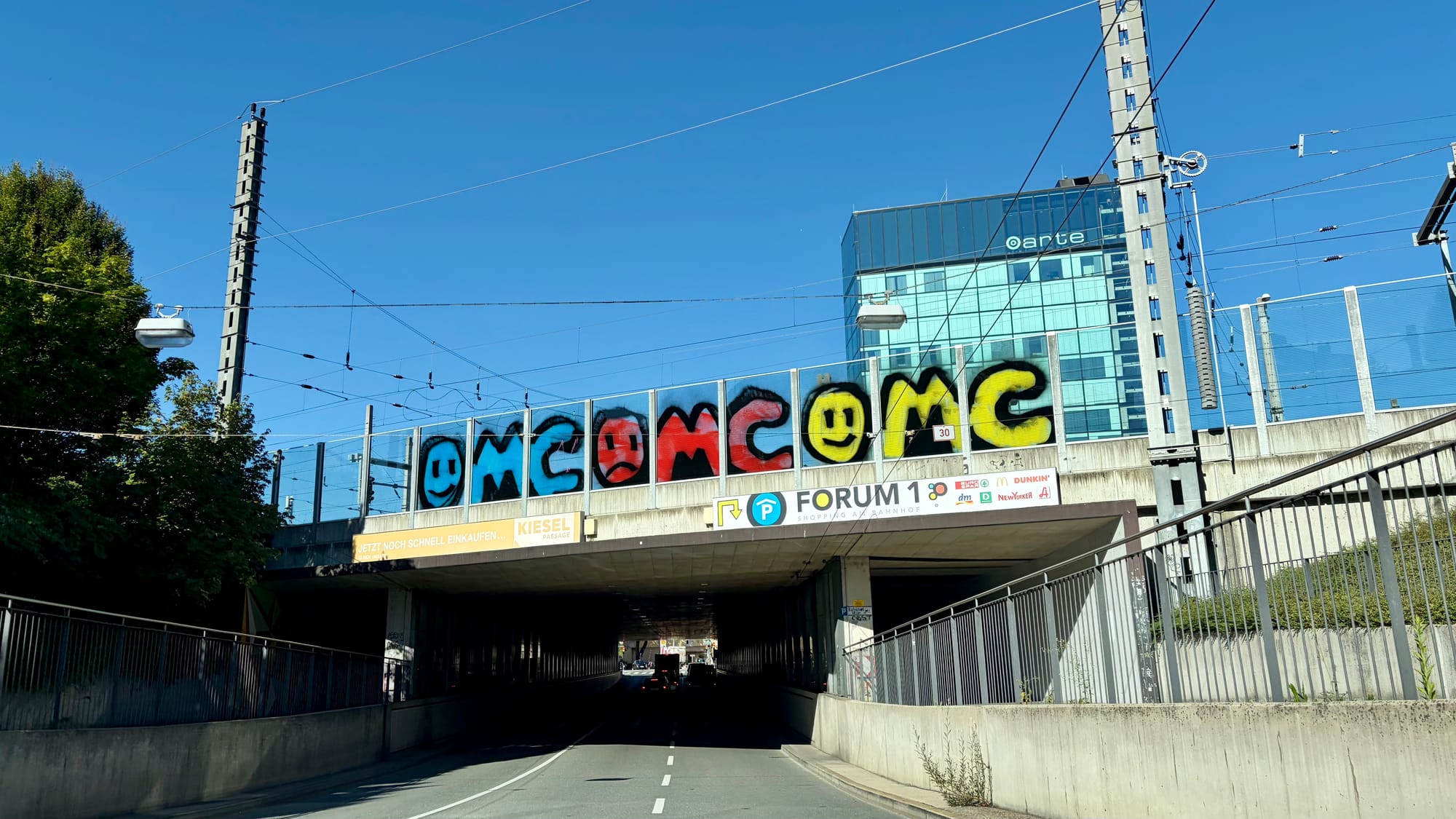
Leaving Salzburg
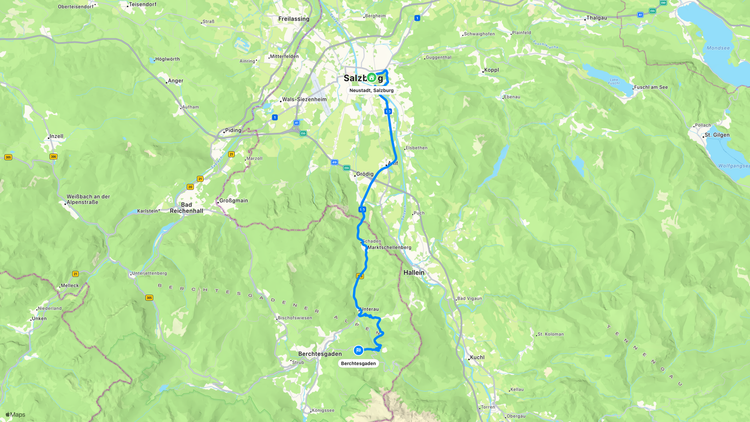
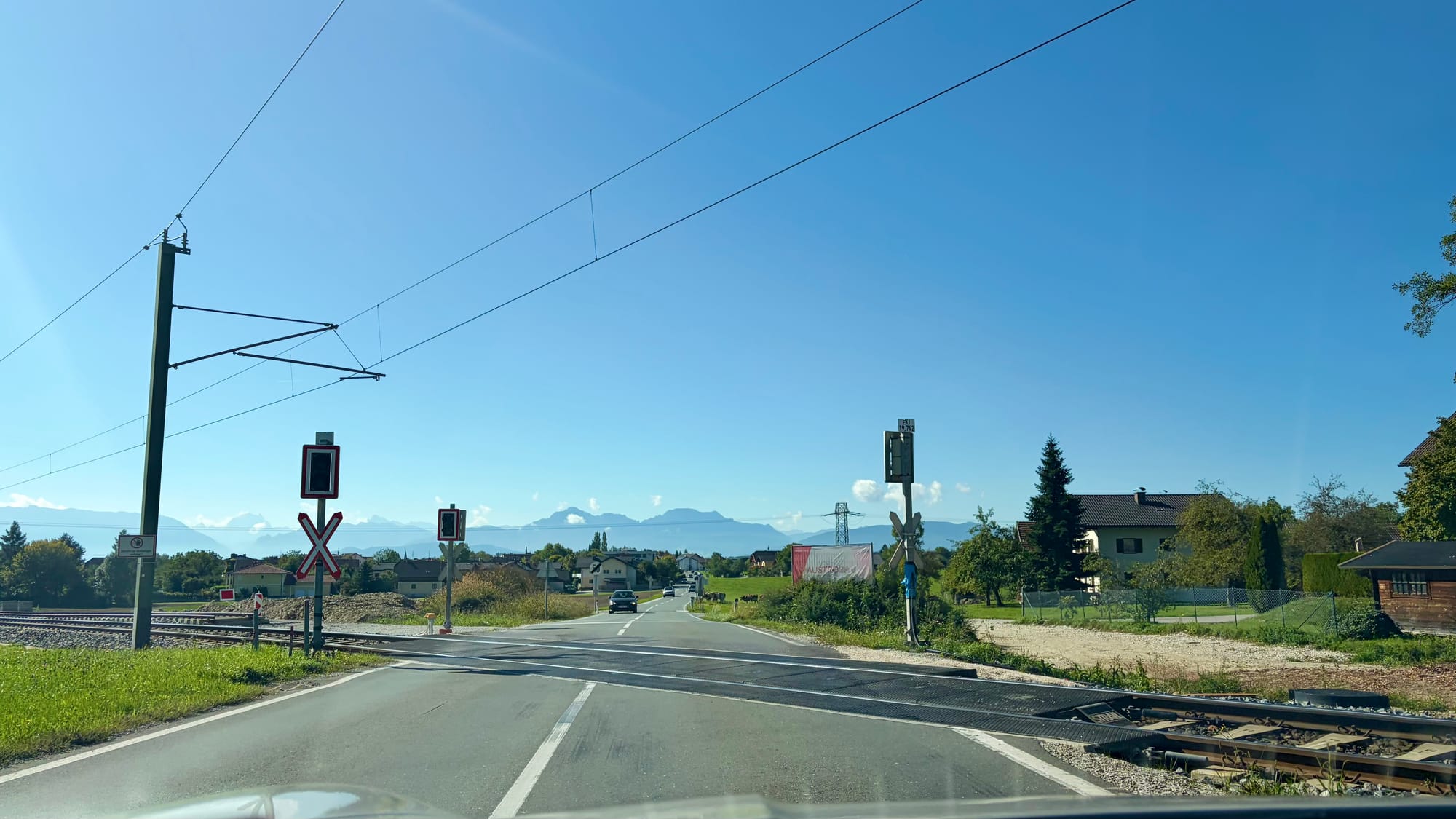
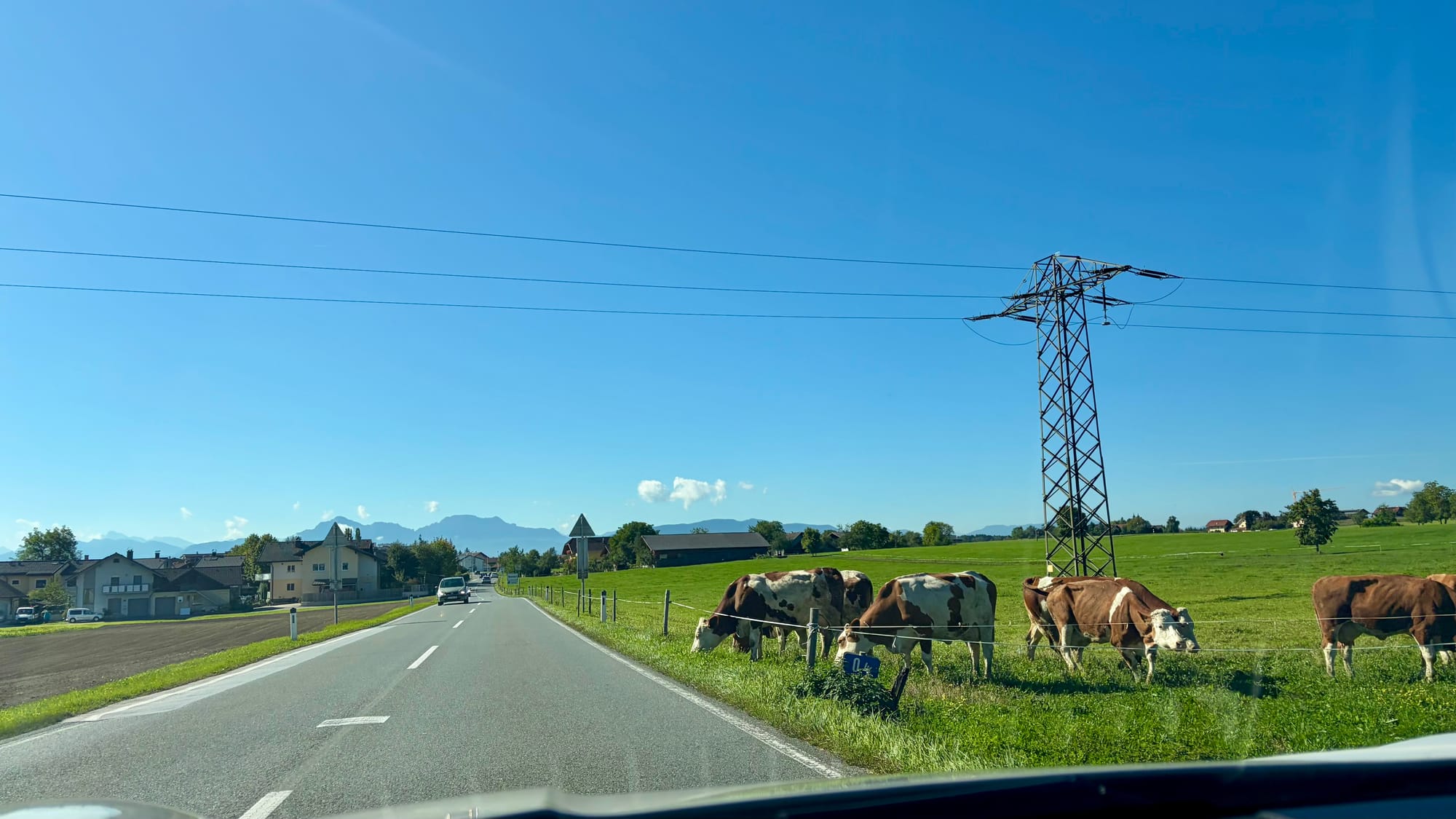
There was a 45-minute traffic jam on the autobahn just outside Salzburg, so our PCM routed us through the countryside for the first hour. Though we are heading for Germany, this route takes us alongside the border inside Austria for a surprisingly long time.
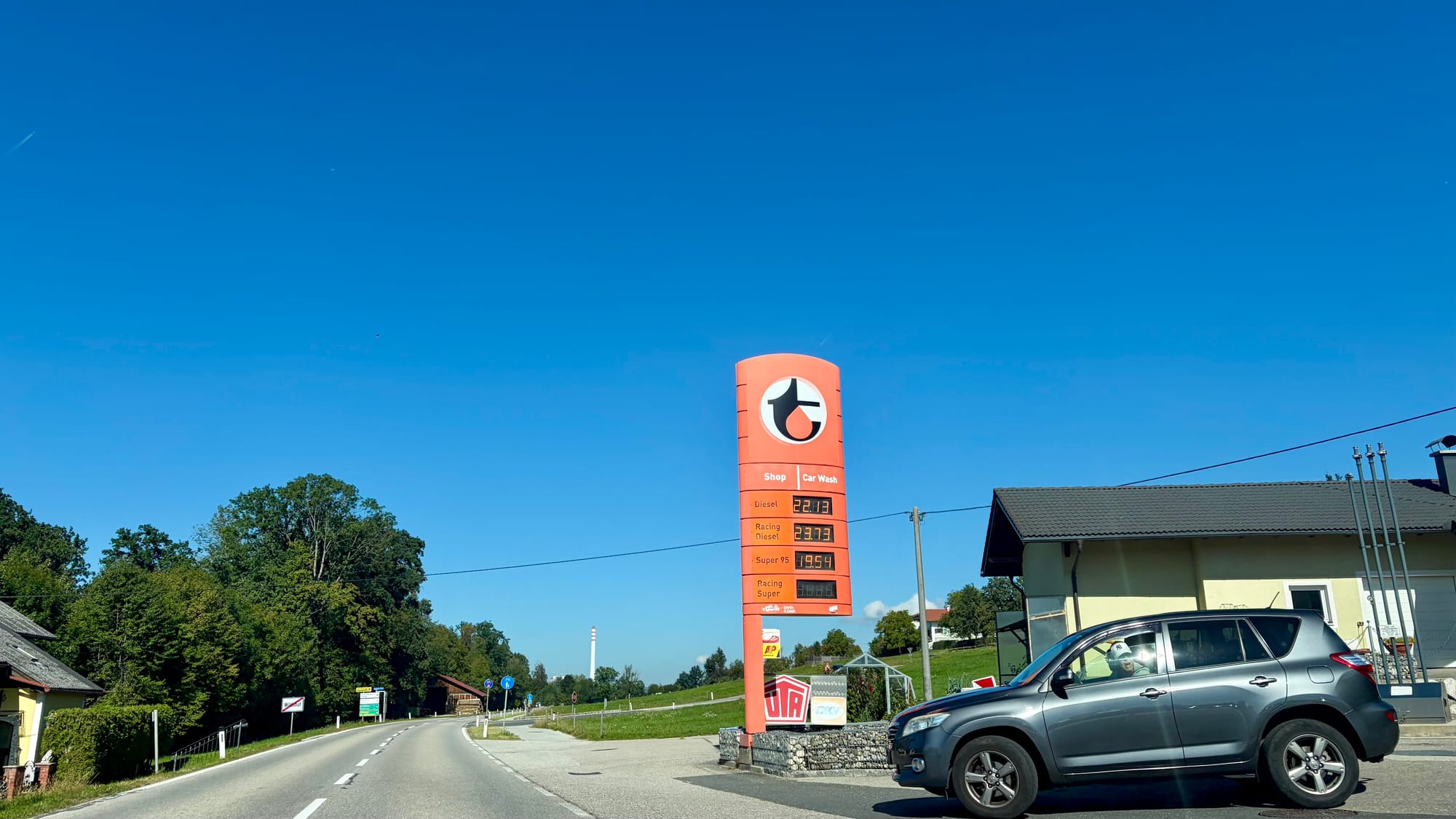
We pass a few service stops with a fuel called “Racing Diesel”. We cannot imagine what that is, given very few racing cars use diesel. We suspect its just “better diesel” trading of the genuine concept of “racing petrol”.
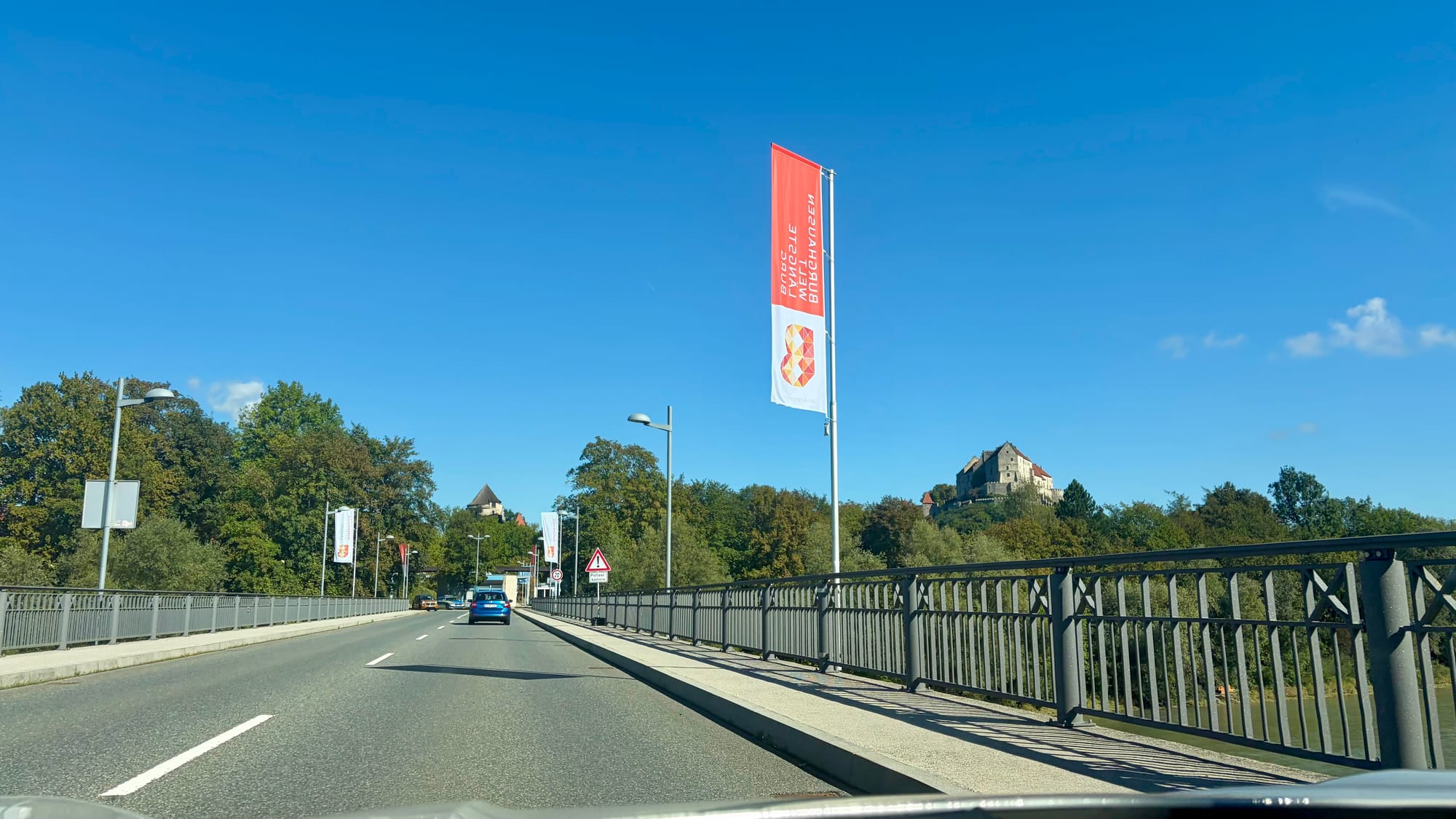
We cross over a bridge that marks the border between Austria and Germany.
And are quickly onto the nearby Germany Autobahn.
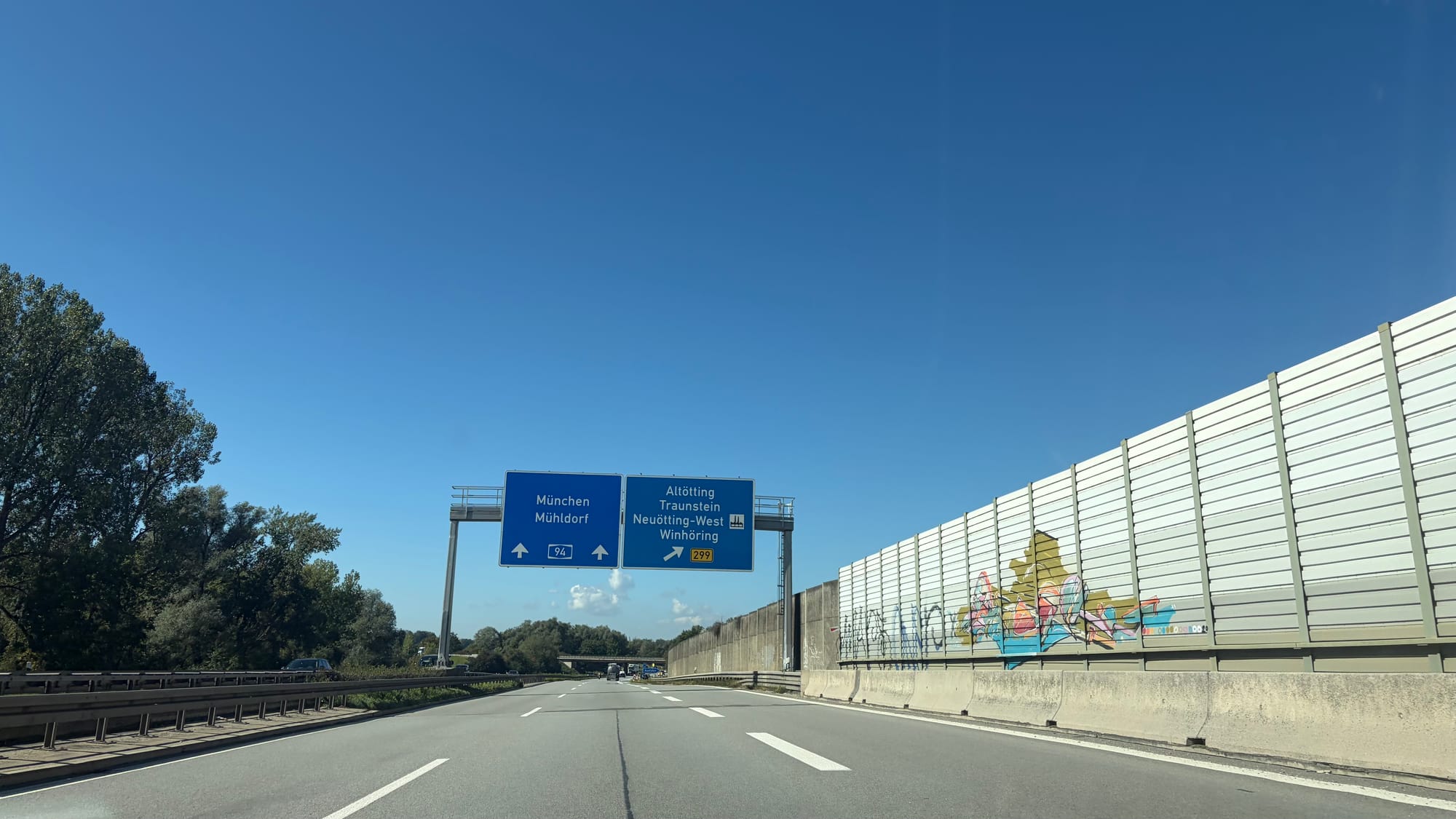
Unlike at the start of this road trip the dry day means we’re able to push our car up to well above 200 km/h where it is happiest.
It is one of our favourite aspects to the 911 Targa: it is very enjoyable both at 80 km/h with roof down soaking up the sights and smells around you and roof closed and pushing at high speeds.
It is not trying to be a track car, but that doesn’t mean it isn’t a very capable sports car. In particular, the Porsche Dynamic Chassis Control (PDCC) and rear-axle steering (RWS) options take centre stage on fast sections of the autobahn, especially when negotiating long, sweeping curves.
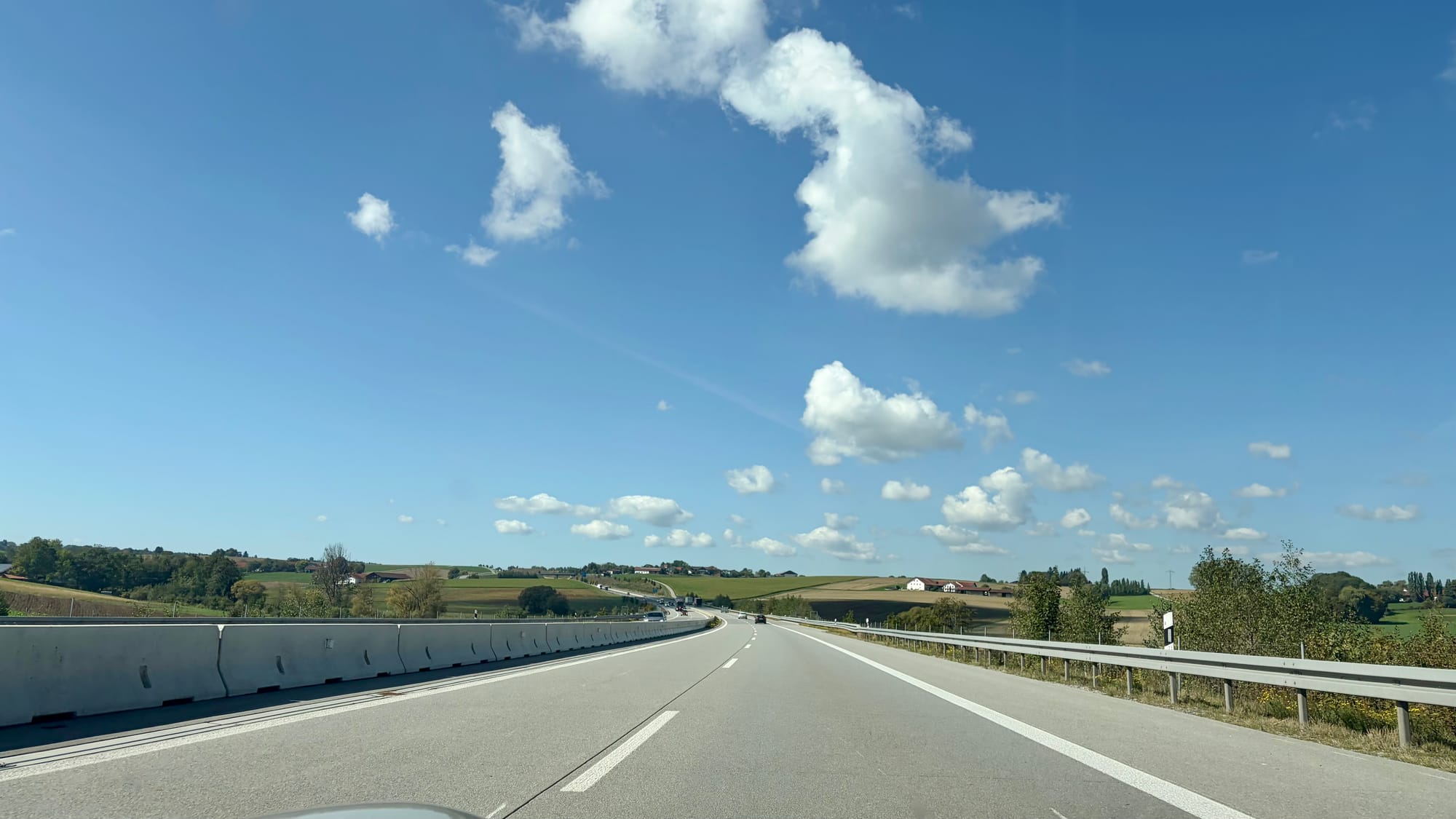
We notice that many of the cars that are going quickly alongside us, tend to fall back on steep uphill sections, where as the Targa just spurts up the inclines leaving them as a dot in our rear-view mirror.
As we drive past Stuttgart Airport – we pass under a parking garage built over the autobahn.
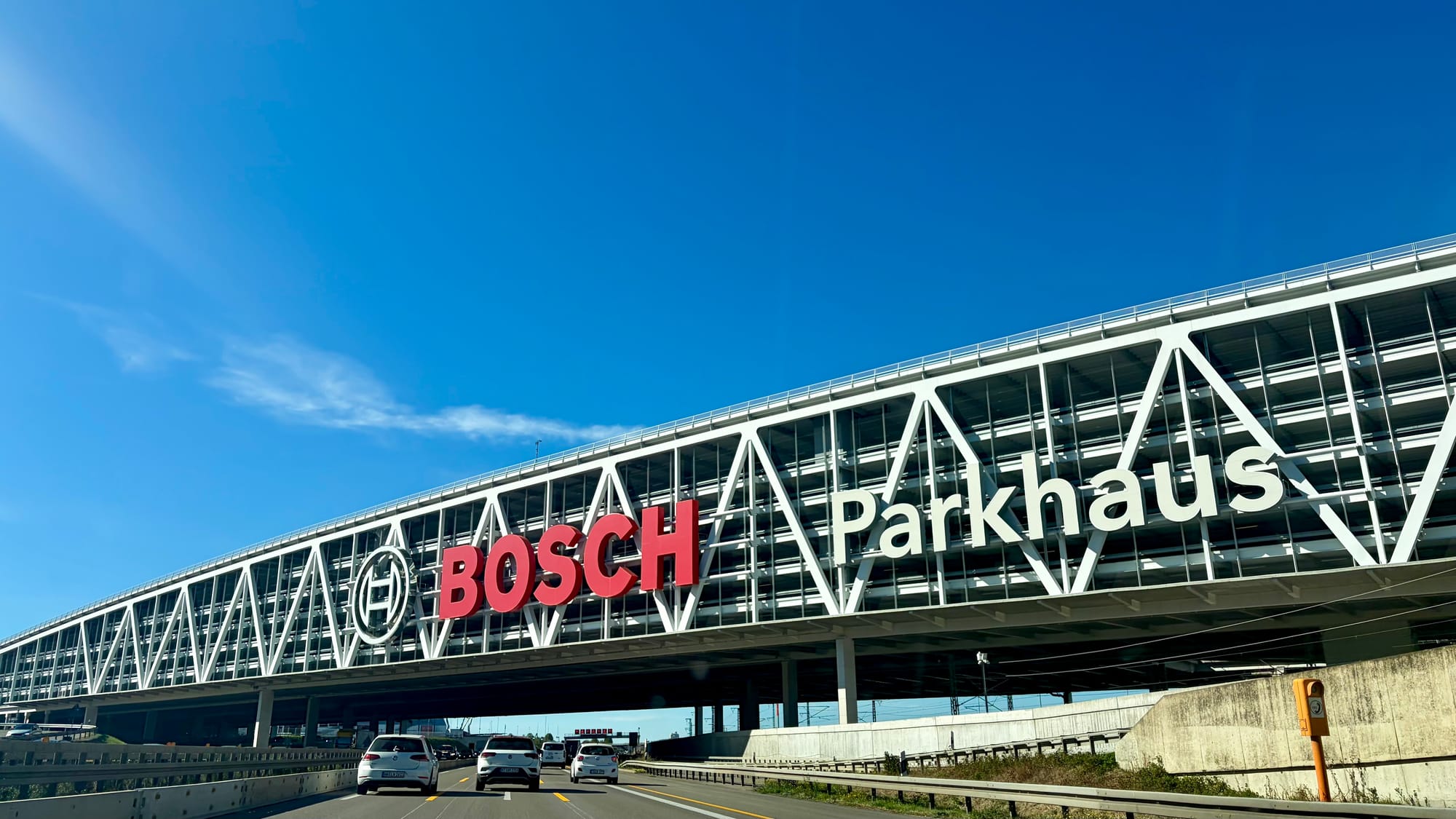
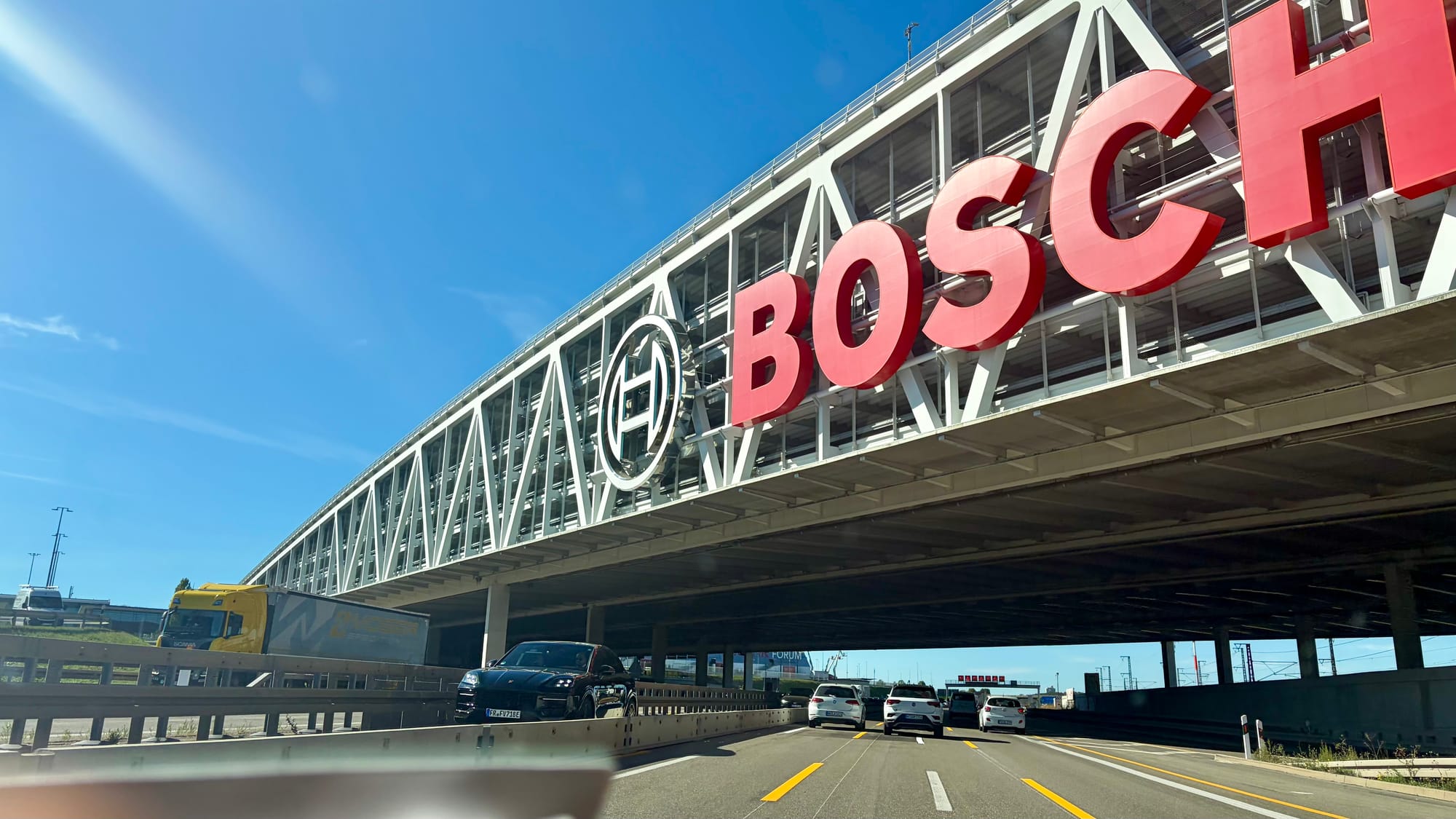
And get stuck in some city traffic alongside a lovely 718 that we think is in Ruby Star.
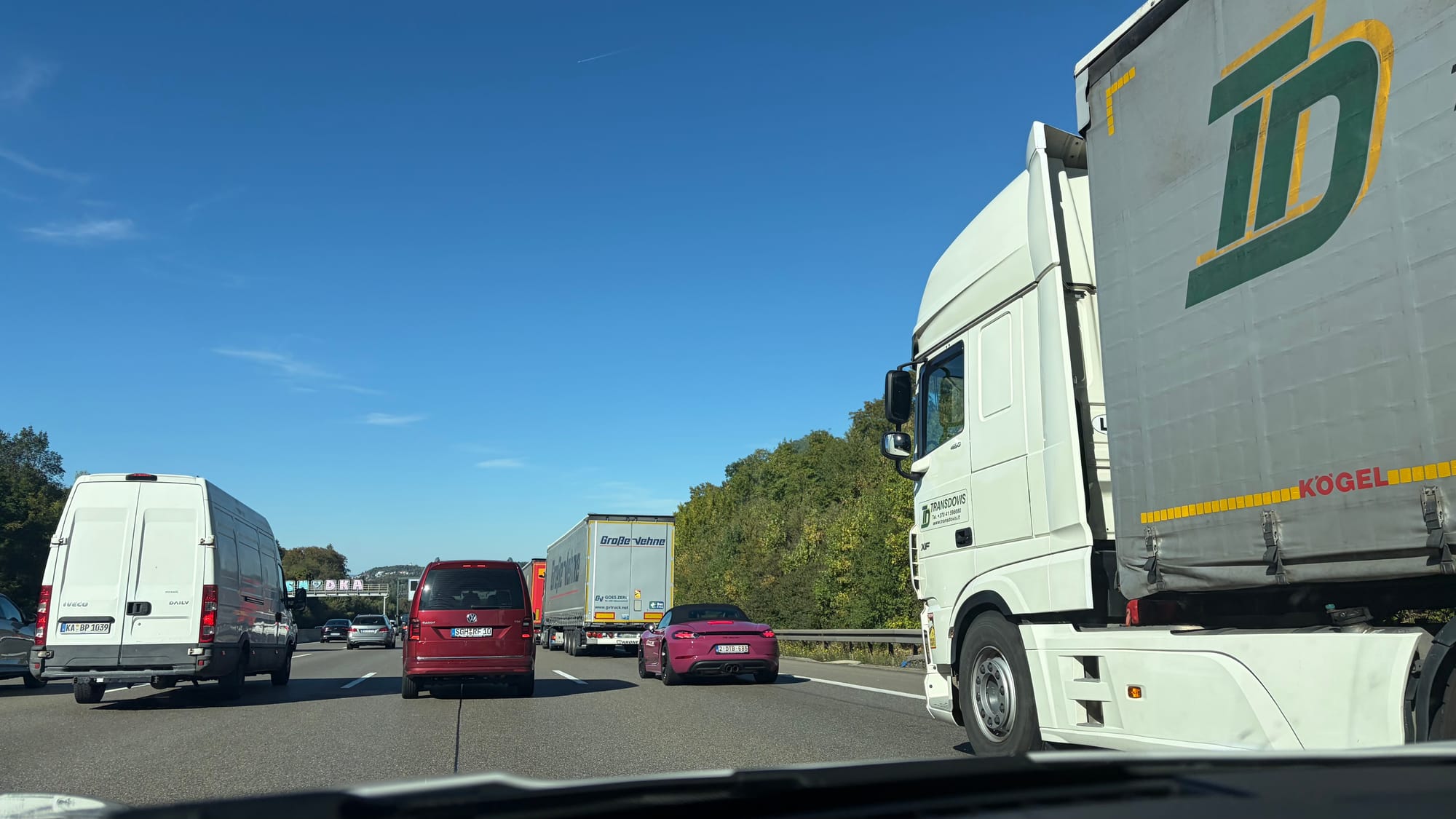
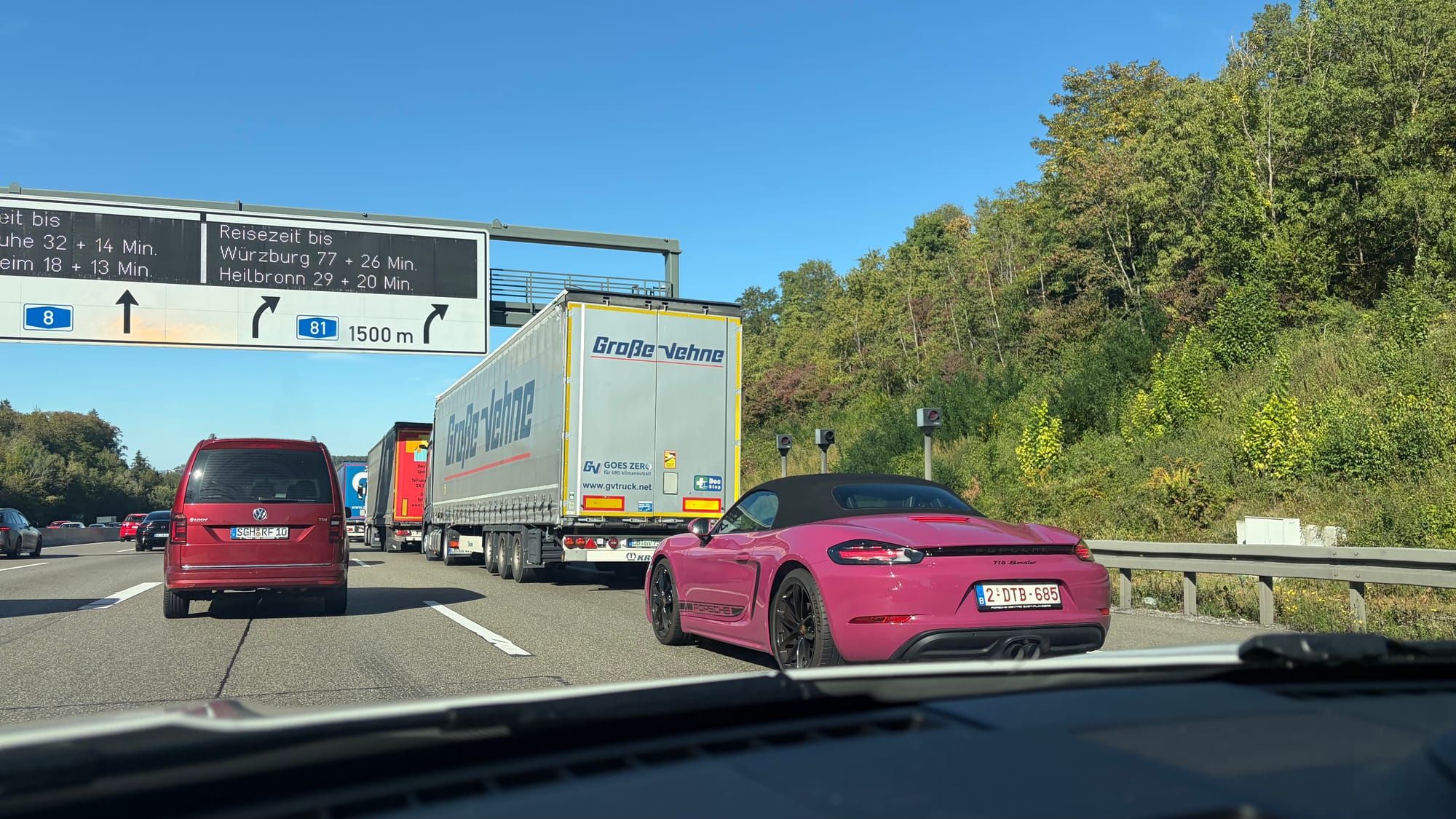
Is this lovely 718 colour Ruby Star?
As we are passing right by Zuffenhausen and are making good time we decide to stop off at the Porsche Museum for a quick unplanned visit.
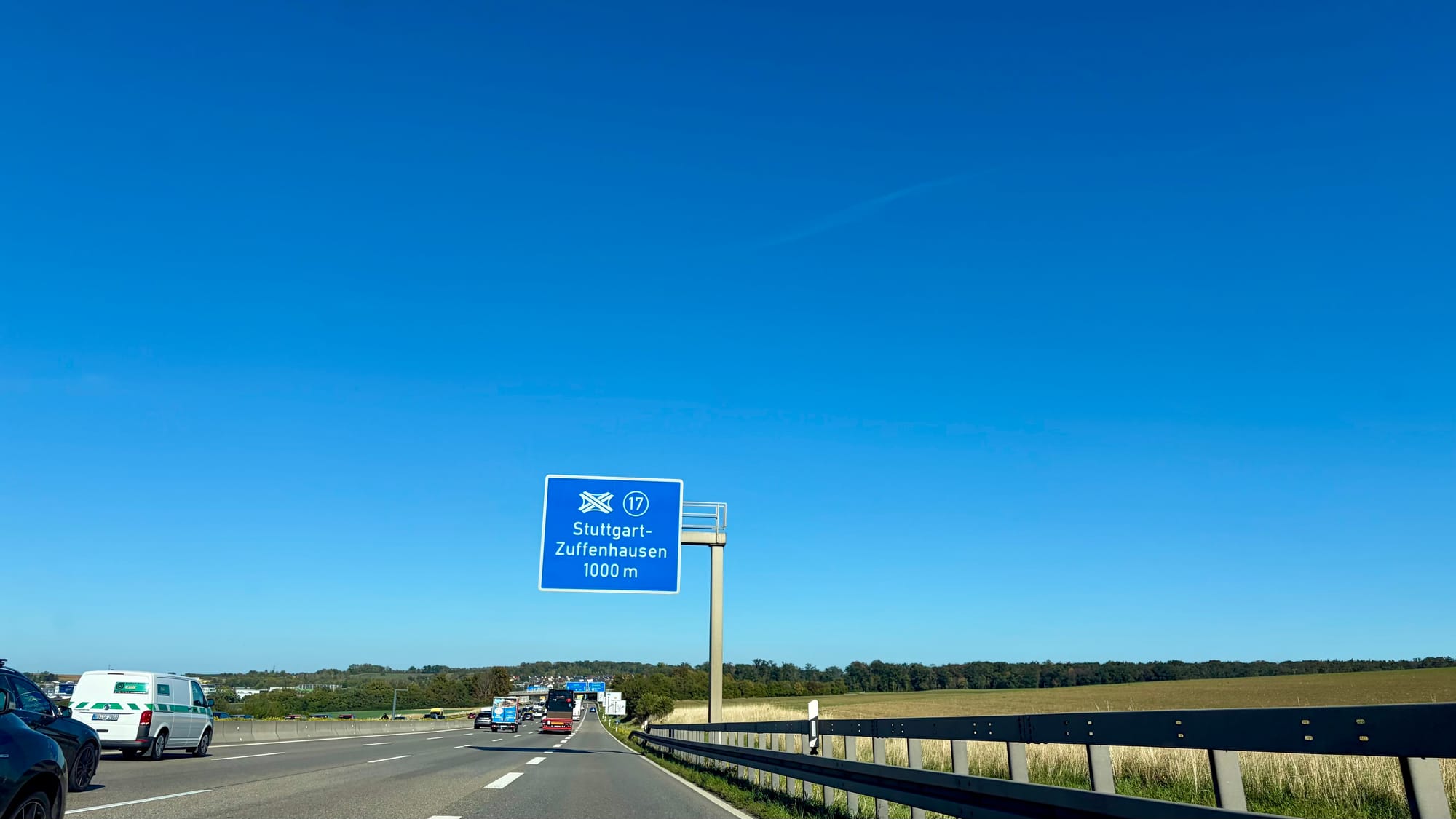
We approach the Porscheplatz roundabout at the heart of the Porsche complex here in Zuffenhausen. The Porsche Museum, 911 factory and the original factory Werk 1 are all directly off the roundabout.
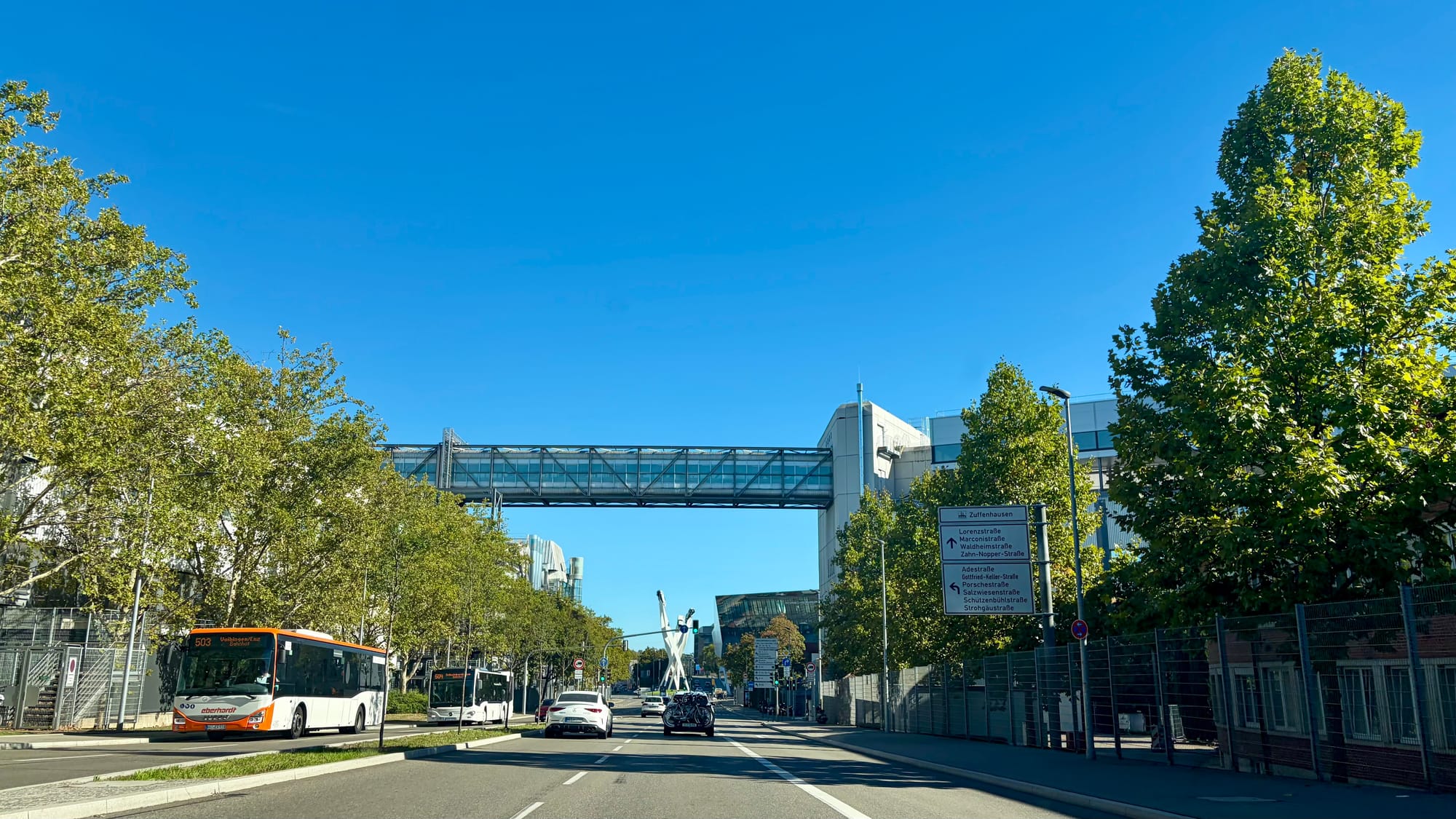
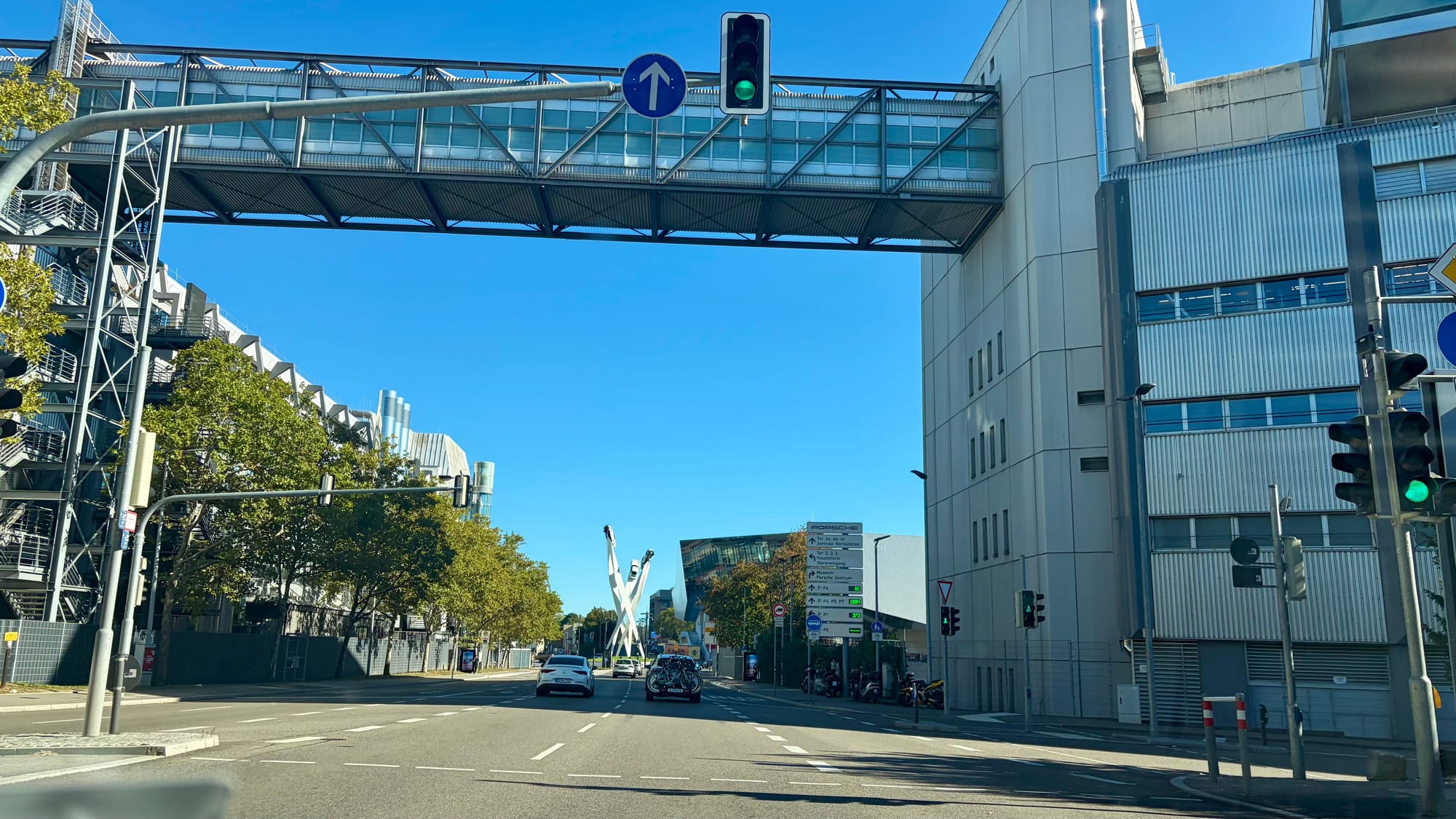
Approaching Porscheplatz
The famous “Inspiration 911” monument is located in the middle of the roundabout. The first Porsche 911 – the car that represents the core of the brand – rolled off the assembly line here in 1963.
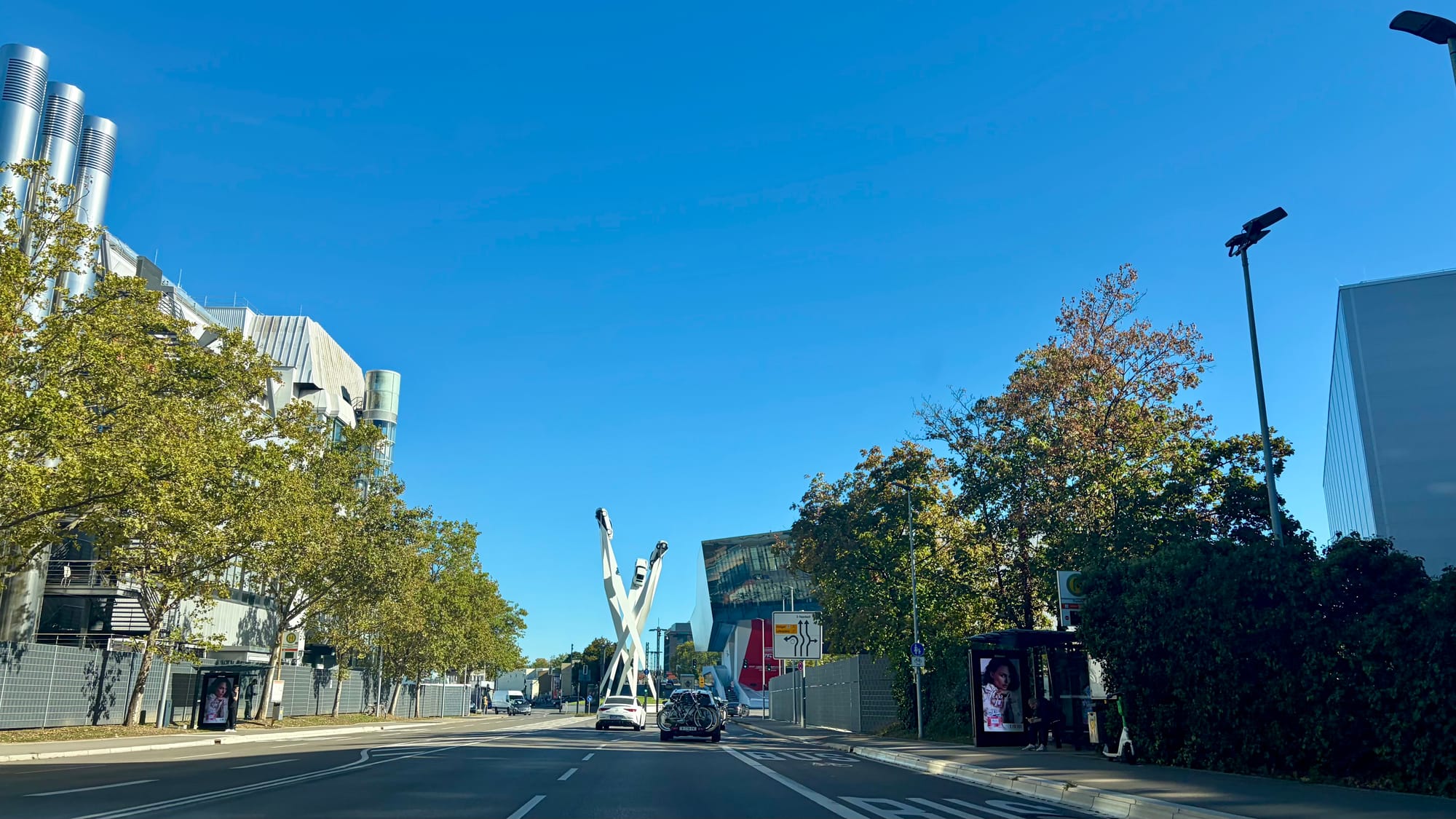
We take the first exit and turn left directly into the underground garage under the museum.
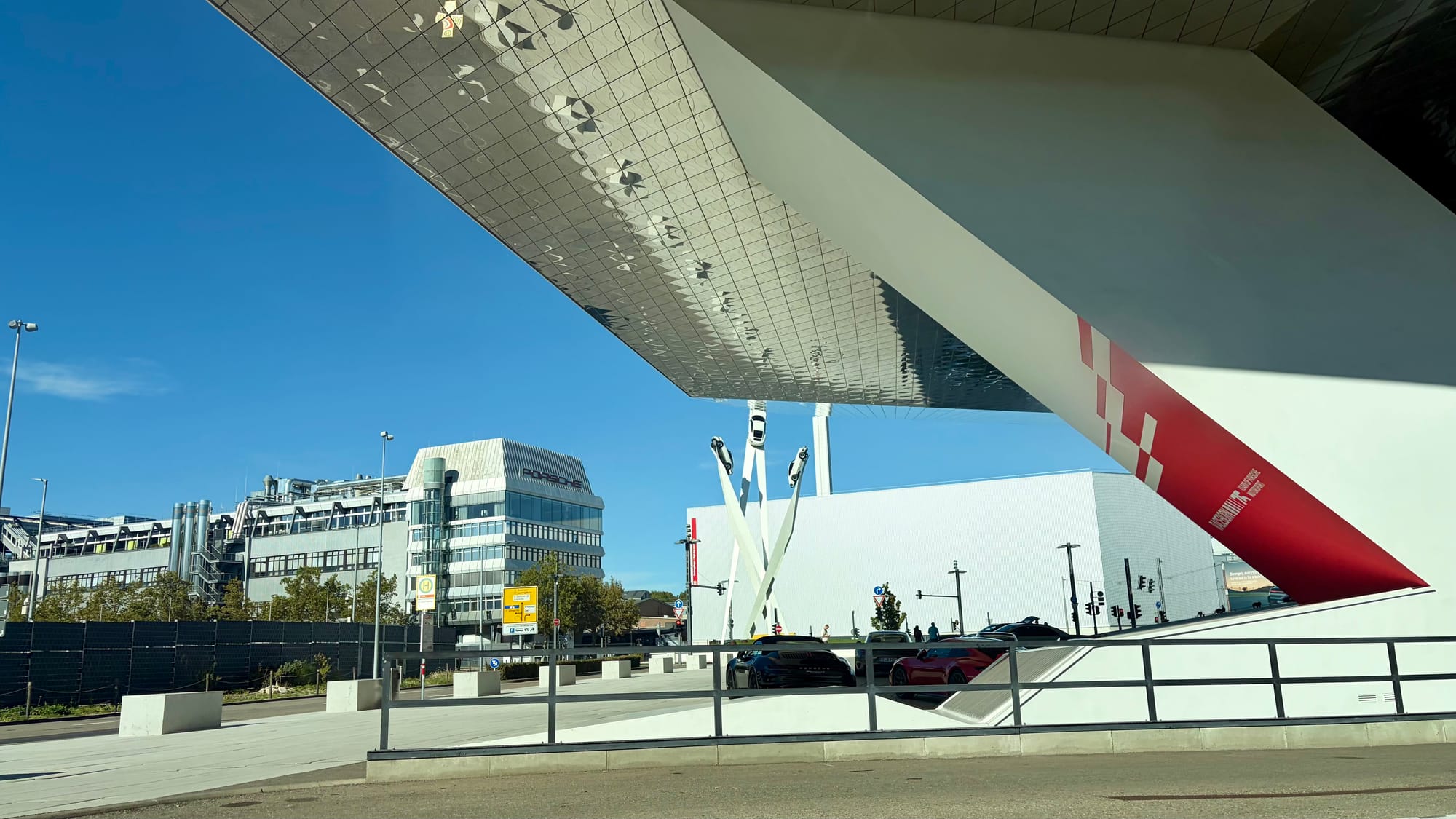
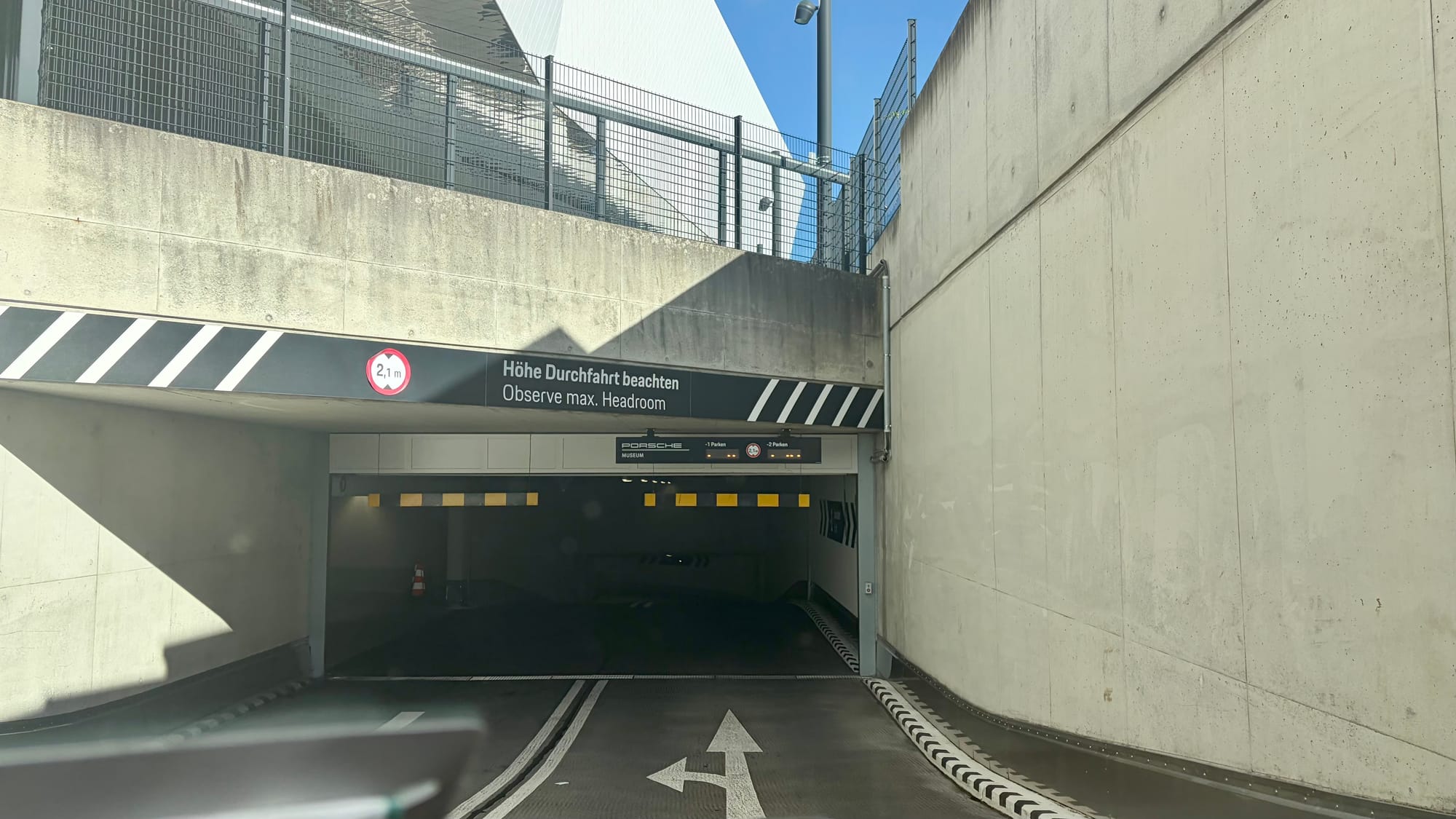
Parking garage under the Porsche Museum
While we’ve been here many times, this is the first time we get to park our 911 under the museum and less than 500 meters from where it was manufactured back in early 2024.
We park beside another right-hand drive 911 Targa 4 GTS with a UK registration.
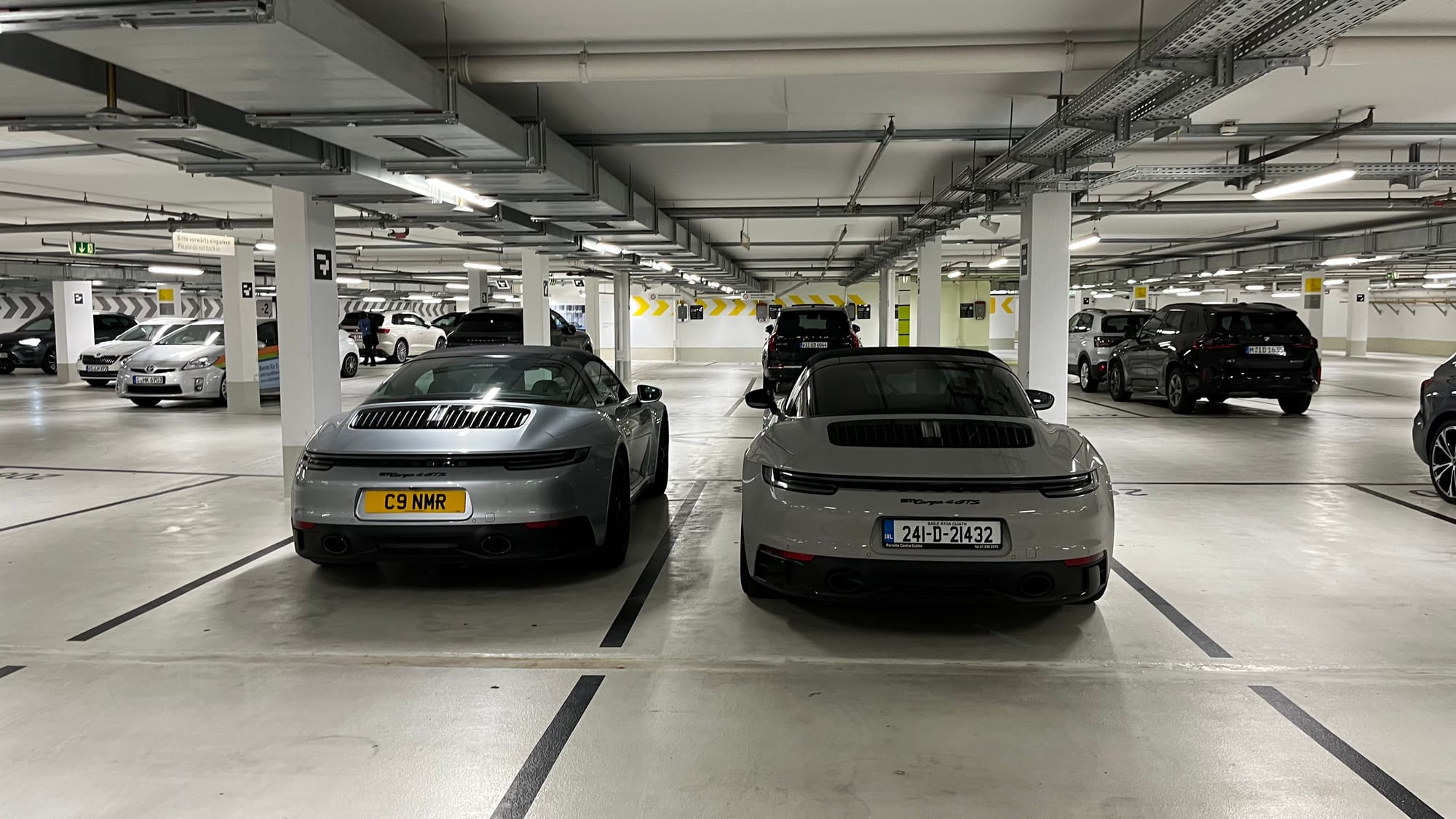
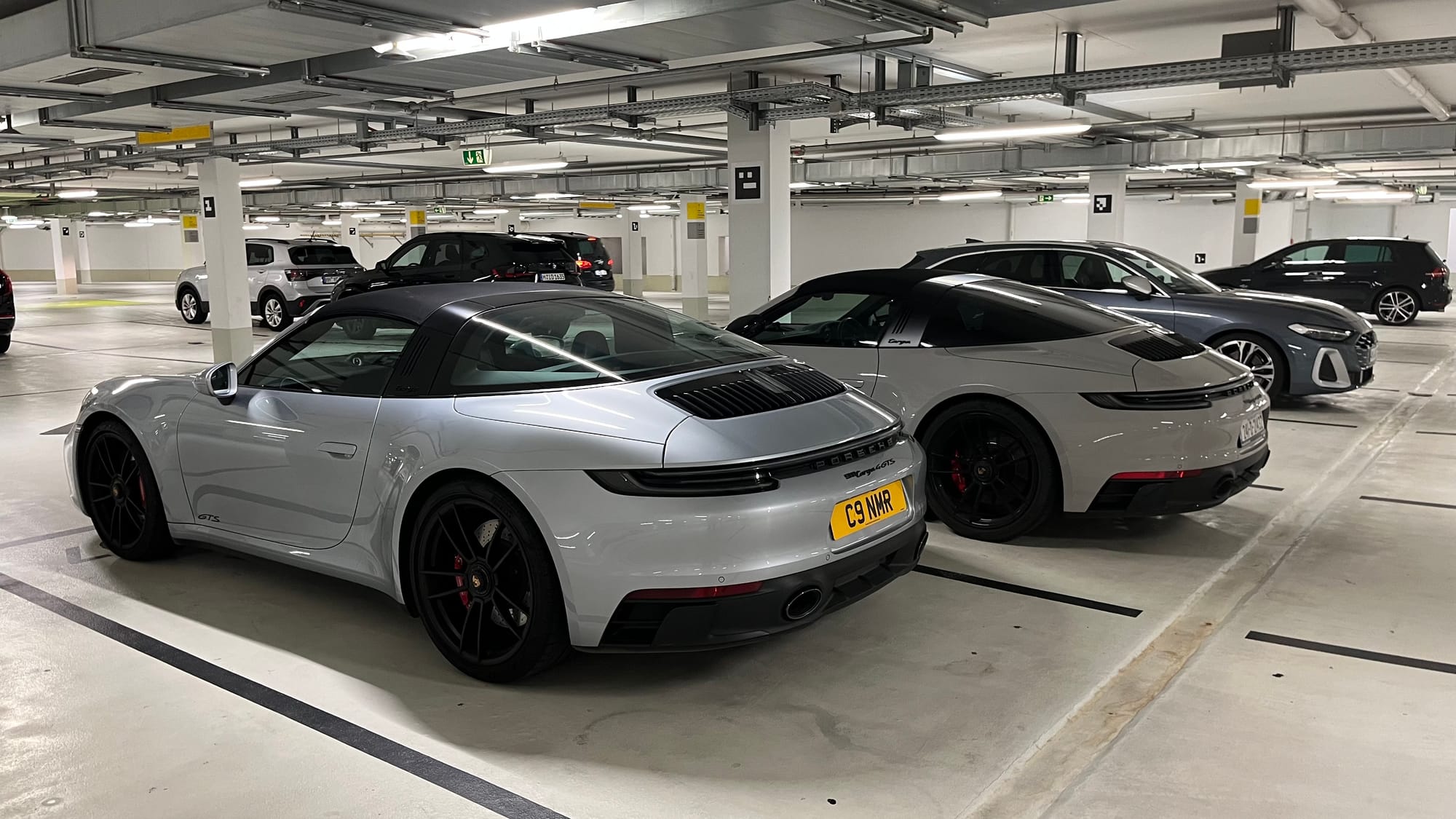
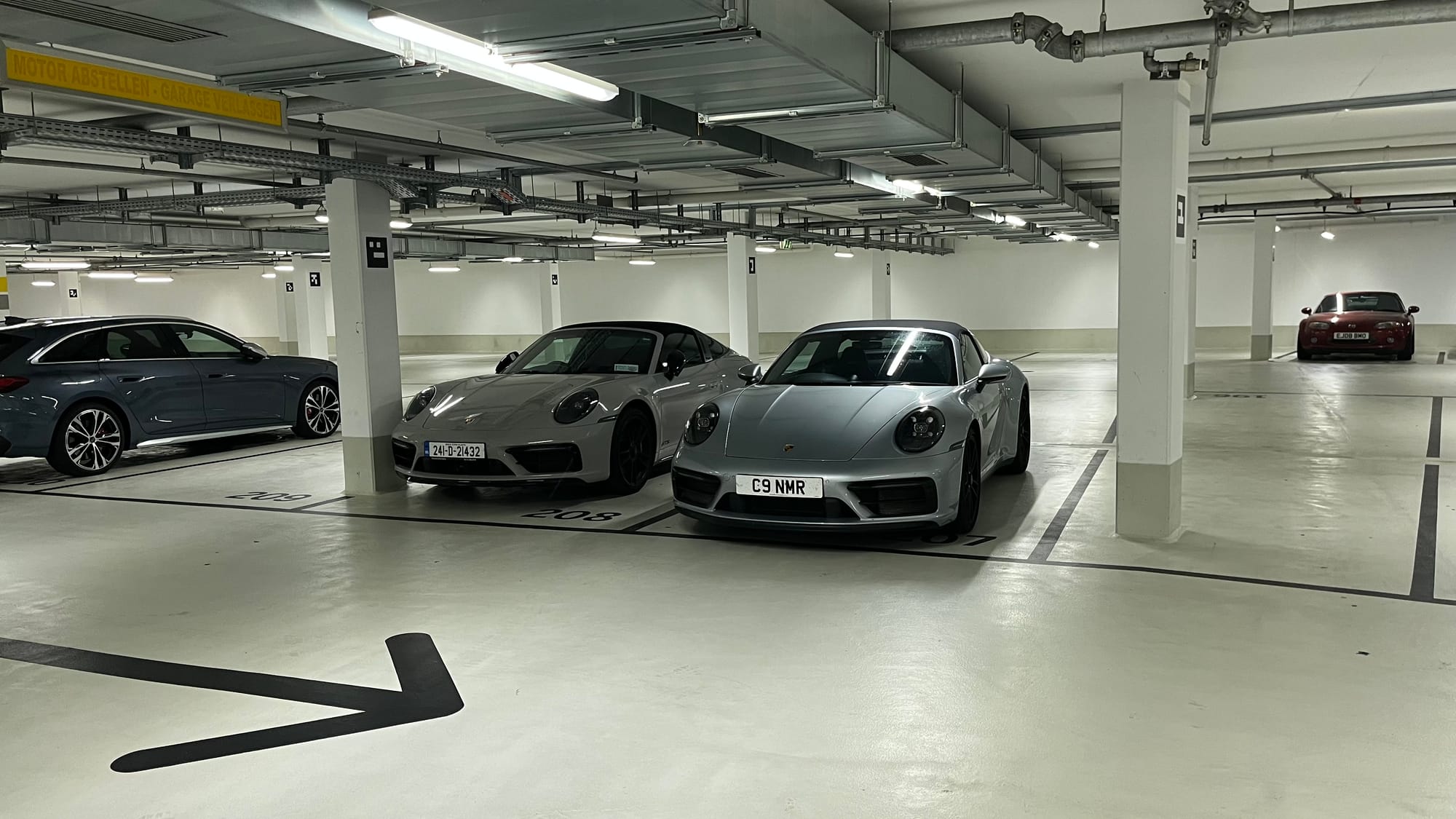
Parking garage under the Porsche Museum
We purchase two tickets for the museum with a 20% discount due to it being just after 16:00 in the afternoon. We are so familiar with this place that the closing time in two hours at 18:00 will offer us plenty of time for this visit.
Our first stop is the Porsche shop – which is always crowded – and could do with being a little bit bigger to give everyone more browsing space.
Some Pink Pig shoes take our attention at the entrance.
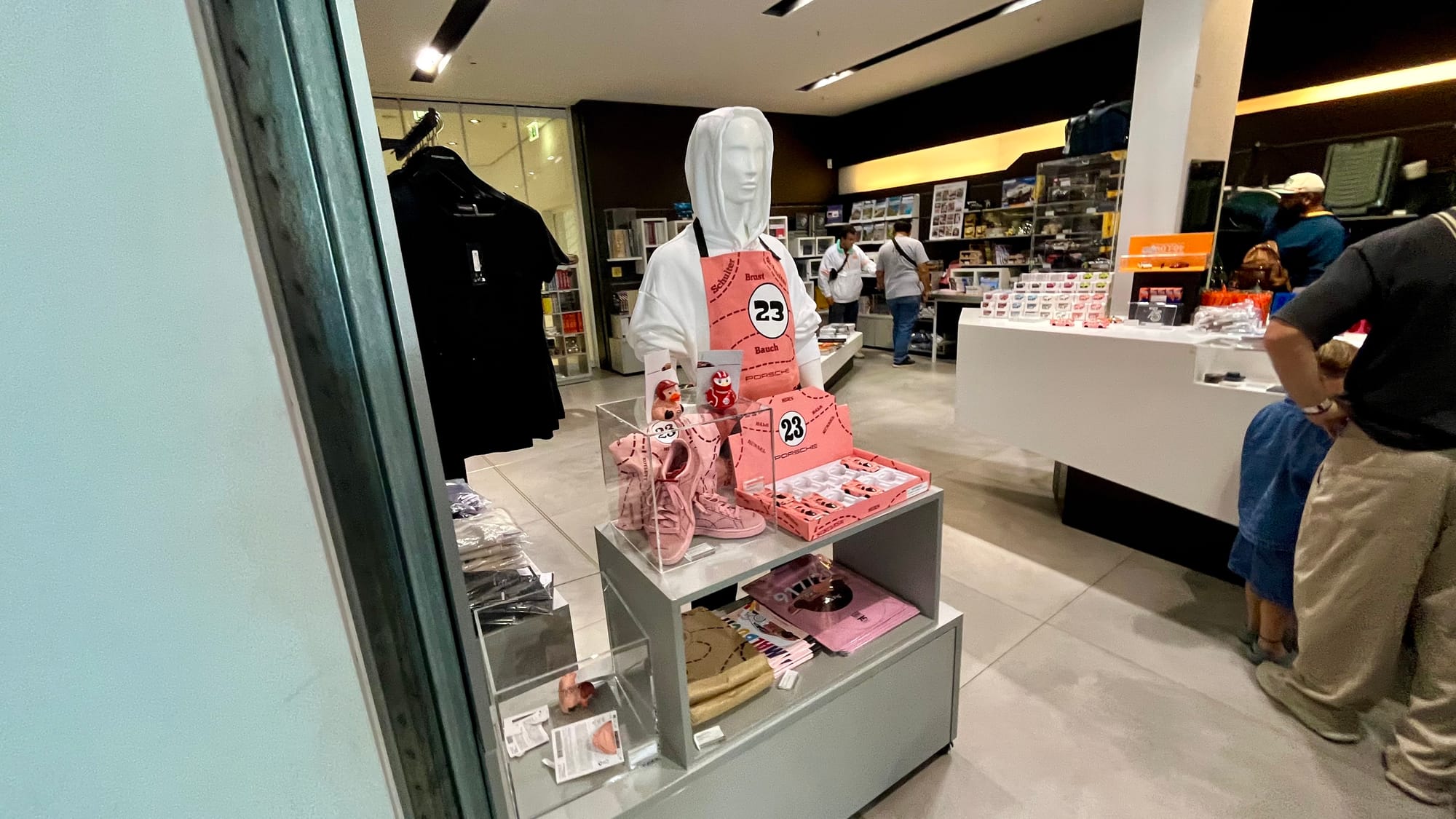
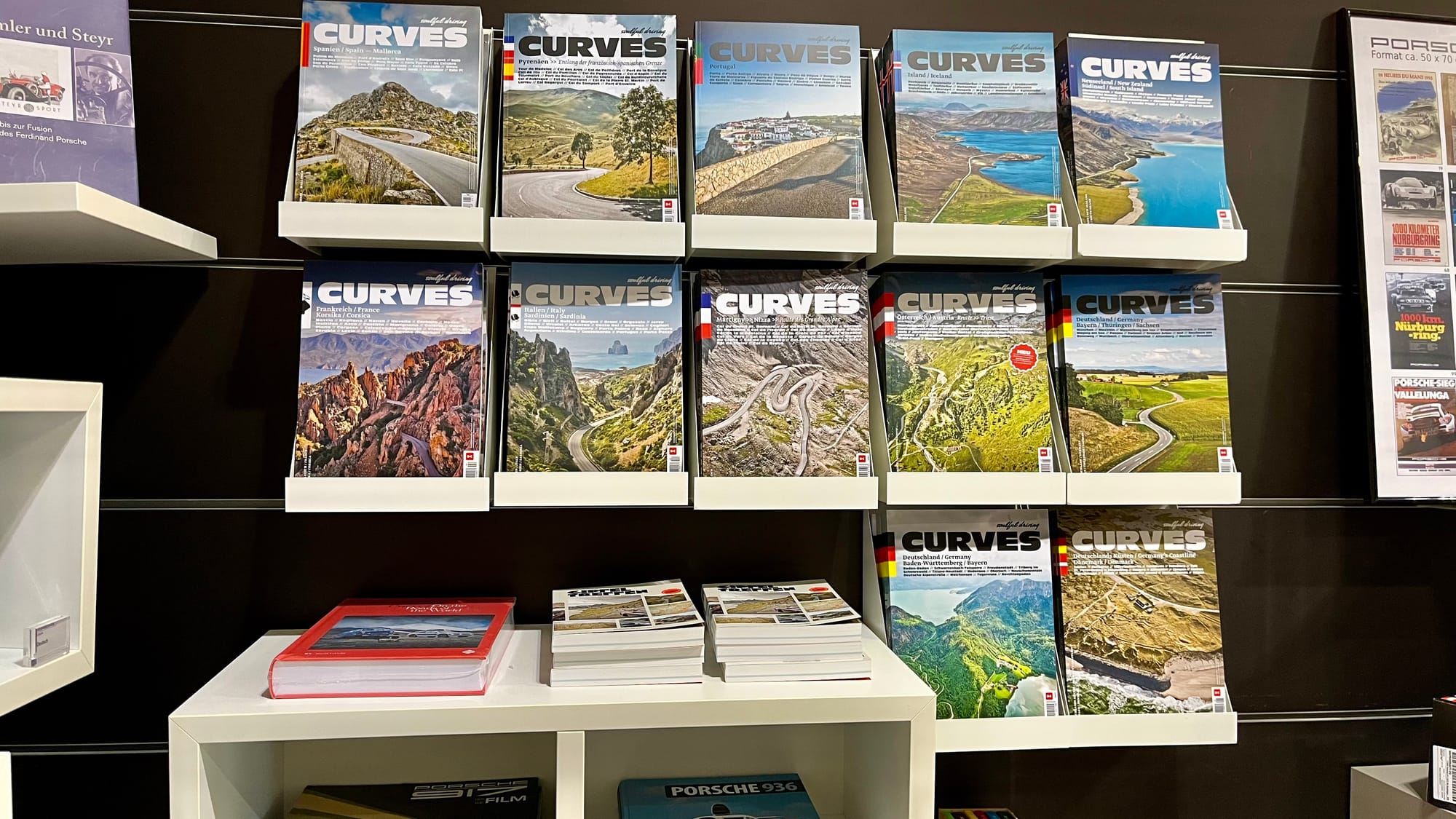
With our focus on using our Porsche for scenic road trips across the mountains, lakes, and the Arctic, we often use Curves Magazine as inspiration when planning for our own adventures.
The shop here has a nice collection, many of which we also have at home.
There is a new hardback book on the Targa which we just had to pick up in its English-speaking edition.
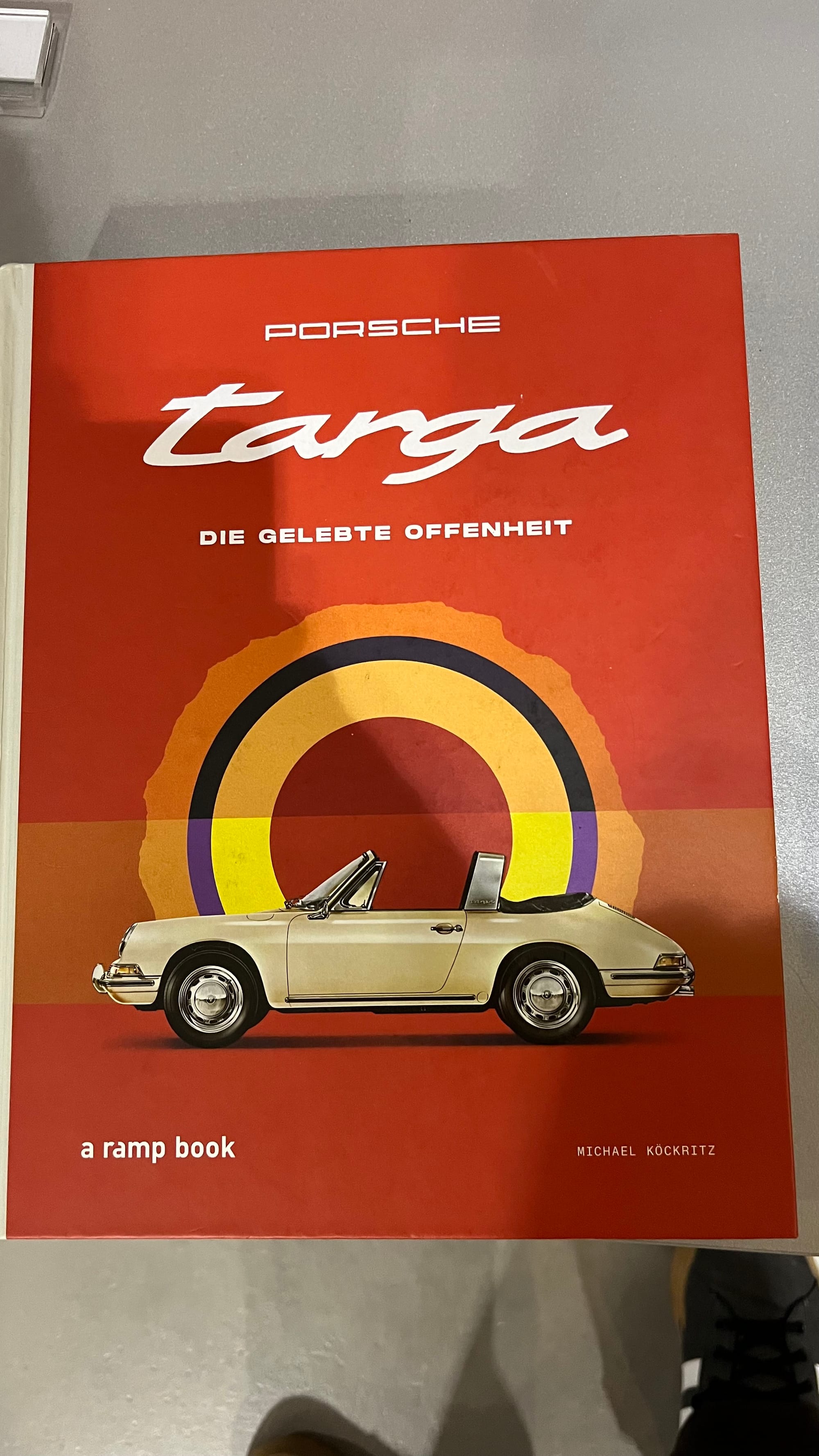
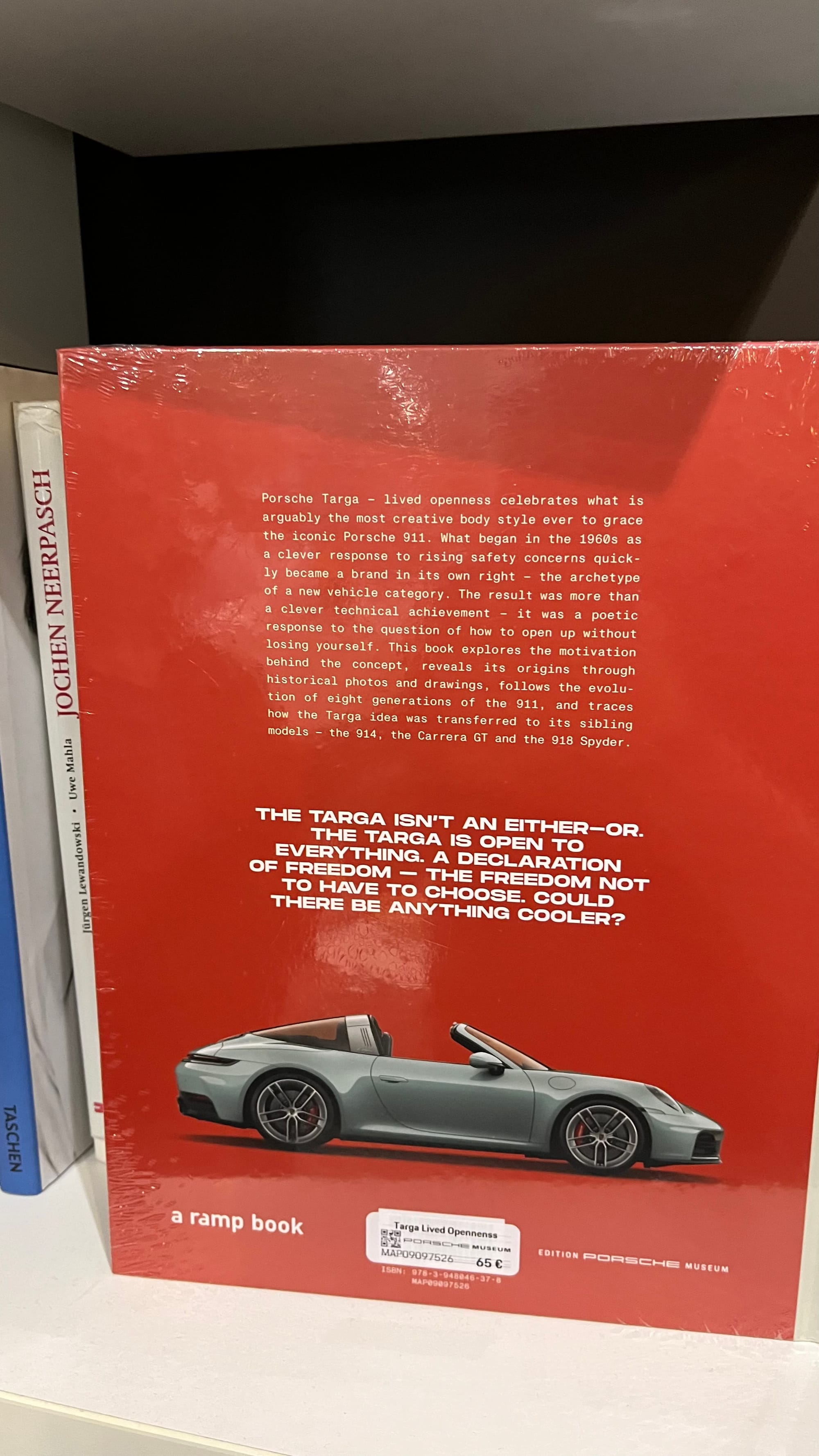
New book on the 911 Targa
Before heading up the stairs to the museum proper, we sit in the busy coffee shop as groups are preparing to go on the final factory tour of the day. This overlooks the museum workshop, where they prepare and preserve the museum’s extensive collection.
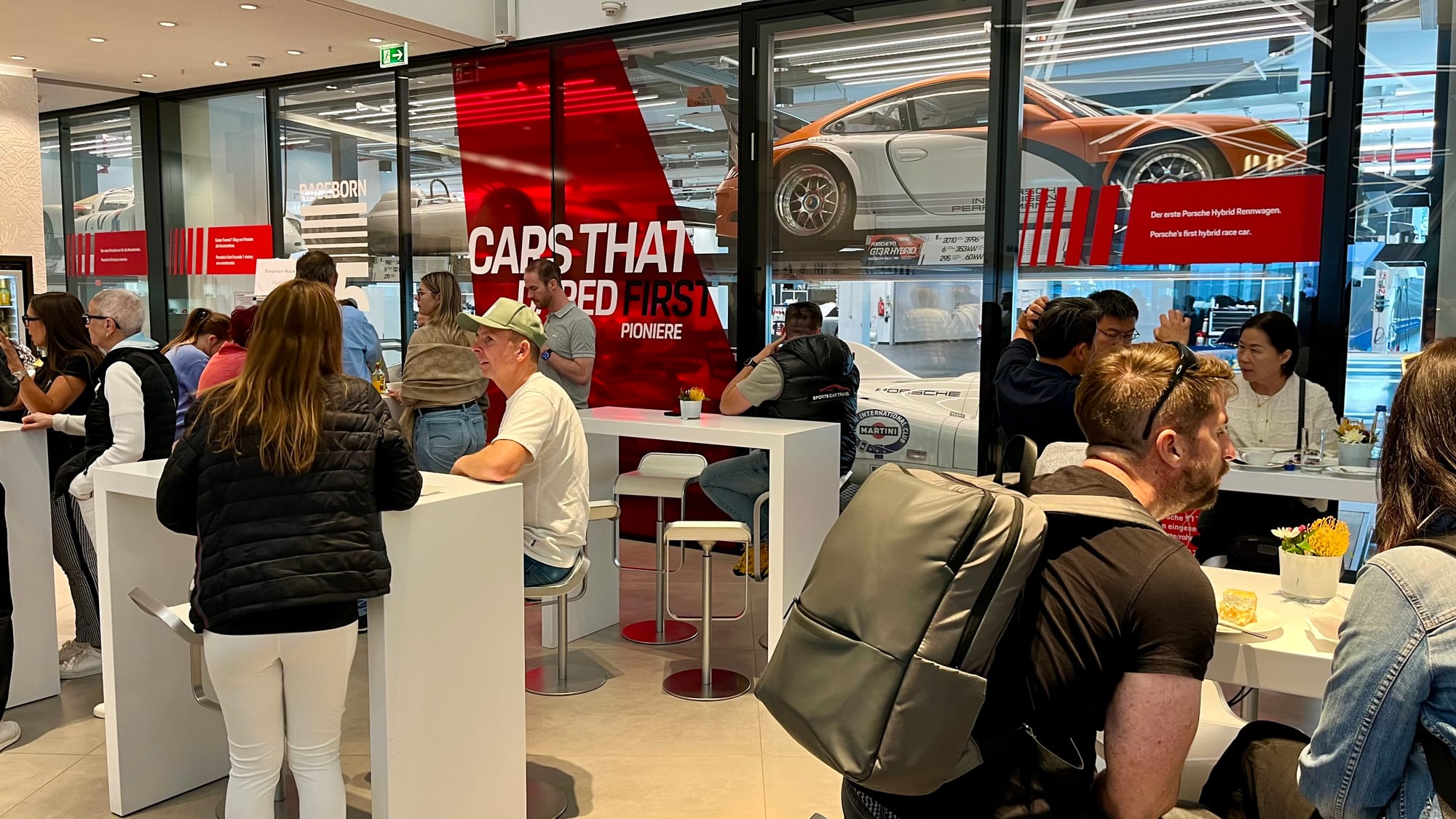
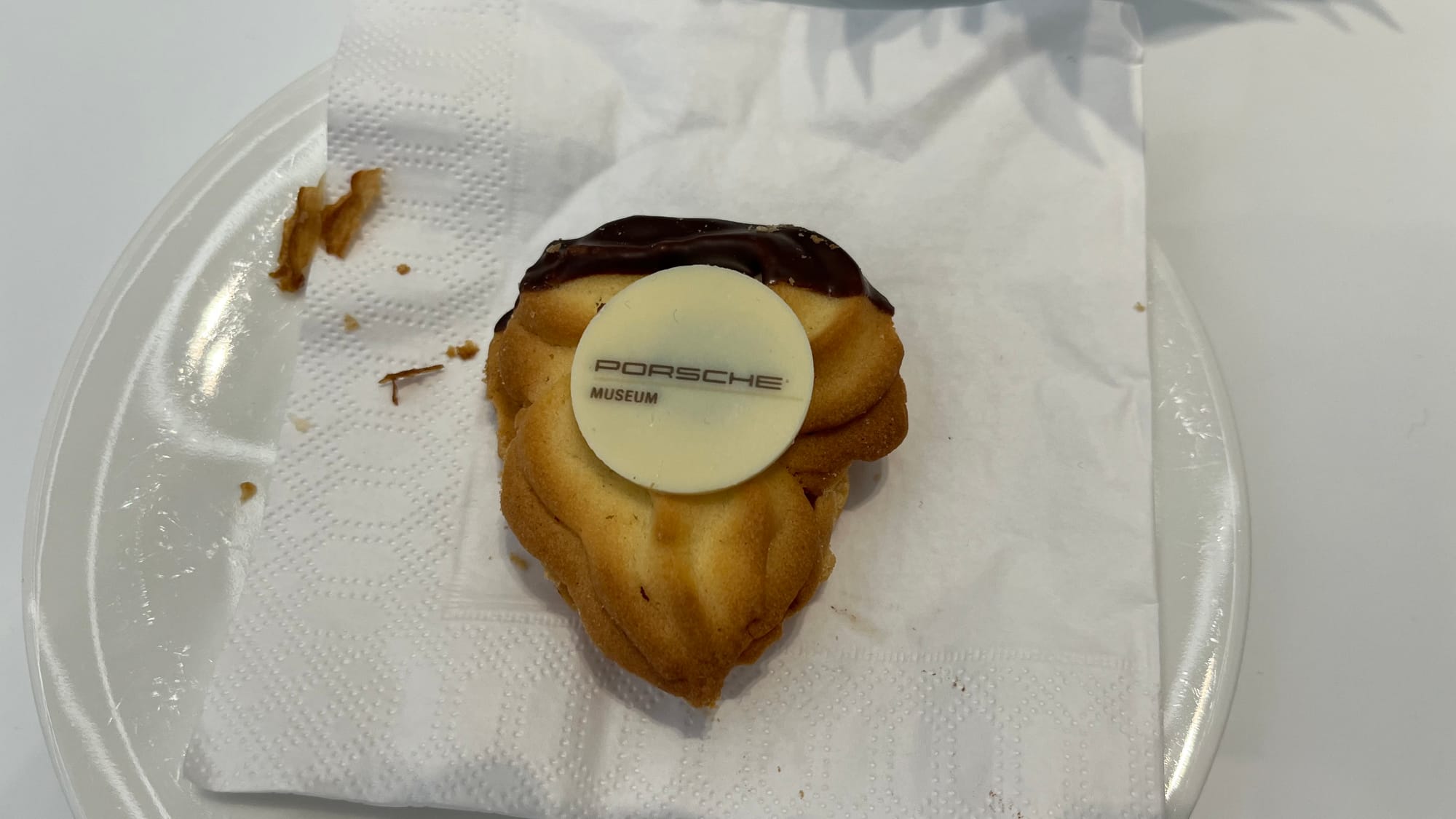
And had a small coffee and Porsche-themed treat.
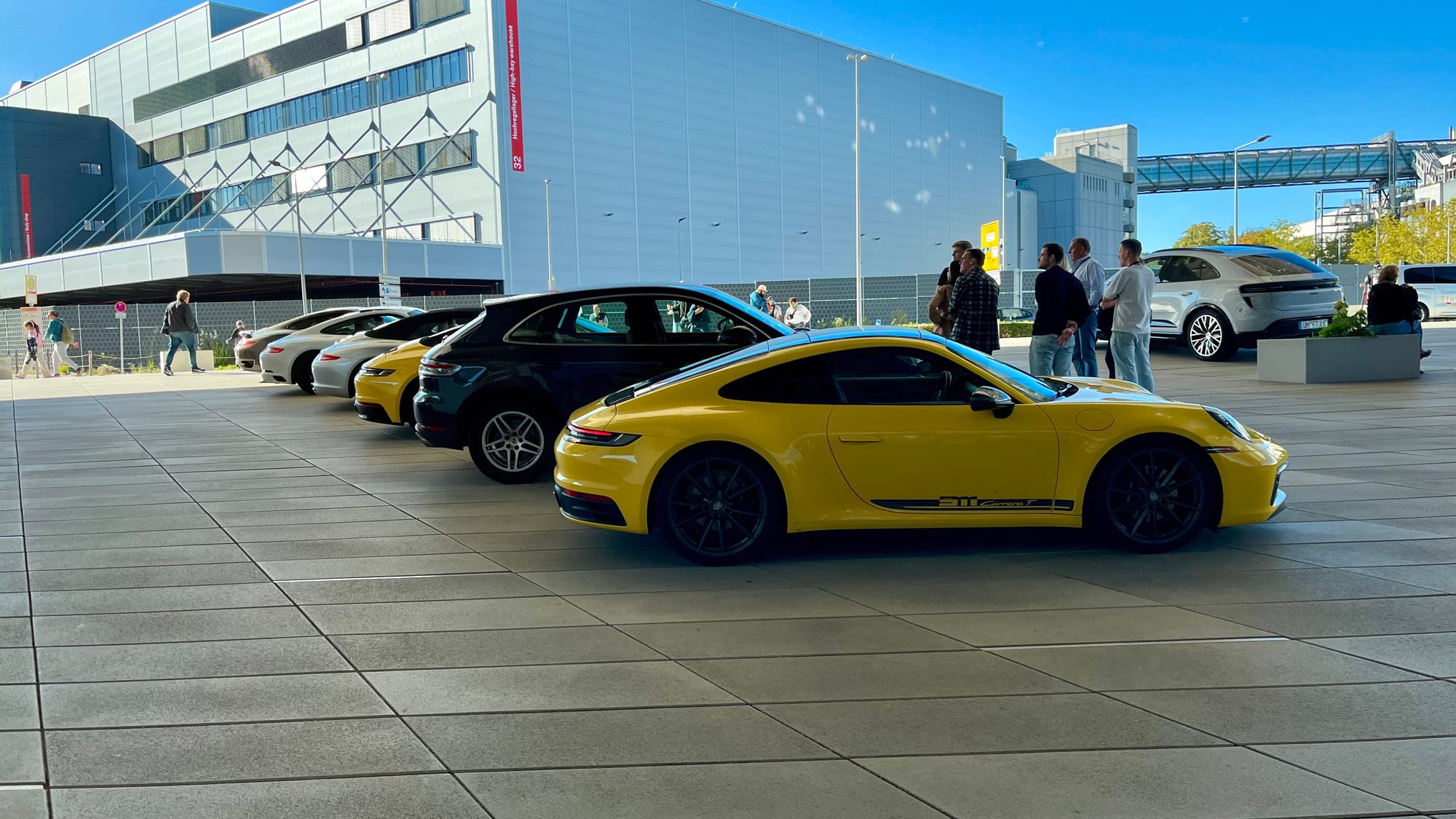
A number of 911s and a somewhat modest Macan are available for hire at Porsche Drive. It always surprises us how busy the actual rentals are here. People are taking them out for the day consistently and the rental counter always has someone in discussions.
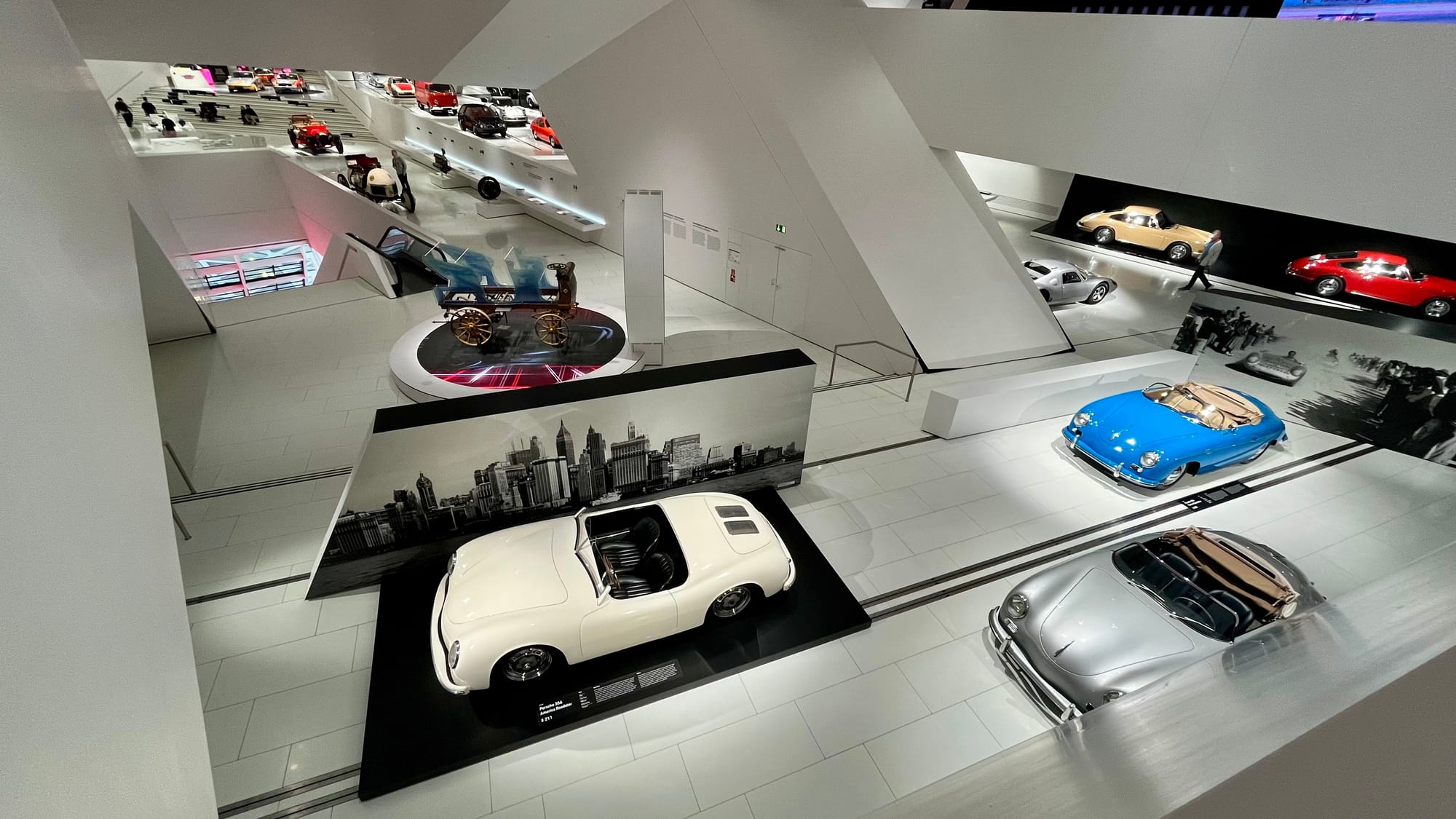
We travel up the escalator to the first floor of the museum. A significant exhibit of the museum is the building architecture itself.
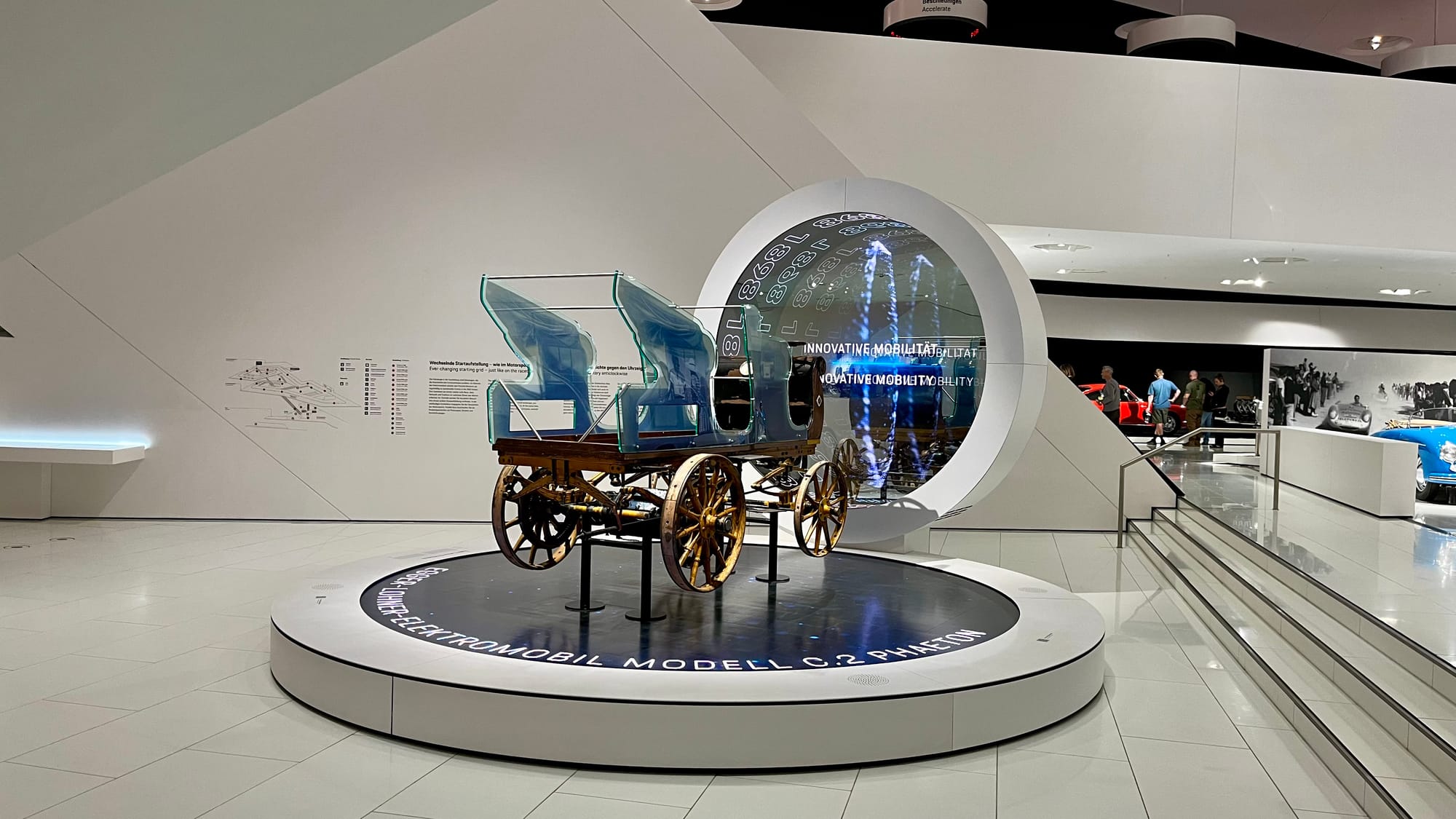
You are quickly introduced to a historical account of the first vehicle engineered by Ferdinand Porsche, which was electric. The museum argues convincingly that electric vehicles formed a central part of the company’s early identity.
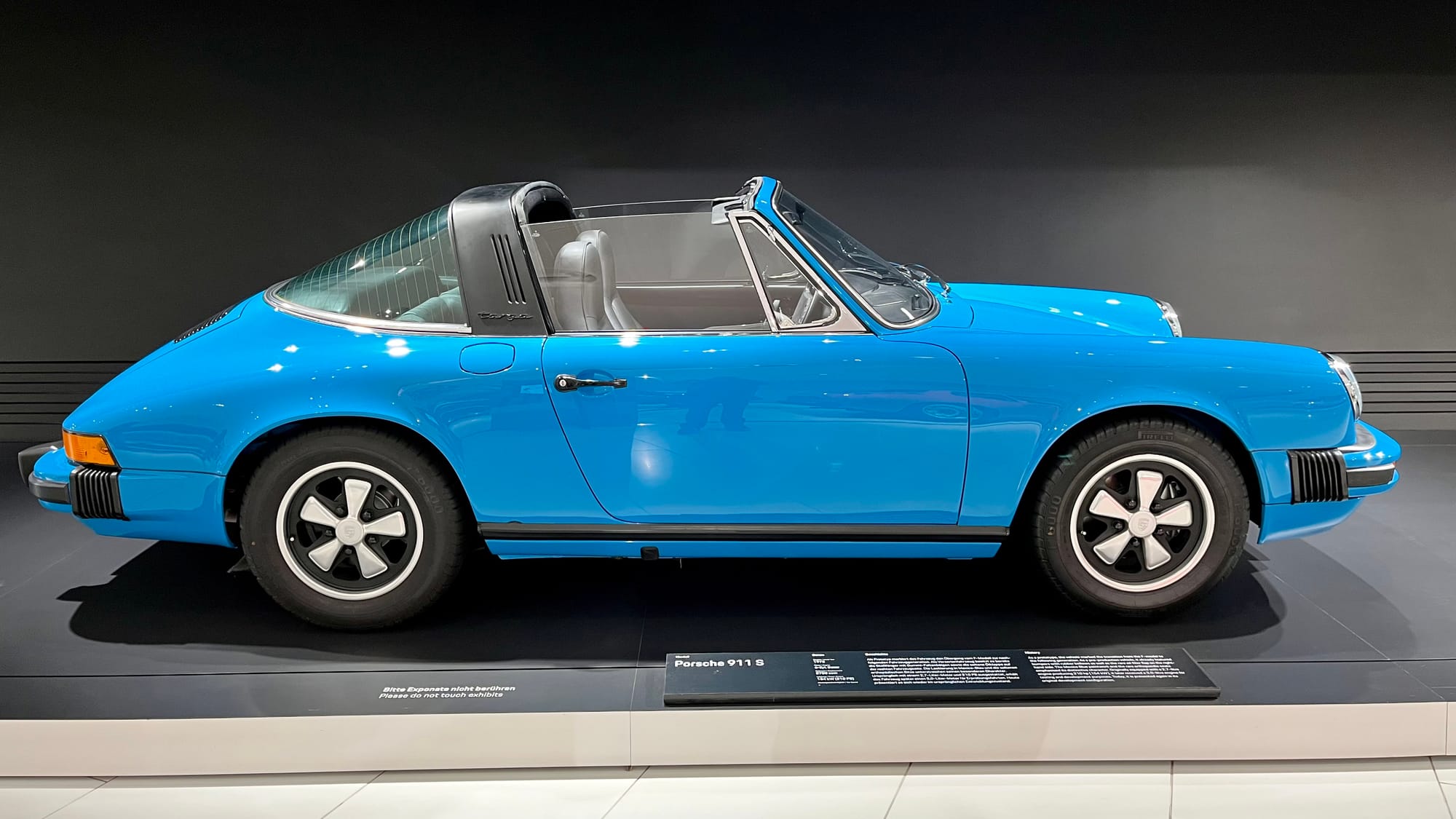
We see an early prototype model-G Targa in beautiful Mexico Blue. It is remarkable how our own Targa Bar is almost identical to what is in our own car parked downstairs that was manufactured 52 years later.
This car has the rare external engine oil filler cap on the right hand side just behind the passenger door.
The always run and “cute” VW van that Porsche used as a company fire fighting vehicle.
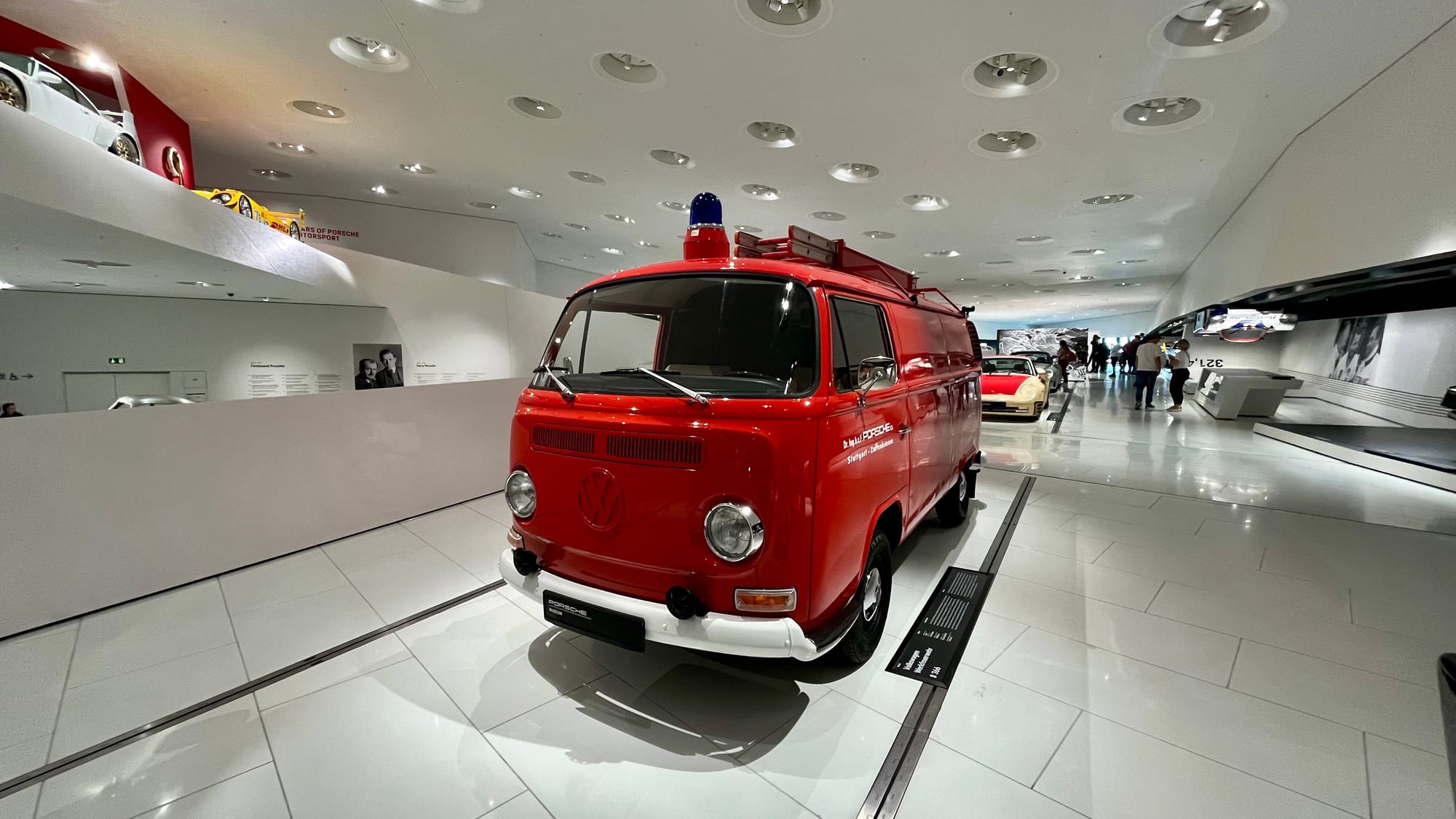
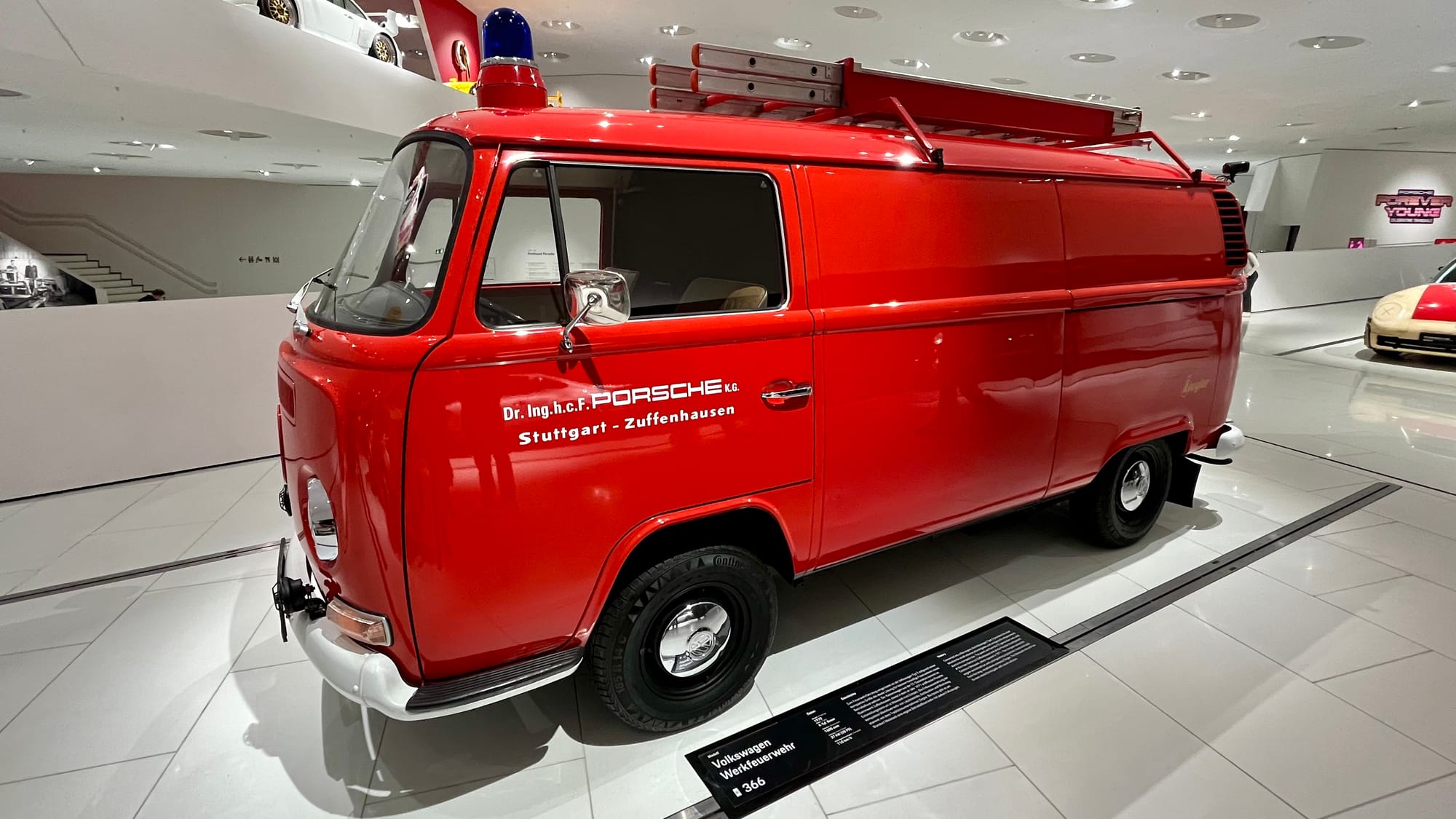
Porsche company fire fighting VW van
The museum has a large collection of special one off vehicles, including police cars and a beach buggy both powered by air-cooled flat-six engines.
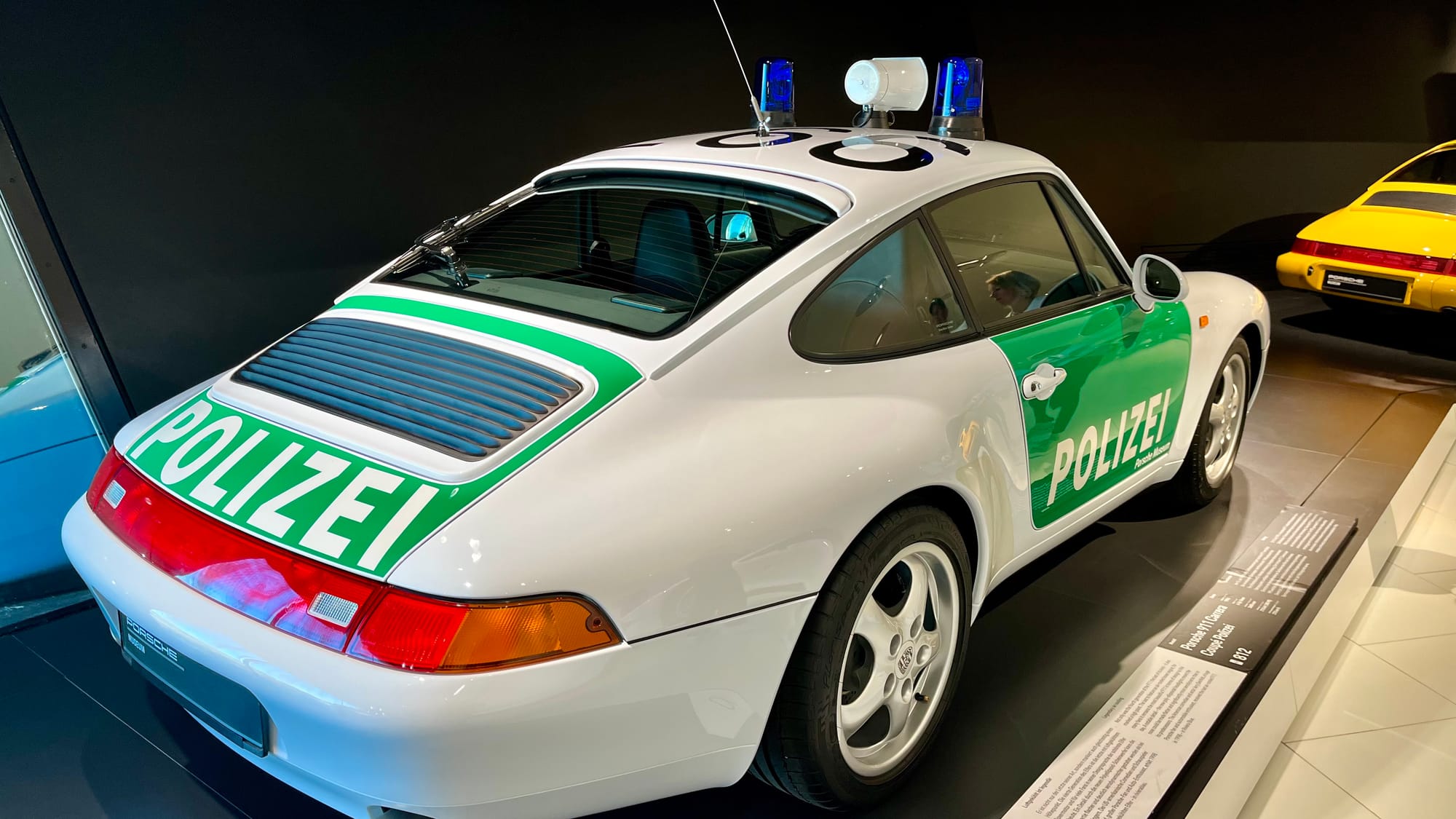
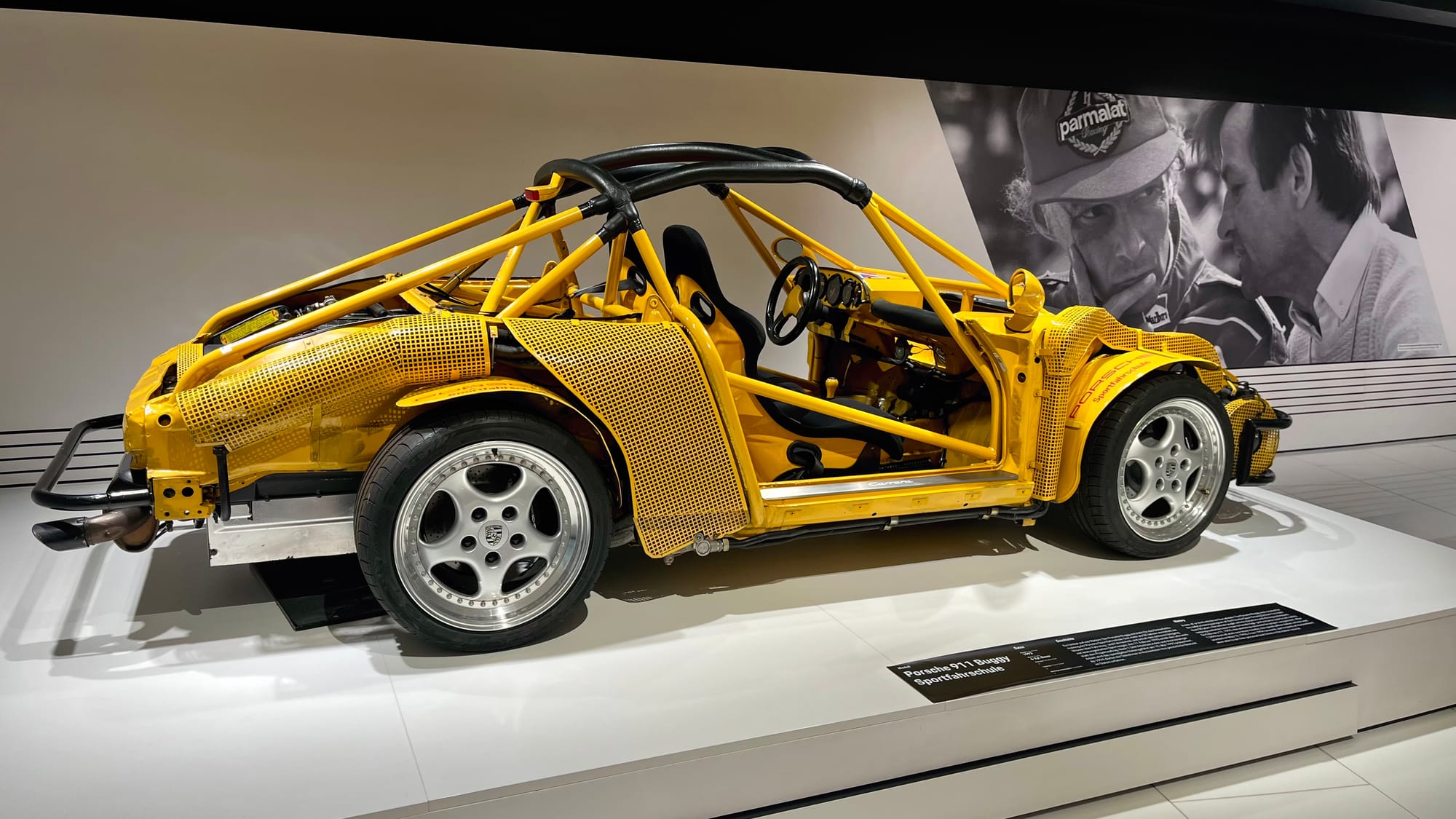
Special one-off cars
Today the museum has a number of “cut away” cars – that show the internal workings of the vehicles.
It remains intriguing to observe the volume of “stuff” packed into these cars. Every square centimetre is utilised.
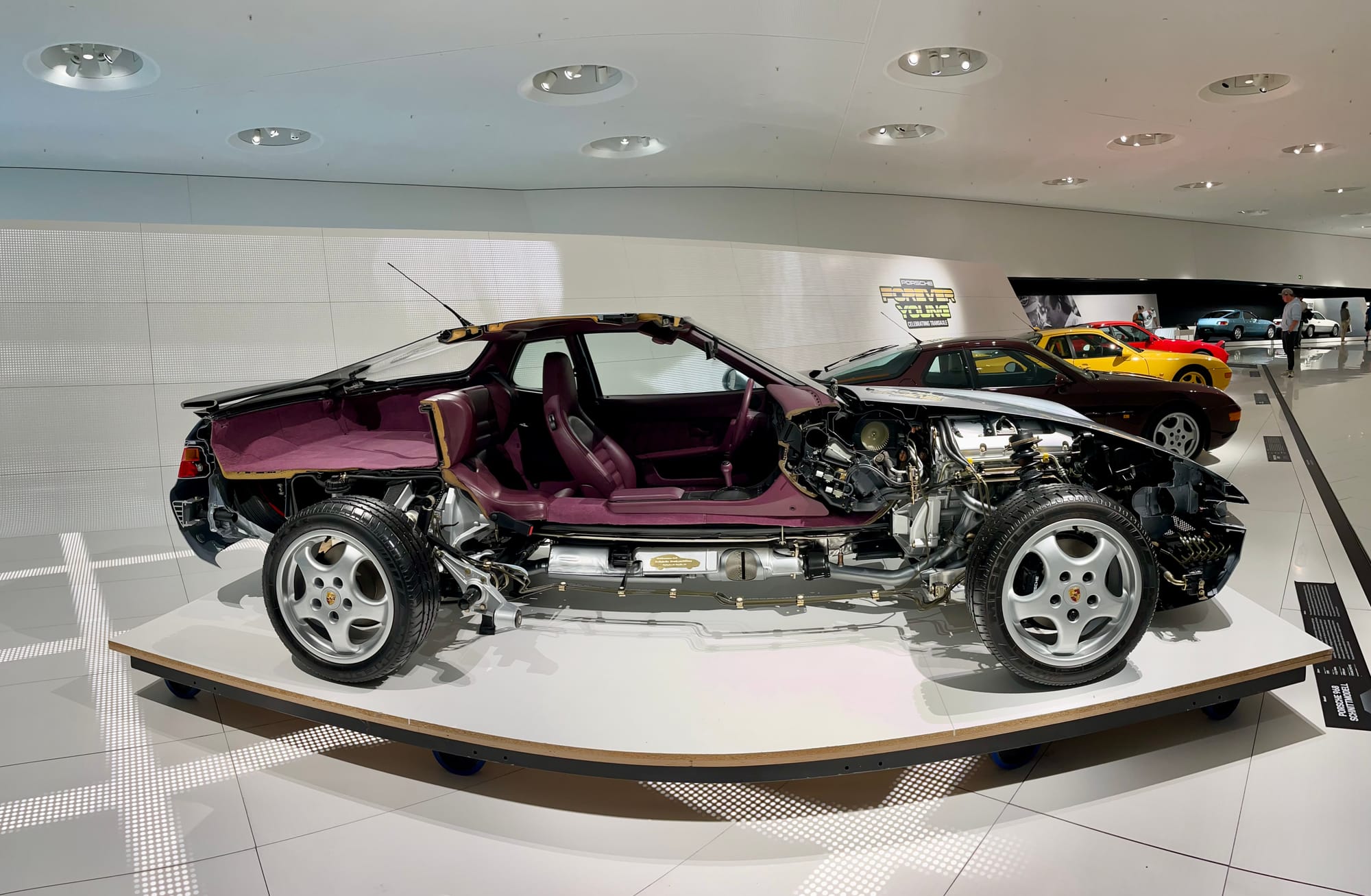
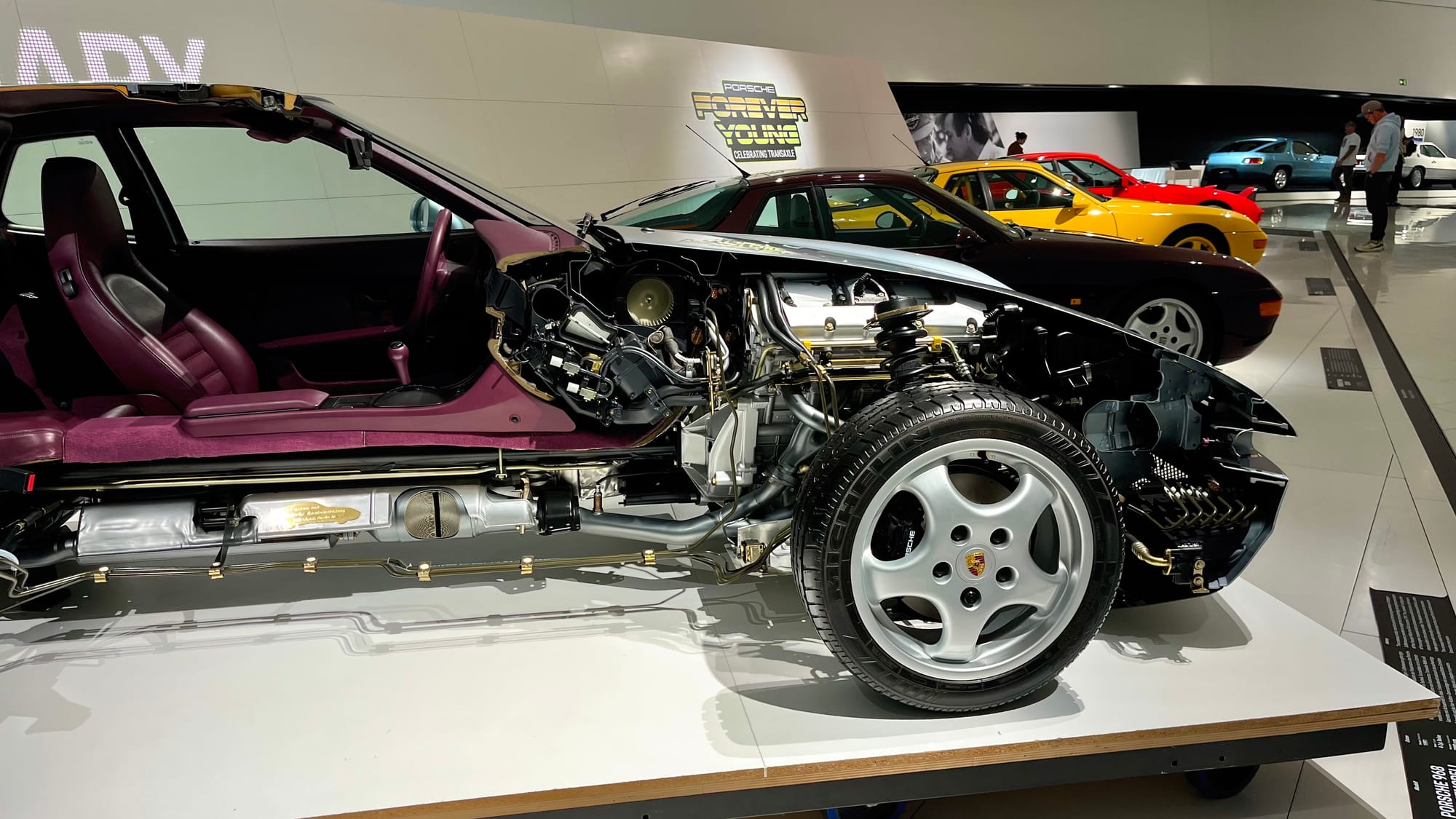
Car cutaways
Even though the original Panamera is large, its interior remains crowded with components and equipment. A hybrid variant would be further filled with electrical gear and batteries.
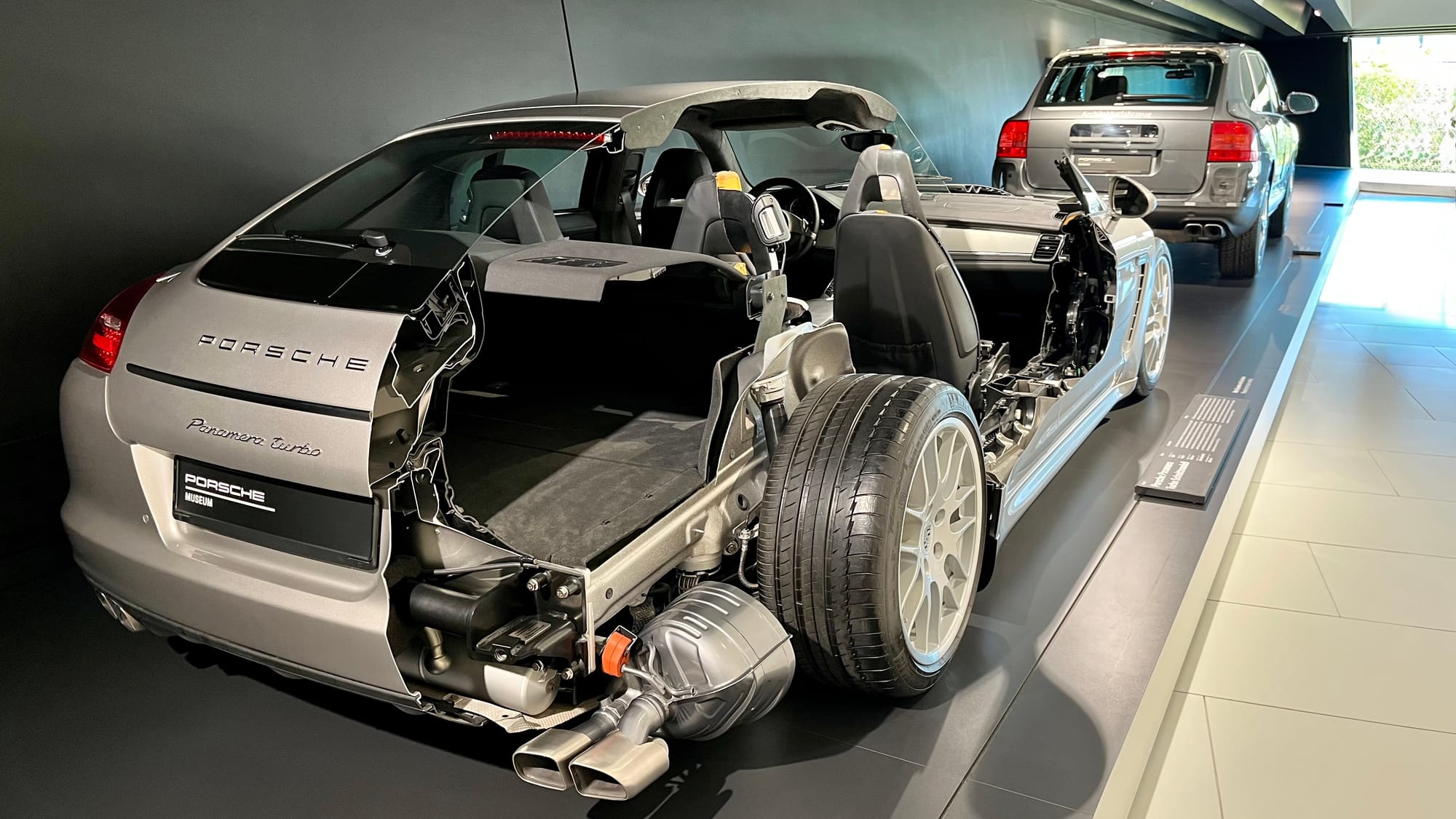
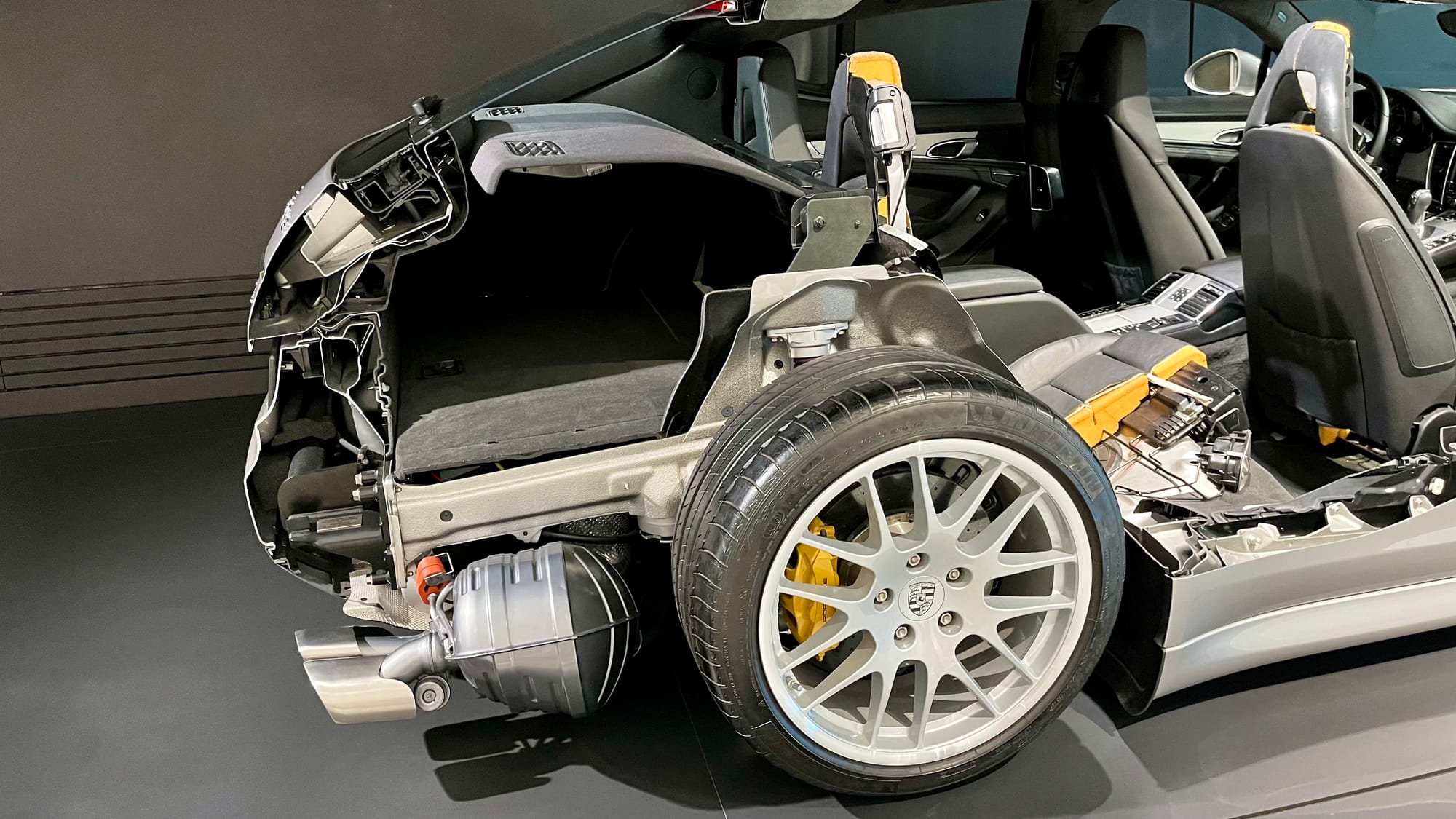
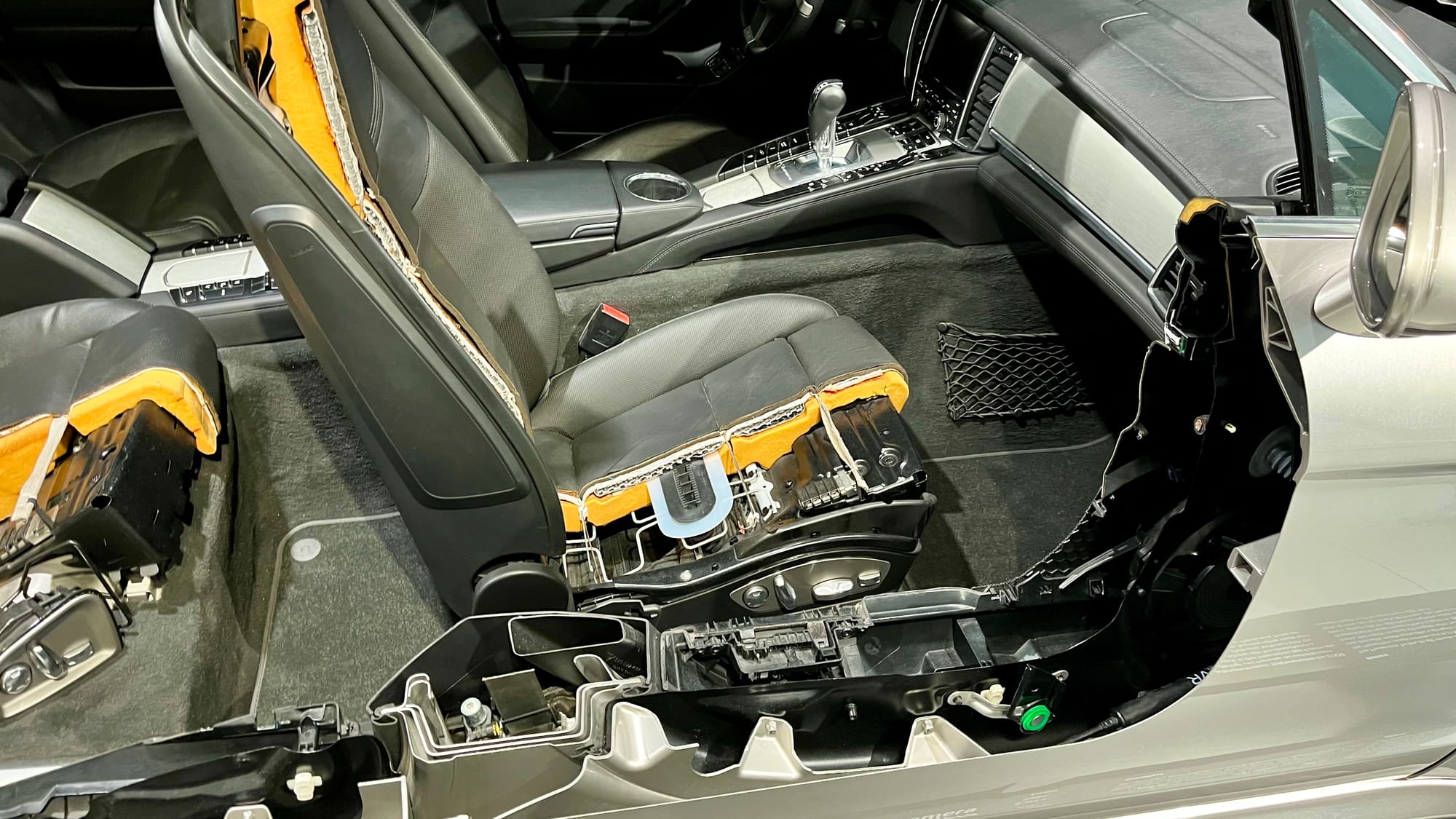
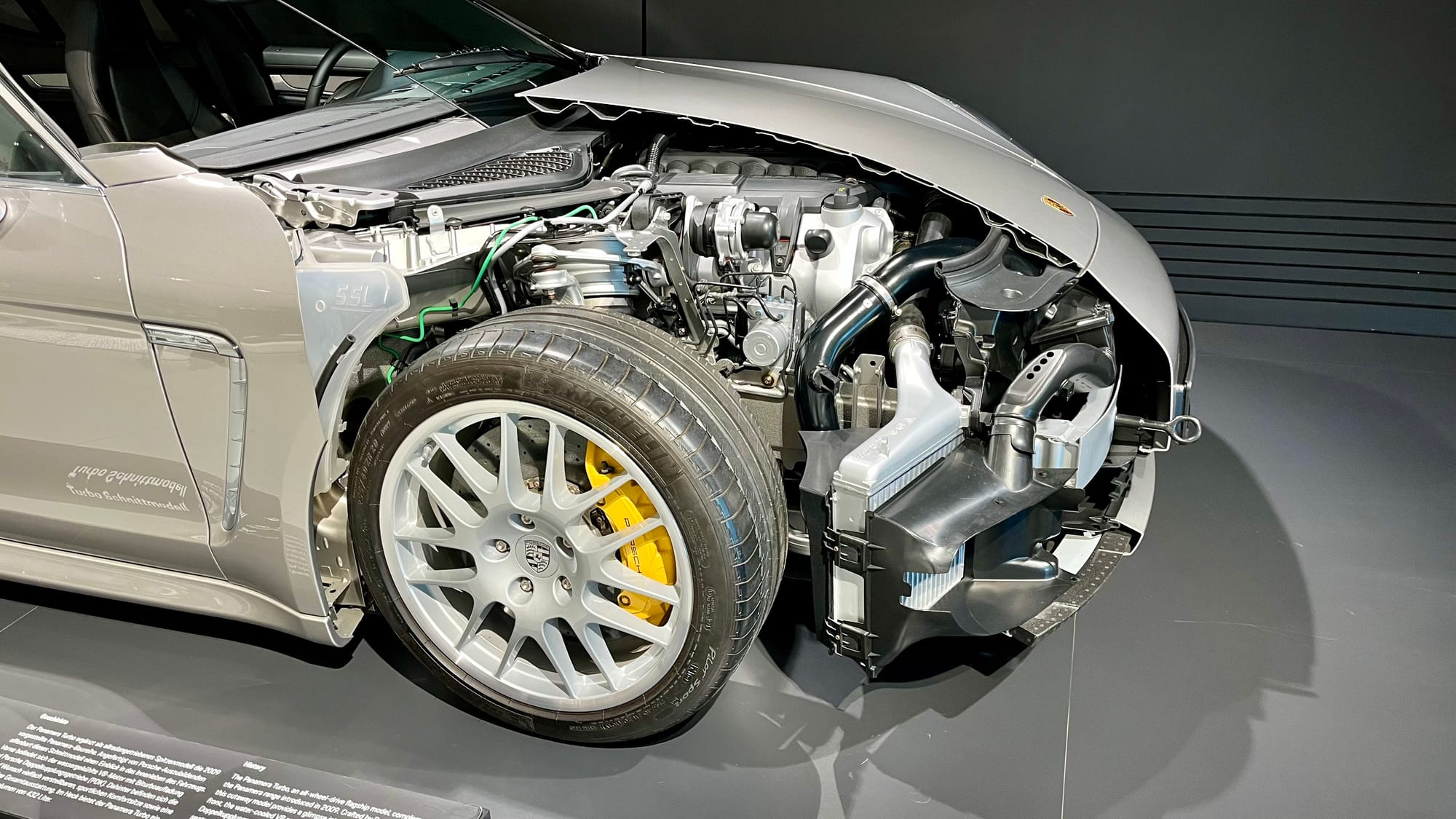
Car cutaways
There is a lovely 997 era Sports Classic that inspired a more modern 992 version that is much sought after. At its core, it is a Turbo engine paired with a manual gearbox and no side air intakes—a combination no longer available in any 911 other than the Sports Classic.
The 1,250 units of this car sold out quickly and are now considered collectors items with rapidly increasing values.
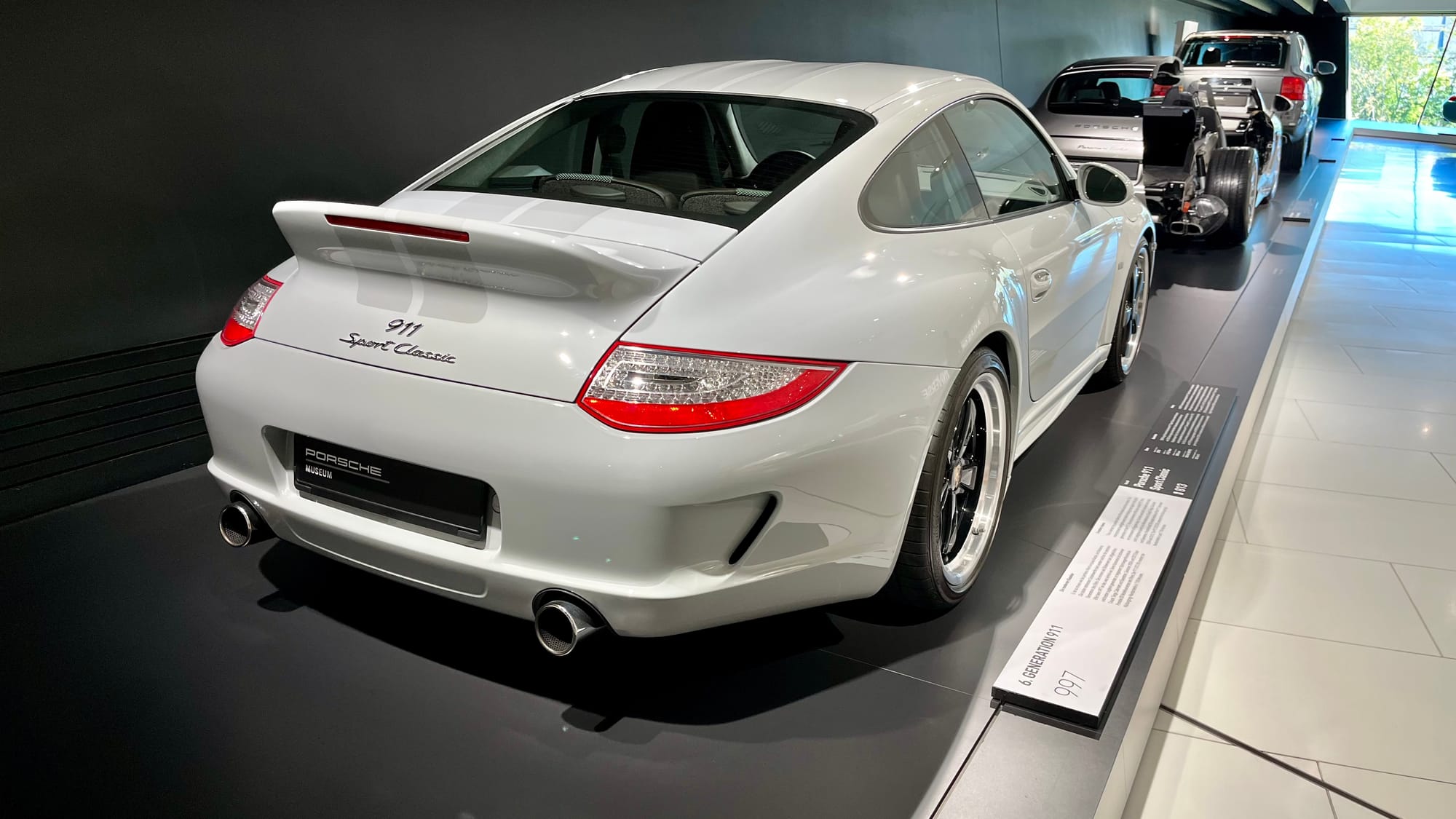
This advertisement for the newest Sports Classic earned widespread praise for establishing atmosphere and connecting the older and newer vehicles.
We sit into a 718 Spyder with a manual gearbox box that the museum is encouraging visitors to sit in. On sitting into the drivers seat, my co-driver remarks how “similar” it feels to our own Targa.
She instantly did not like the cloth internal door handles! We live in a country with too much intermittent rain to be dealing with the manual roof mechanism.
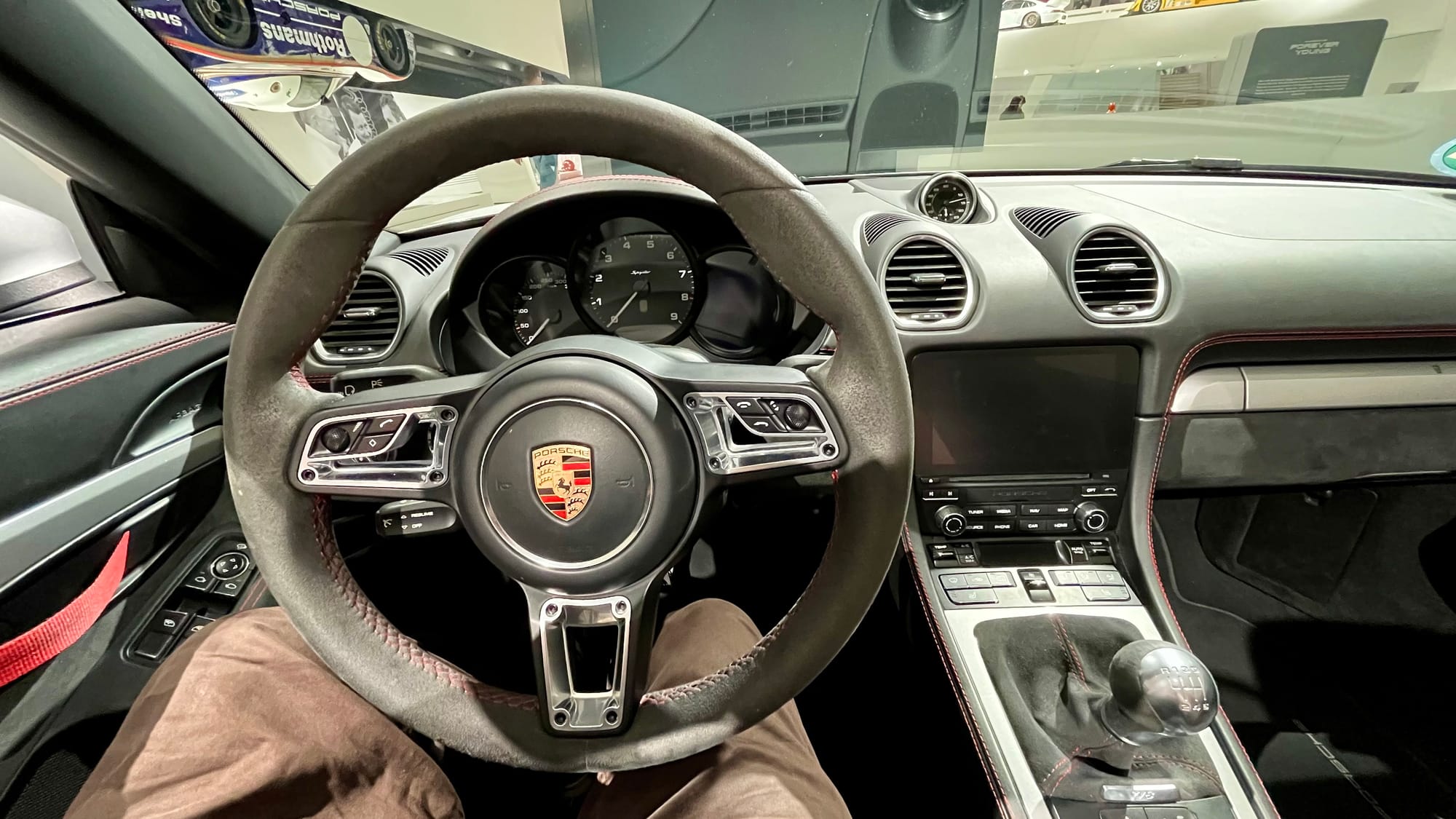
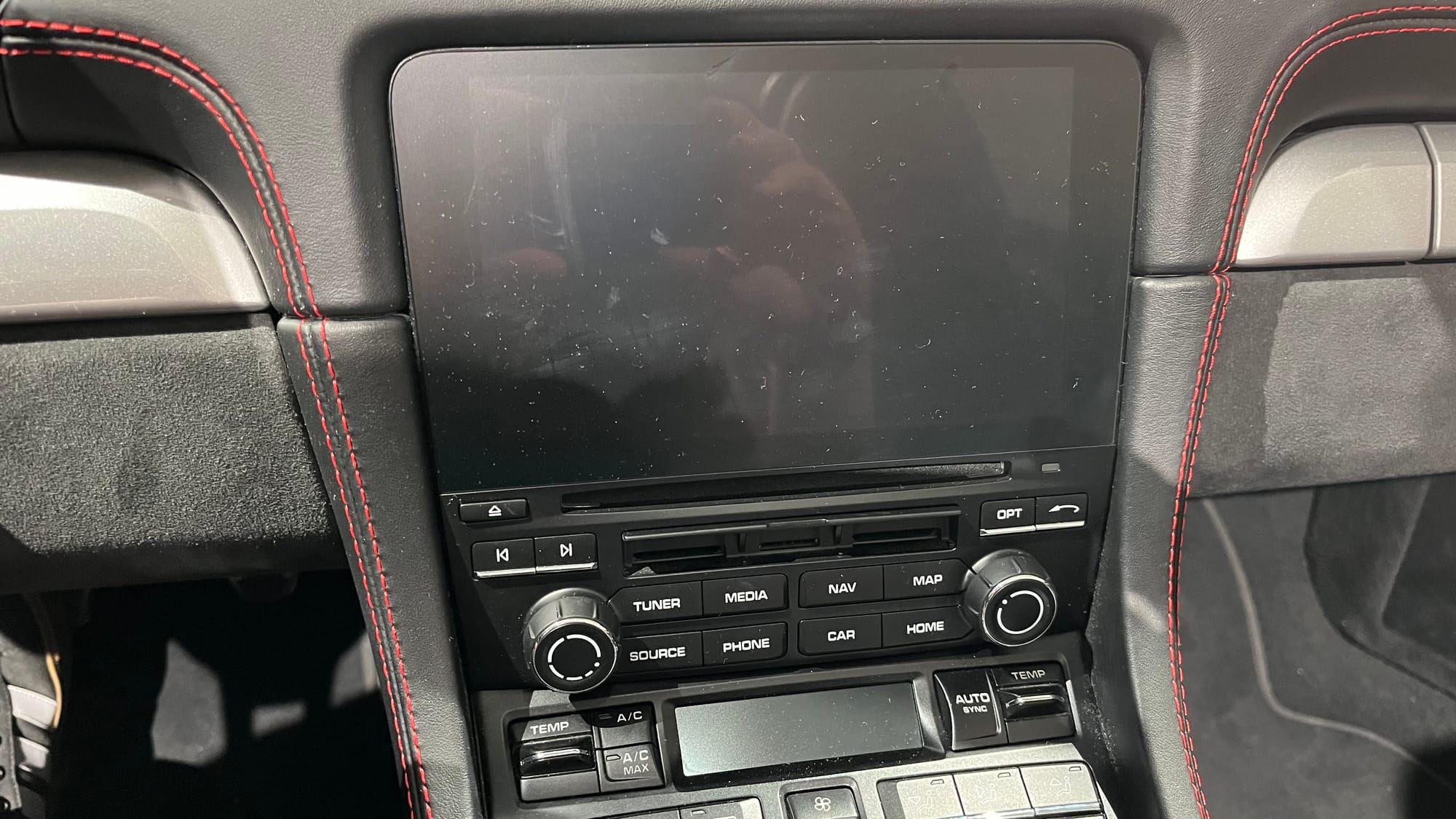
We like the “cohesiveness” of the older PCM 4.0 that is still fitted to these cars. The buttons for each “app” is much easier to use than relying on the touchscreen only in the newer version 6.0 PCM in our own car.
Yes, it is older software, yet it remains quite suitable for current use, and there is a quality we still appreciate. It provides just the right degree of digitisation for a manual mechanical car like this.
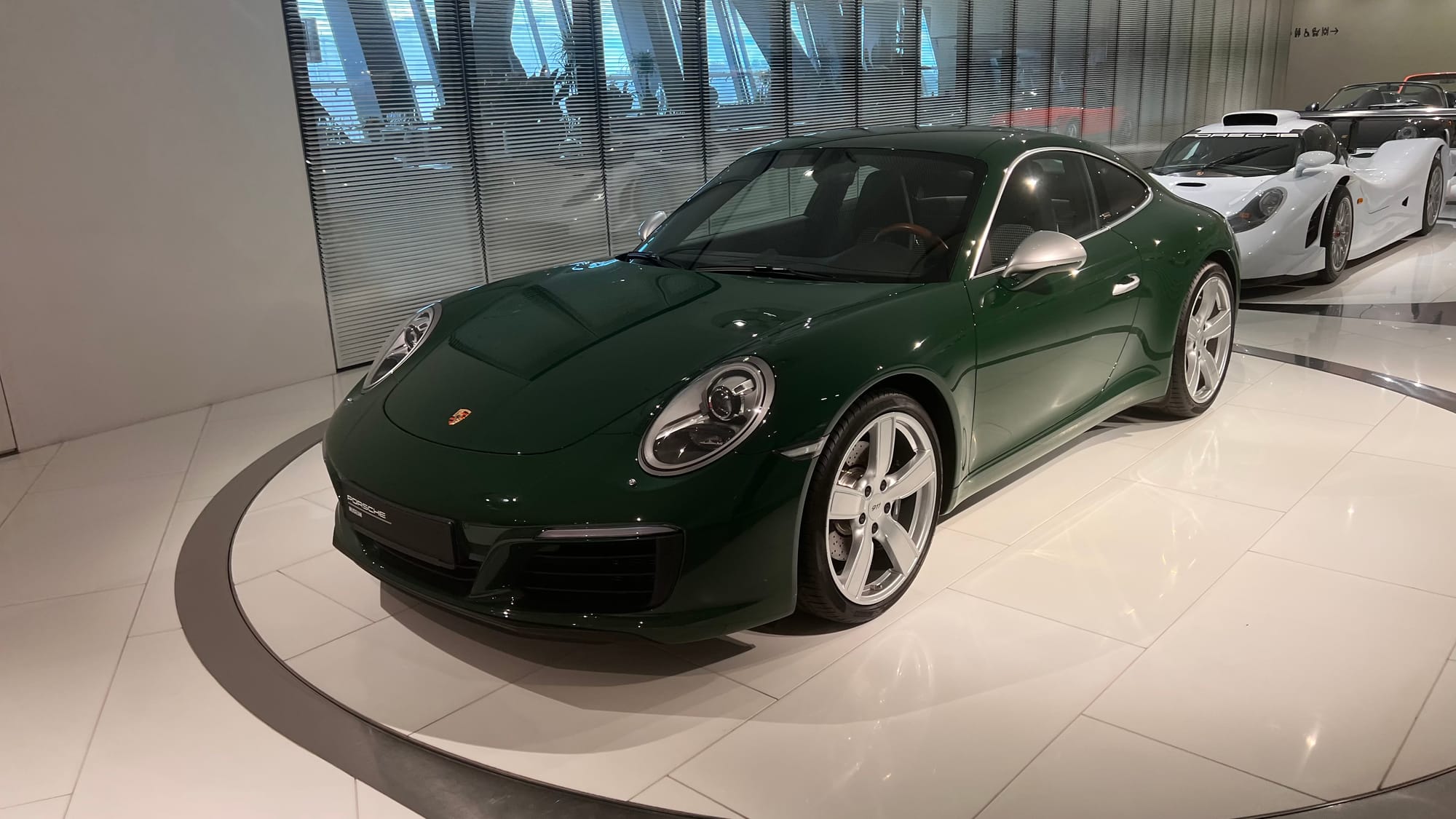
There are two “dream” colours that both of us would really love a 911: Irishgreen and Osloblue.
Irishgreen is a very special historical colour for the 911. It is a rich shade of green that is a Porsche family colour. In 1963, the first series-produced Porsche of the 901 type was painted in Irishgreen – for the subsequent owner Ferdinand “Ferry” Porsche.
Dr Wolfgang Porsche, Chairman of the Supervisory Board at Porsche AG, has been a part of the development of the 911 since day one: “54 years ago, I was able to take my first trips over the Grossglockner High Alpine Road with my father. The feeling of being in a 911 is just as enjoyable now as it was then.“
Porsche AG tells us that no Irish Green 911 has ever been ordered in Ireland when we made the inquiry.
Here is the millionth 911 in Irishgreen at the museum when we were first here in 2022.
We first saw Oslo Blue parked up at the glacier on the Grossglockner on a road trip with our first Taycan back in 2021.
Osloblue is a soft and restrained colour with subtle greyish or greenish undertones that exude their calm look. The shade is used to create a peaceful and relaxing atmosphere.
Porsche describes the colour as: “The dark, non-metallic shade is a blue that was available on the 356B in the early 1960s and was probably inspired by the Norwegian capital Oslo. The Scandinavian countries are characterised by a unique culture, impressive natural landscapes and a sense of community.”
With our love of both blue cars and visiting the Norwegian arctic this is the blue colour that talks best to us.
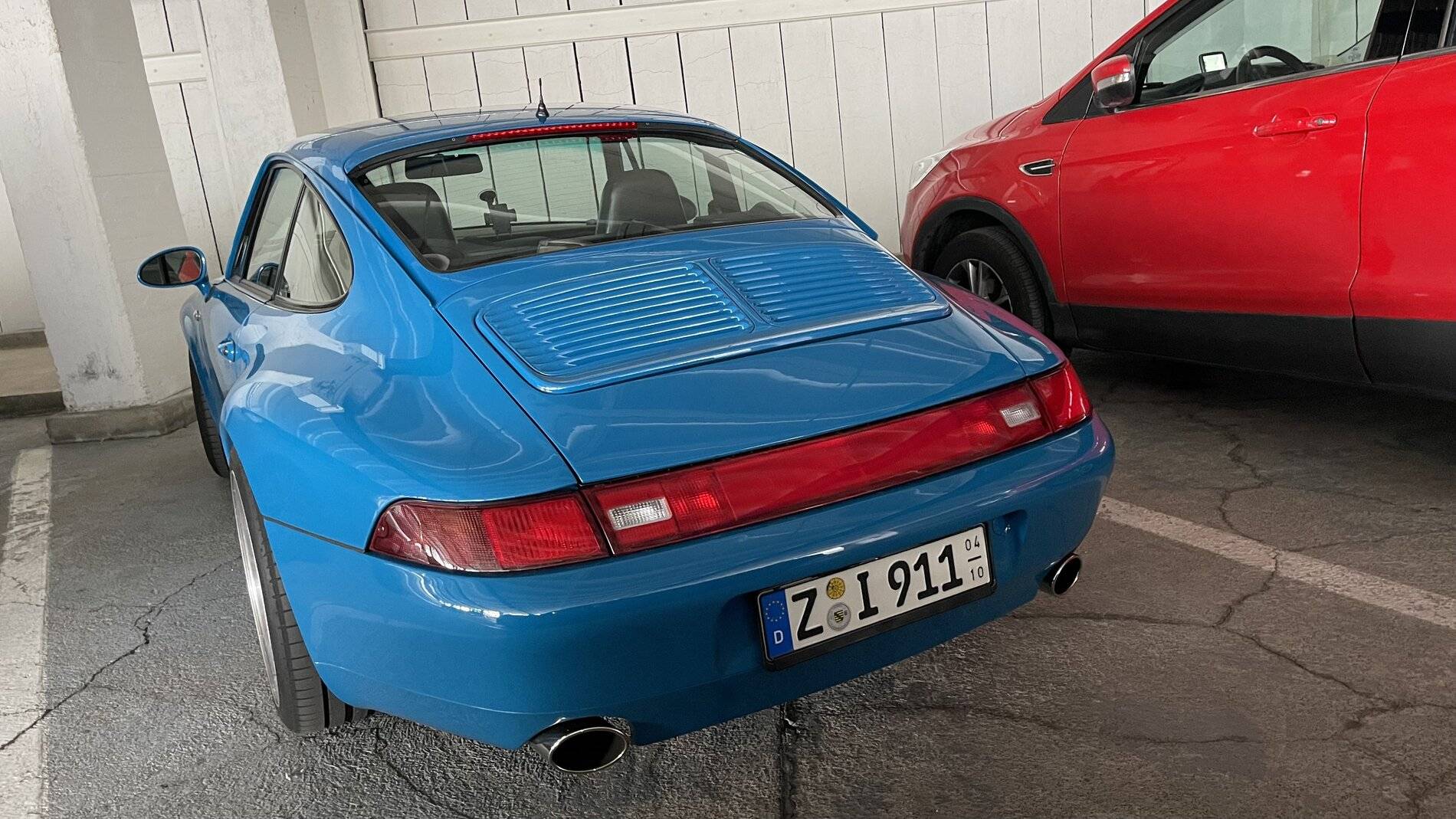
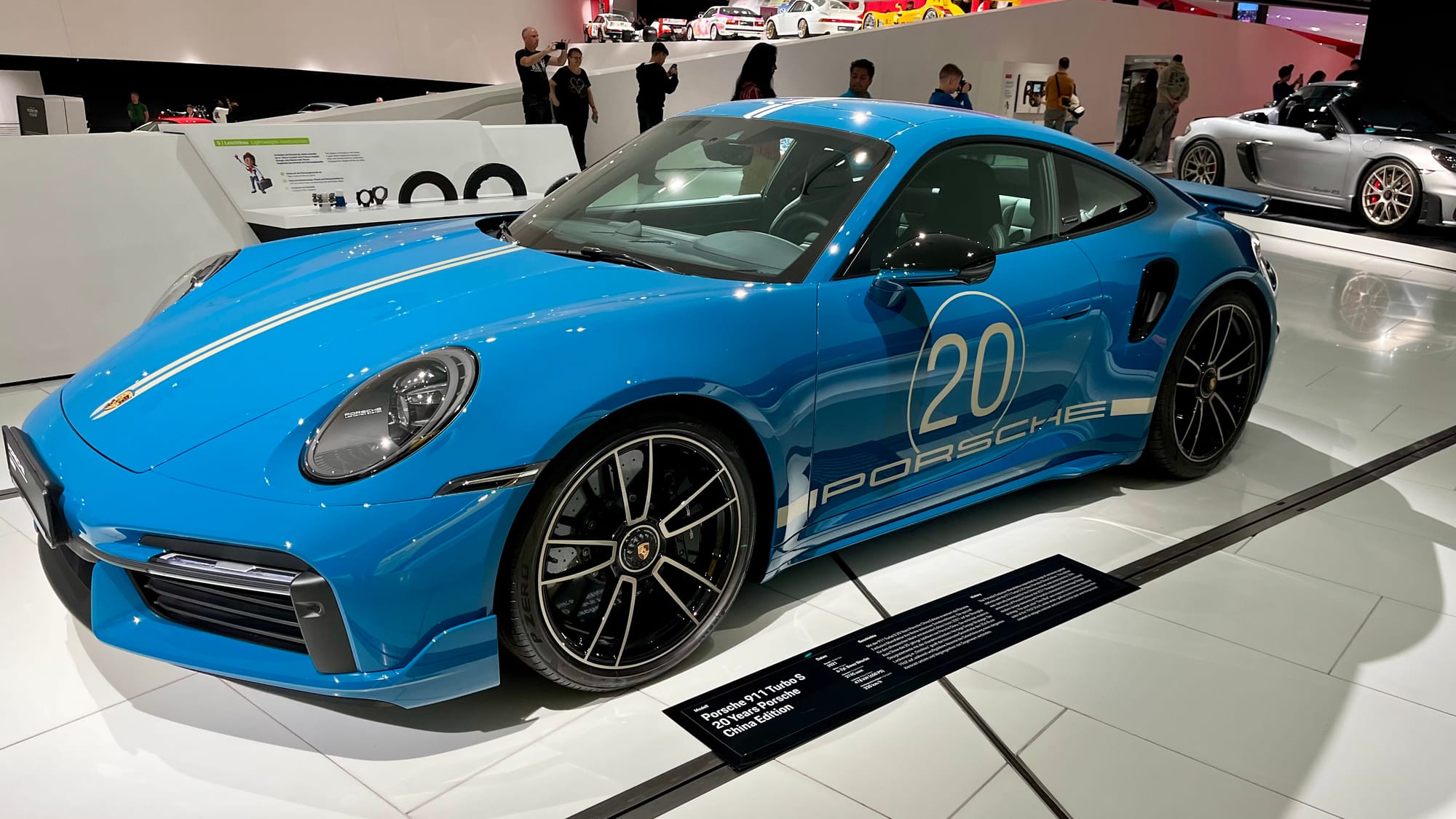
So it was wonderful seeing Osloblue in person on a modern 911 in the guise of a special 20th year edition for China.
When walking up towards the car in the museum, we didn’t immediately recognise the colour but both of us exclaimed: “oh, what a nice blue”.
On this visit, Porsche was pushing “racing heritage” strongly throughout the exhibits.
The “adverts” shown were fun and it is clear that Porsche are leaning heavily into its heritage in an attempt to create a moat around its cars that the Chinese brands will find difficult to reproduce.
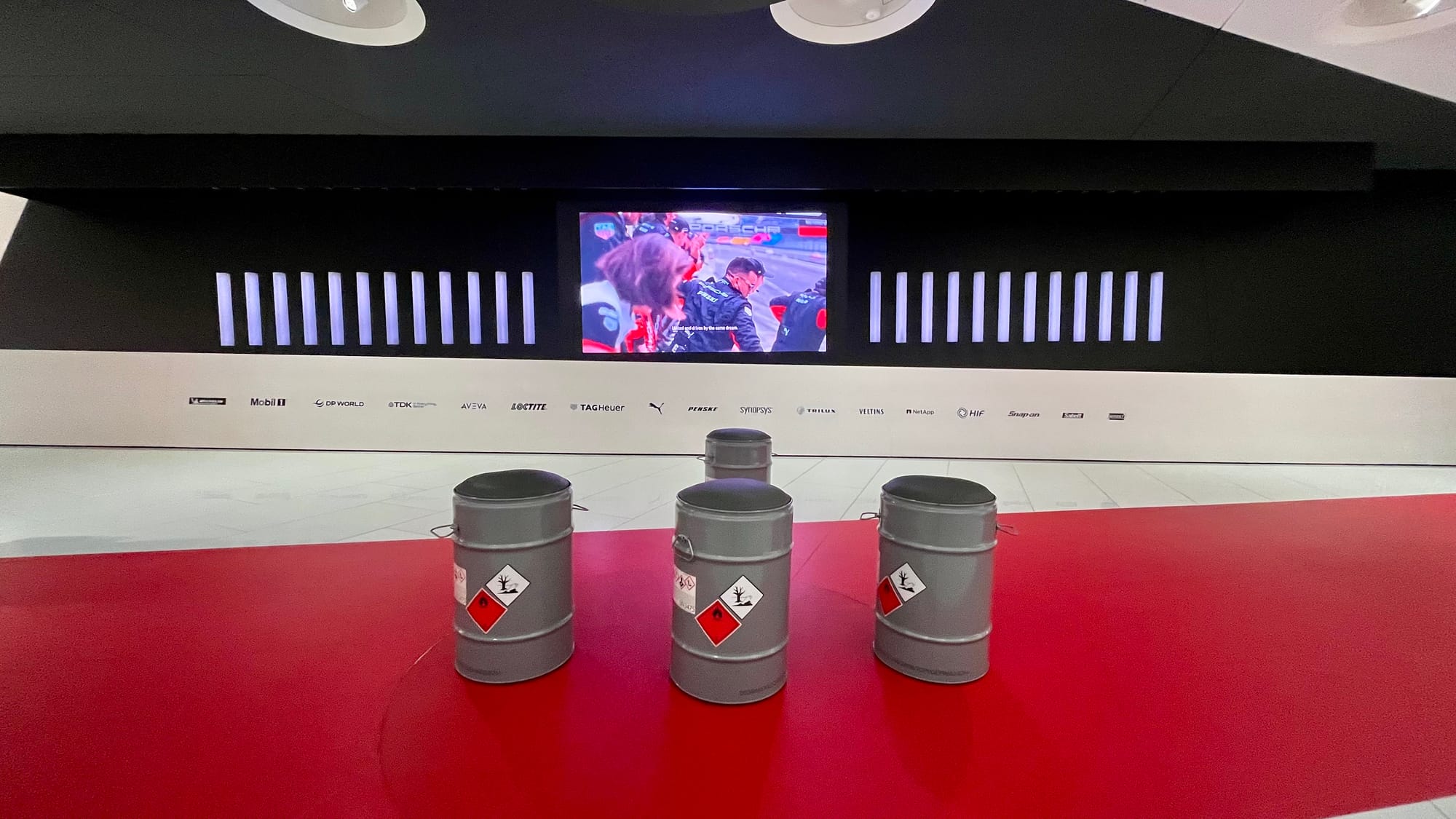
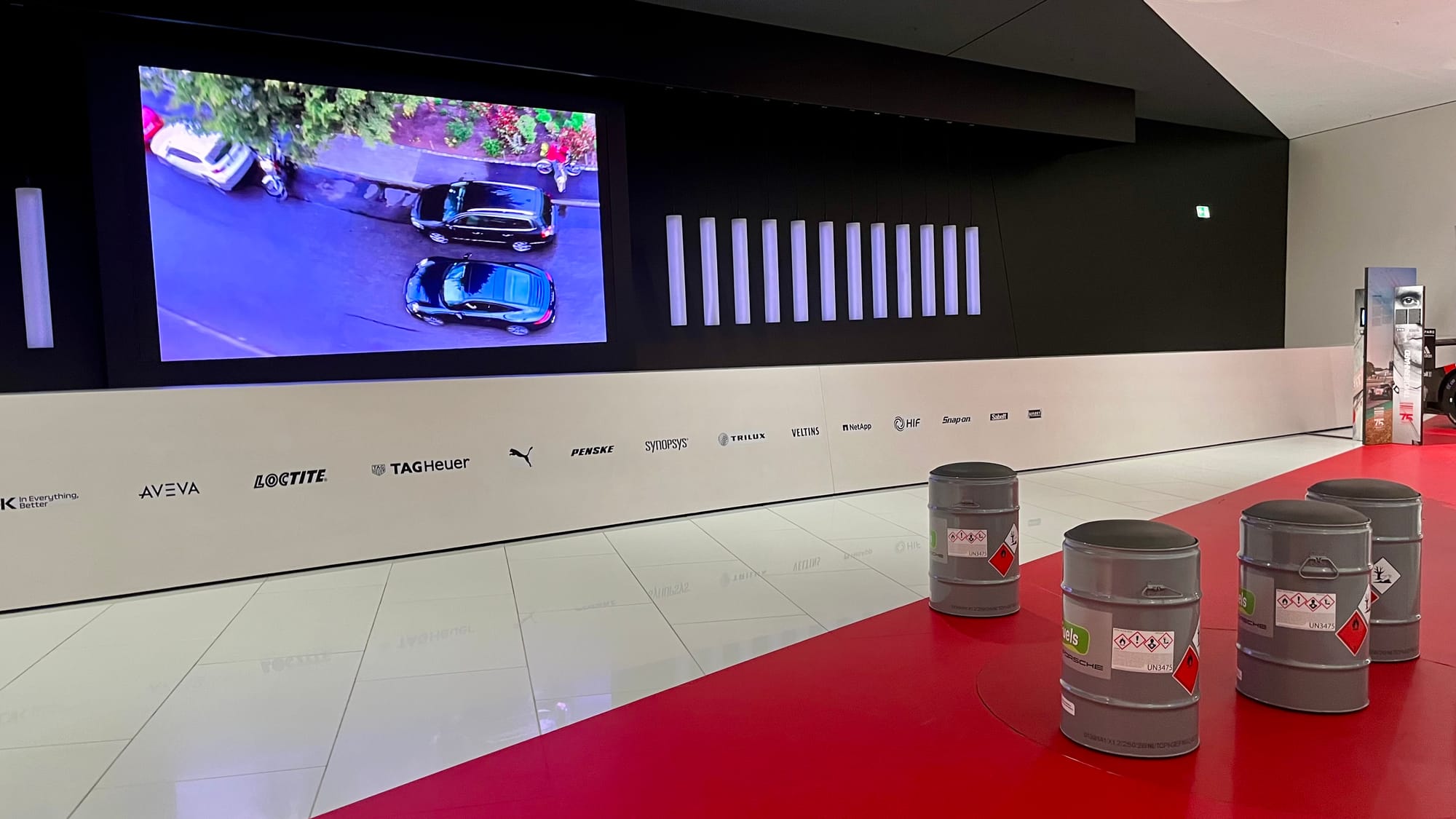
Racing adverts being shown at the museum
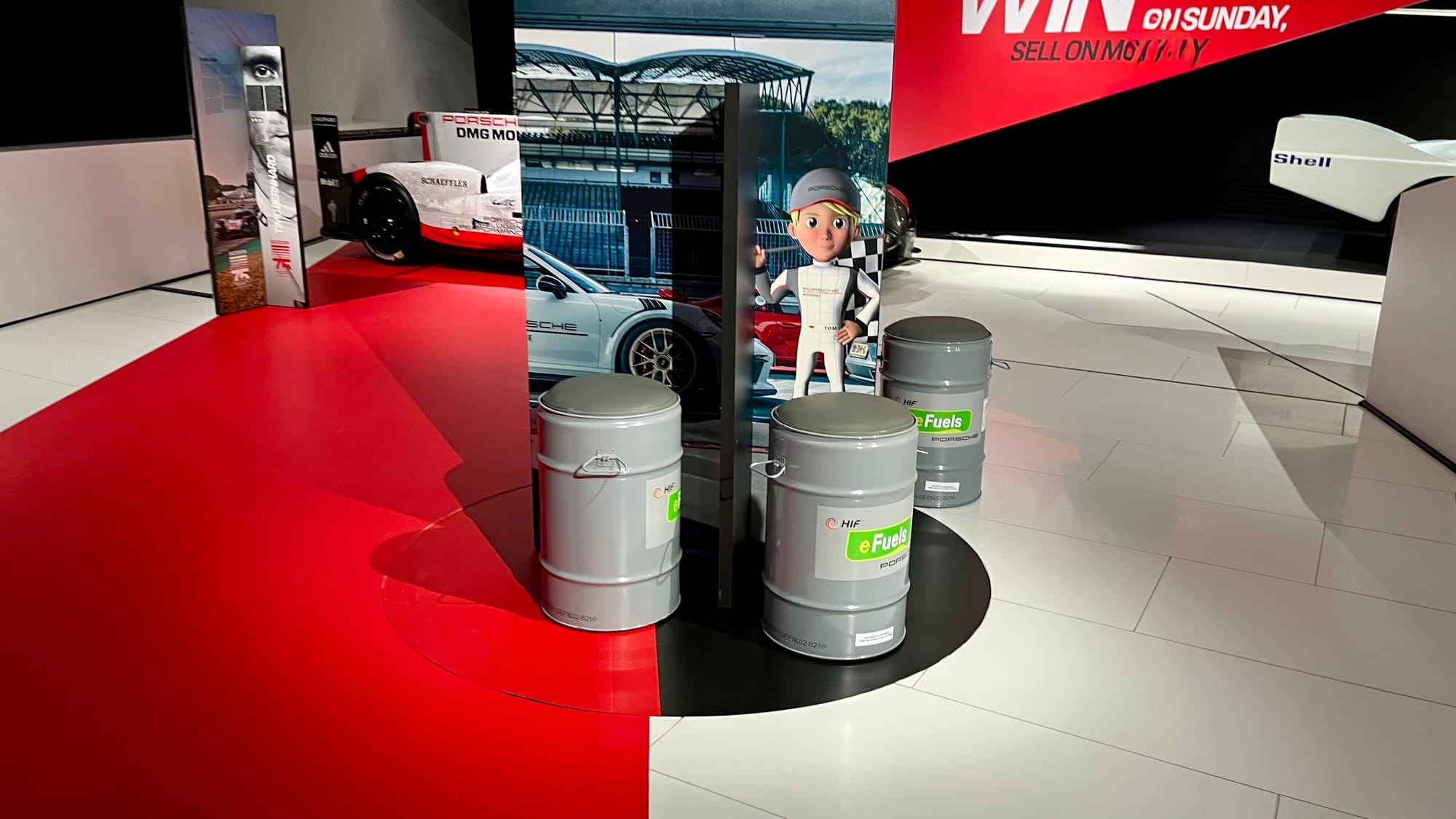
They also were pushing their sustainable “eFuels” throughout the museum – something Porsche hopes will keep their petrol 911s alive into the future as environmental legislation in Europe leans into electric vehicle propulsion.
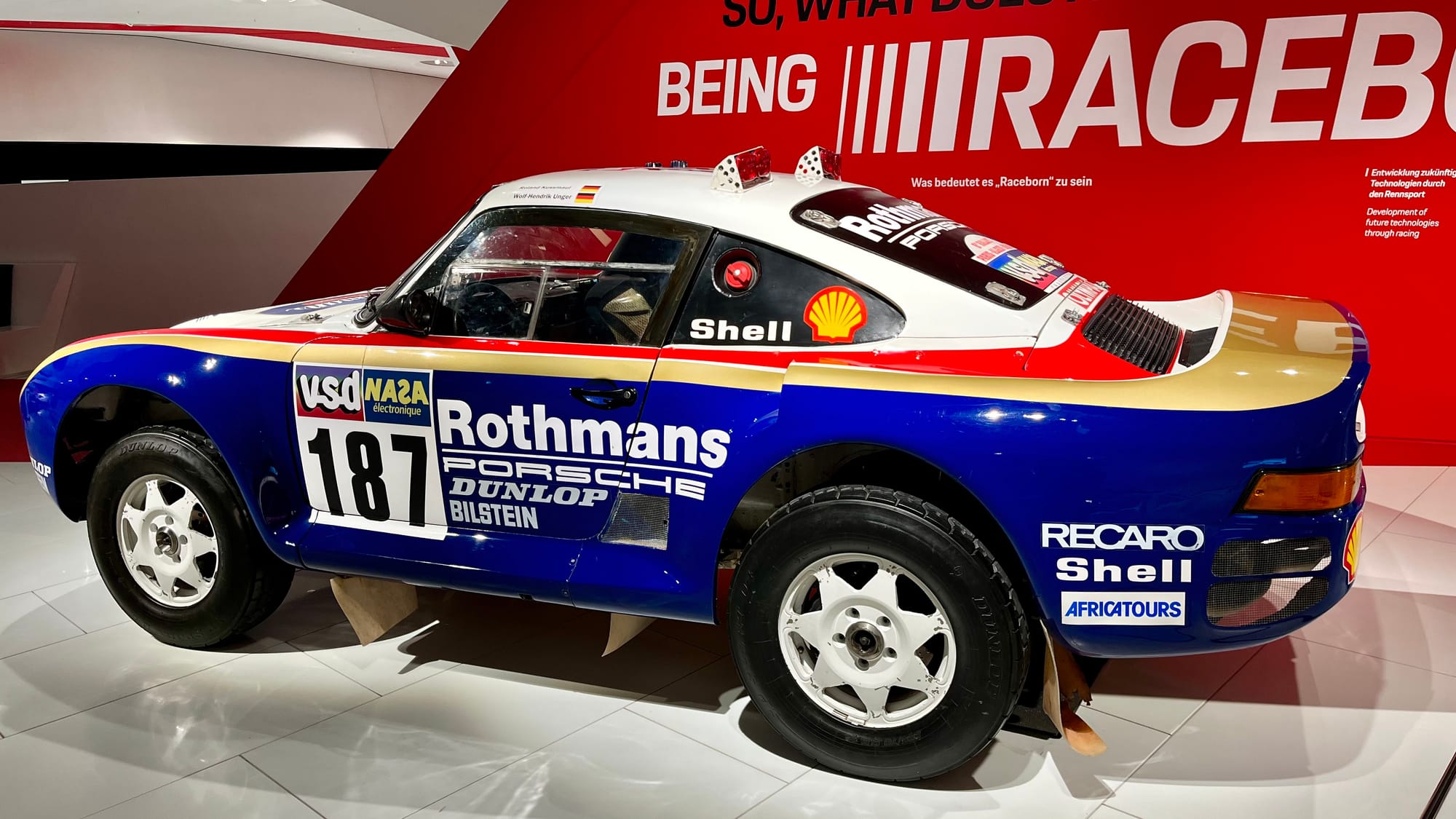
It was fun seeing the actual car that raced in the deserts of Africa and inspired the much loved 911 Dakar.
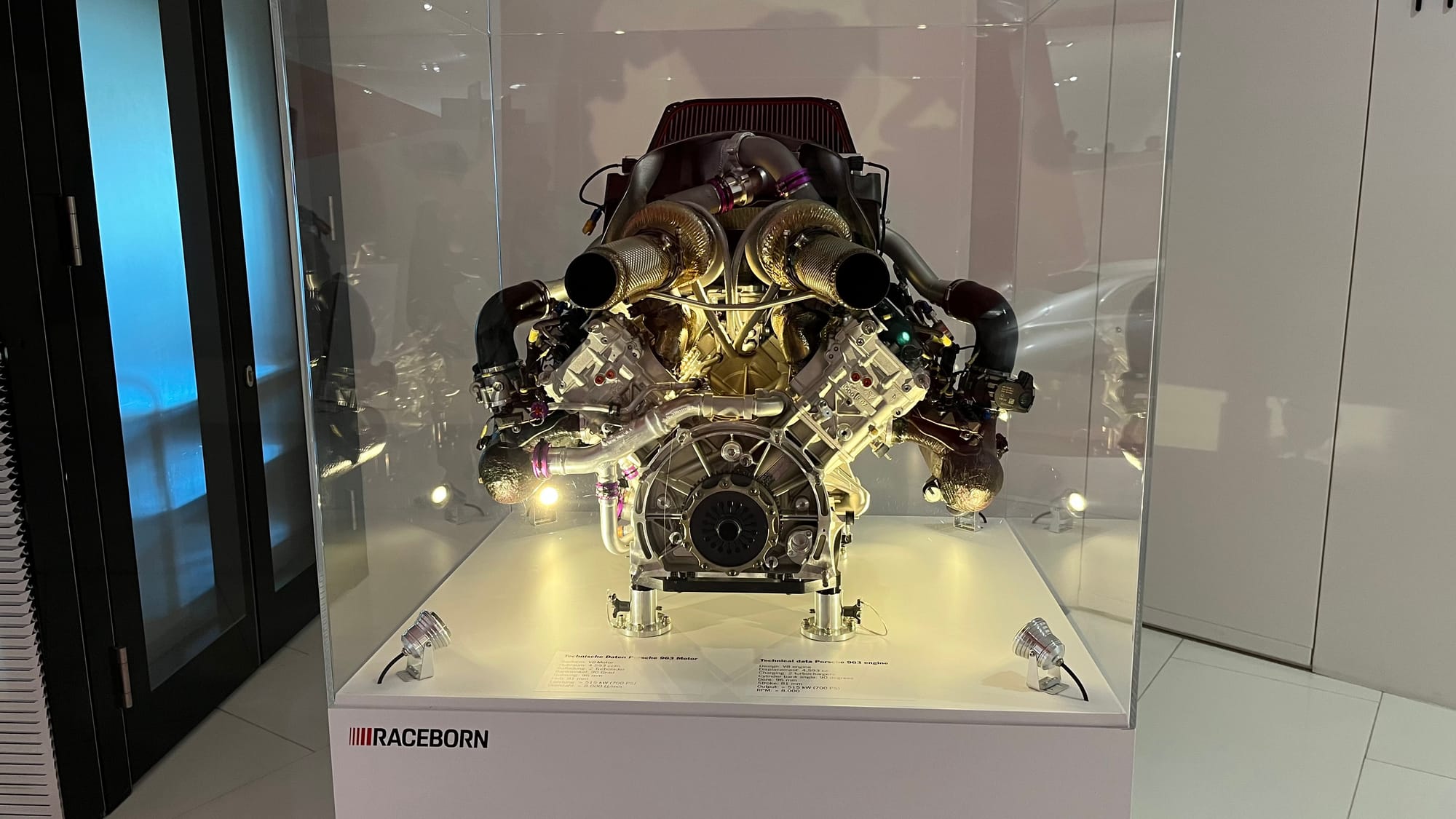
We looked at a giant V8 racing engine that despite its size generated significantly less power and torque than the tiny electric motor in a Taycan Turbo S.
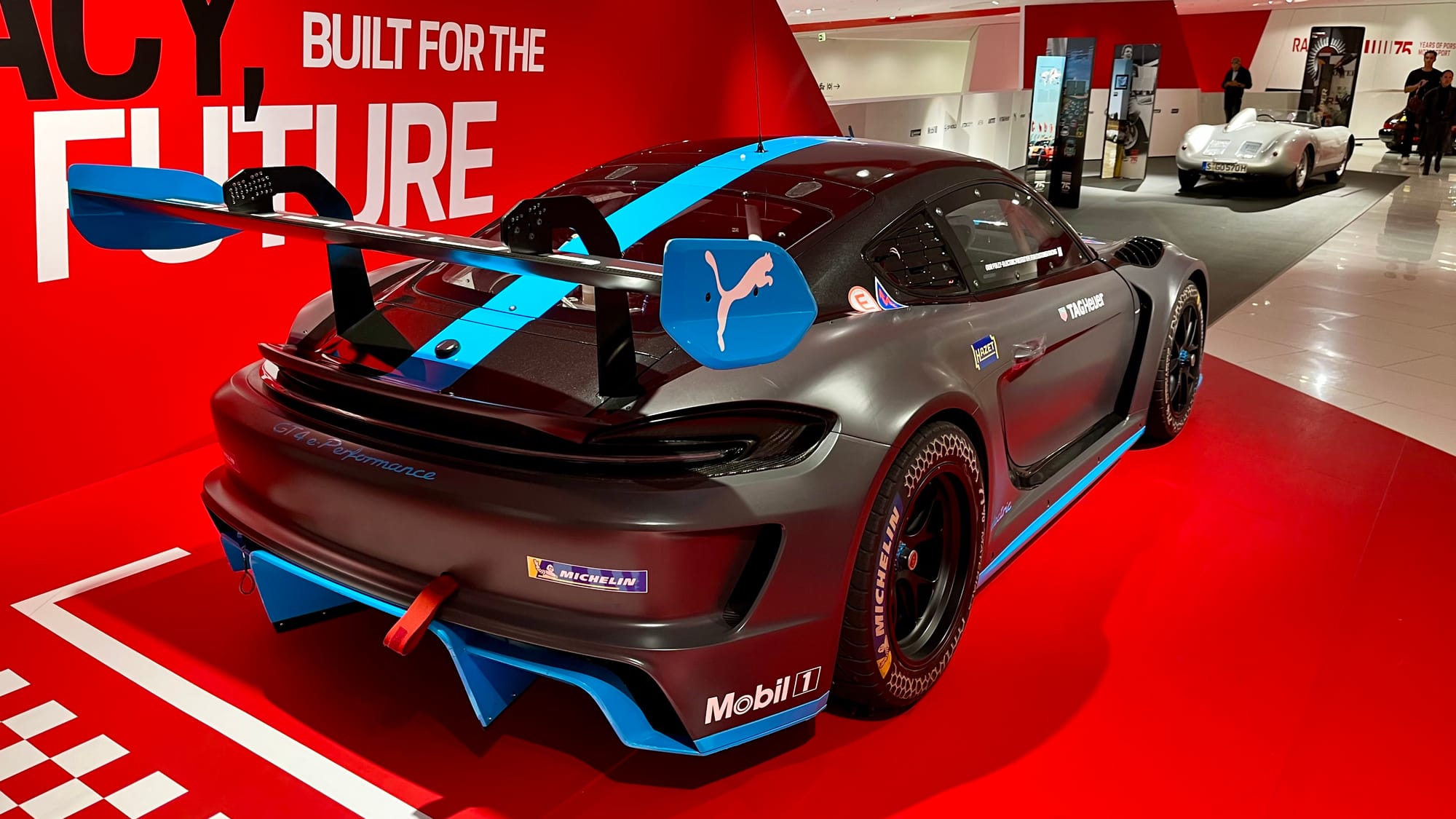
On the topic of electric drivetrains, the museum concludes with a prototype electric race car labelled “Built for the Future”.
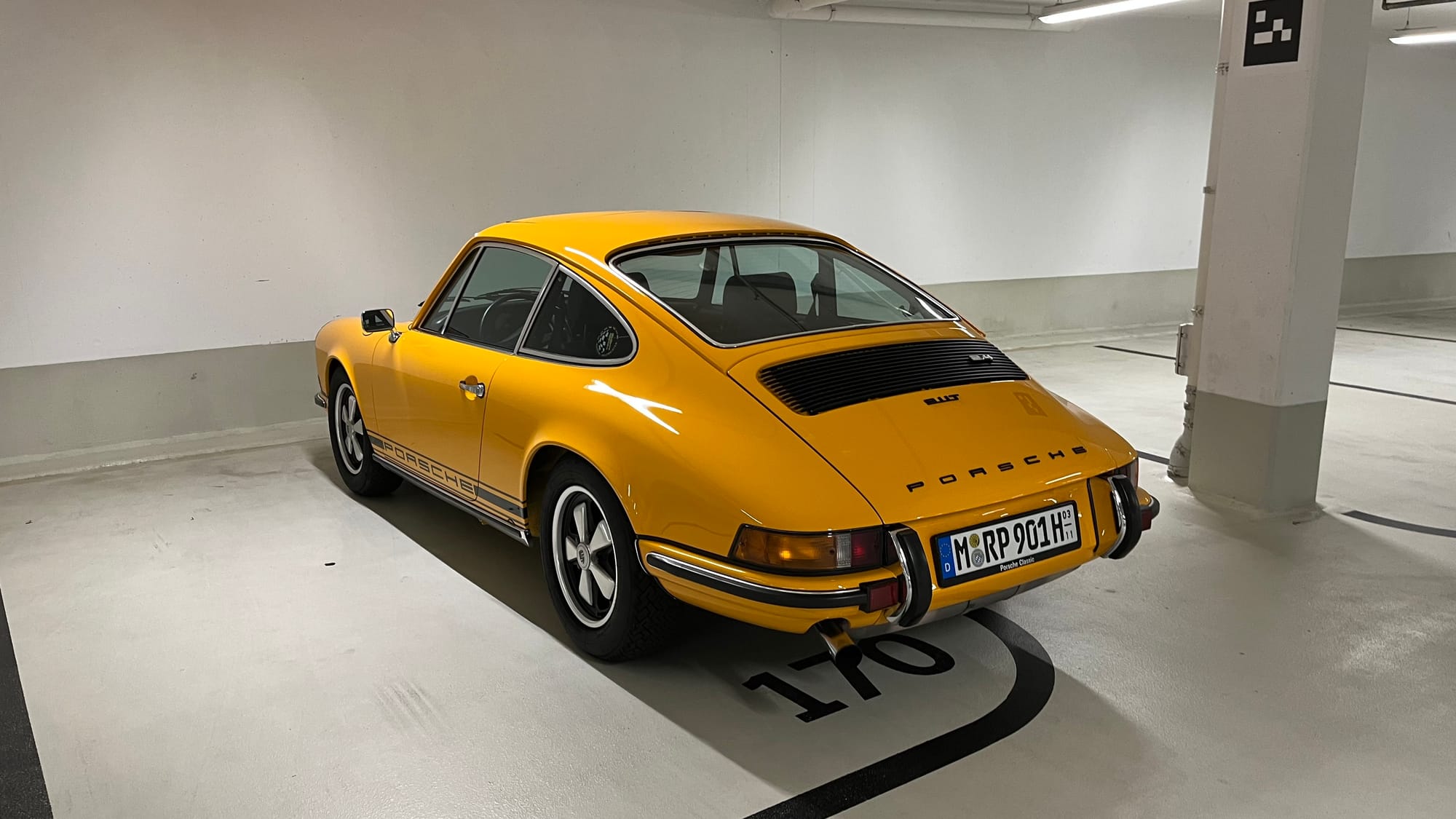
As it is now just after 18:00 with the museum shutting to the public, we head down to the parking garage where there is now a lovely Bahama Yellow classic 911 parked beside us.
We pay for our parking which uses registration plate recognition to identify our car and has no issue with the EU Irish Registration format our car uses.
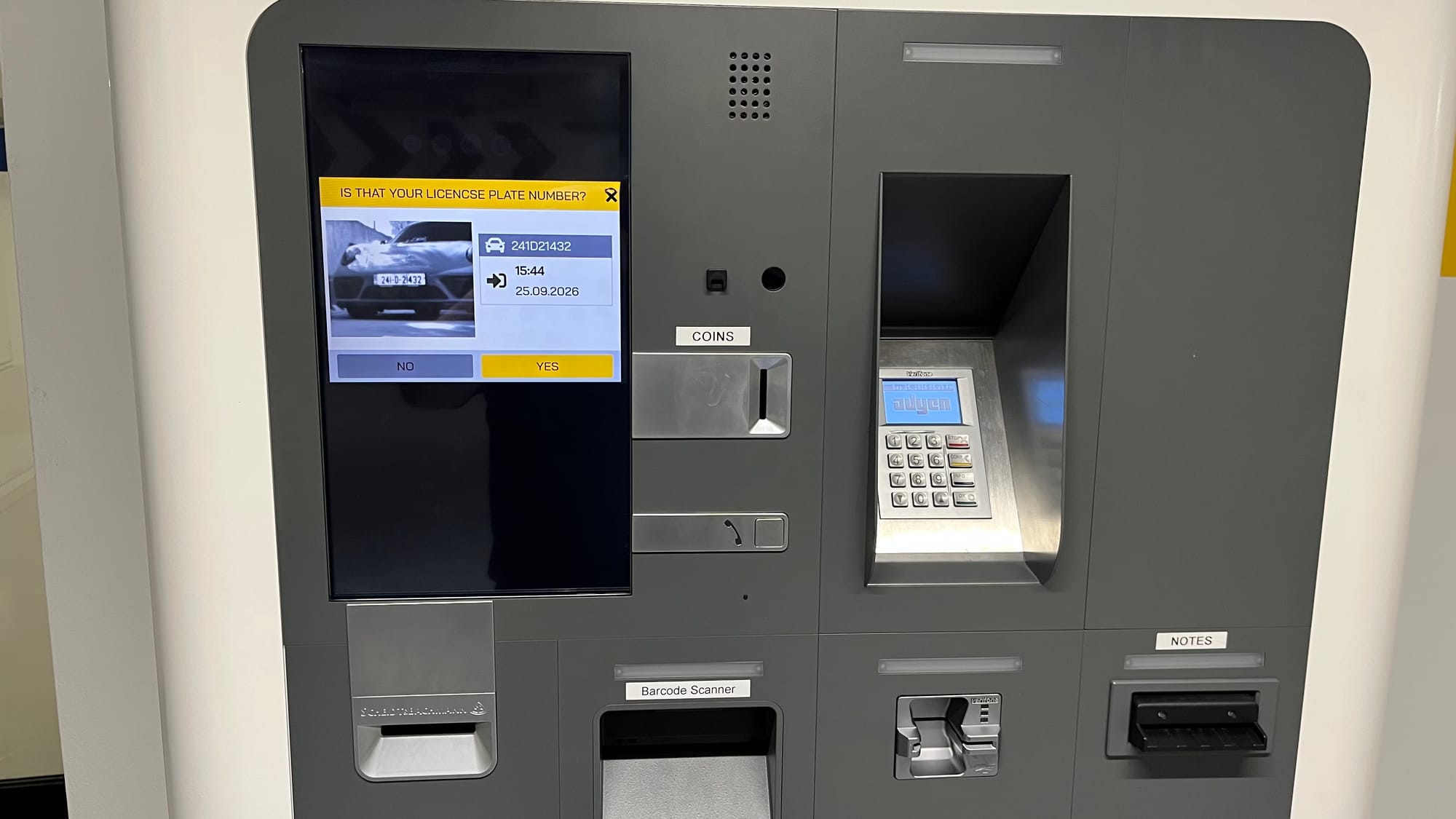
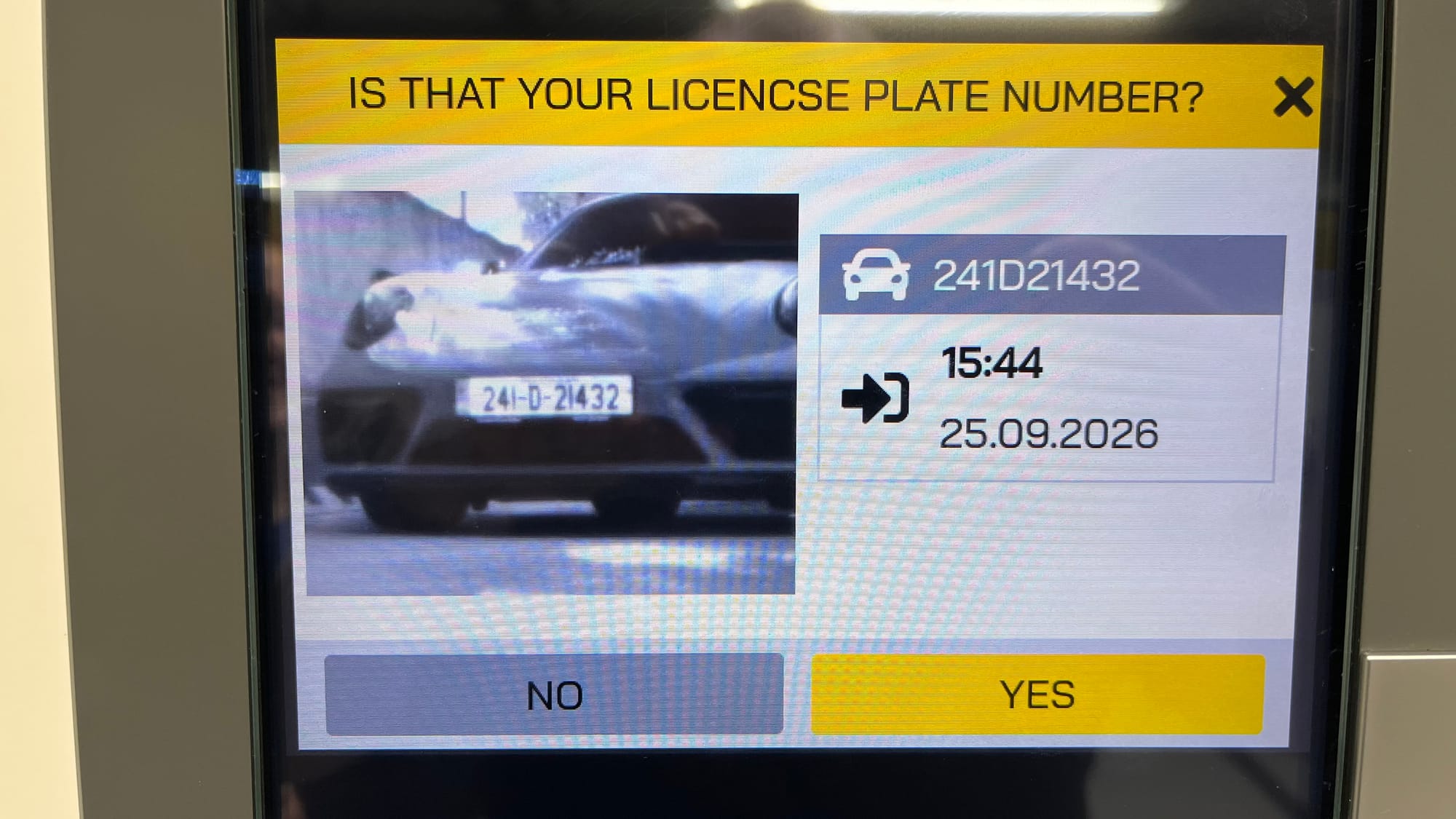
Paying for our parking at the museum
And drive among the Porsche factories and buildings of Zuffenhausen.
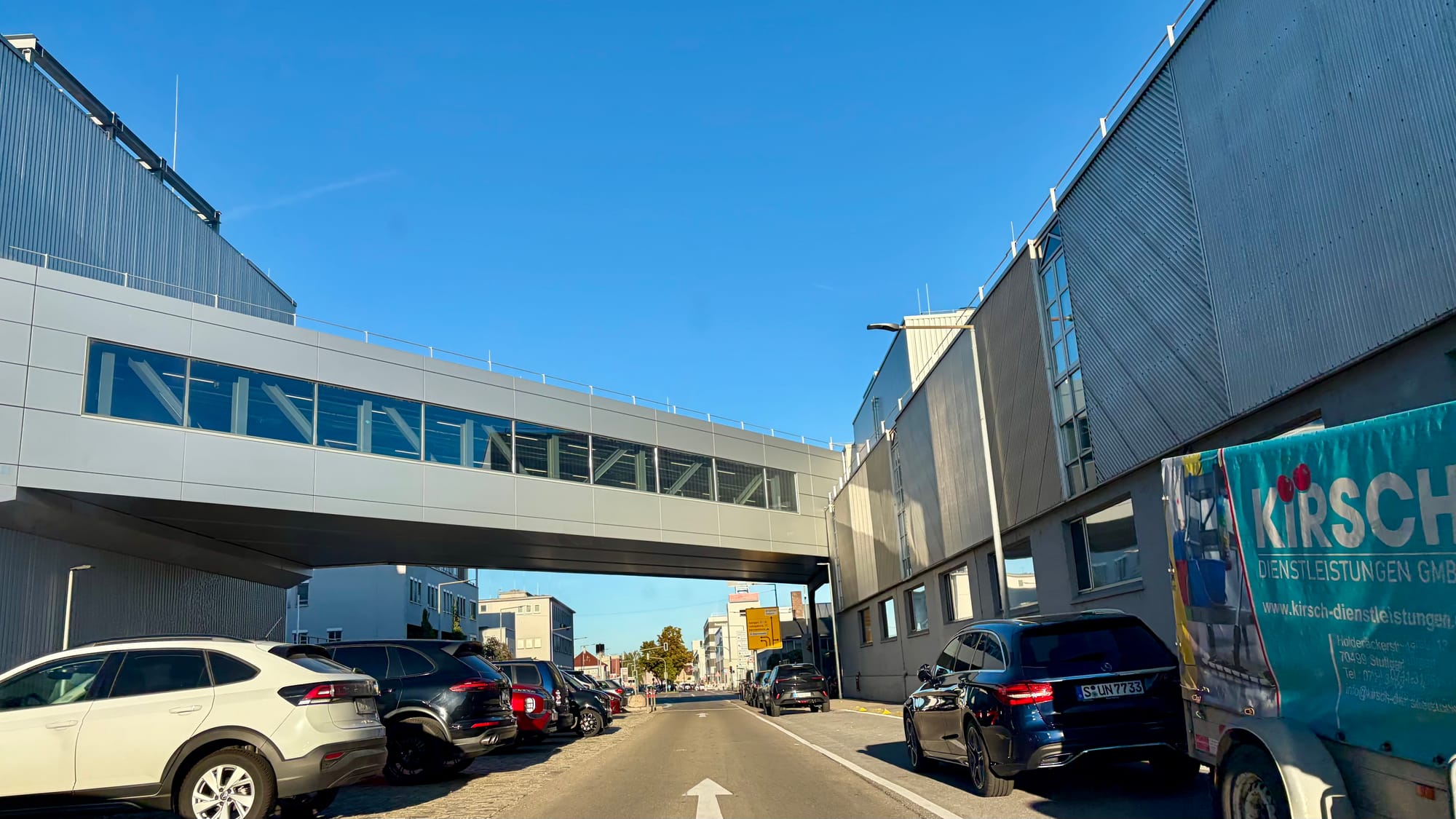
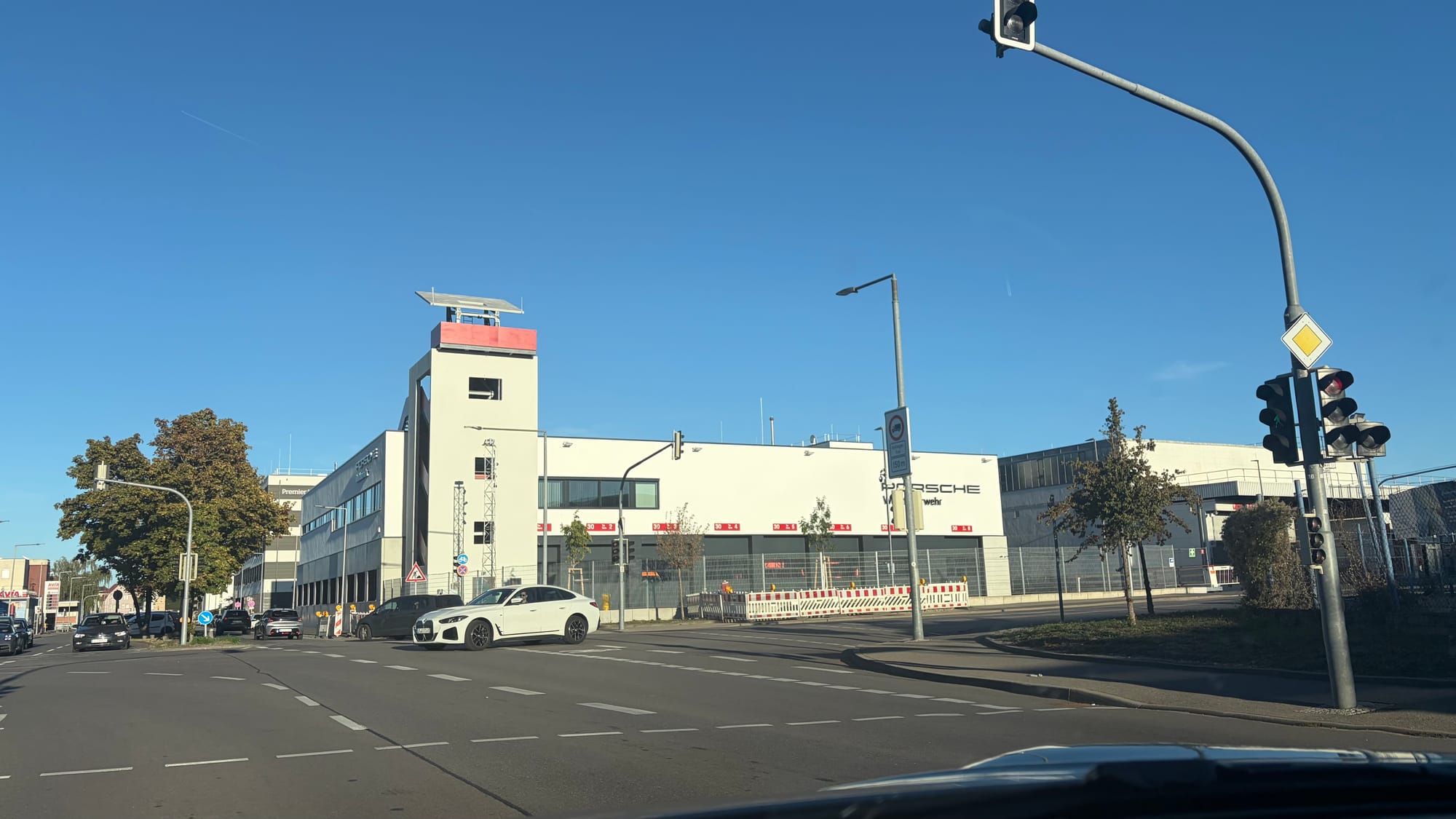
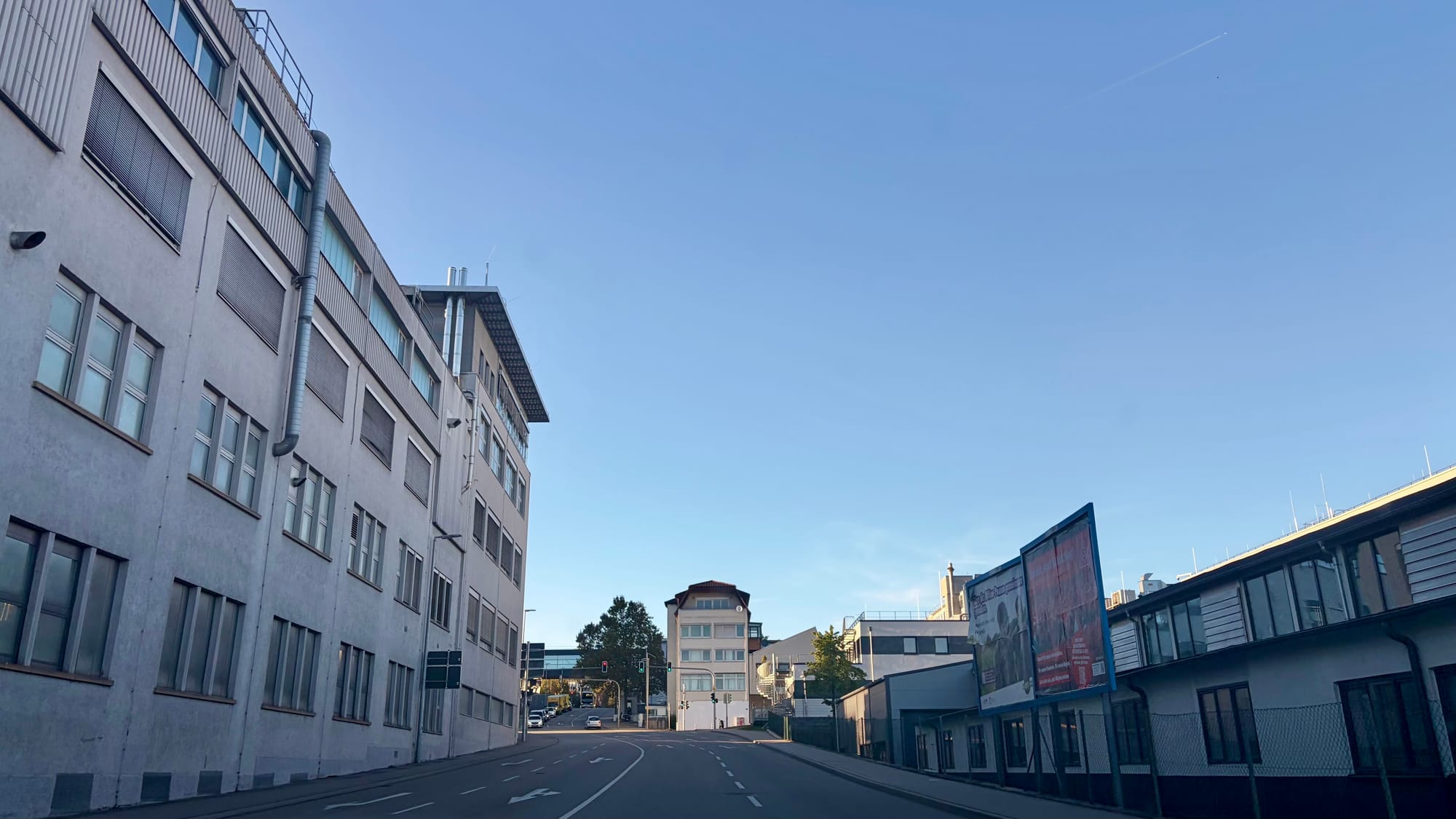
Driving through Zuffenhausen away from the museum
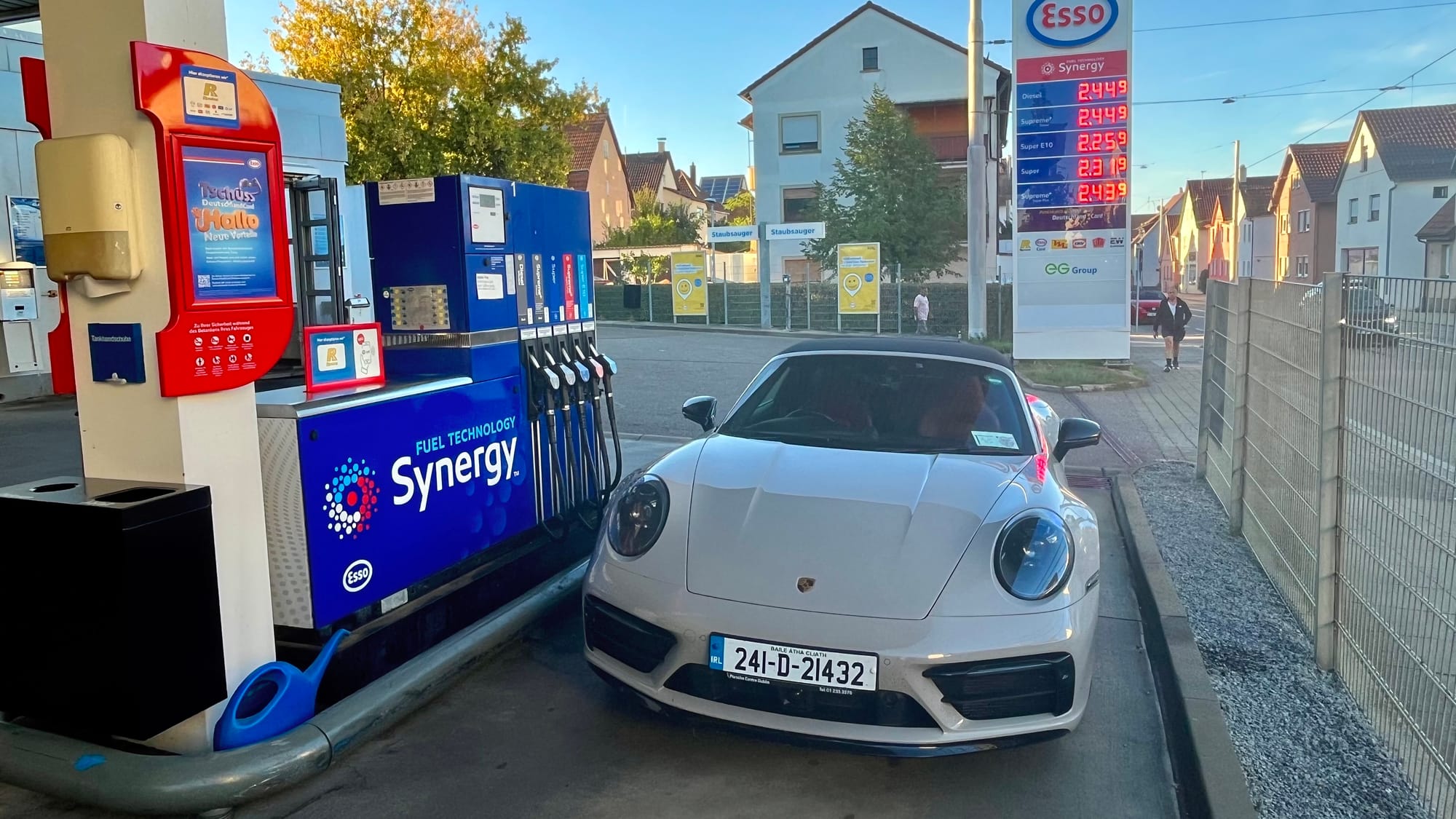
To a nearby Esso service station to fill up on some 98 octane fuel for the autobahn push north to Frankfurt.
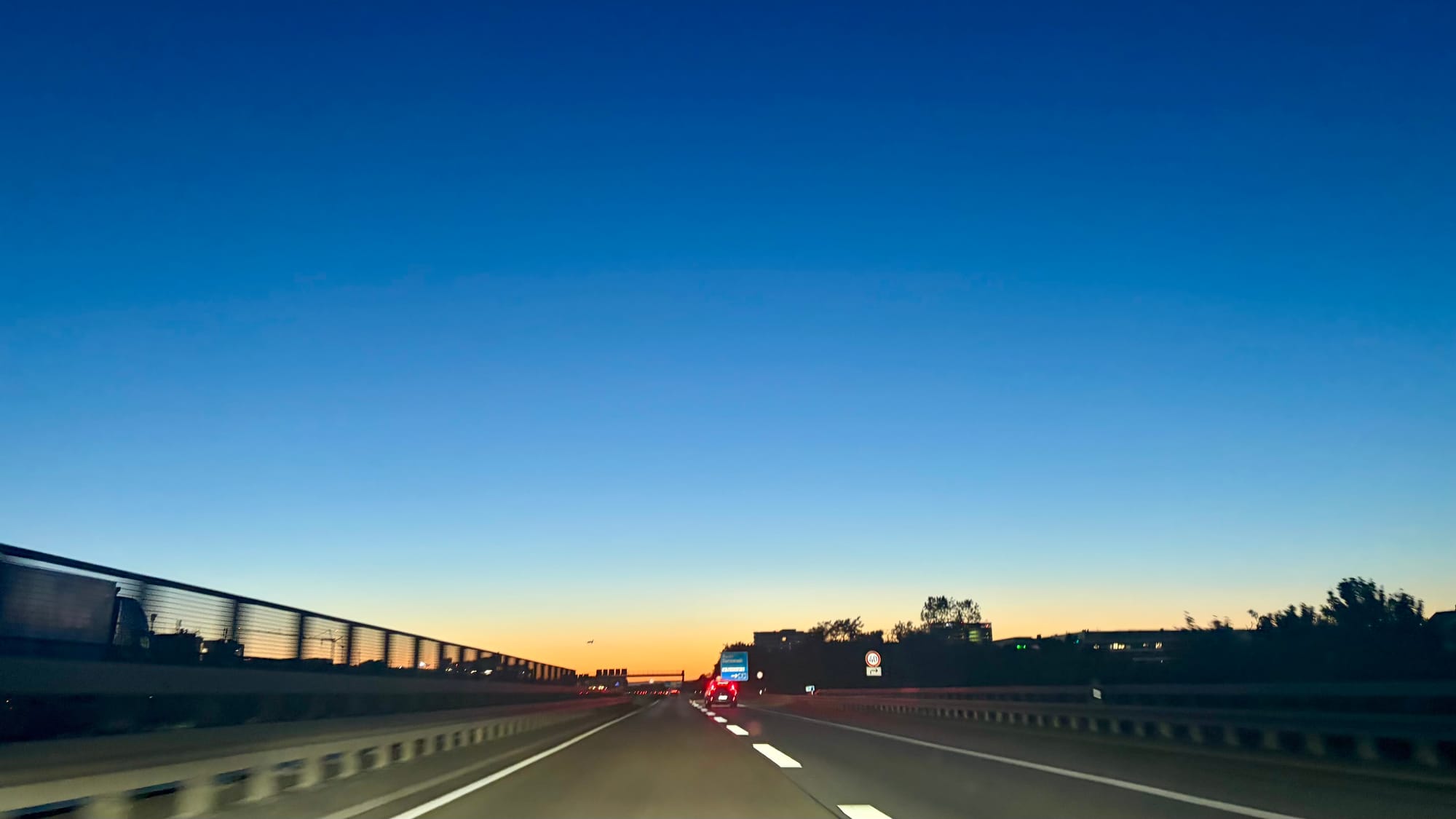
It is a fun sprint to our destination on the now quieter autobahn as the sun sets. Our cars’ various sensors, especially the radar – which tells us the speed of any vehicles in front of us – before we reach them, are very helpful in these darker conditions.
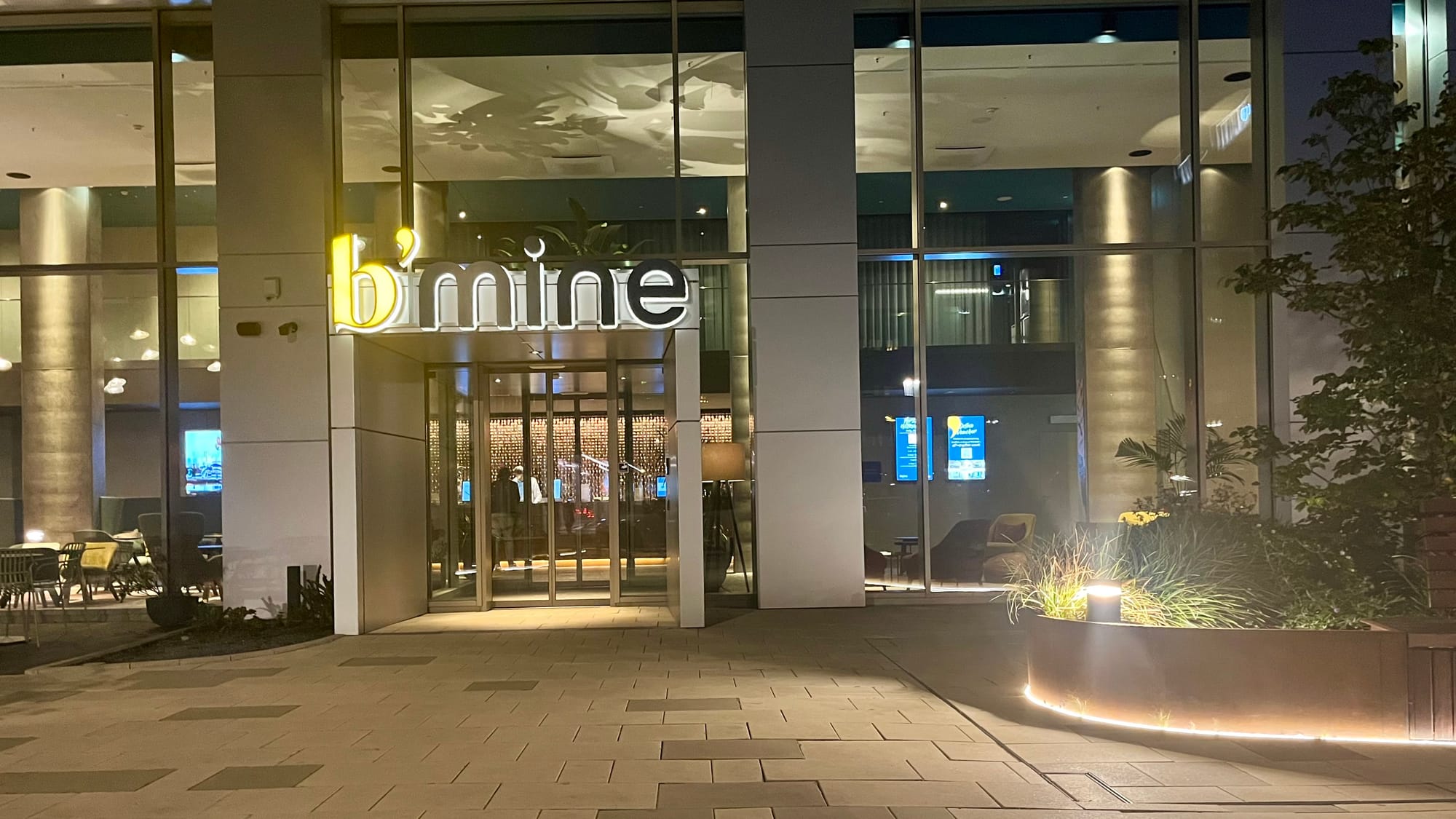
We arrive at our overnight hotel stop just off the autobahn alongside the airport in Frankfurt. This is the second time we’ve used this hotel.
The carloft is always a fun feature of this hotel and is by far our most convenient in terms of loading and unloading our luggage.
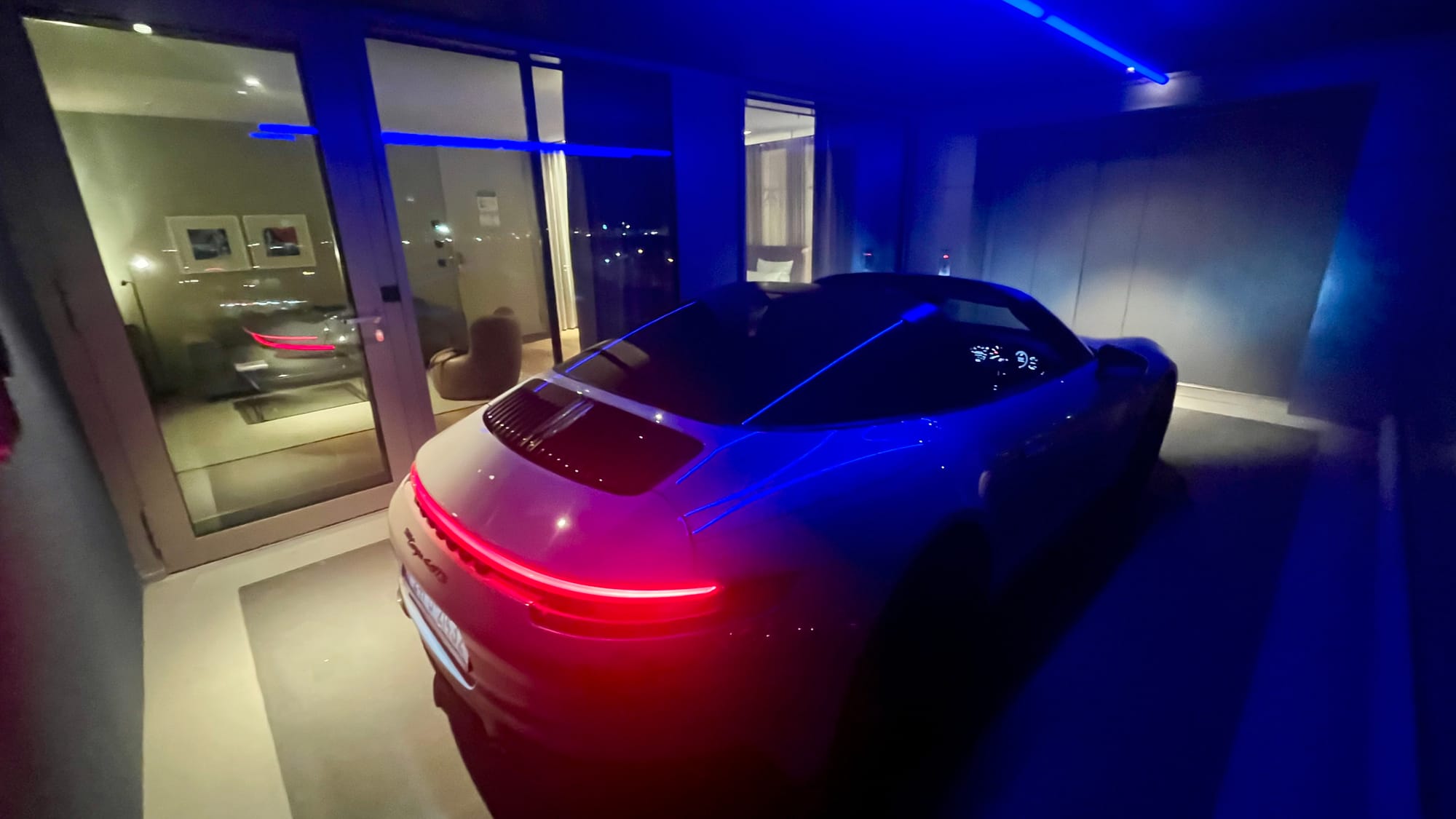
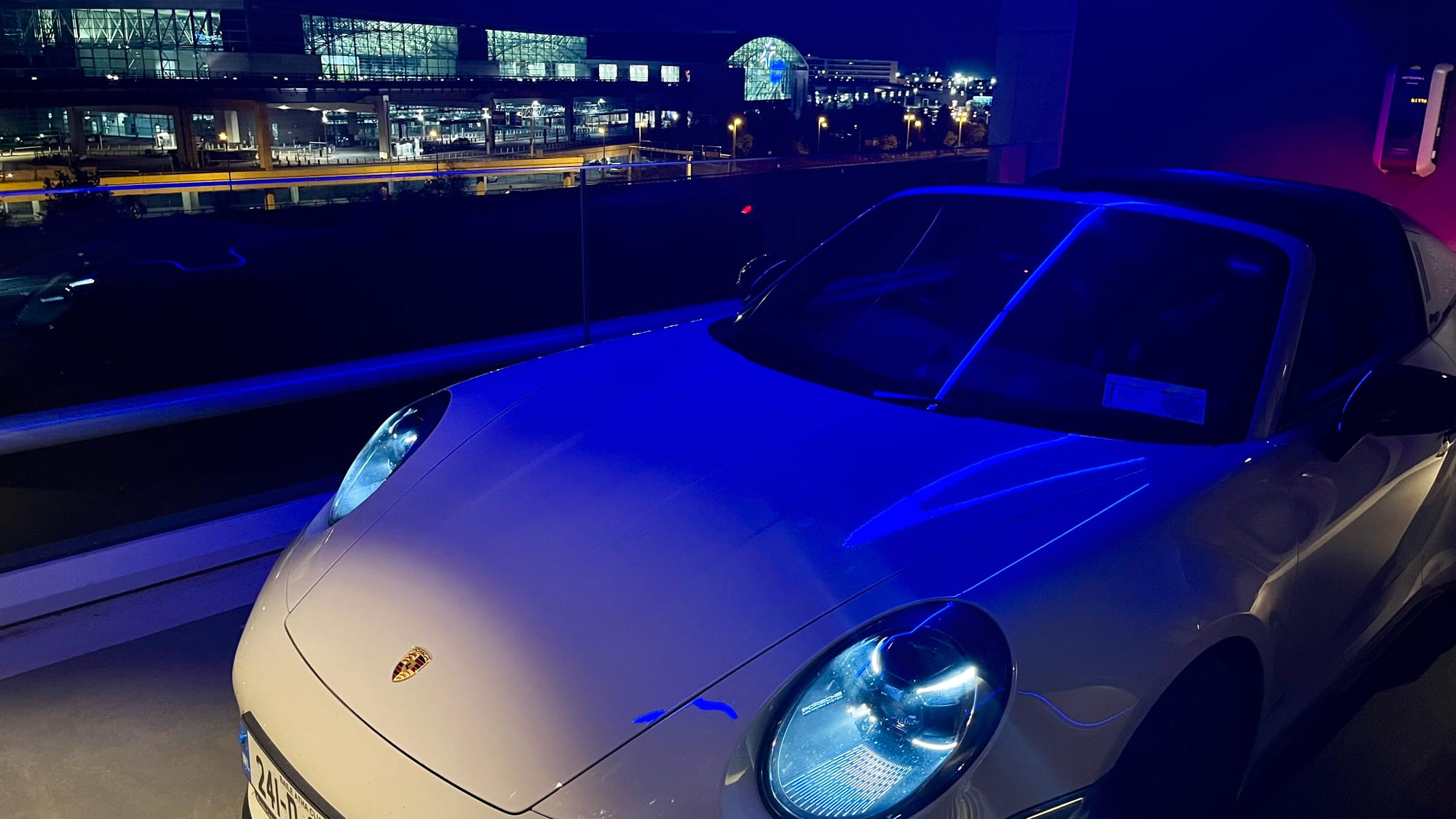
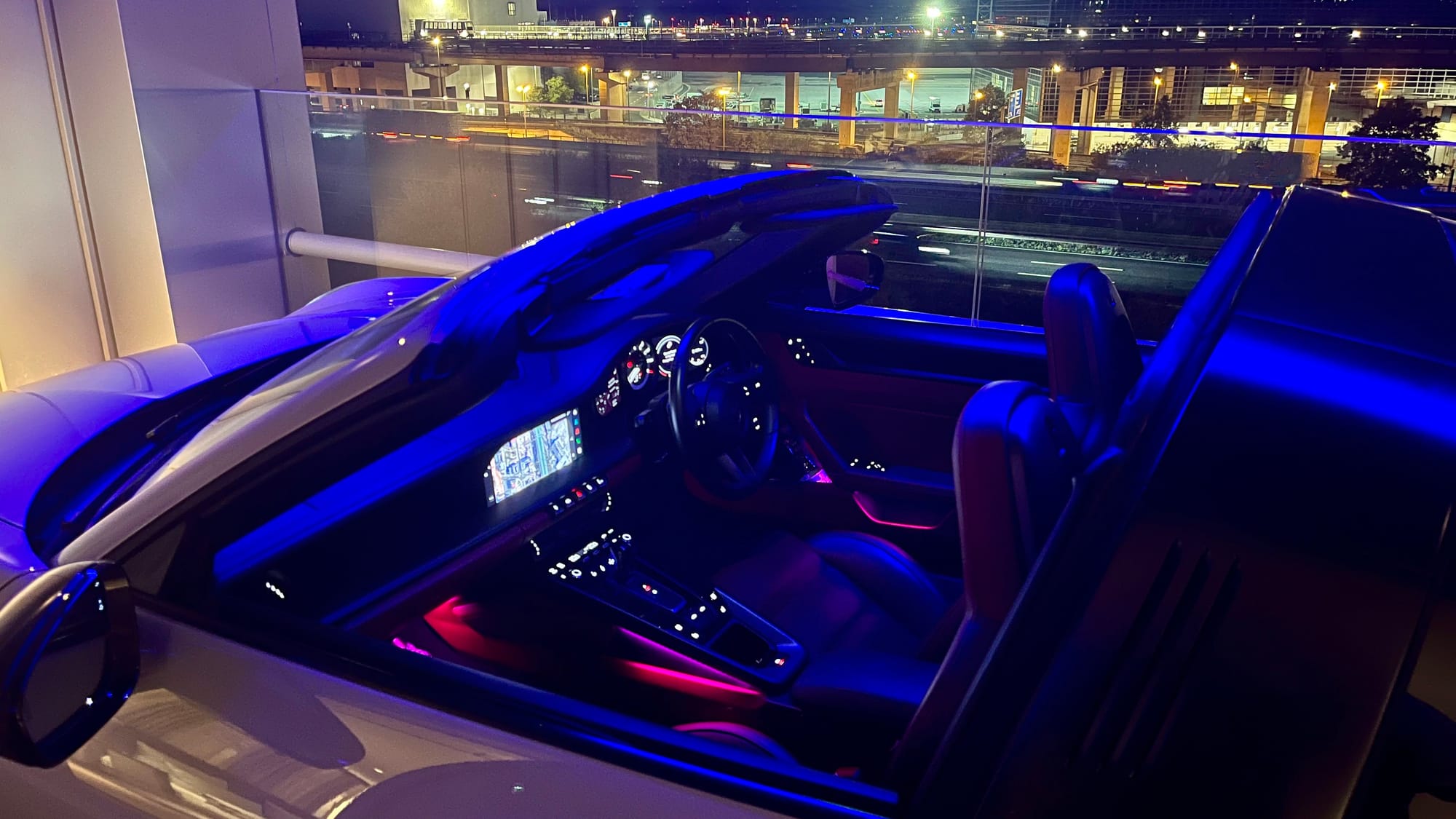
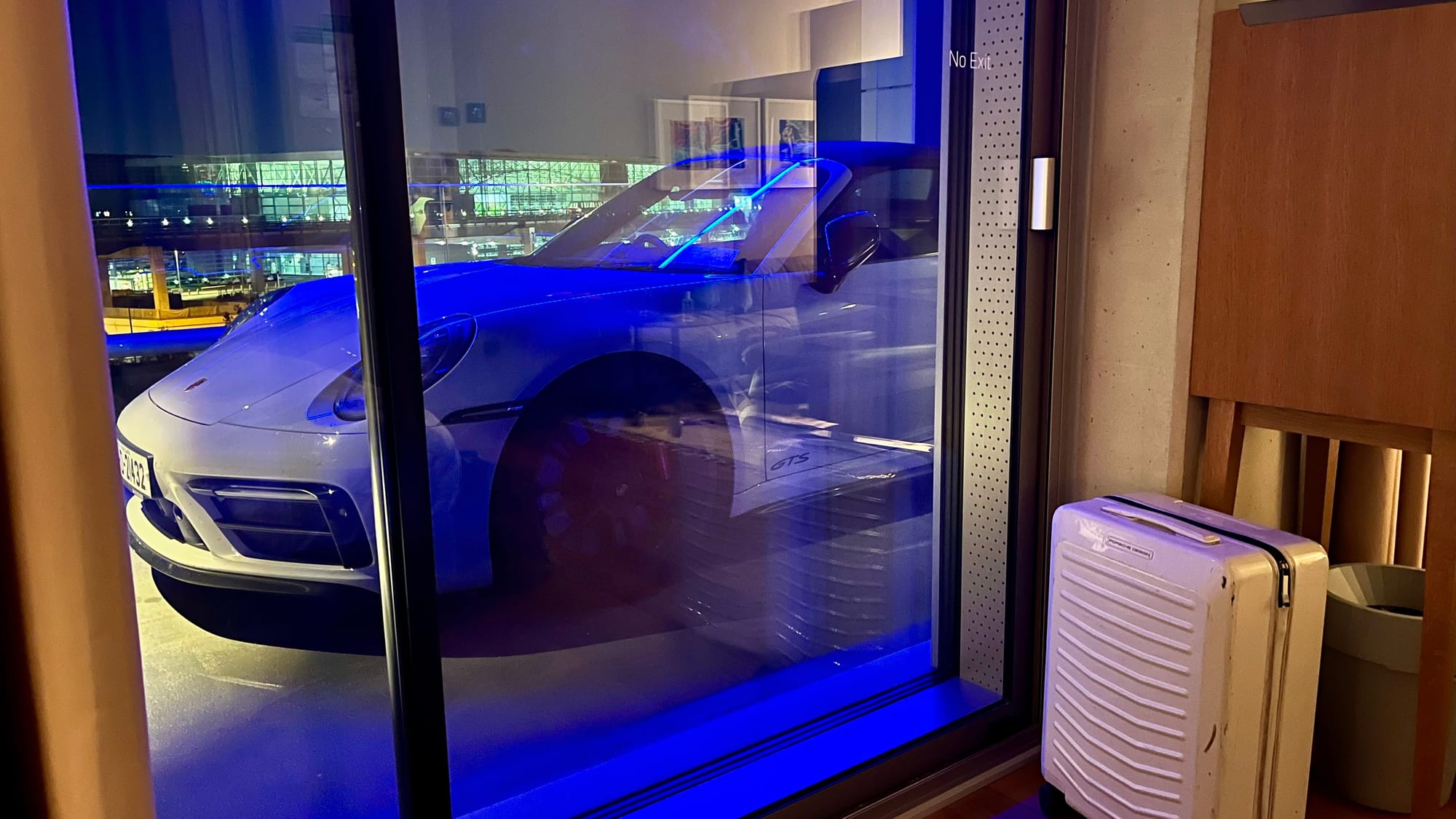
A three minute video showing our carloft experience
Thankfully the bar on the roof of the hotel is open and serving food late. Today was very enjoyable autobahn day with great dry weather and a few interesting hours hanging around the Porsche Museum in Zuffenhausen.
Stats
| Location | Litres | €/litre | Total € | Fuel Type | Octane |
|---|---|---|---|---|---|
| Zuffenhausen, Germany | 50.21 | €2.439 | €122.46 | Esso Supreme+ | 98 |
Today we did 593 km over 7:02 hours, with an average speed of 84 km/h, consuming 11.4 litres/100 km.
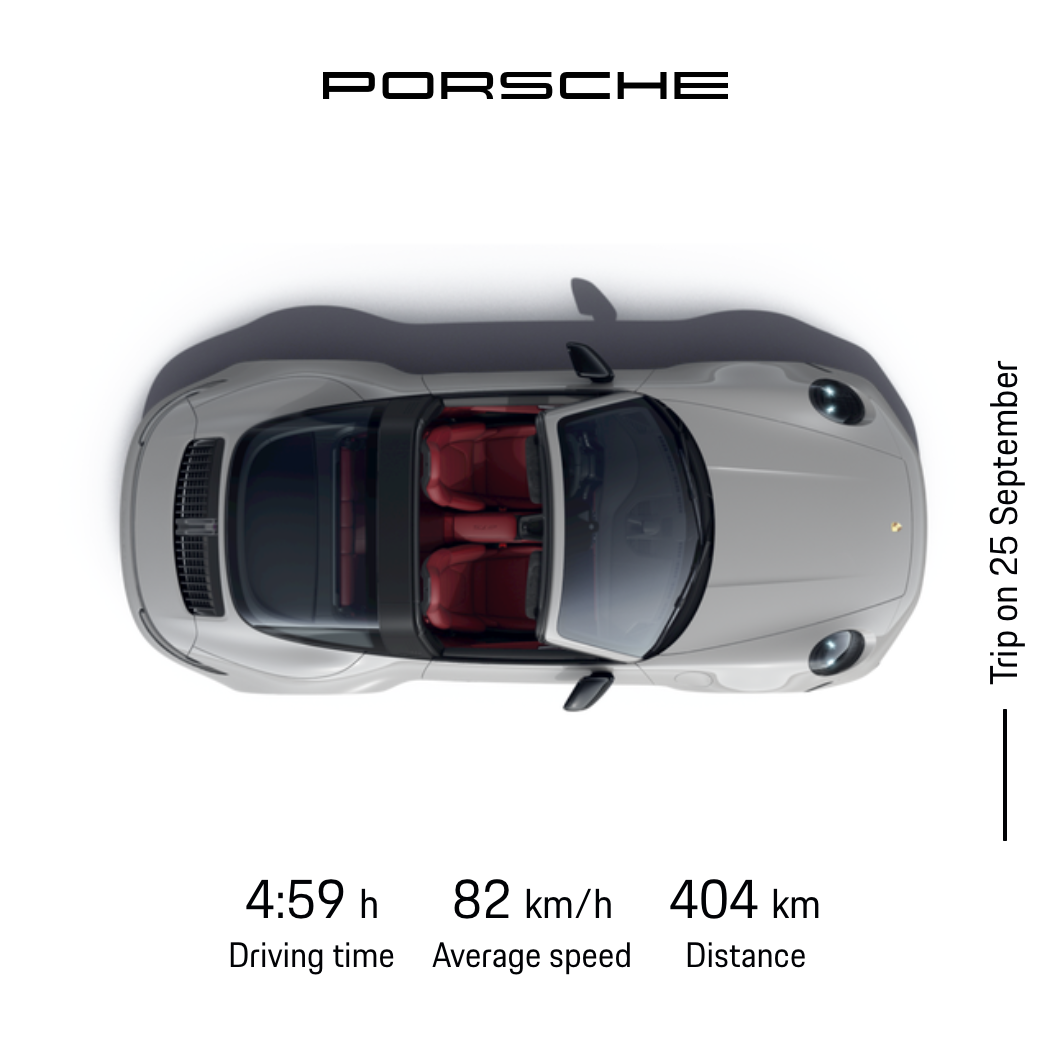
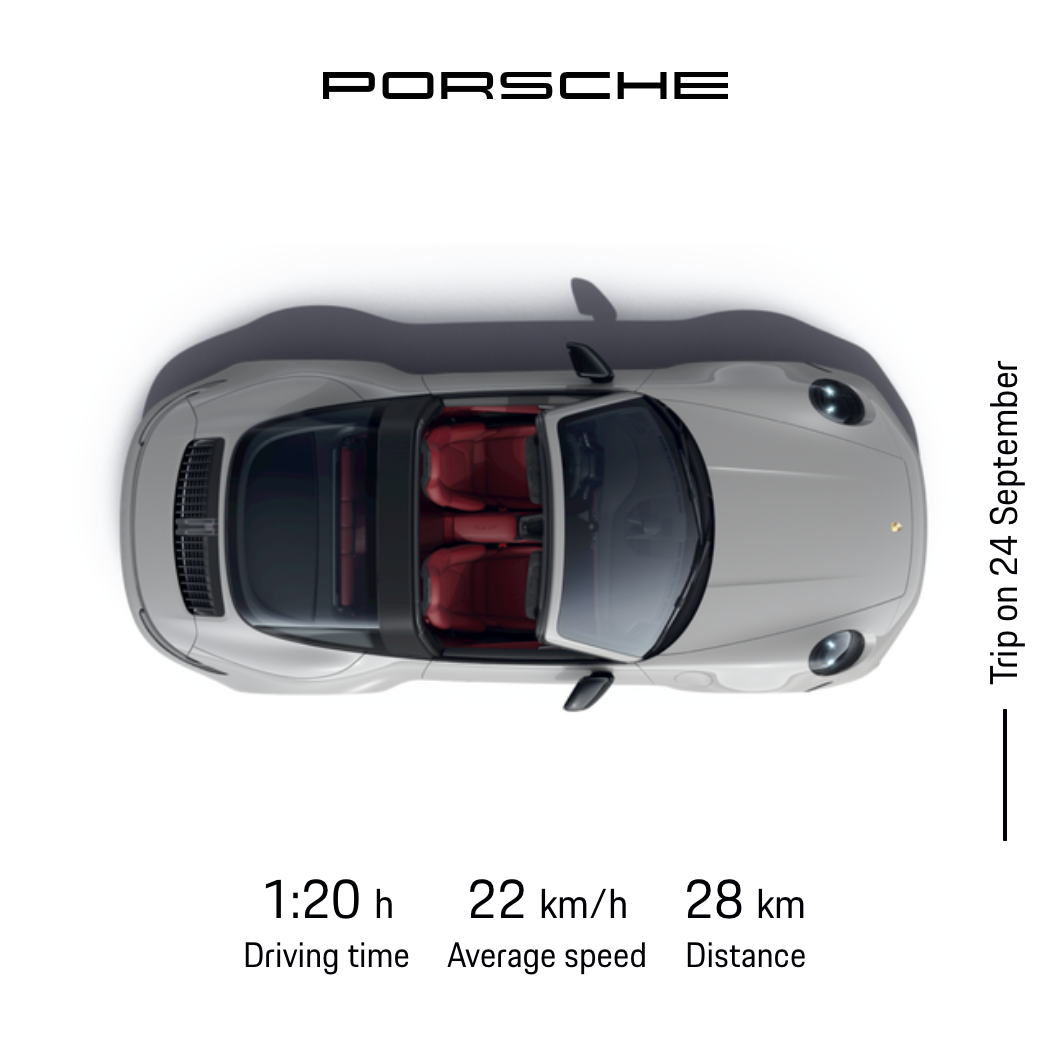
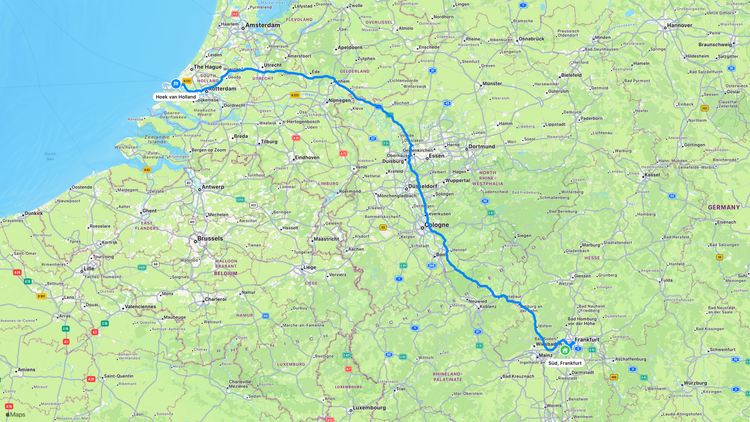
Salzburg to Porsche Museum and Porsche Museum to Frankfurt