What would we have configured differently on our Targa?
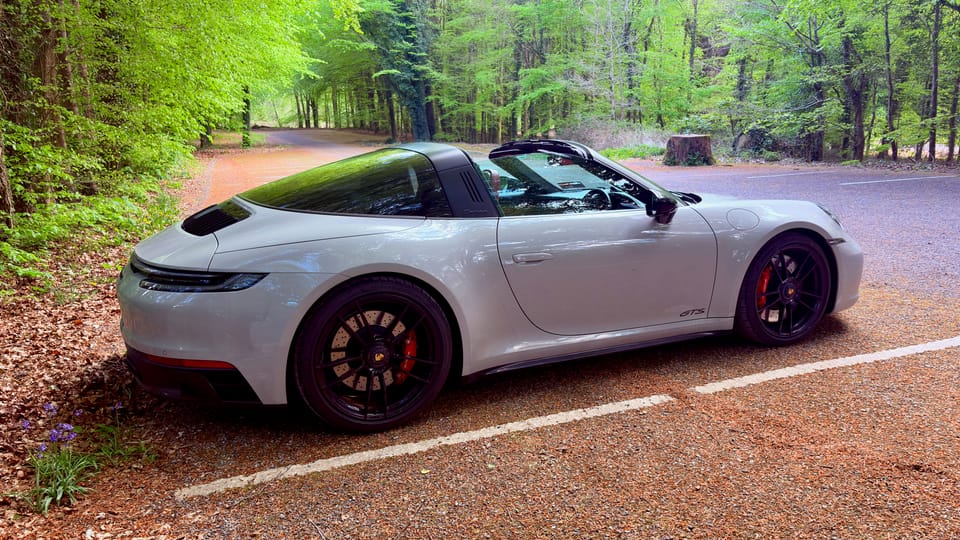
We're the second owner of our car and so had no influence on its original configuration. Not only is this the first Porsche we've owned that we didn't order from the factory, it is the first second-hand car we've owned.
It is also the first Porsche we've had that has a powertrain with zero electrification – neither hybrid nor fully electric. This has a major impact on the tax that the car attracts here in Ireland.
Taxes
Before getting into the specification, it is worth understanding the rather unusual tax landscape that surrounds a car like this in Ireland.
There are two main taxes built into the price of a new car: VAT (Value Added Tax), the standard consumption tax applied to goods and services, which is currently 23%, and VRT (Vehicle Registration Tax), a tax charged when a vehicle is first registered in Ireland.
VRT is particularly significant for performance cars because, for passenger cars, it is linked directly to CO₂ emissions: the higher the emissions, the higher the rate. A 911 like ours, with CO₂ emissions above 190 g/km, falls into the highest VRT band, currently 41% of Revenue's Open Market Selling Price, with a separate NOx charge on top.
The important thing to appreciate is that these taxes are already built into the price you see on the Irish Porsche configurator. They aren't something that gets added afterwards. In fact, for a car in the highest VRT band, roughly 52% of the final Irish retail price is accounted for by VAT and VRT alone, before the relatively small NOx element.
So, very roughly, of every €100,000 spent on a new 911 in Ireland, only about €48,000 represents the car itself before these taxes.
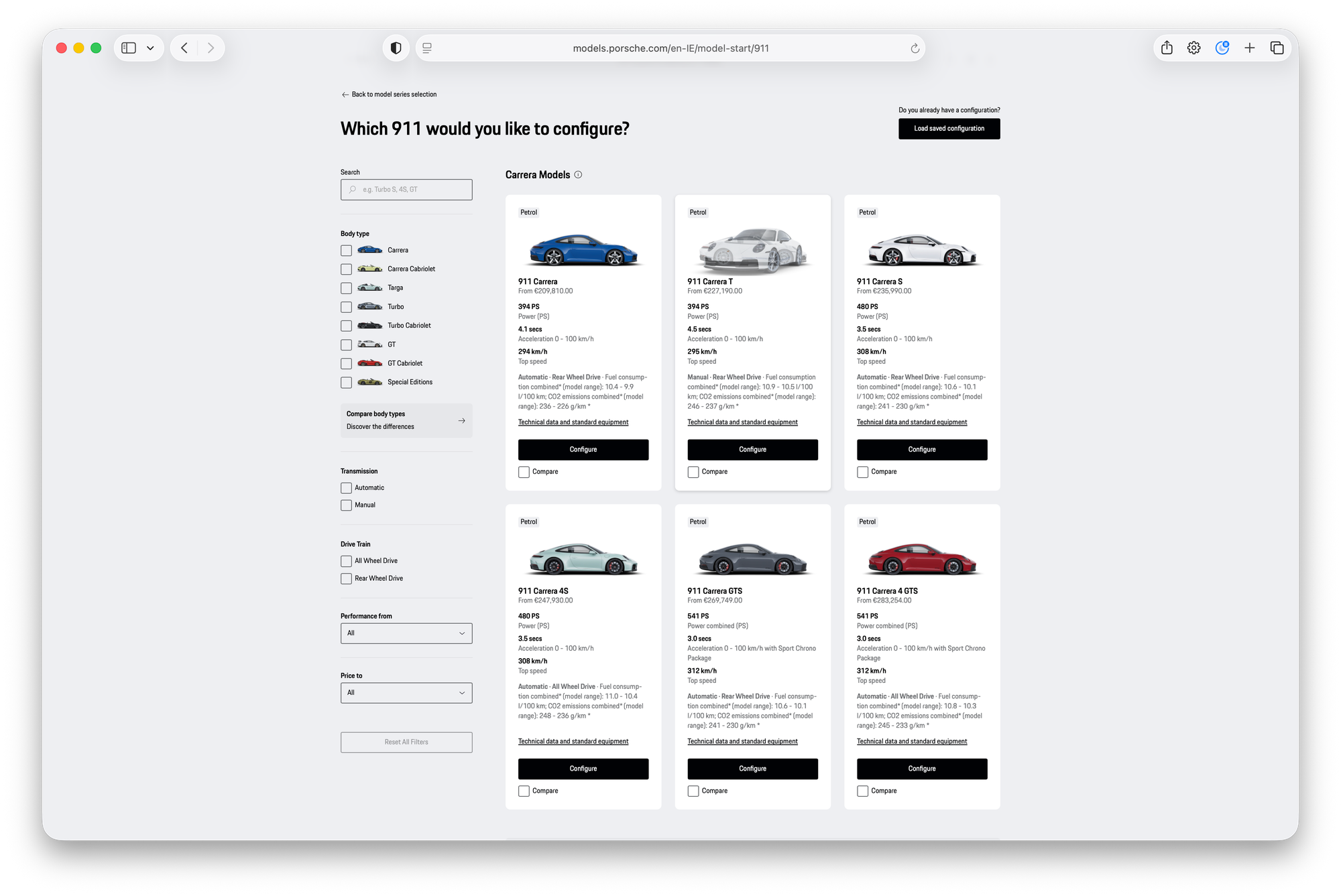
This also has a major impact on how 911s tend to be specified in Ireland. With more than half the cost of every option effectively going to tax, each tick on the Porsche configurator is a much bigger financial decision for an Irish buyer than it might be elsewhere.
An option that costs €5,000 before Irish taxes can easily end up costing more than €10,000 once VAT and VRT are taken into account.
As a result, Irish owners have to think long and hard about which options are genuinely worth having, and perhaps unsurprisingly, most 911s on Irish roads tend to be relatively lightly optioned compared with their counterparts in larger European markets.
Sales volumes
Like many enthusiasts, we had an "alert" setup for any cars – both new and previously owned – that come up for sale at the Porsche Centre here in Ireland.
Ireland registers around twenty new 911s each year – a significant increase in recent years likely reflecting the strong economy. Approximately the same number of pre-owned vehicles are available each year.
With these low numbers – every 911 – regardless of model or configuration – is a rare car on Irish roads. You can expect to drive across the country and never see another one.
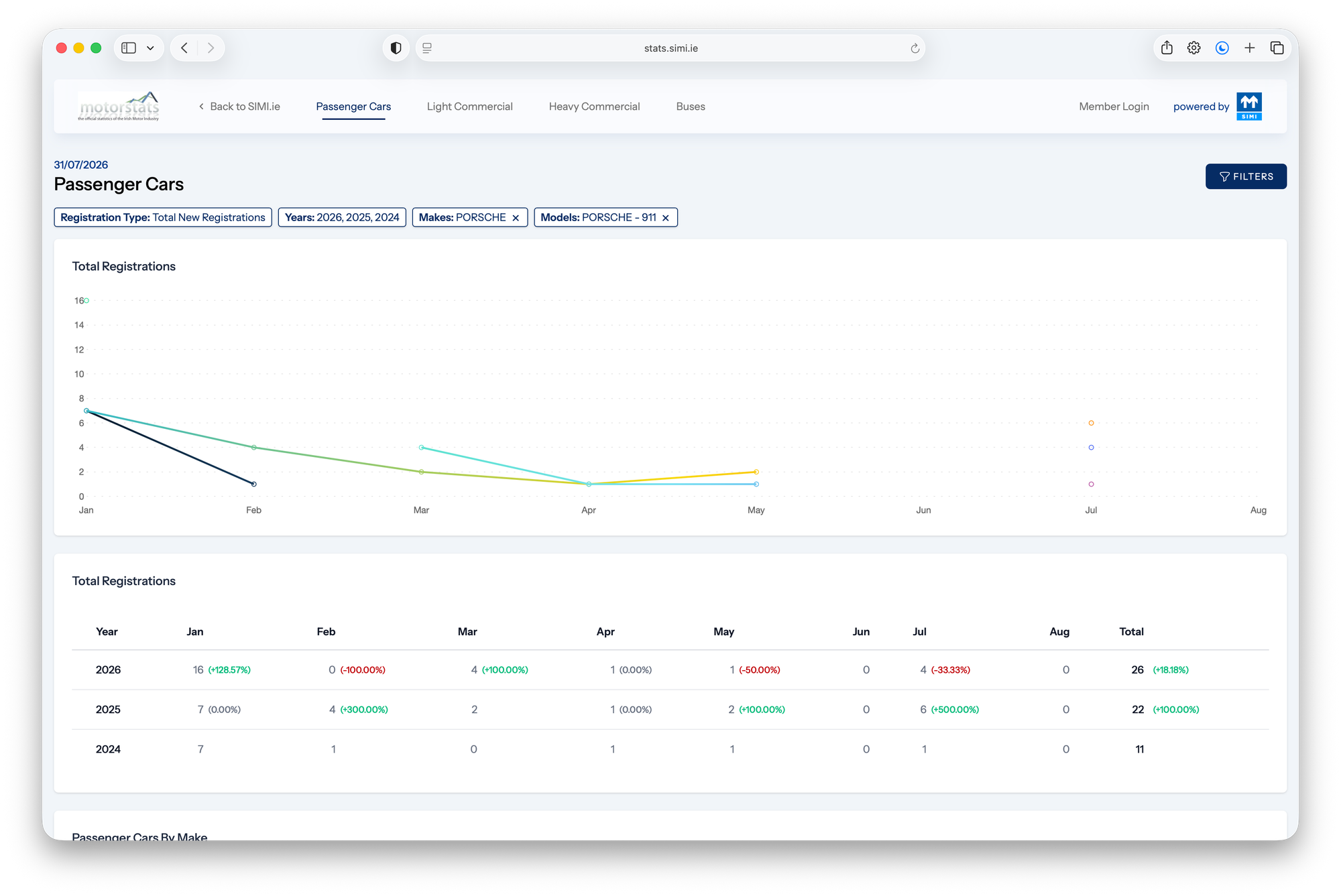
There’s also a distinctly Irish quirk to the car market: new-car registrations are heavily concentrated around two dates, January and July, when the registration plate changes.
This creates a very lumpy sales pattern through the year, with two pronounced peaks as buyers and dealers time purchases around the new registration periods, rather than the more evenly distributed sales pattern you might see in other markets.
Typical 911 configurations
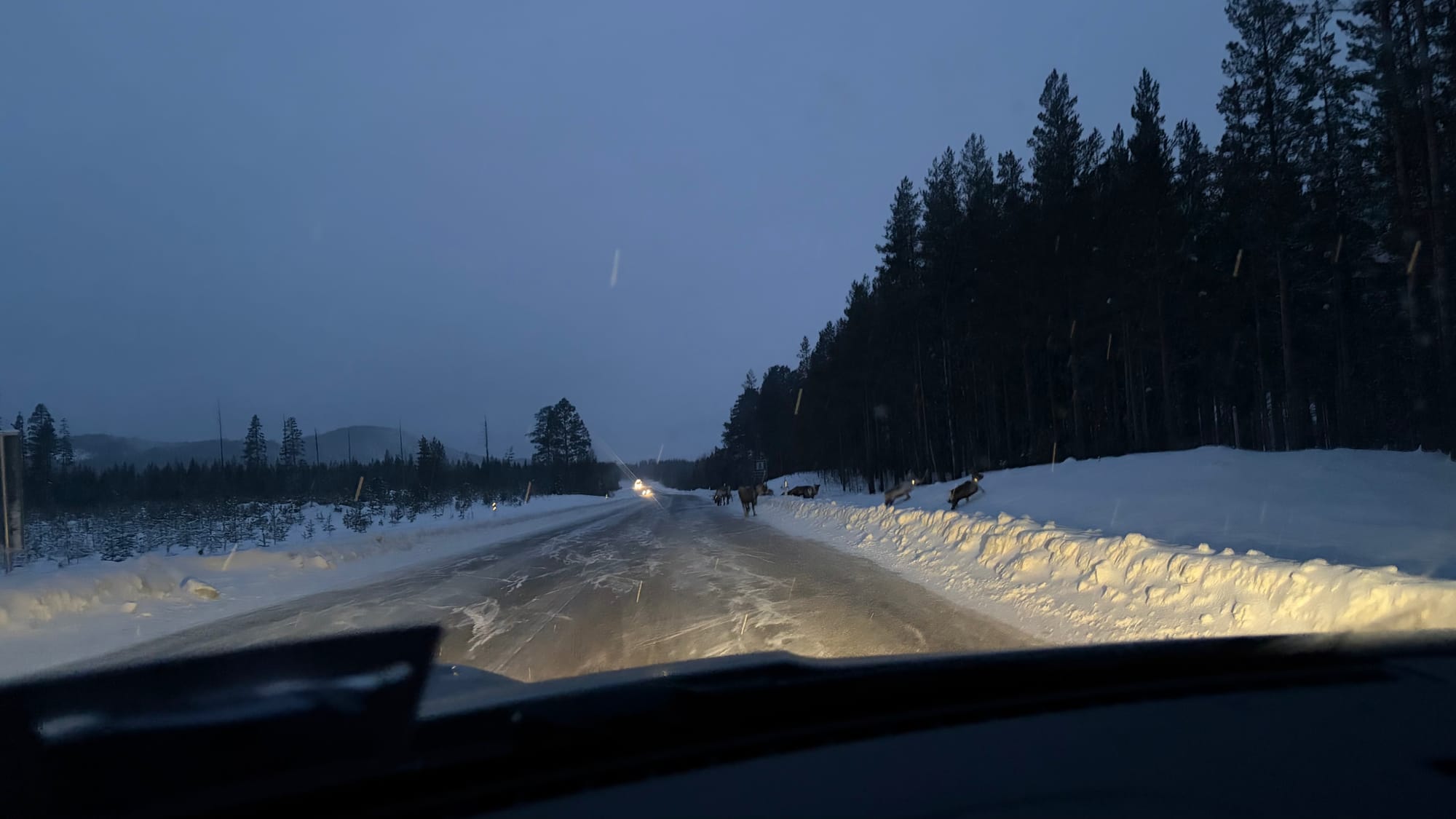
The primary reason we purchase cars is for long-distance road trips. All the cars we've configured ourselves from the factory have included options that cater to this purpose. Adaptive cruise control (ACC) is a must-have option to make long days of driving 1,000 kilometres easier. Other options, such as night-vision assist, may be perceived as gimmicks, but they have saved us on more than one occasion in the harsh conditions of the deep arctic.
However, with options being heavily taxed, potential owners of 911s in Ireland often have to convince themselves that they don't need these features. After all, the 911 is considered a "driver's car" so adaptive cruise control is unnecessary, right?
Another problem for Irish buyers is that you rarely recover the cost of expensive options when the car is sold. The original buyer has paid the Irish tax associated with those options, but the second-hand market doesn't necessarily place anything close to the same value on them.
Choosing our car
On a random Saturday morning in May 2025, we stumbled upon a recent "car for sale" alert from Porsche Centre. It was a Targa, a model that holds a special place in the hearts of 911 enthusiasts. In Ireland, they're particularly rare due to our unpredictable weather, which doesn't make open-top motoring very practical.
We spotted something remarkable: this car was equipped with night-vision assist! It's rare to find a car with that feature unless the buyer has opted for almost every other option on the configurator.
Taking a closer look at the configuration, we confirmed that this car had everything we required from a road trip car, and it even surpassed our expectations of our current Taycan Turbo S.
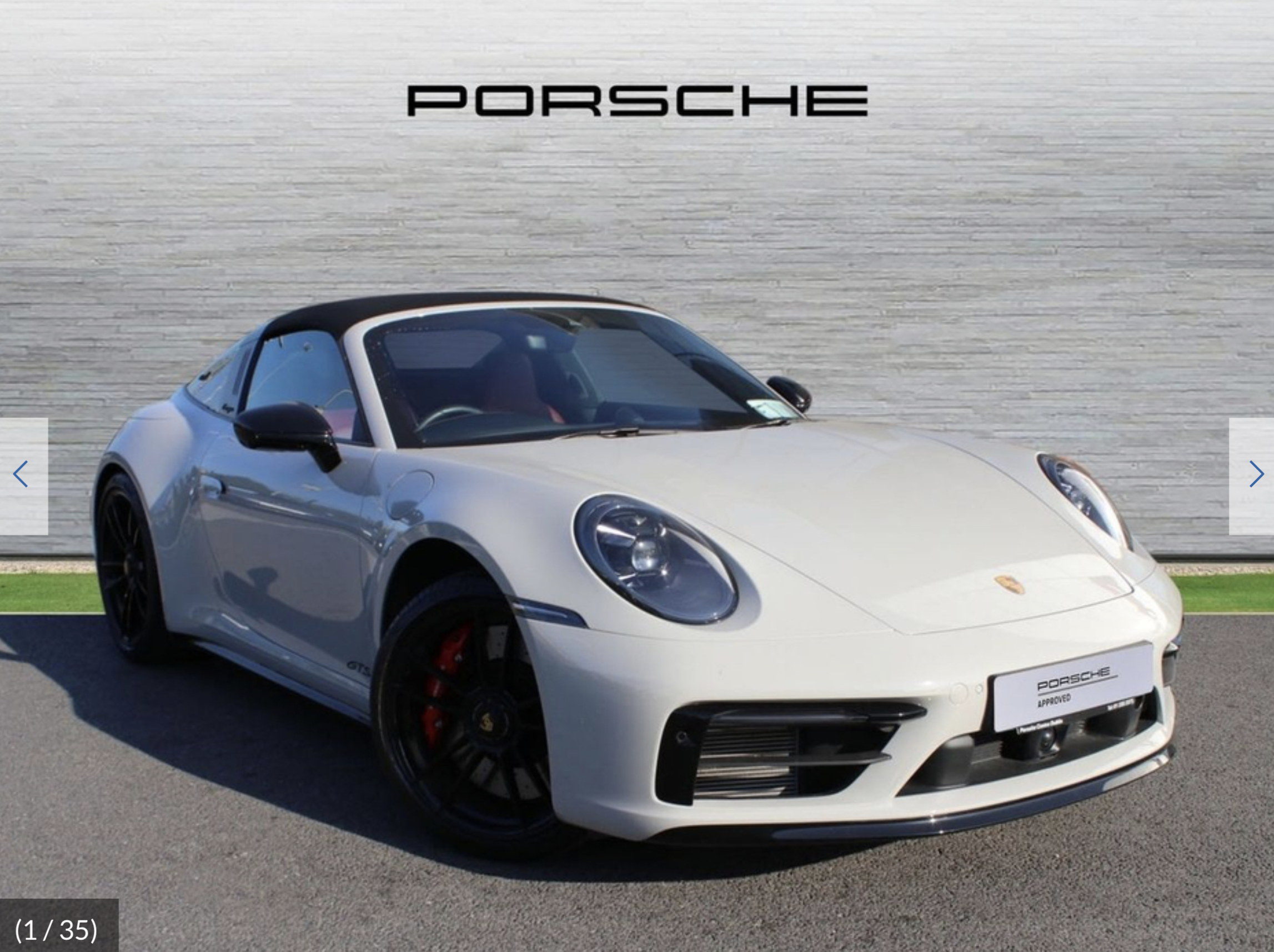
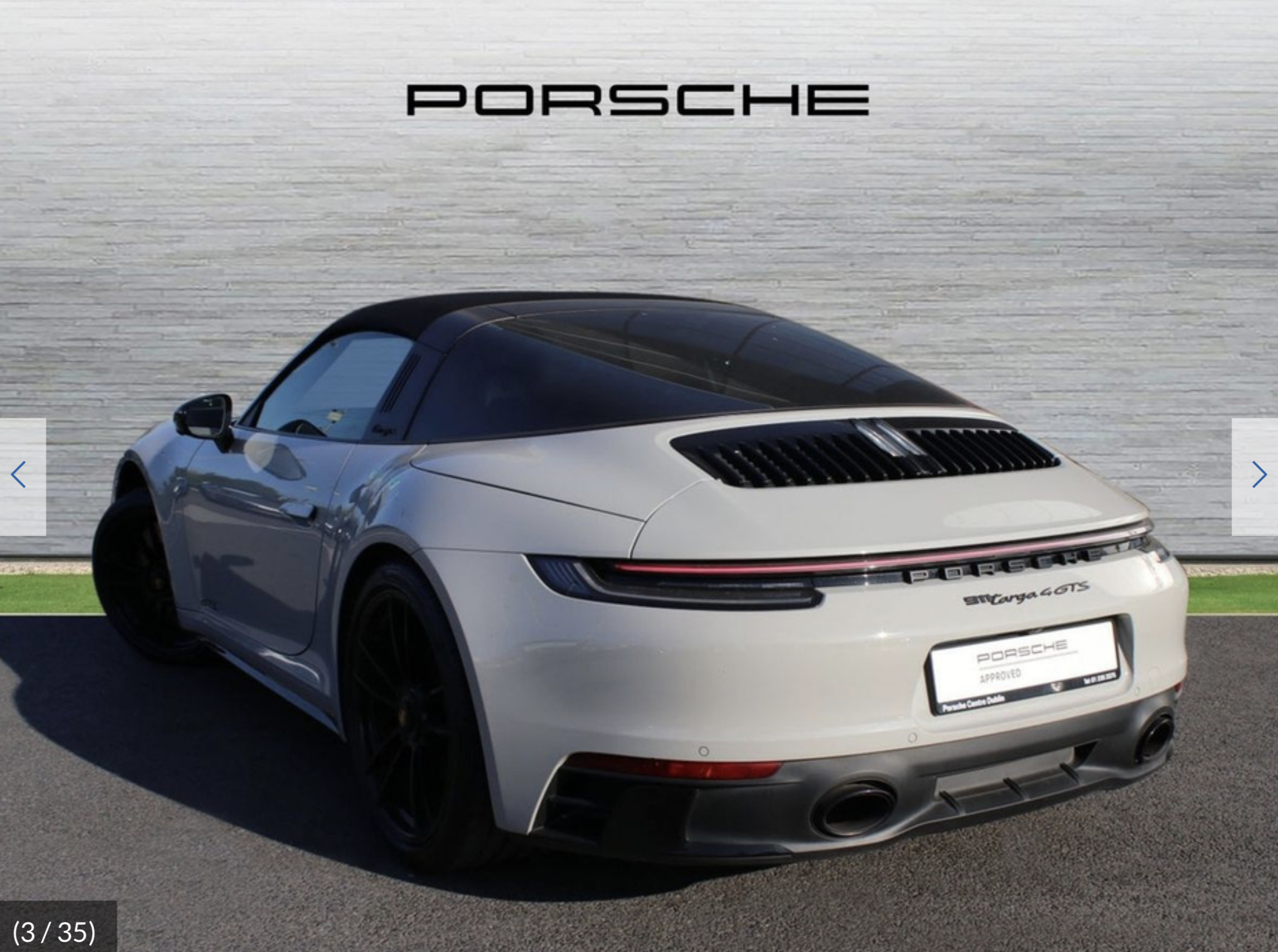
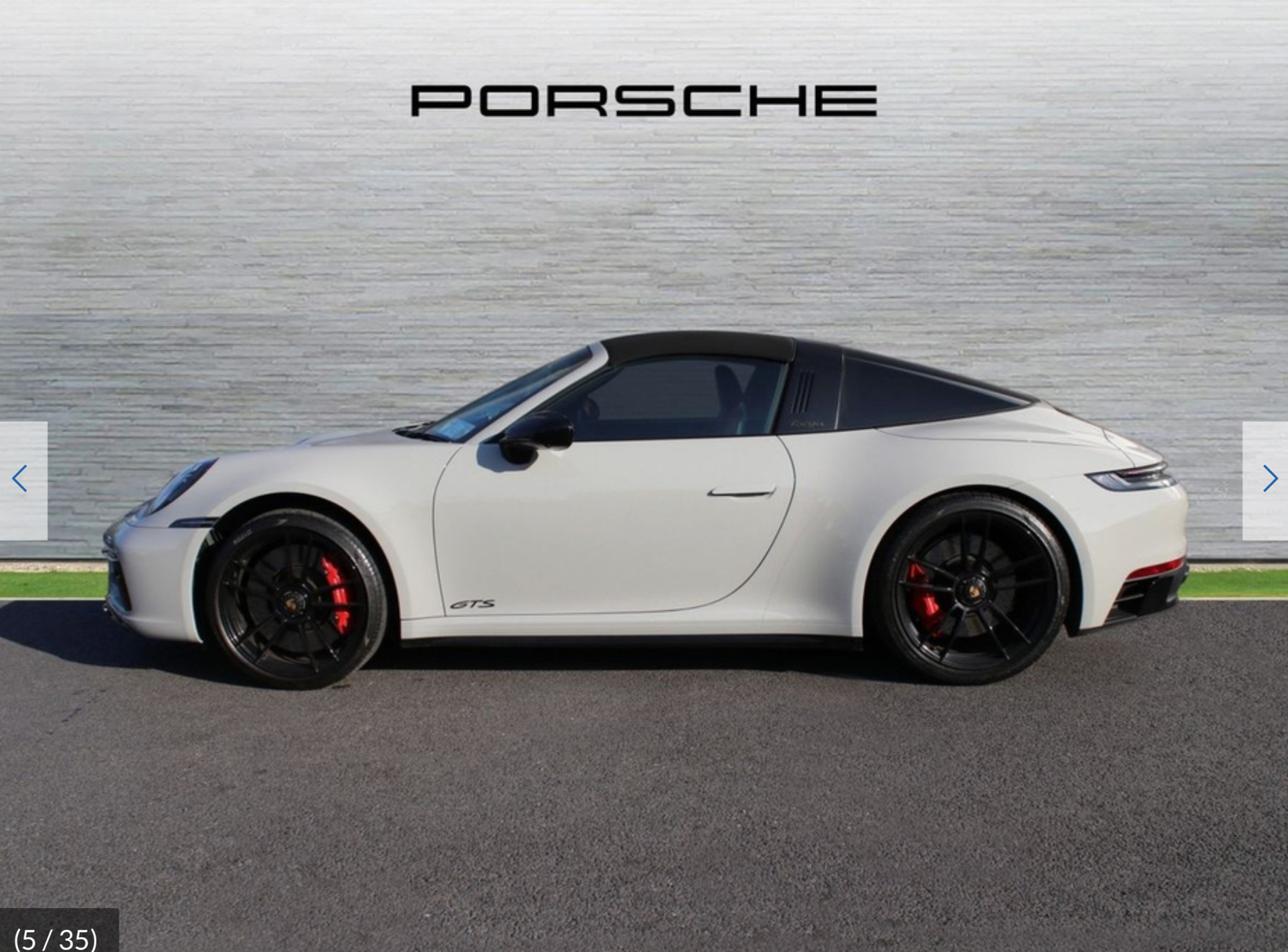
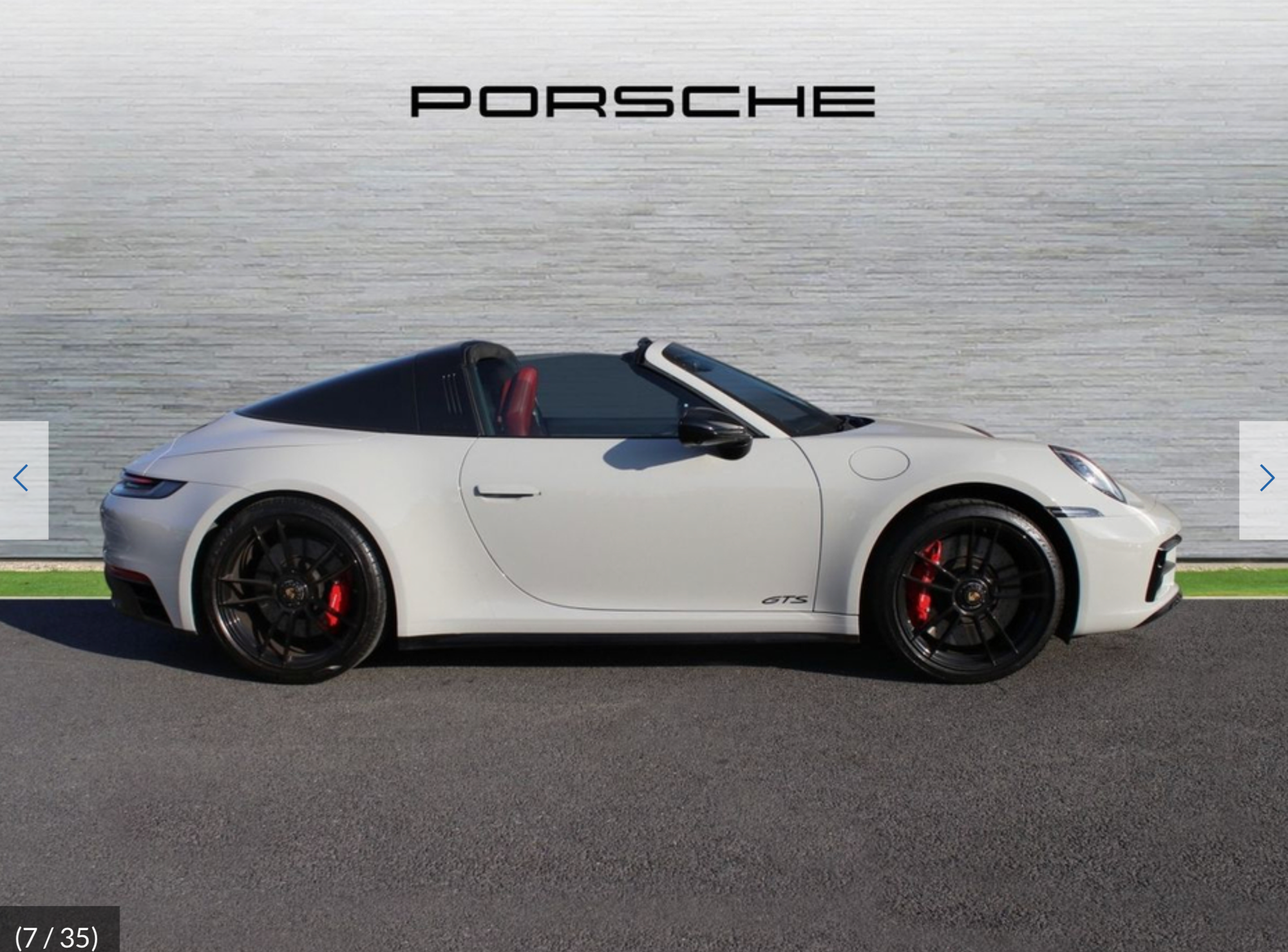
Our car on the Porsche sales site
One challenge is that we didn't wake up that morning with "buying a 911" on the plan. However, a car with such impressive specifications—perfectly suited for our road trip needs—is quite rare in Ireland.
It was only a year old, with just 7,500 kilometres on the odometer. In some ways, buying a highly optioned 911 second-hand makes more sense in Ireland than ordering one new.
The first owner has already absorbed the enormous upfront cost of the options and their associated taxes, while the second owner can potentially acquire those same options for a fraction of their original cost.
In our case, that was particularly compelling: we were effectively getting a nearly new Targa with an extraordinary specification for roughly what a much more basic new car would have cost.
We calculated the financial numbers and found a way to make them work for us, but this purchase is definitely not impulsive—it's a significant amount of money.
We had a morning chore to drop up a ladder to a storage unit we rent – that just happens to be across from Porsche Centre in Dublin.
🤔
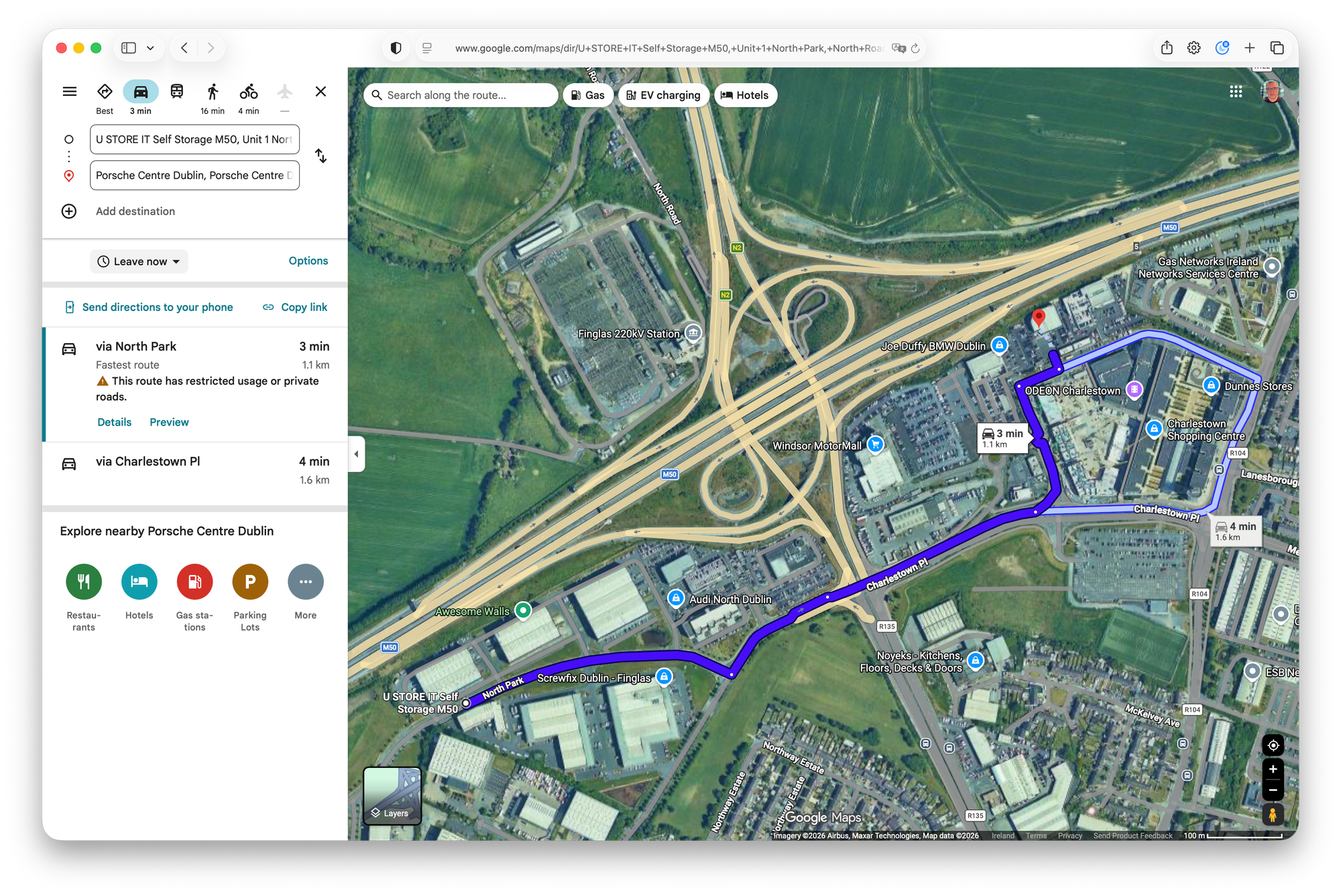
As fate would have it, Mark, our sales representative, happened to call us just as we arrived at the storage unit! What are the odds?
Mark is well aware of our Taycan adventures, and everyone at Porsche Centre recognises our passion for electric vehicles. Therefore, it was quite unexpected that we expressed interest in exploring the Targa.
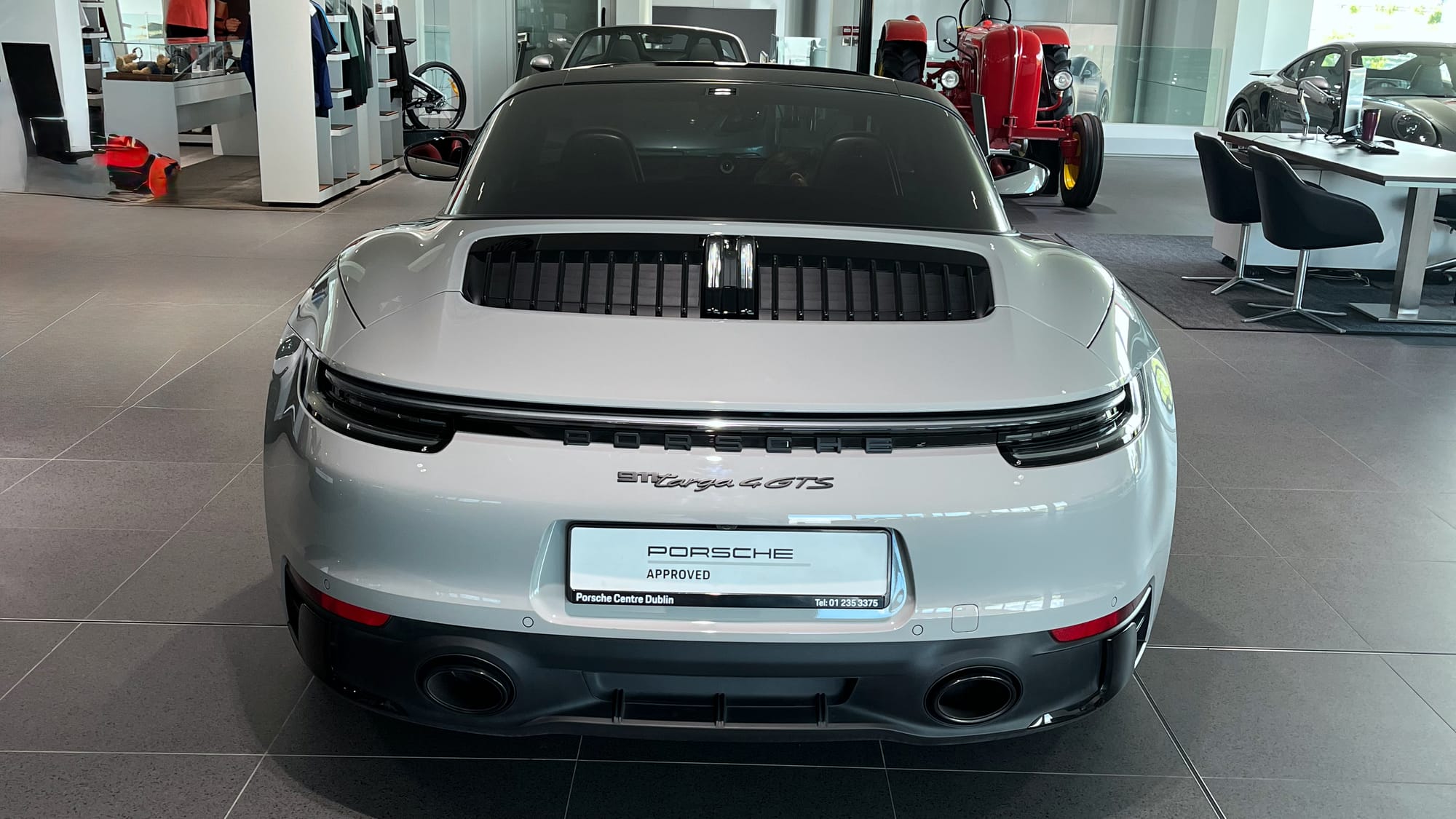
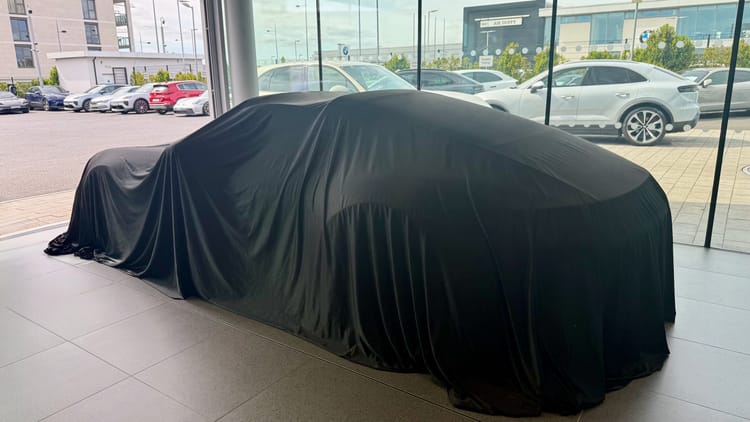
The moment we laid eyes on the car displayed at Porsche Centre, we knew it was the perfect match for us. While there would be some trade-offs, such as reduced luggage space and higher running costs, we were confident that we could make it work.
We had a cost to trade in our Taycan Turbo S for this in mind. We pride ourselves on knowing the market, including understanding that the dealer has to make something on the deal, and we had what we thought was a realistic number in mind. Porsche thought the exact same and arrived at the same numbers as we had independently.
While Mark needed to get full sales approval on Monday, we did the deal in-principle there and then.
Options we like
We wouldn't own this car if the vast majority of its options weren't in this section. This car is exceptionally well-specified for the Irish market and perfectly suits our long road trip needs. We drive in both arctic snow and German autobahns, so it takes a lot of options to meet both uses effectively.
AWD
We appreciate that every Targa is all-wheel drive, but having it is a must have due to our arctic snow adventures.
Porsche Dynamic Chasis Control (PDCC)
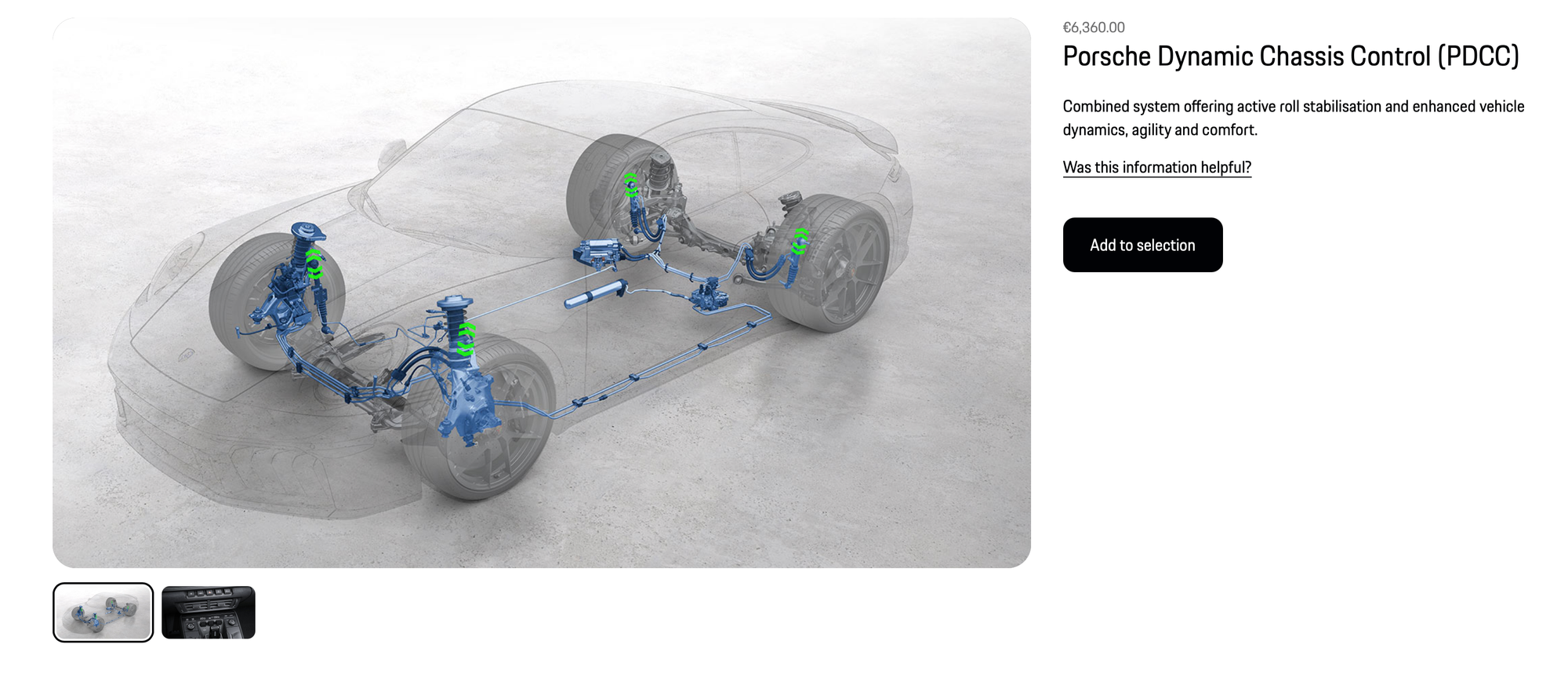
A €6,000+ option, it is Porsche's active anti-roll (anti-sway) system. It uses hydraulically controlled actuators on the anti-roll bars to counteract body roll when cornering.
Very noticeable on the top-heavy Targa, this keeps the car completely flat when doing spirited driving in the west of Ireland or on sweeping curves at 300 km/h on the German autobahn.
Rear-Axle Steering
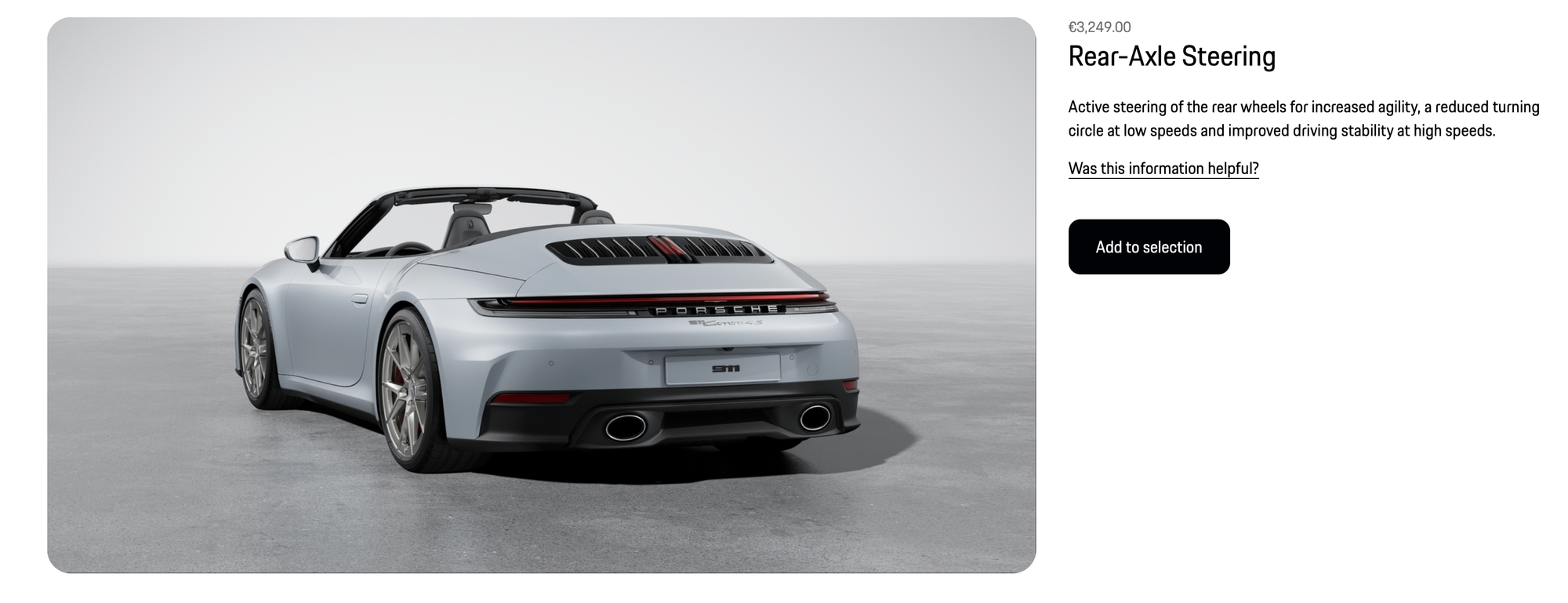
Rear-axle steering (RAS) is Porsche's system that turns the rear wheels slightly to improve both agility and stability.
At lower speeds, the rear wheels turn in the opposite direction to the fronts. This effectively shortens the car's turning circle, making the 911 feel more manoeuvrable and making tight corners and parking considerably easier.
At higher speeds, the rear wheels turn in the same direction as the front wheels. This effectively lengthens the wheelbase, making the car feel more stable and planted, particularly during fast direction changes and high-speed cornering.
Here is a raw video of this option working on our previous Taycan Turbo S in the Norwegian arctic.
All our Porsches have had this option, so admittedly we are not very experienced at driving these cars without it.
Front-Axle Lift System
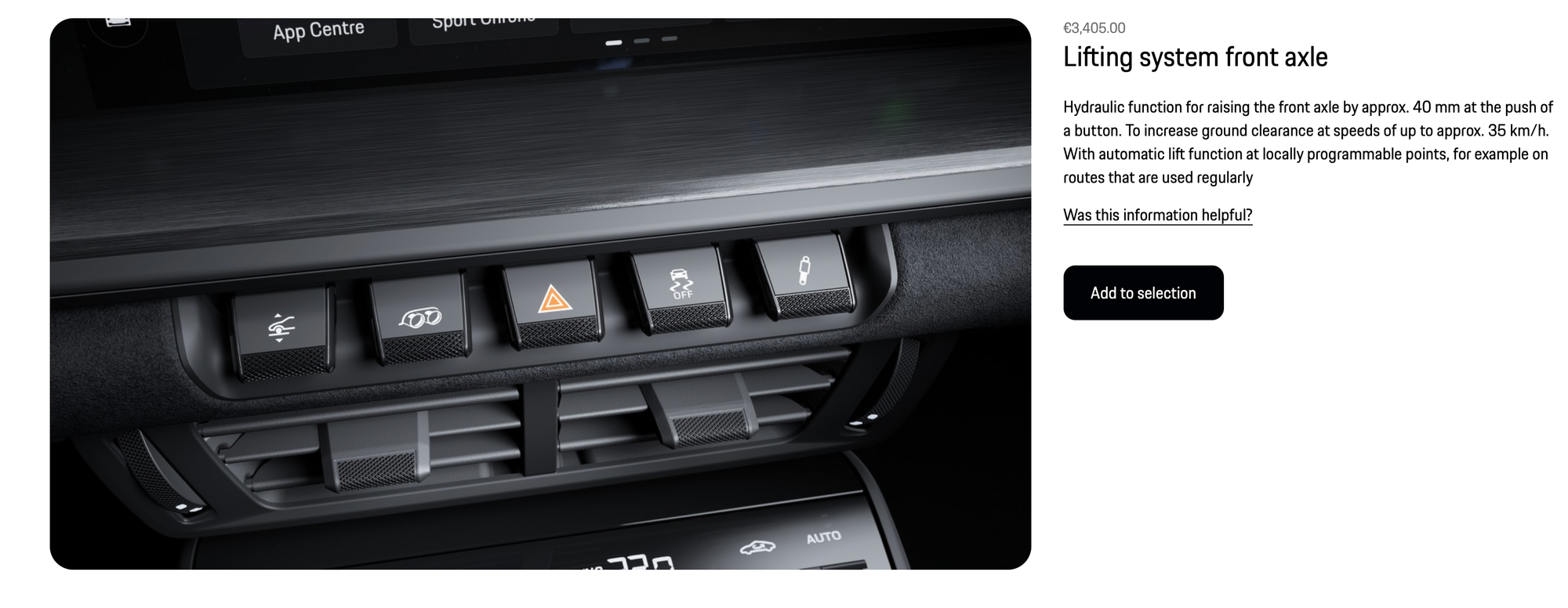
An expensive option that is surprisingly popular on Irish 911s. We do use this, especially when driving onto ferries and down into steep underground car parks.
The Targa is not as low as a typical GTS, so the need for it is somewhat reduced. For example, it is generally not necessary to use it to go over speed bumps here in Ireland.
Porsche InnoDrive including Adaptive Cruise Control
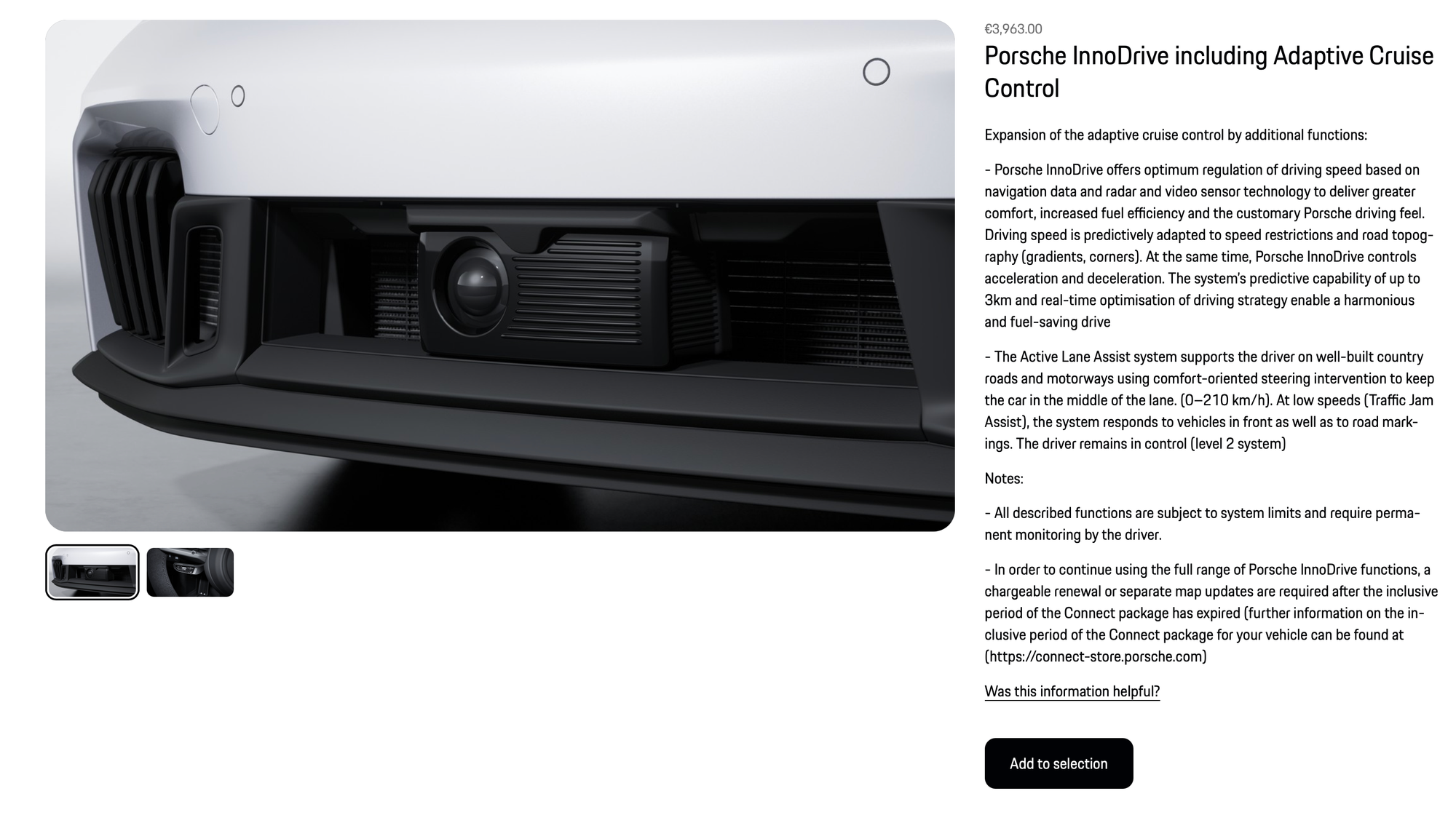
For long road trips, ACC becomes particularly valuable. On a journey of several hundred kilometres, especially on motorways where traffic speeds constantly fluctuate, it takes much of the repetitive work out of maintaining speed and distance.
Rather than repeatedly adjusting the throttle or braking as traffic changes, the 911 smoothly manages the gap to the vehicle ahead, allowing the driver to concentrate on the road and the journey.
InnoDrive adds another layer by anticipating the road ahead and adjusting speed for bends, gradients and changing speed limits.
It is an option that perhaps feels unnecessary on a Sunday morning drive, but becomes something you really appreciate after six or eight hours behind the wheel.
Night Vision Assist
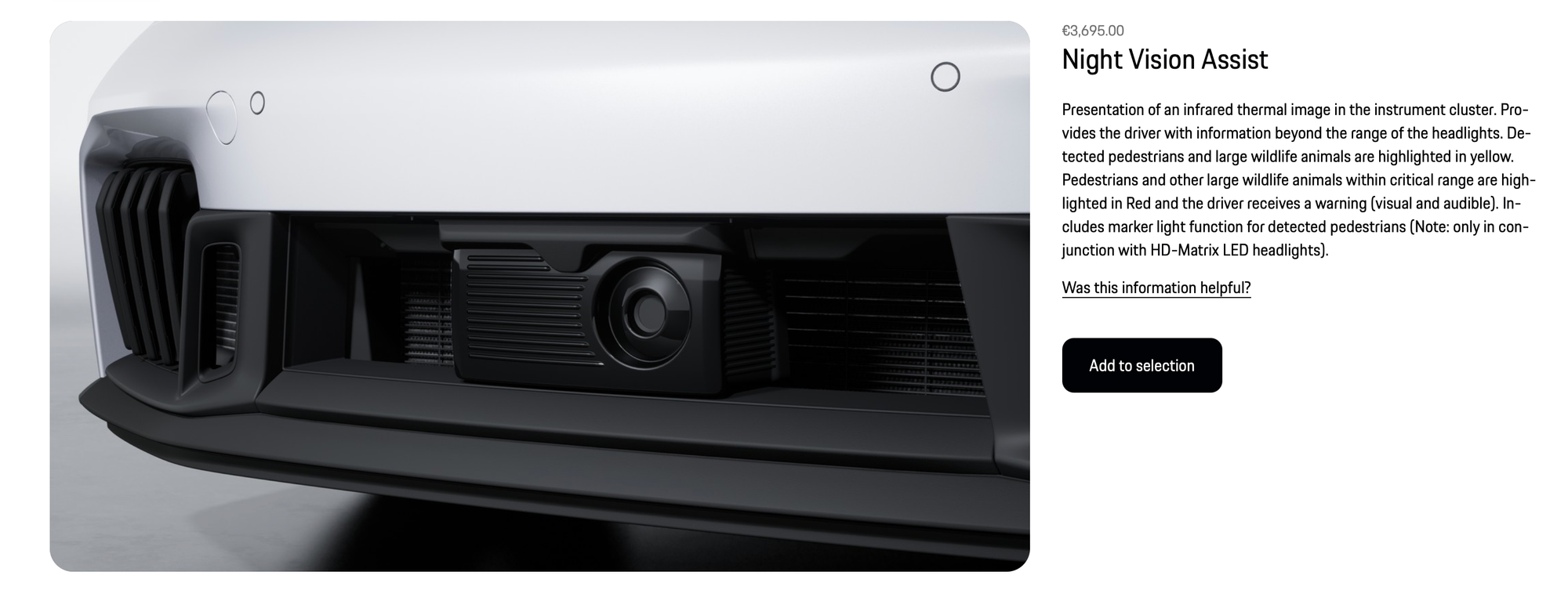
Night Vision Assist uses a thermal imaging camera mounted at the front of the 911 to detect people and animals in the road ahead that may not yet be visible in the headlights.
The system displays the thermal image on the instrument cluster, highlighting detected objects so the driver gets an additional warning of potential hazards beyond the reach of the headlights.
A lot of people also do not realise that this feature is scanning the road ahead once dusk arrives regardless if you have the camera display switched on or not.
Despite its €3,695 expense, it has saved us on a number of occasions in the dark arctic region.
Garage door opener with HomeLink®
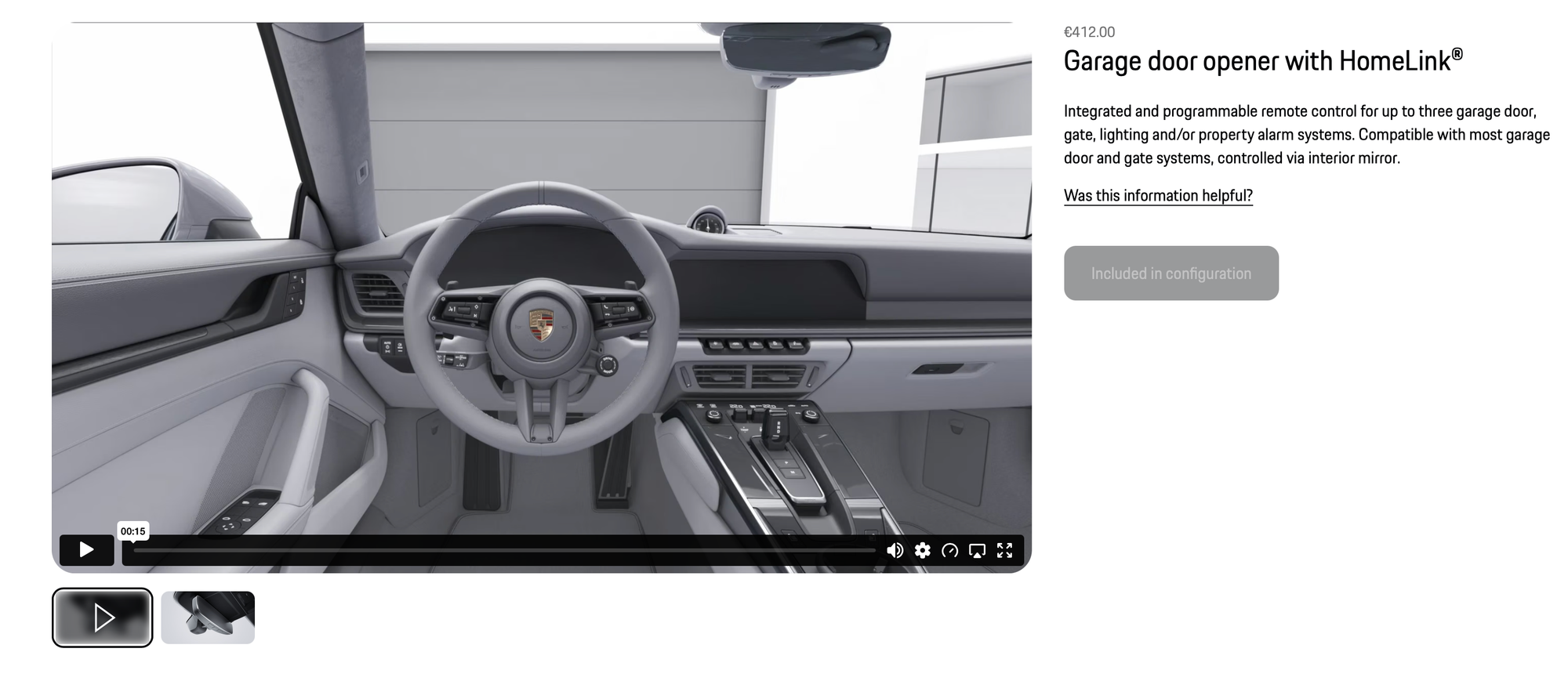
Our garage gate in our apartment complex is compatible with HomeLink so this is a very handy option that we use every time we enter or leave our underground carpark.
It's fiddly to set up but once done it's very reliable.
Matrix LED main headlights
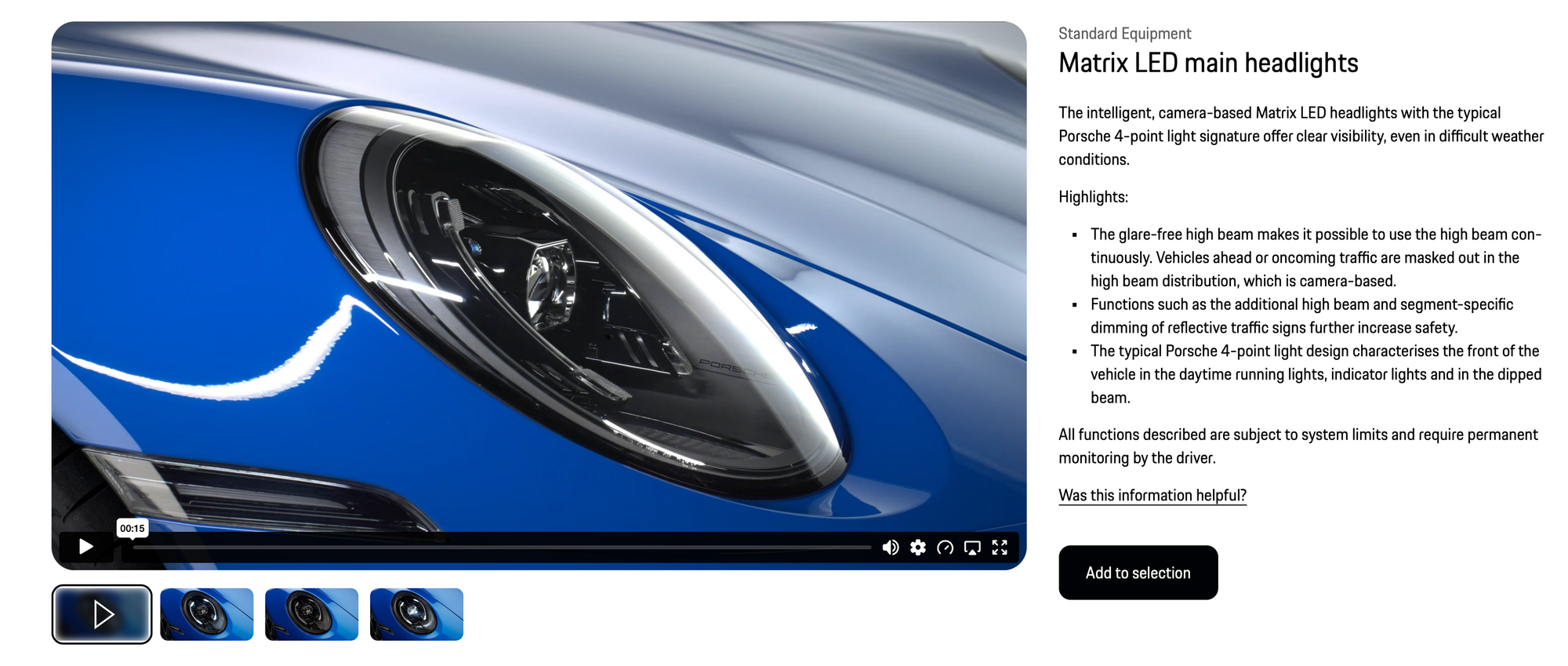
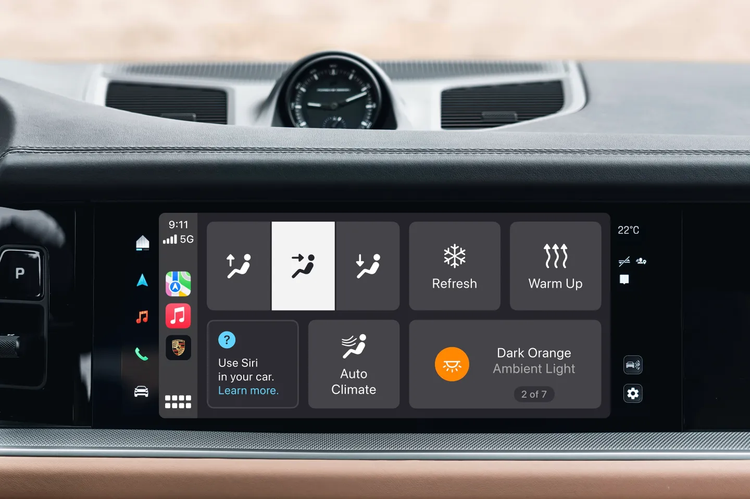
This is now standard equipment, but on our 2024 Targa it is a €2,500 option that we make use of every time we drive in the dark. Night falls early in the arctic so it also gets a lot of use during our winter road trips.
We have become so used to it over the past few years, that we have forgotten what it is like to have to manually control headlights.
They are also required for the Night Vision Assist option.
Door sill guards carbon matt, illuminated
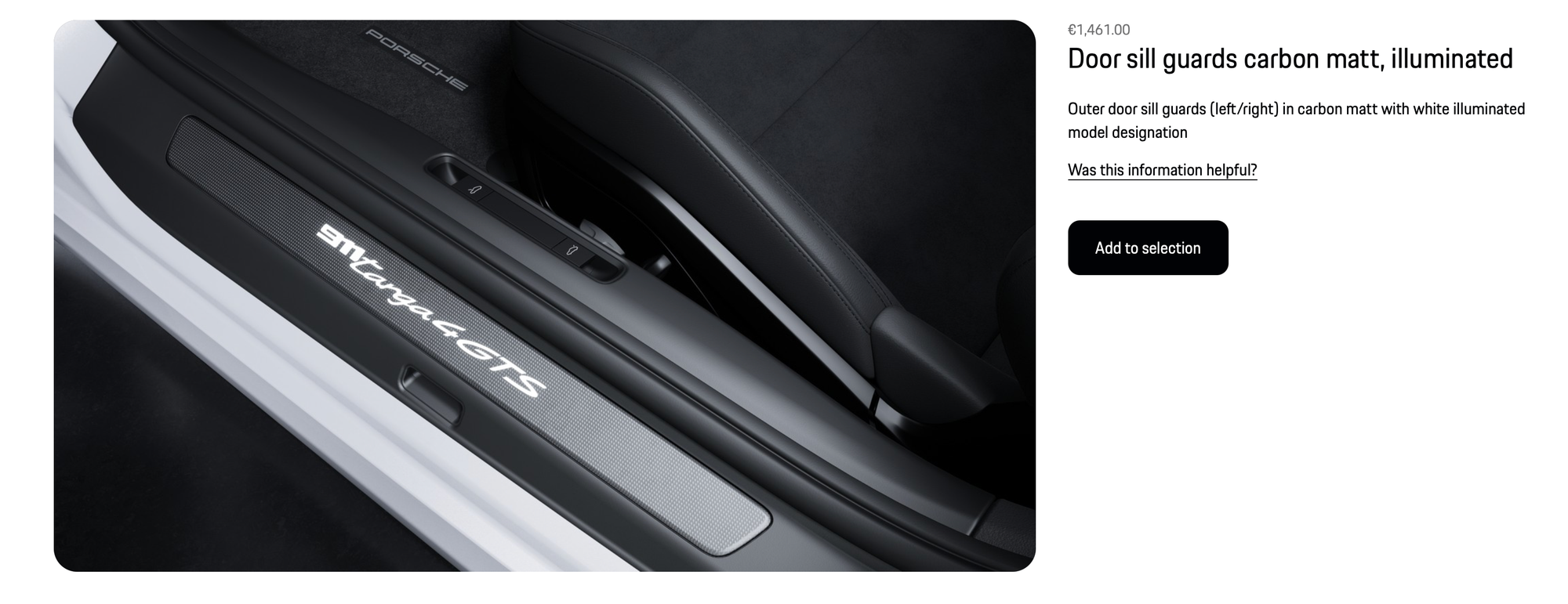
An entirely cosmetic option that is very far from required! However, as we park our car in a dark underground under our apartment, we get to enjoy this option every time we open our car to step inside.
Carbon matt Interior Package with accent in Black
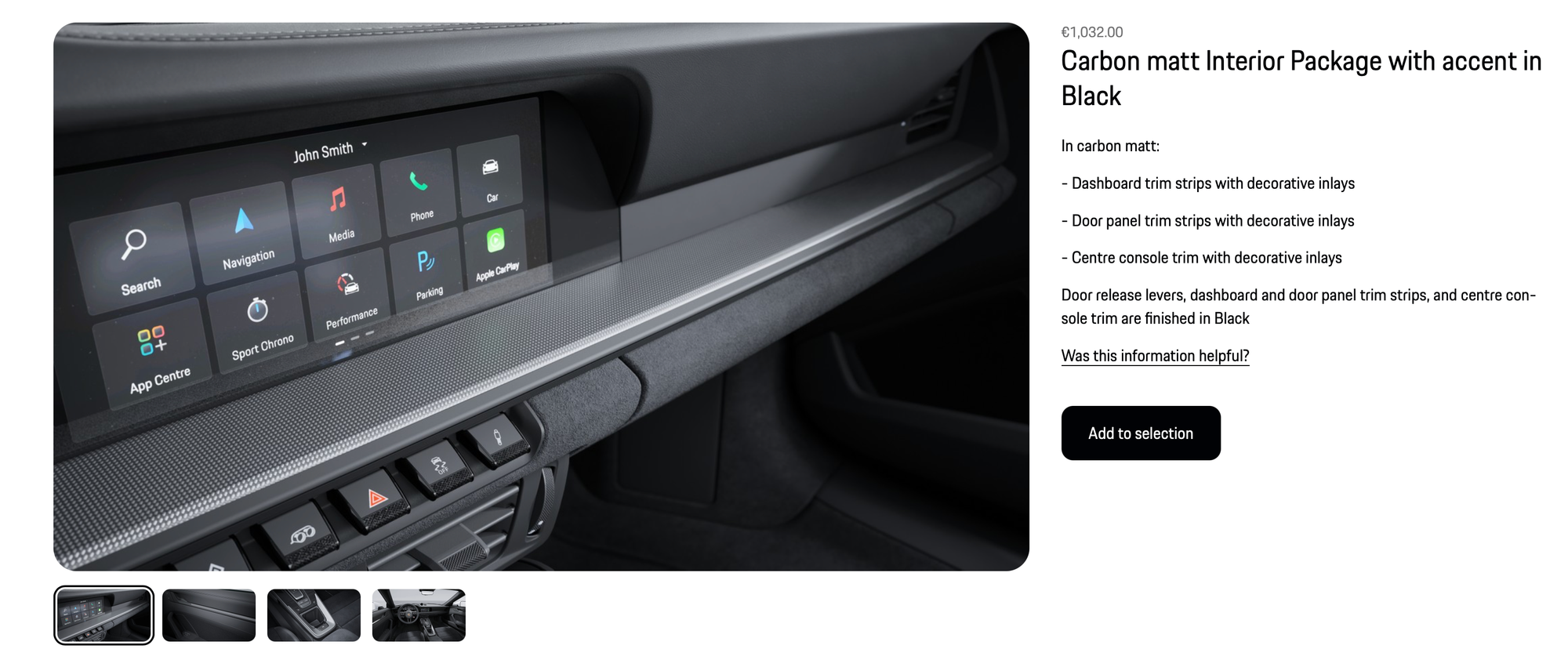
Some people really dislike carbon used just for cosmetic purposes, however, we have matt carbon on our interior, steering wheel and sill guards and it creates a very cohesive look.
It is certainly a few thousand euro that could be saved upon, but it is also very visible when sitting in the car where you spend most of your time enjoying it.
Porsche crest on headrests
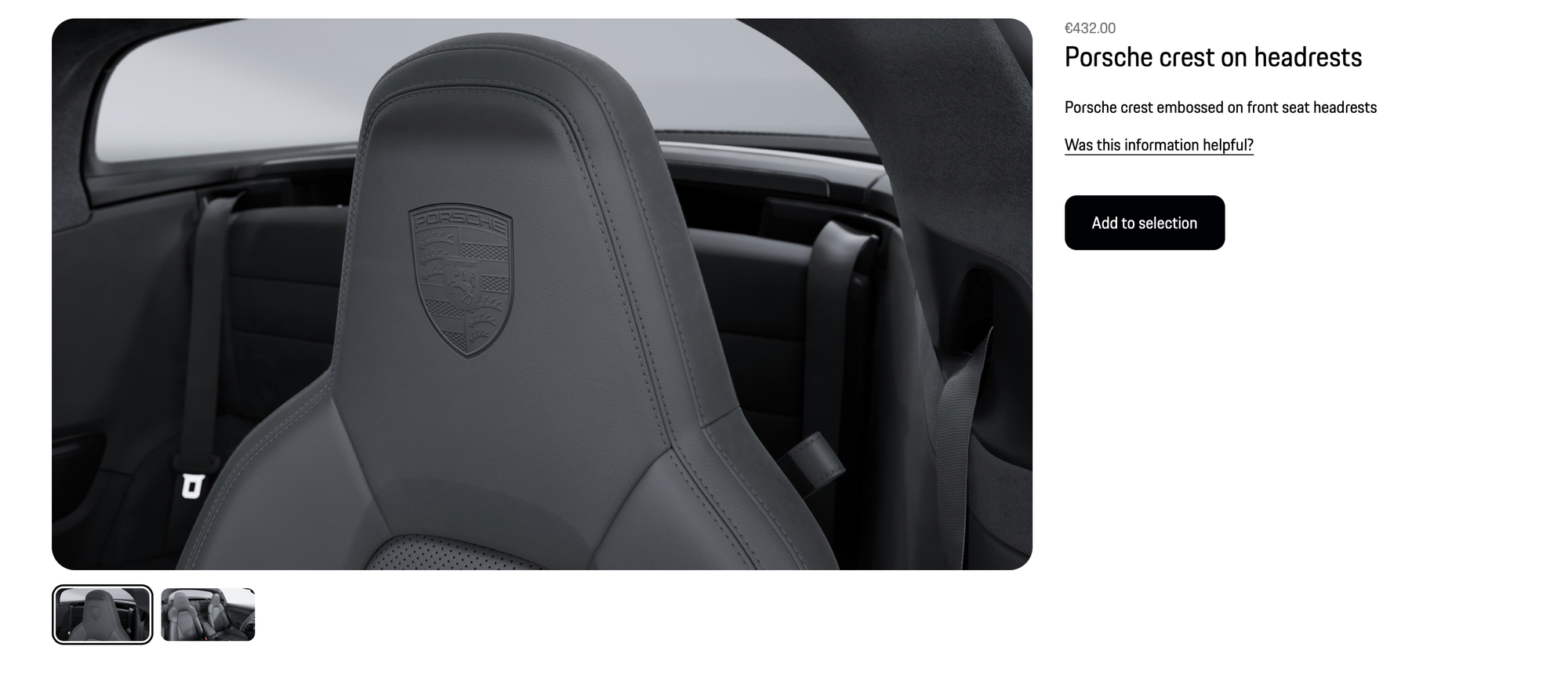
It seems crazy to pay extra for the vehicle manufacturer to put extra logos on your car. But in the context of the overall cost this is relatively small and it does provide a nice finish to the seats.
People especially notice it when looking into the car with the Targa roof down.
Options we're neutral on
These are options that we don't mind but would probably either not have purchased or chosen something else. It doesn't mean we don't like them just that we probably don't "value" them as much as the original owner did.
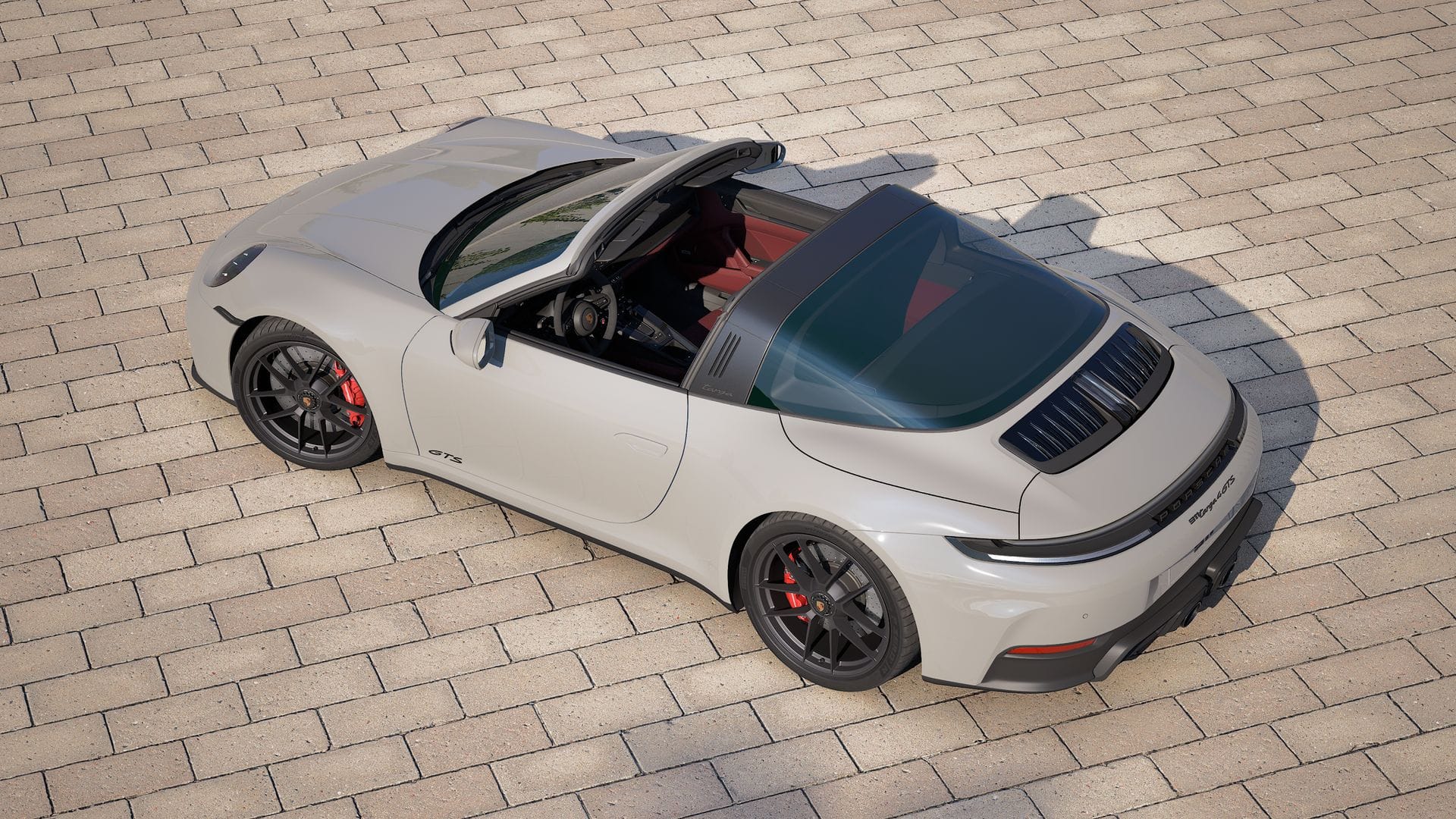
Crayon external colour
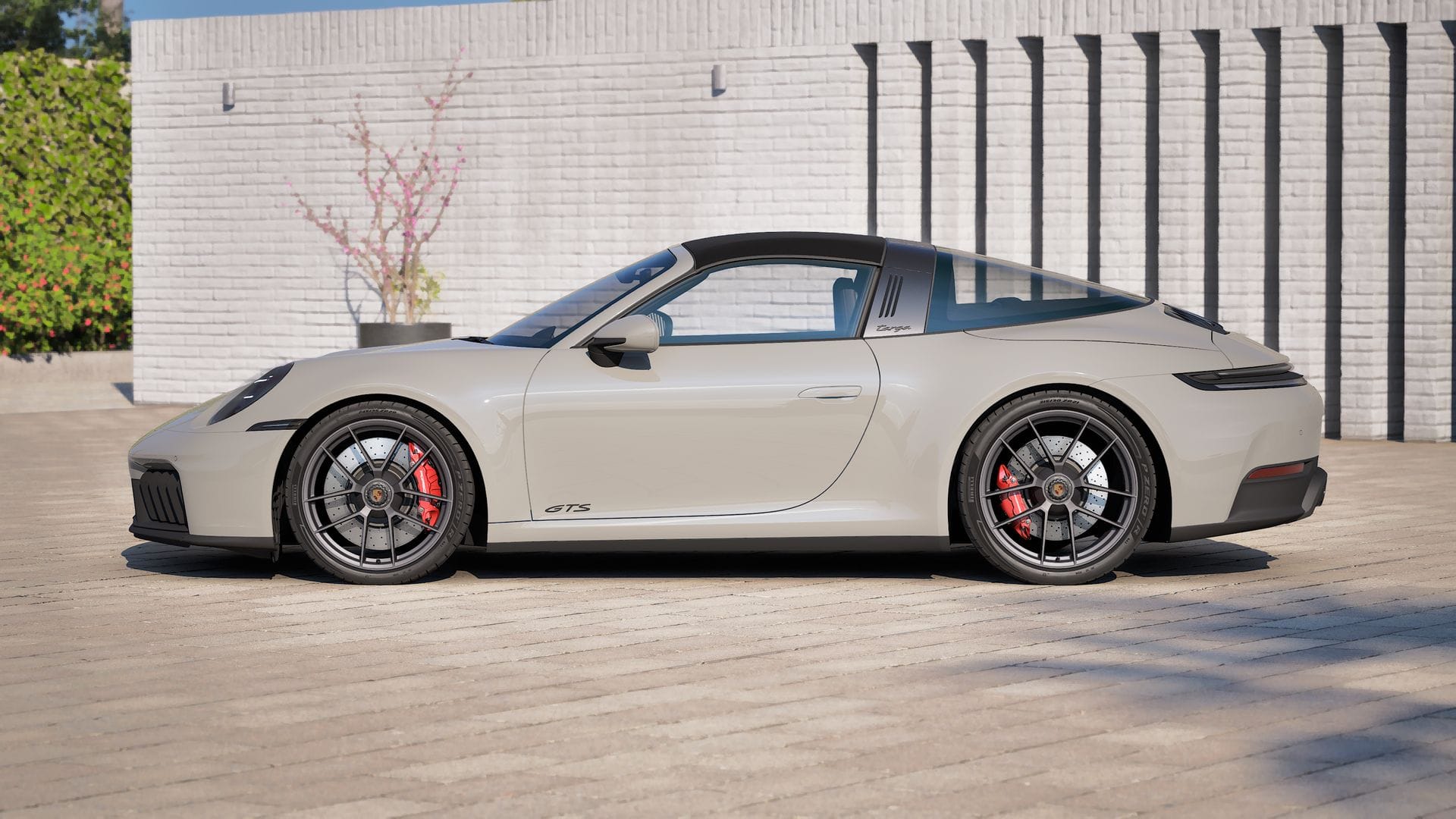
The colour of a car is probably one of its most important options. It would be very difficult to live with a car if you didn't like its colour.
We actually got very close to configuring our Taycan Turbo S in Crayon with Blackberry interior.
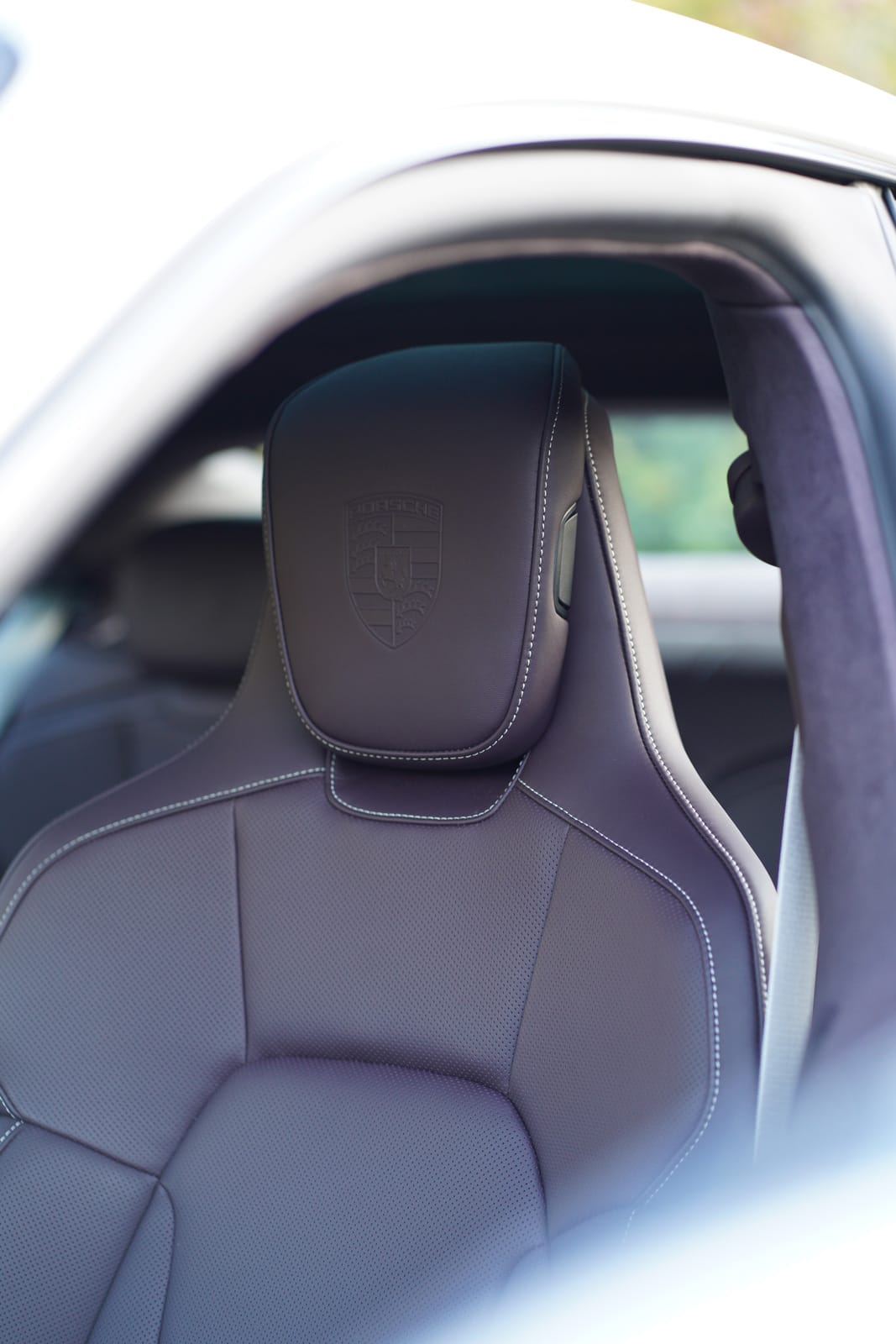
Ultimately, we decided we prefer "stronger" colours like blues and greens and went with Neptune Blue.
We also thought that Crayon would blend in too much into the snow in the arctic, but actually the opposite happened: the white of the snow in the background caused the beige of Crayon to really pop.
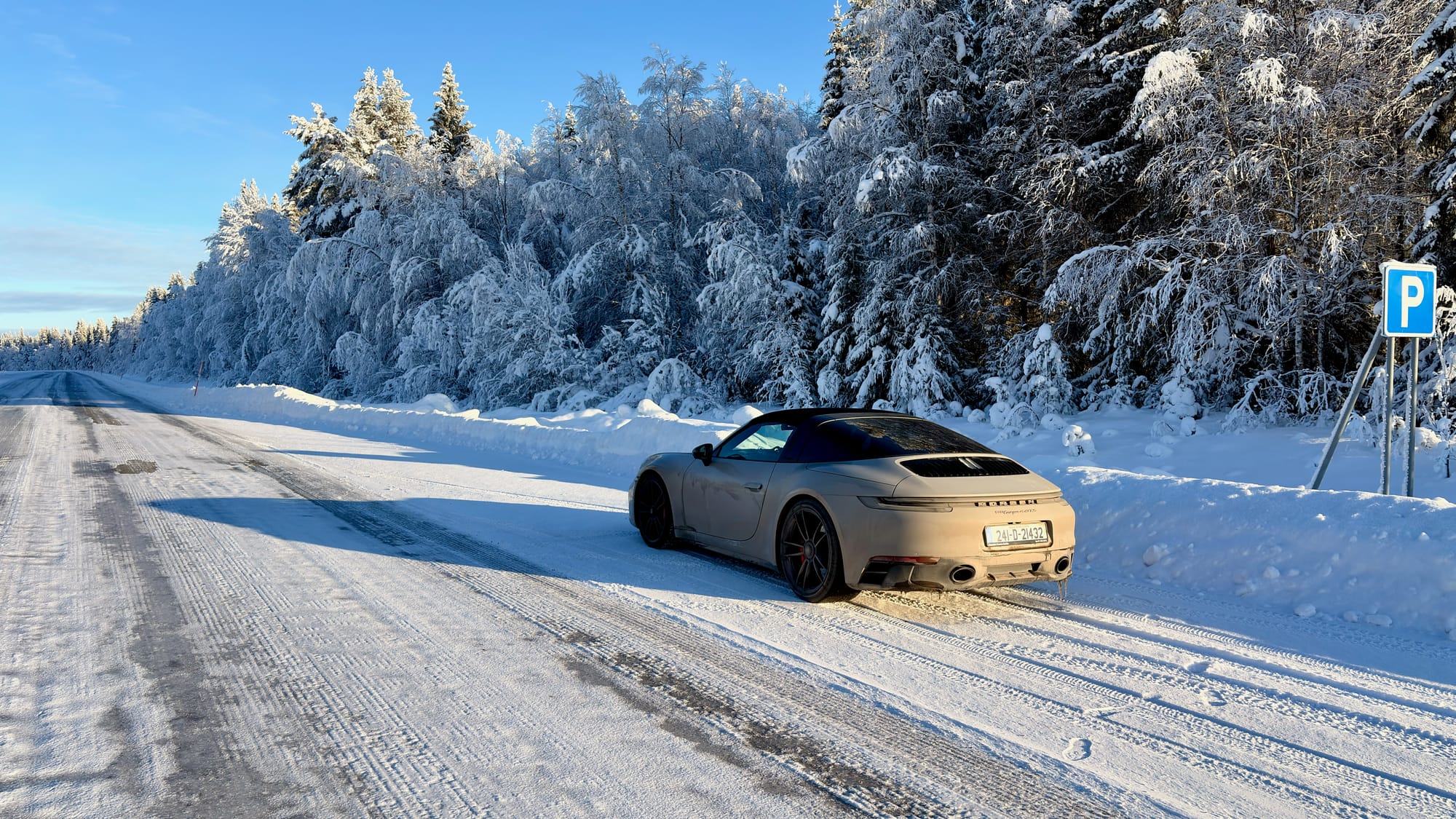
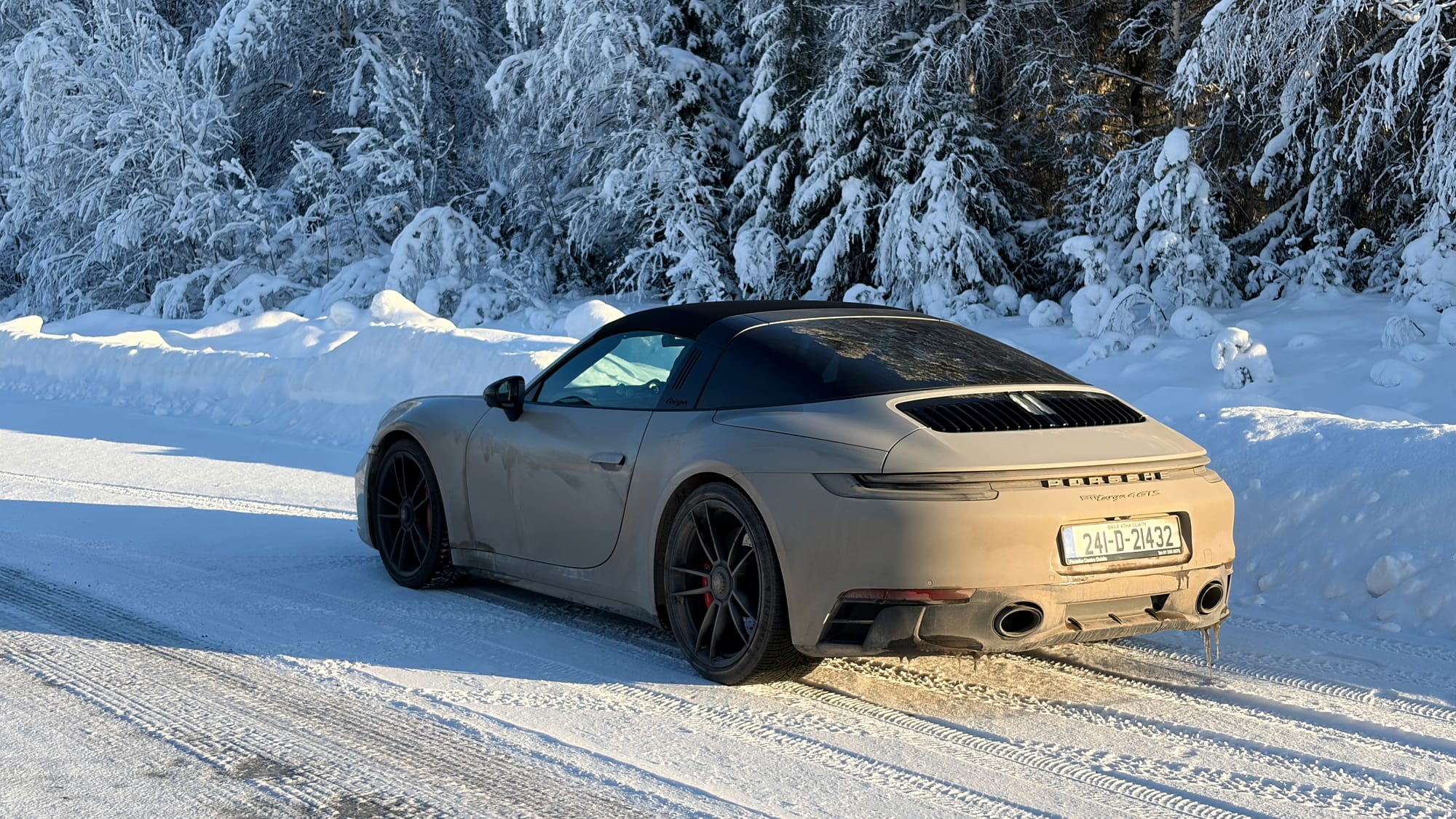
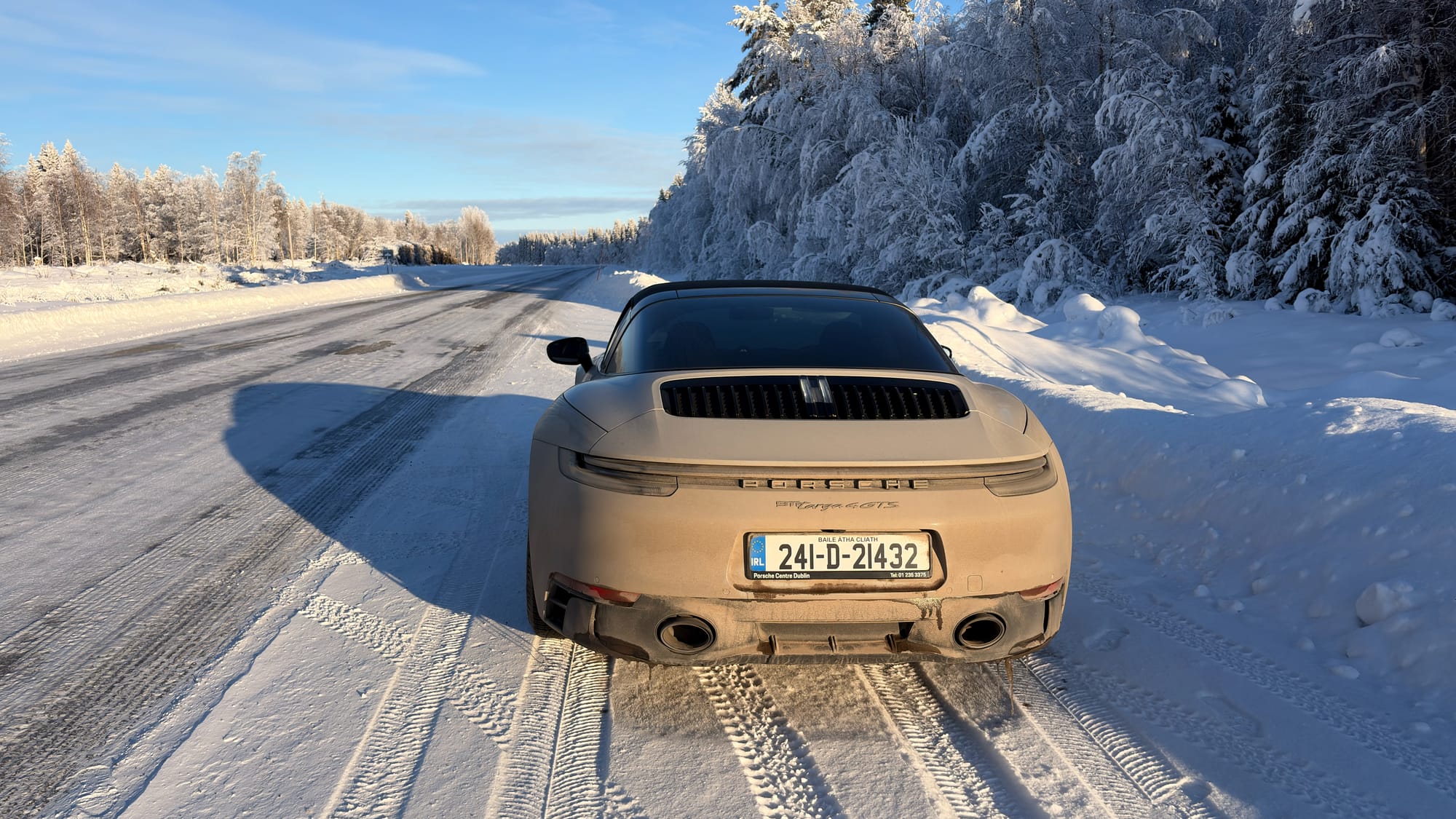
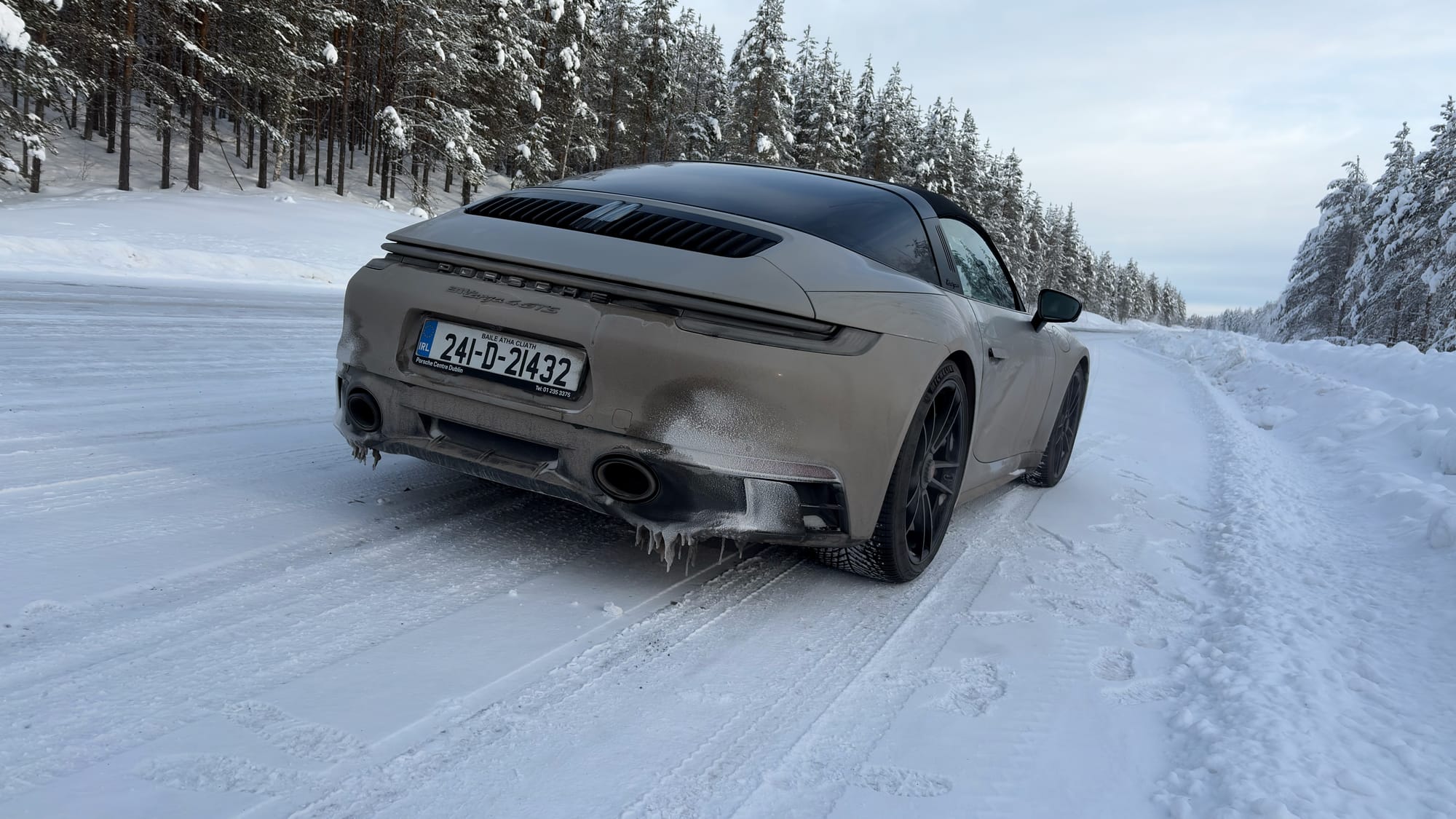
We still think if we were configuring a new car, we'd probably still lean towards bolder colours but this is still a very sophisticated paint that looks really good in person.
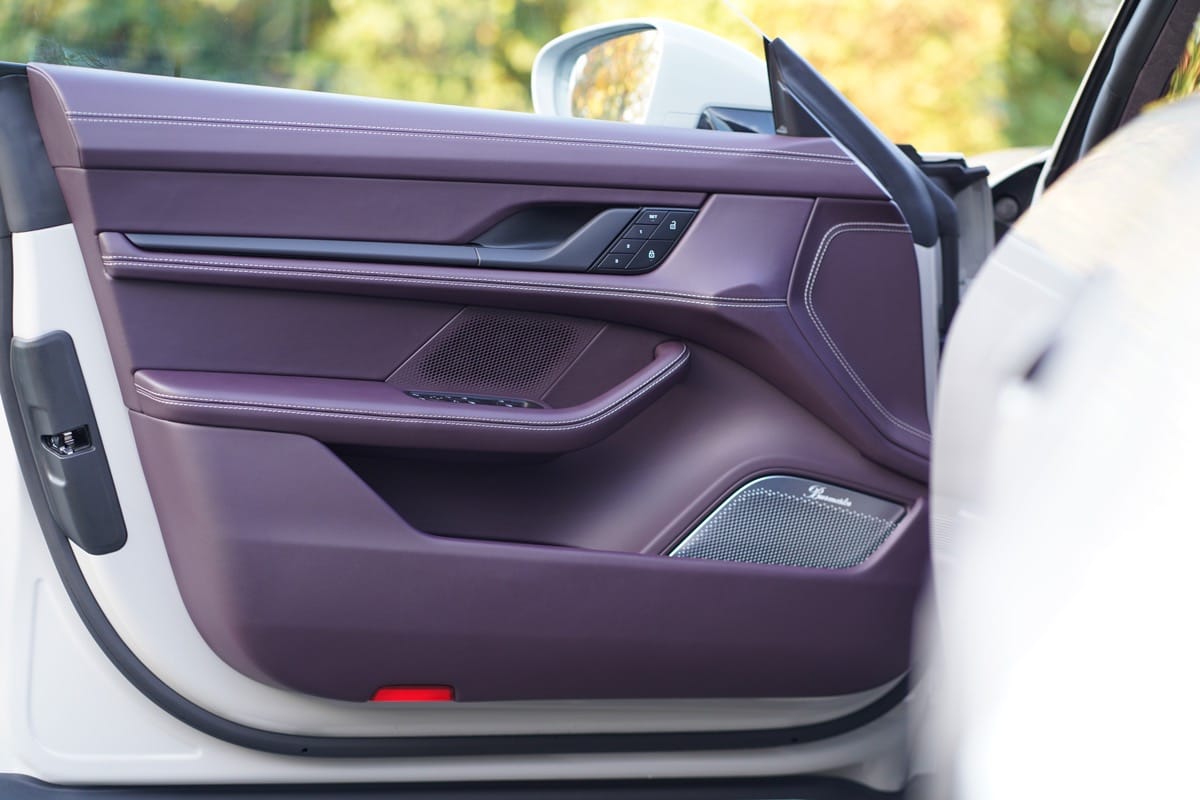
Two-tone leather Black/Bordeaux Red
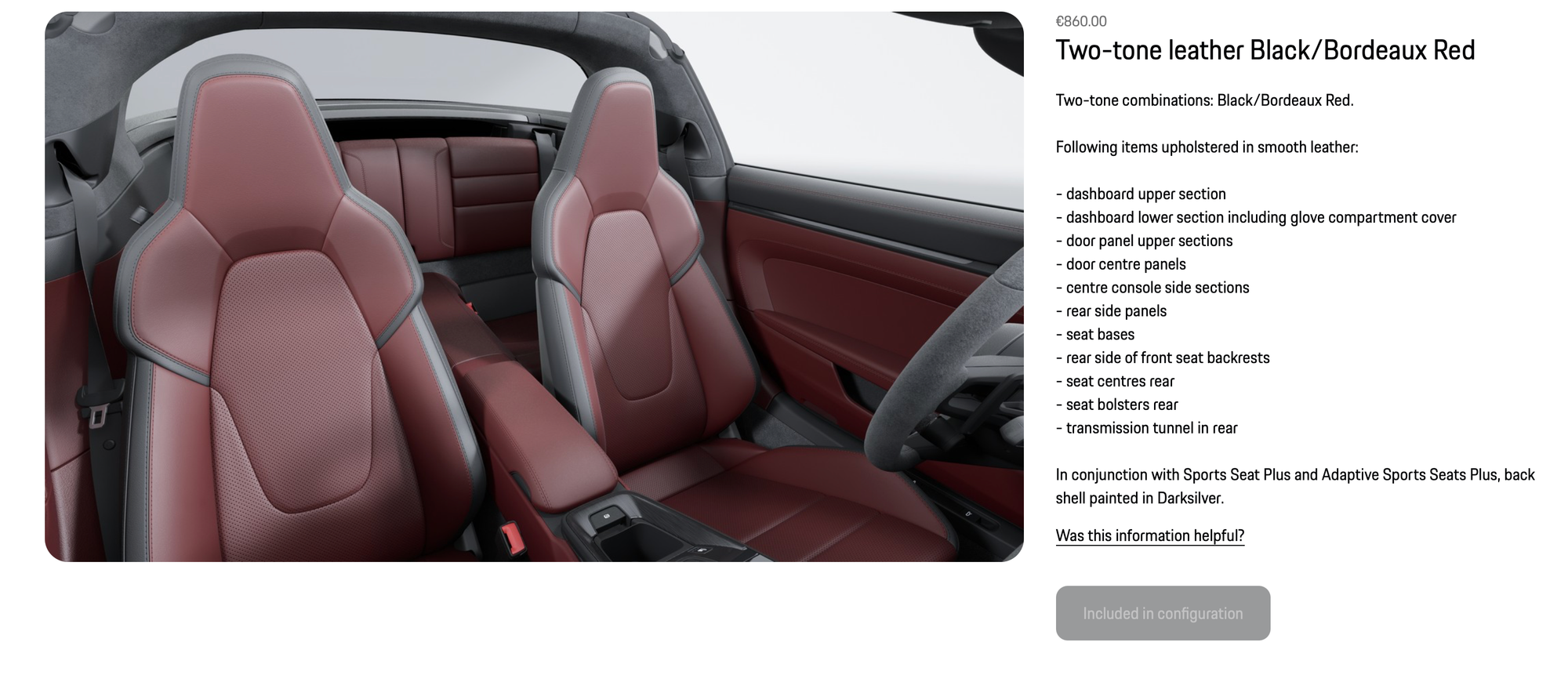
The key distinctive feature of the interior of the car is the Bordeaux Red leather. It is very bold and we do not think we'd have picked it from the configurator, but it looks great in person.
Red interiors have the slight reputation of being an "old persons" car – but with the Crayon exterior it complements it very well. There are a lot of colours it would not work well with, it would be awful with our favourite blue and greens.
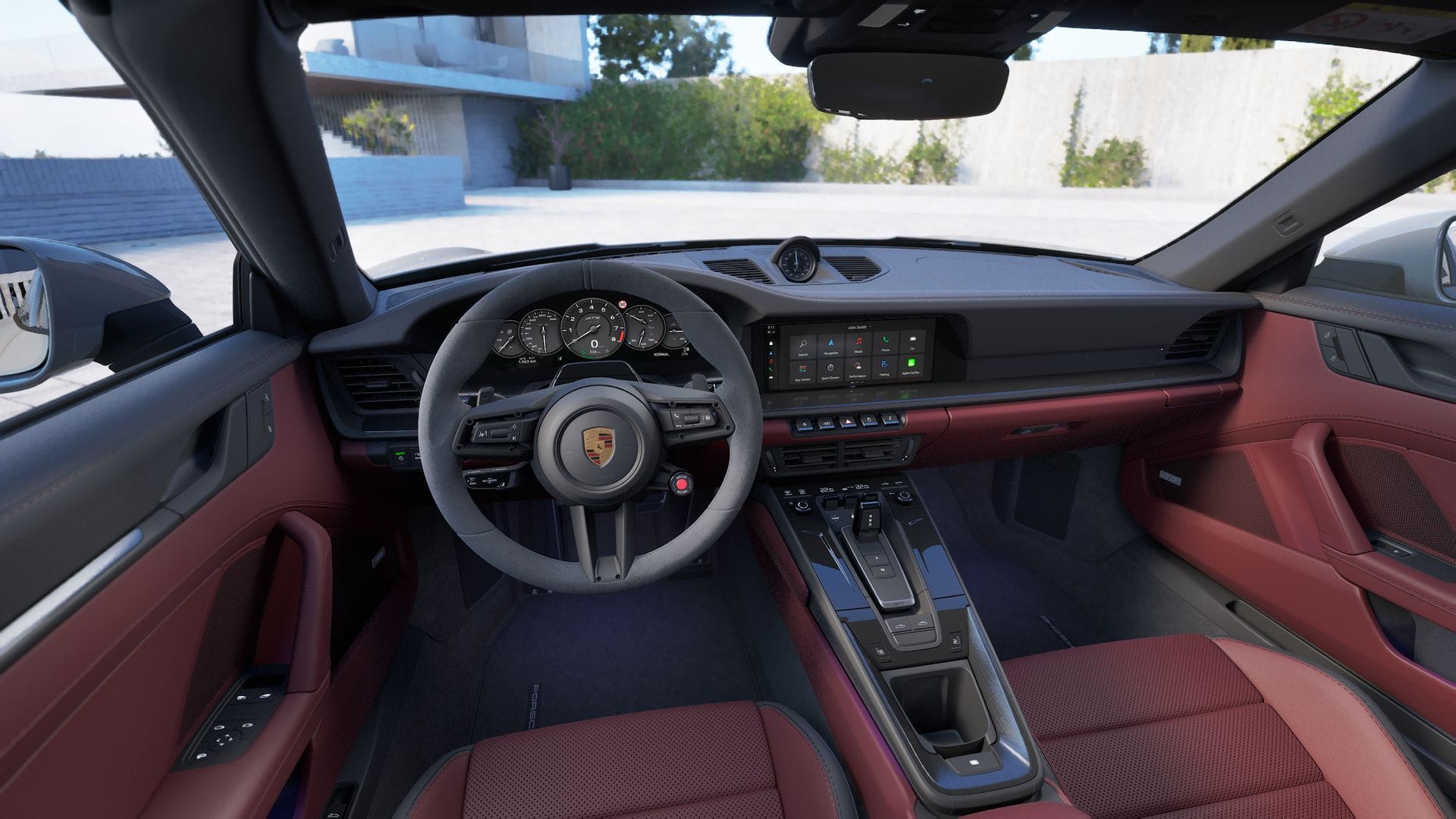
We are also grateful that the original owner picked the two-tone black and red, with the dark dashboard not causing any reflections on the windscreen in sunlight.
Leather Package 930
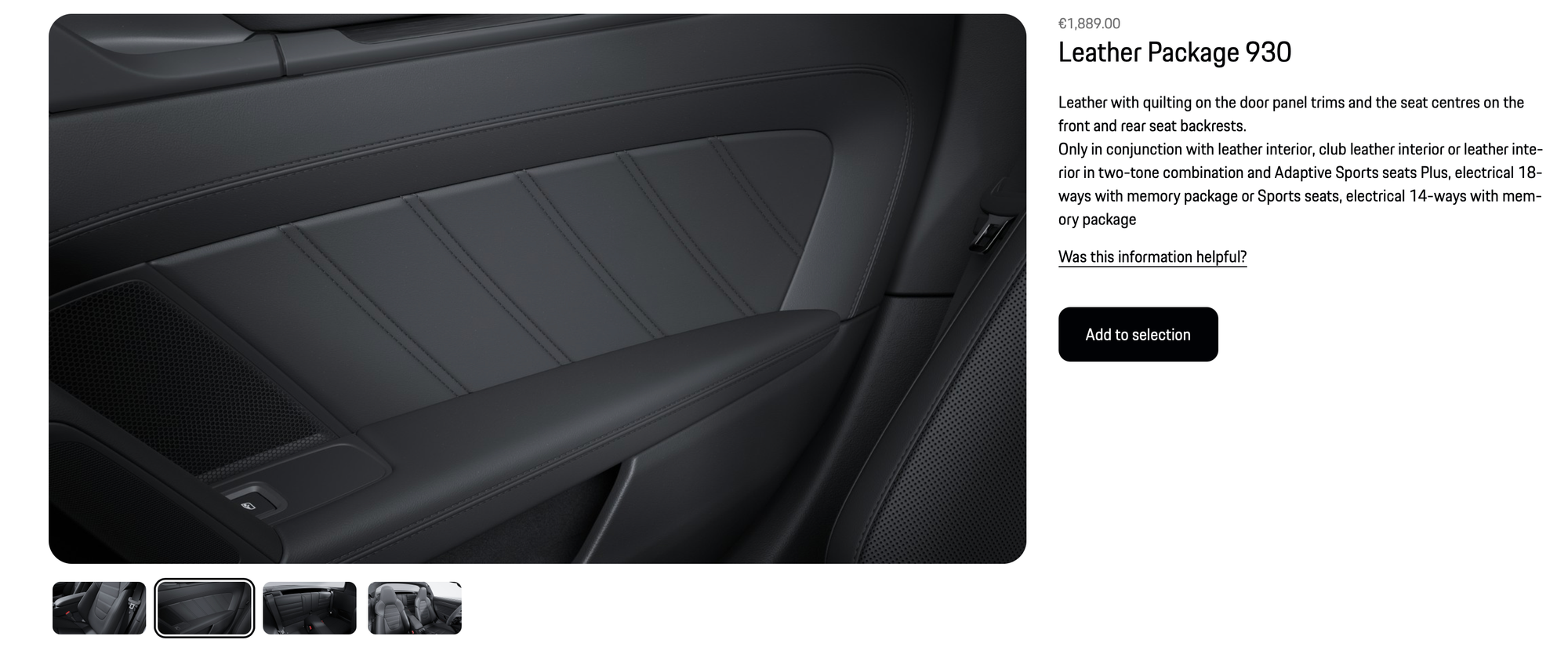
This is essentially additional stitching in the leather on the seats and doors. It looks great, but it's expensive for what it is. Not sure if I'd option it myself if configuring the car. But like it in our car.
Centre-lock wheels
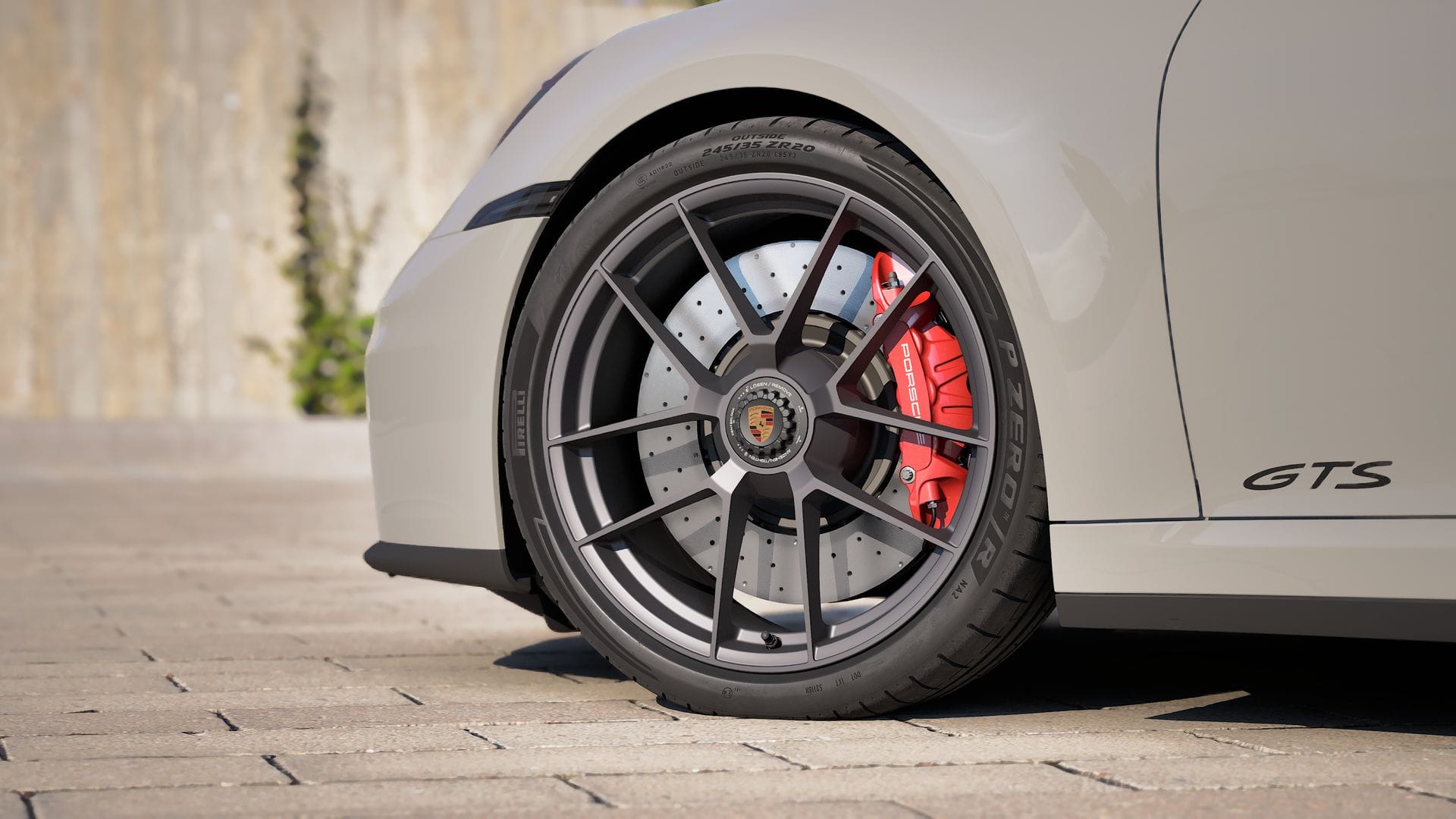
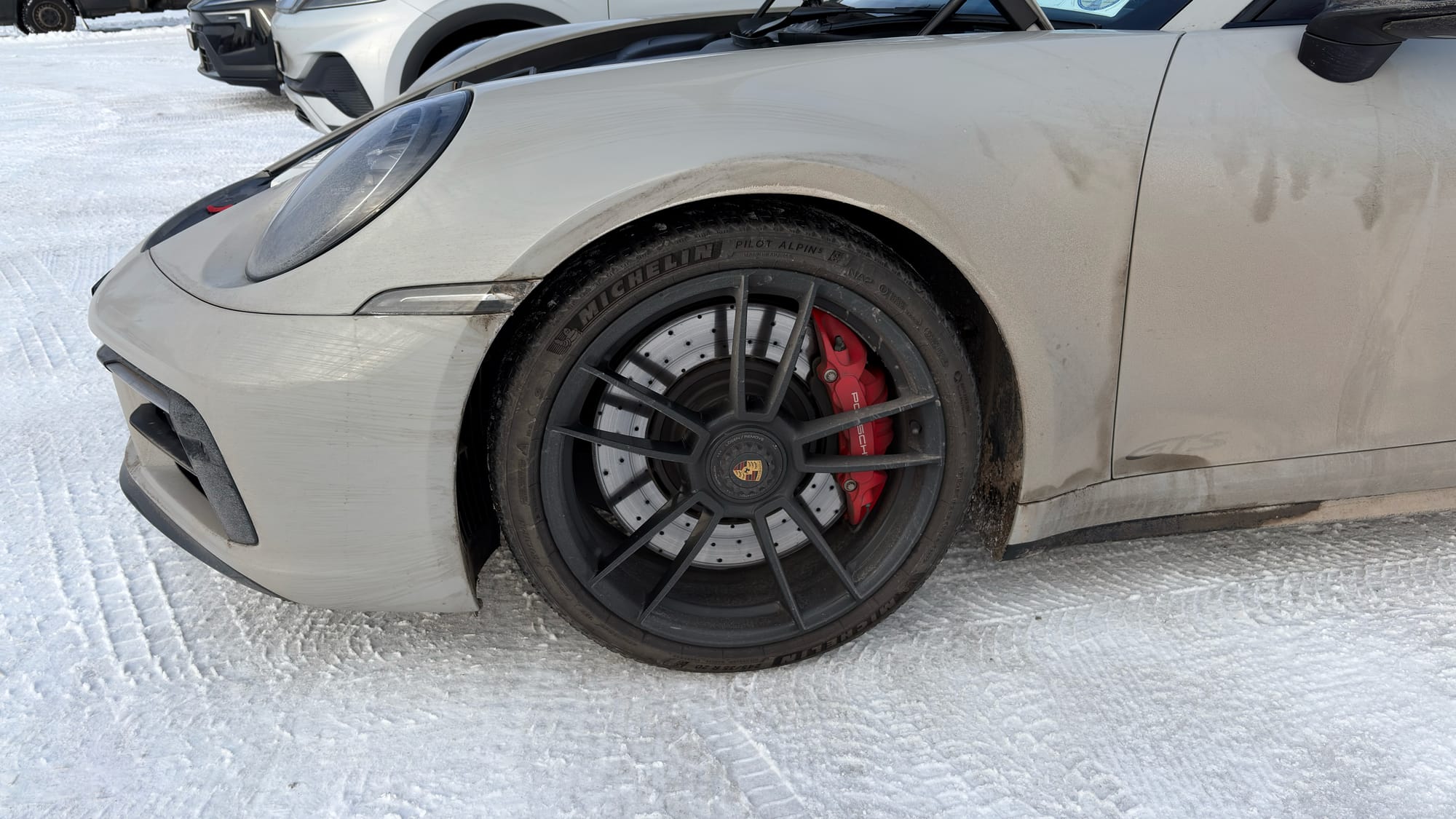
One of the more distinctive features of the car is its centre-lock wheels, rather than the conventional five-bolt arrangement found on most 911s. Originally developed for motorsport, a single large central nut secures each wheel directly to the hub, allowing wheels to be changed much more quickly — particularly useful in a racing environment.
On a road car, the benefit is less about outright practicality and more about the engineering and motorsport connection: they are a genuine piece of race-car technology that has found its way onto the road-going 911.
They look great, but they are a pain to deal with during tyre swaps, including changing between our summer and winter sets. A special tool is required, and the centre-lock nut is tightened to an extraordinary 600 Nm.
They are also a worry during long remote road trips. It would be very difficult to get them off should we get a puncture in the arctic.
Options we'd change
There are a few cosmetic options that cost the original owner real money (about €7,100) and we personally don't like them. Of course, these are highly subjective and everyone has their own opinion.
We understand the intention behind these changes. The aim was to create a "black and white" monochrome theme which we prefer to be bolder. Furthermore, bringing some exterior elements inside, while theoretically sound, never works well in practice.
Exterior Package painted in Black
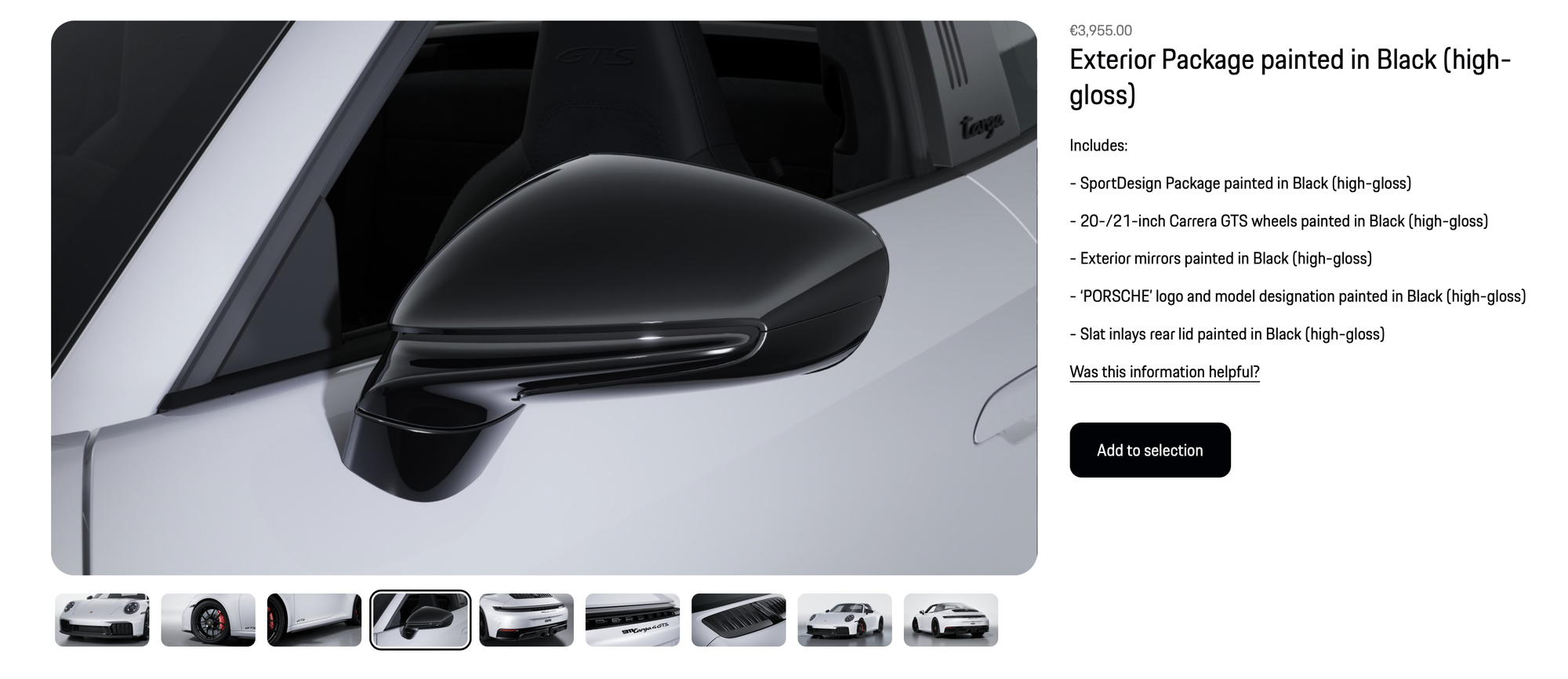
We'd have much preferred the default body coloured mirrors instead of paying thousands to paint them black. There are elements of this body package that we do like, particularly at the rear of the car.
Rev counter in white
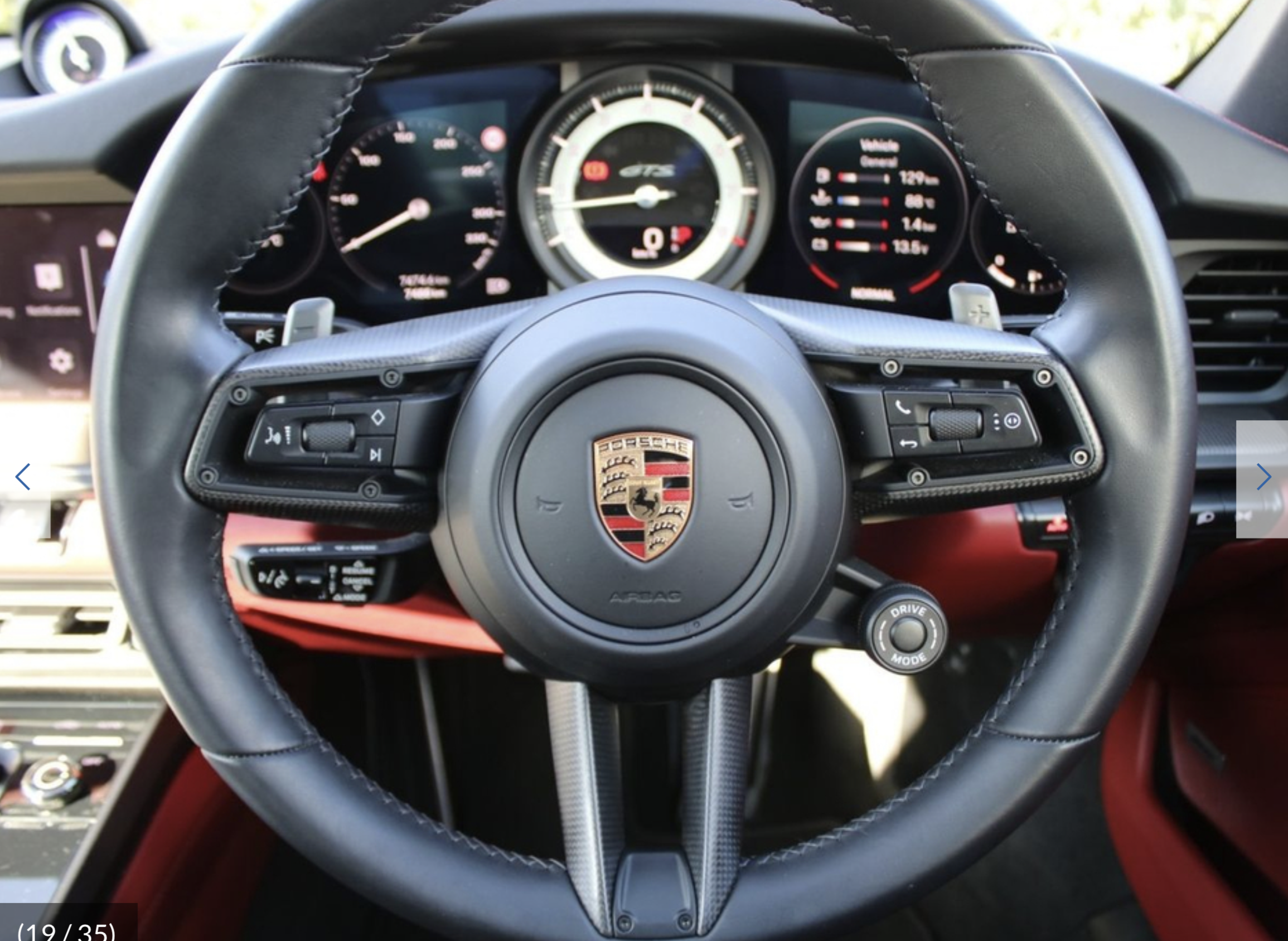
Probably the most trivial dislike overall, but it is also something that is straight in front of the driver. The default black dials look better and blend in with the rest of the dashboard.
The idea here was to bring the exterior colour a little into the cockpit, but the car is a beige Crayon colour and the dial is white!
It also sounds like something that would be easy to fix but you need to replace the entire instrument panel.
Sport Chromo stopwatch instrument dial in white
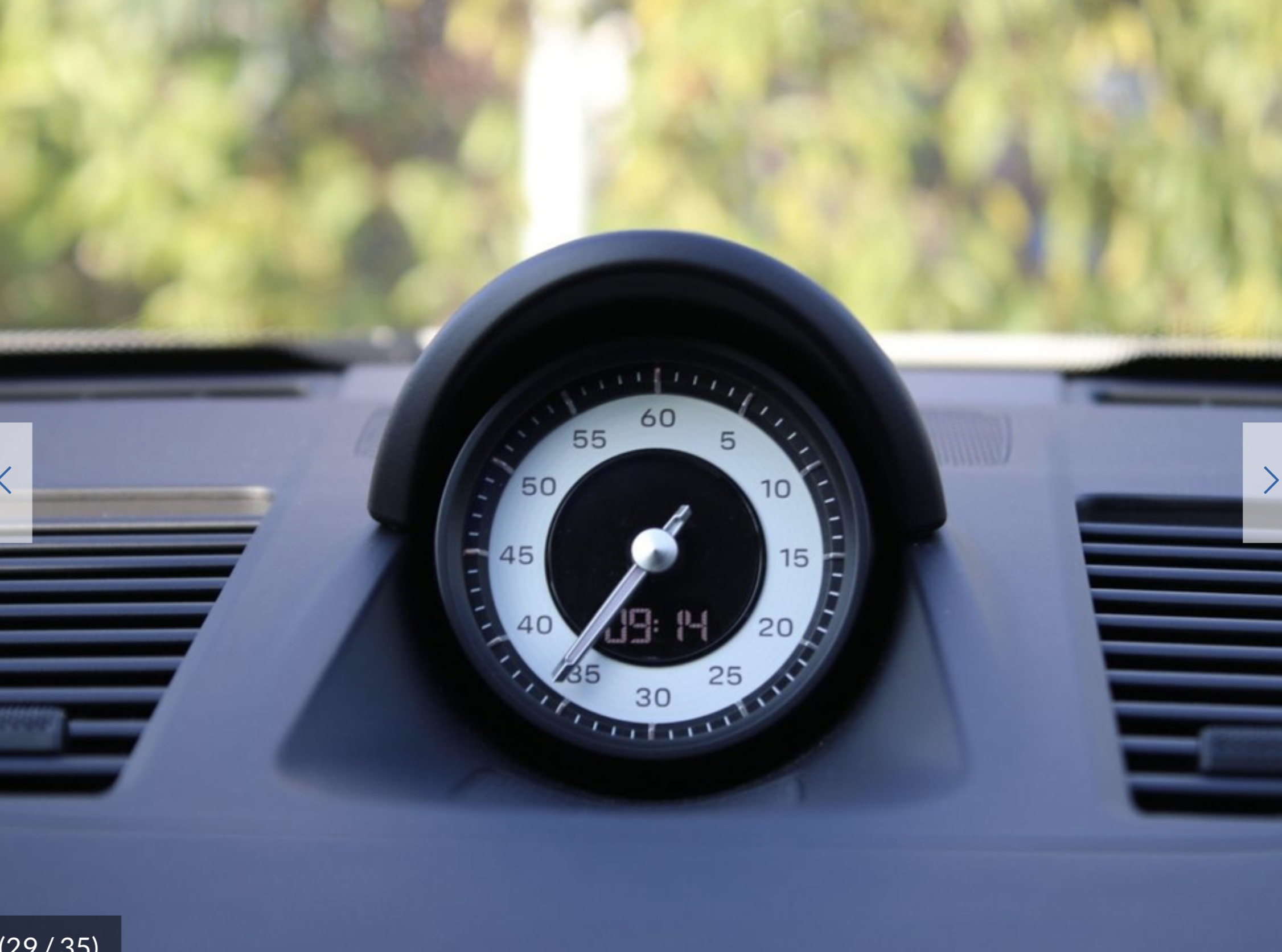
Same story as the rev counter, at least it is the same colour. Changing both dials from the default black would have originally cost about €750 each. That is definitely €1,500 I would have saved on.
Pedals in Aluminium
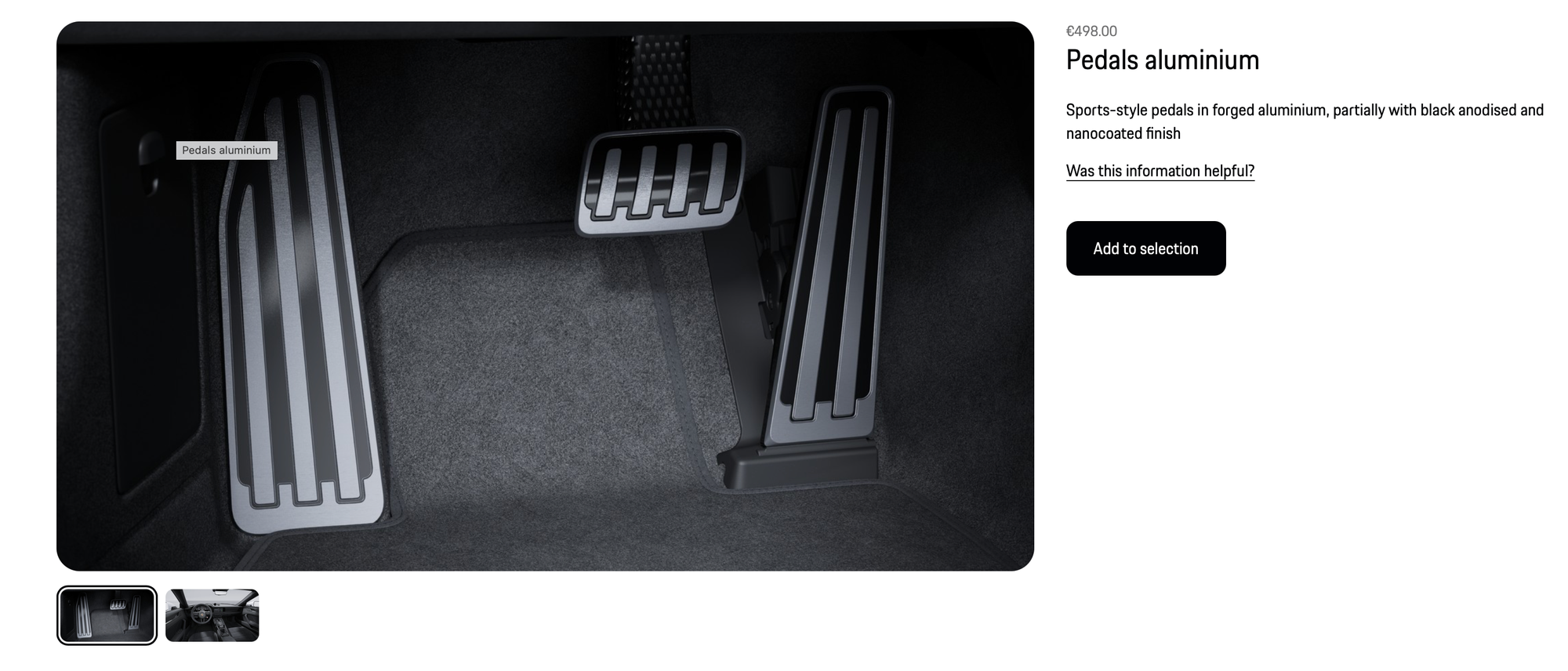
Not the biggest deal, but just don't really understand this option. You can't really see the pedals, even when getting into the car and they feel slightly slippery to me as opposed to the default grippy rubber.
PDK gear selector aluminium
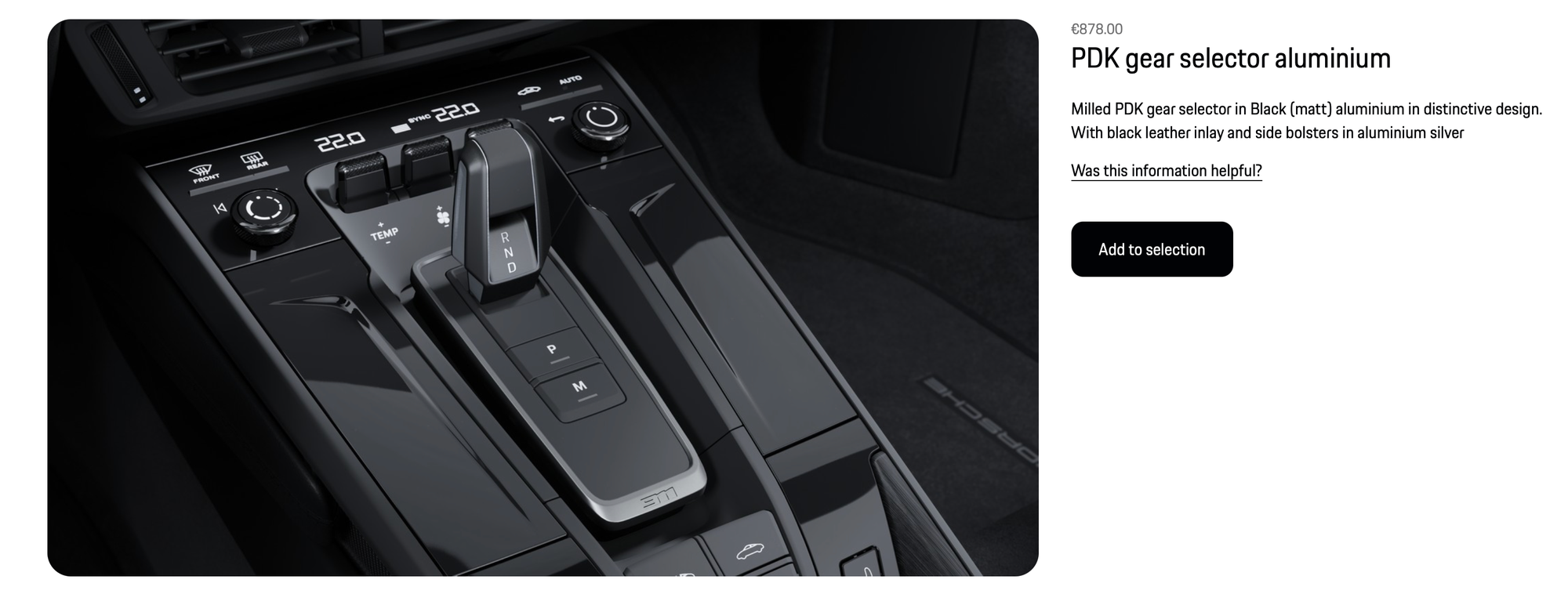
This is the smallest imaginable bit of leather and metal on the tiny gear shifter for €878. The standard one is fine and in fact has the same look and feel as the climate controls – which means it's more cohesive than the one in our car.
Model logo on storage compartment lid
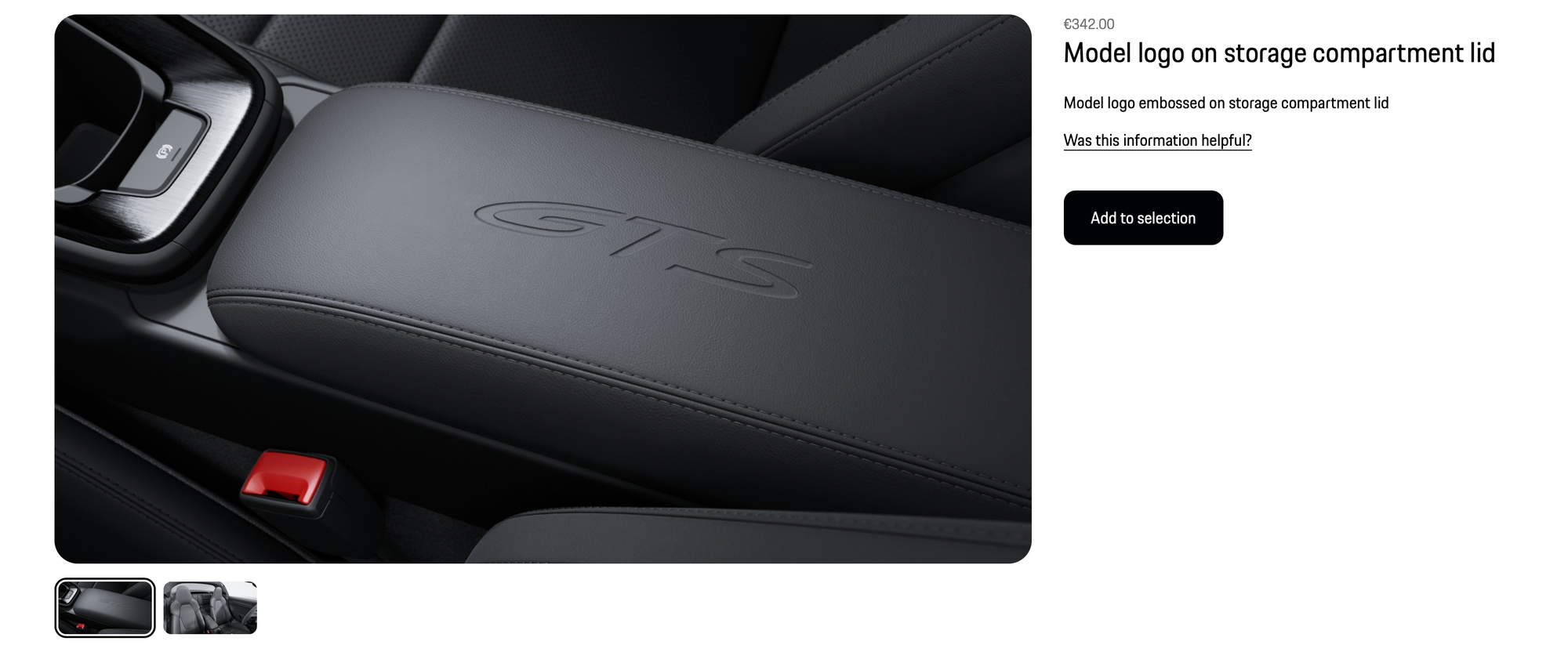
This is a nearly unnoticeable option on the top of the storage lid between the passenger seats. However, the conventional advice is to choose either the logo on the headrests or on the storage lid but not both.
Conclusion
Despite not originally configuring this car ourselves, it is the best car we've ever owned. The things we like about it far outweigh the few cosmetic changes we would have made.
Despite the thousands of moving parts involved in a conventional combustion drivetrain, compared with the relatively small number in an electric drivetrain, this car has been absolutely flawless. It is as enjoyable cruising at 80 km/h around the Lakes of Killarney as it is at 300 km/h on the autobahn.
When you drive a 911 Targa you can really feel the 60+ years of refinement that has gone into this car.
With the amazing new hybrid Targa now available, we have an extremely strong soft spot for this MY24 model that has absolutely no electrification whatsoever and is the last Targa GTS to be built with a fully mechanical drivetrain.
We can hardly believe that we own a 911 Targa here in Ireland and get to use it as our adventure car. And there is still so much of Europe left to explore with it: the mountains of northern Spain, island-hopping through the Greek islands, crossing the Transylvanian Alps in Romania, and eventually driving the historic Targa Florio route in Sicily — the road race from which the Targa takes its name.
If anything, the hardest part is deciding where to point it next.
Porsche 911 Targa 4 GTS roof opening