Day 3: Driving the B500
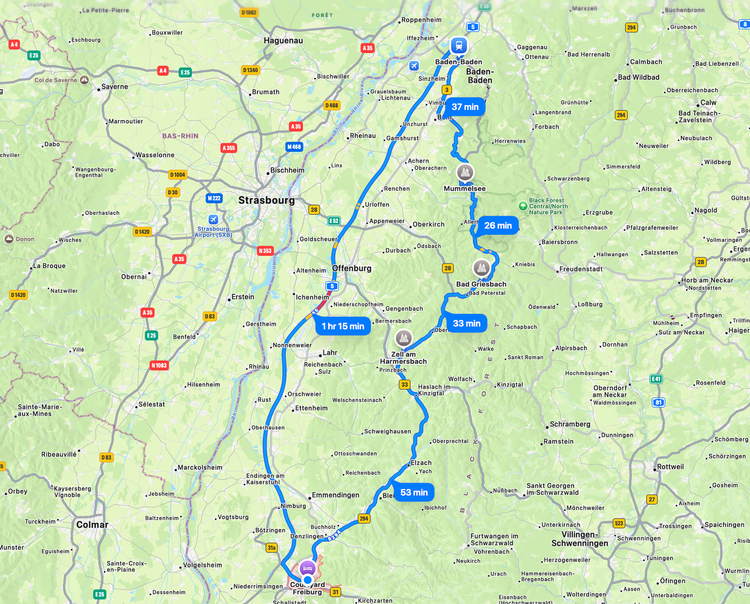
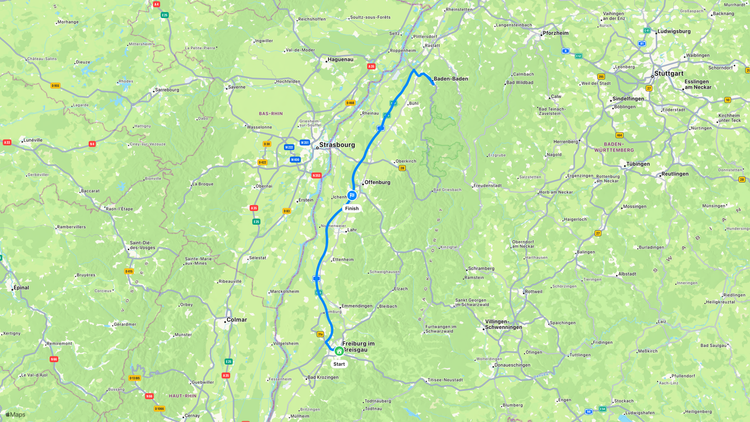
Today we drive a large section of the most famous road in the Black Forest, the B500.
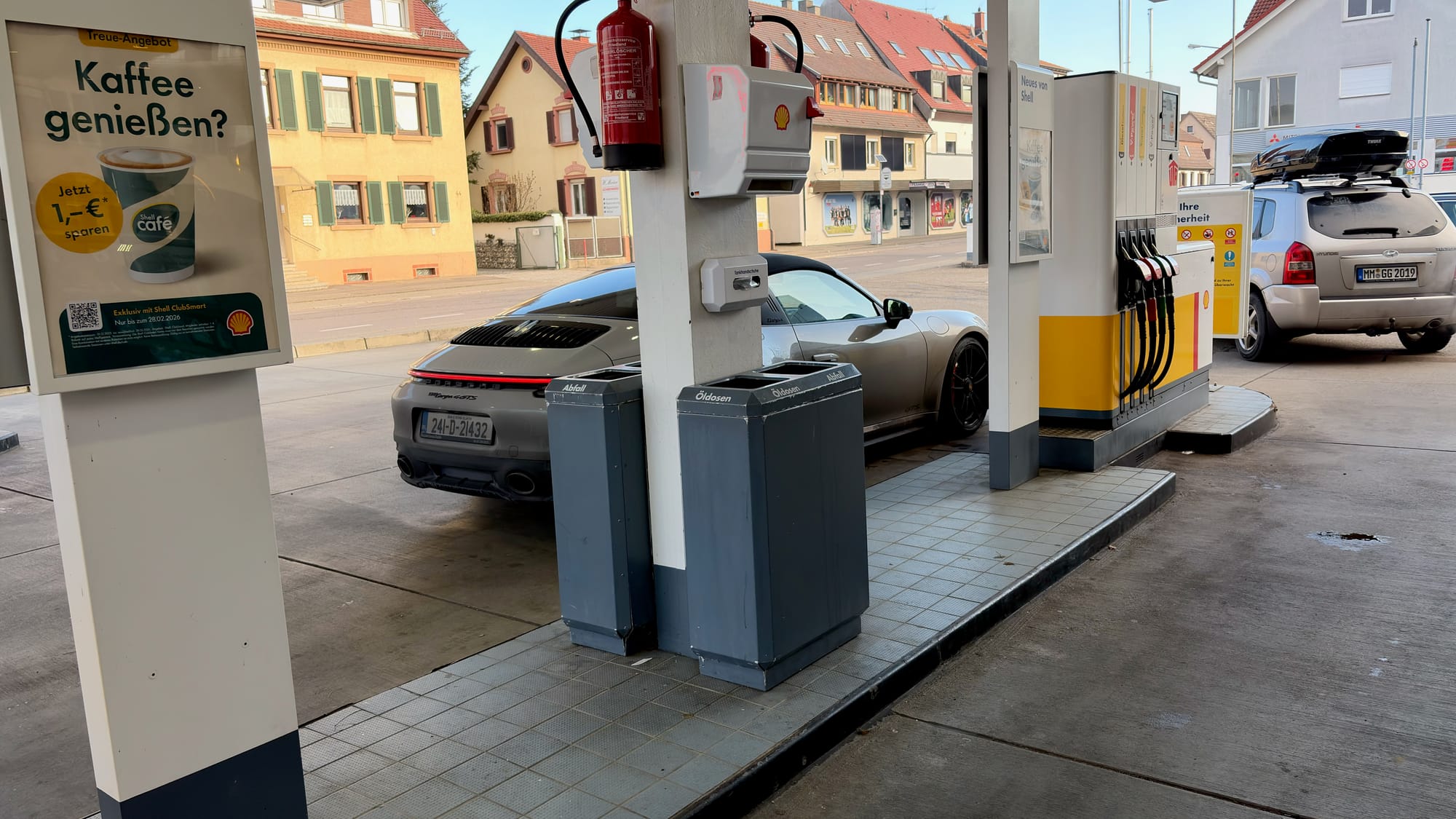
First we grab some energy at our local Shell station here in Freiburg – taking on board our first 100 octane fuel. Totally excessive for our car but the only fuel available nearby that is higher than 95.
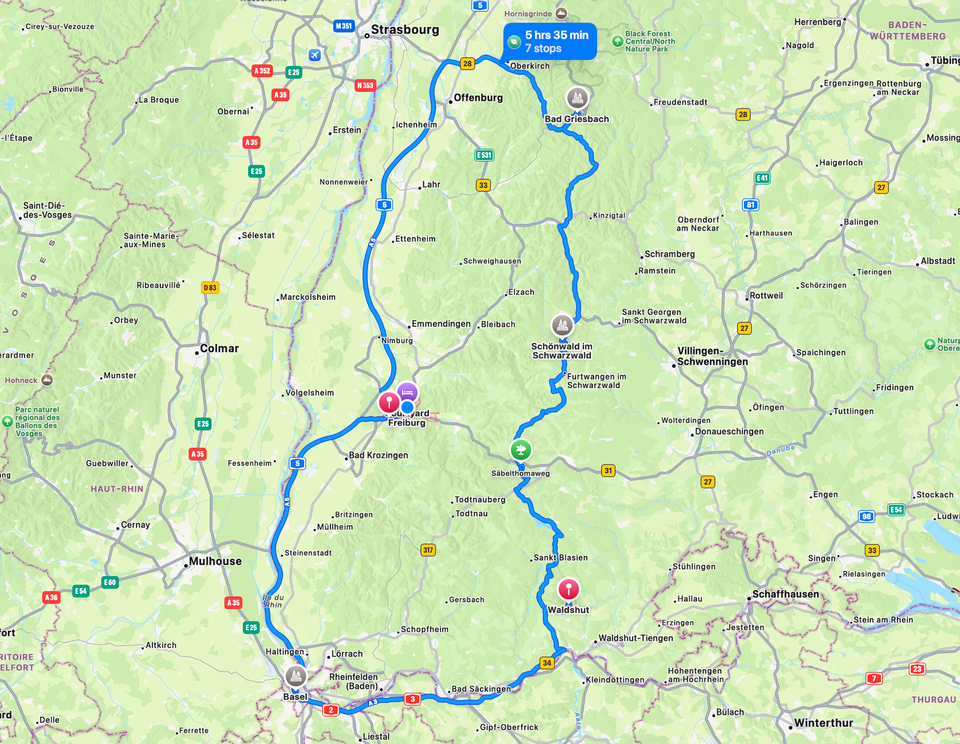
We then head onto the A5 autobahn towards Basel. To find the proper start of the B500, we're going to nip into Switzerland for a few kilometres.
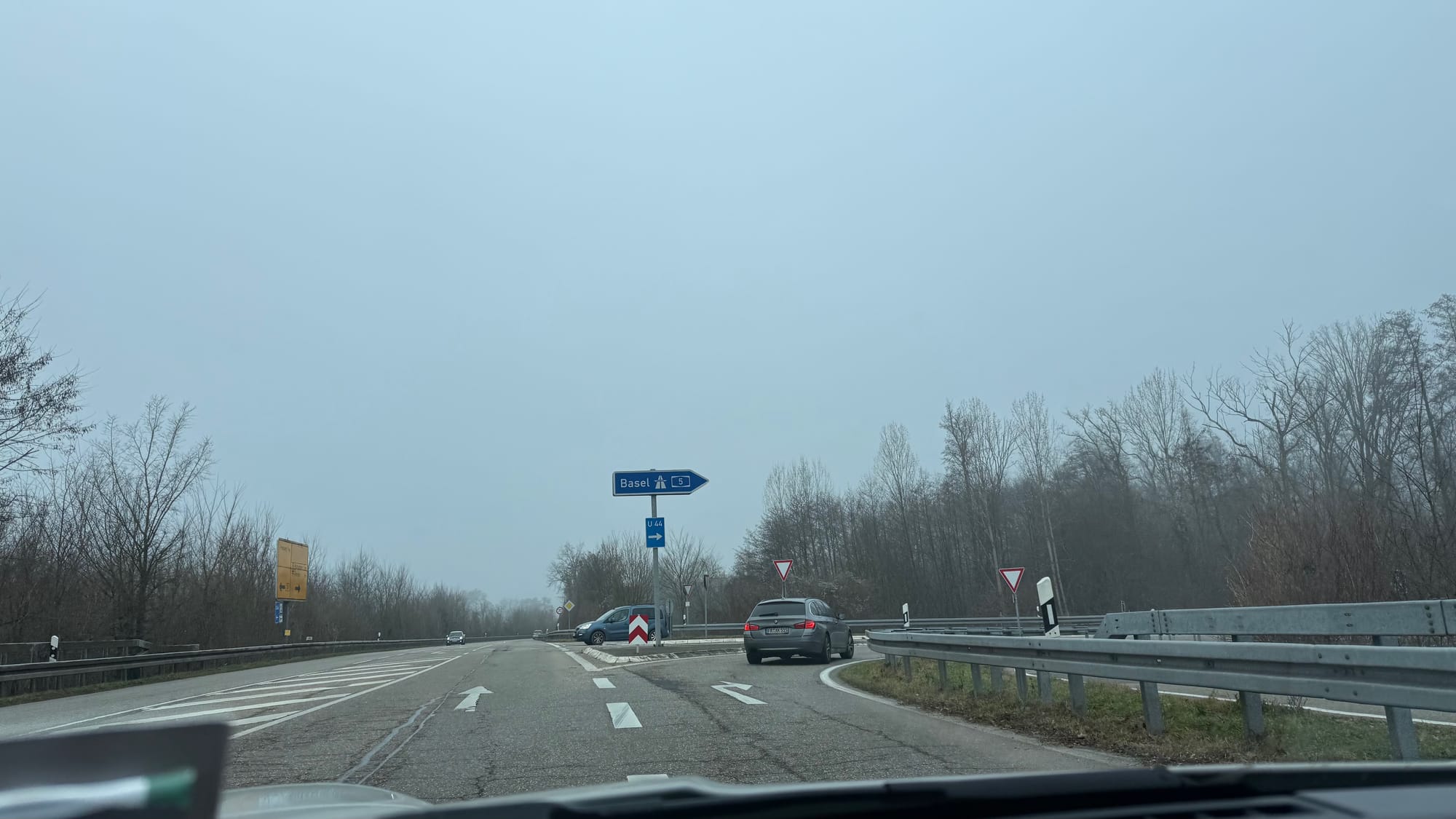
The fog from yesterday is still present as we head south. It is shaping up to be a lovely crisp winters day here.
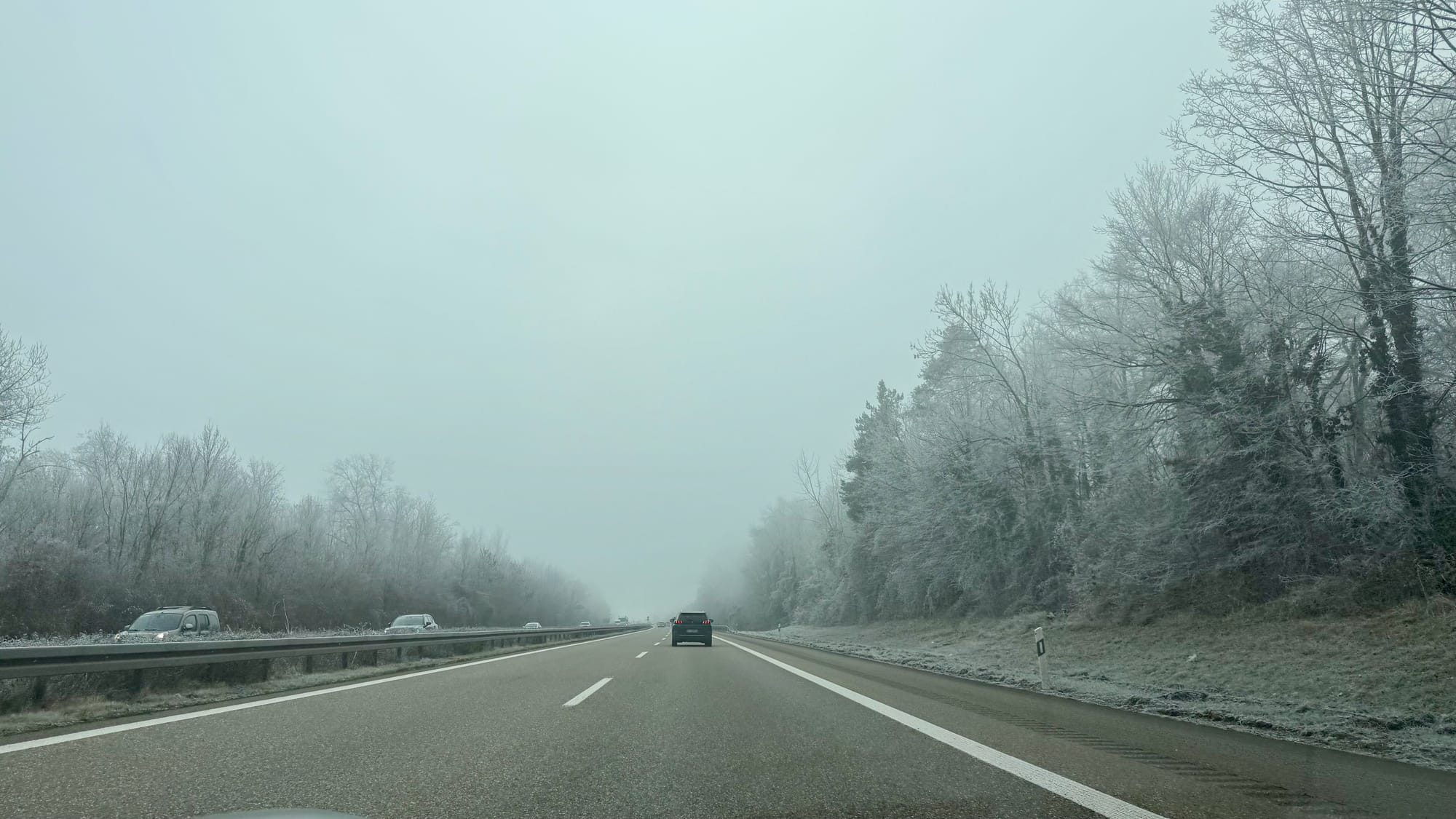
We cross over the border into Switzerland with no delays. Taking advantage of the "digital" vignette that is already registered against our car from earlier in the year.
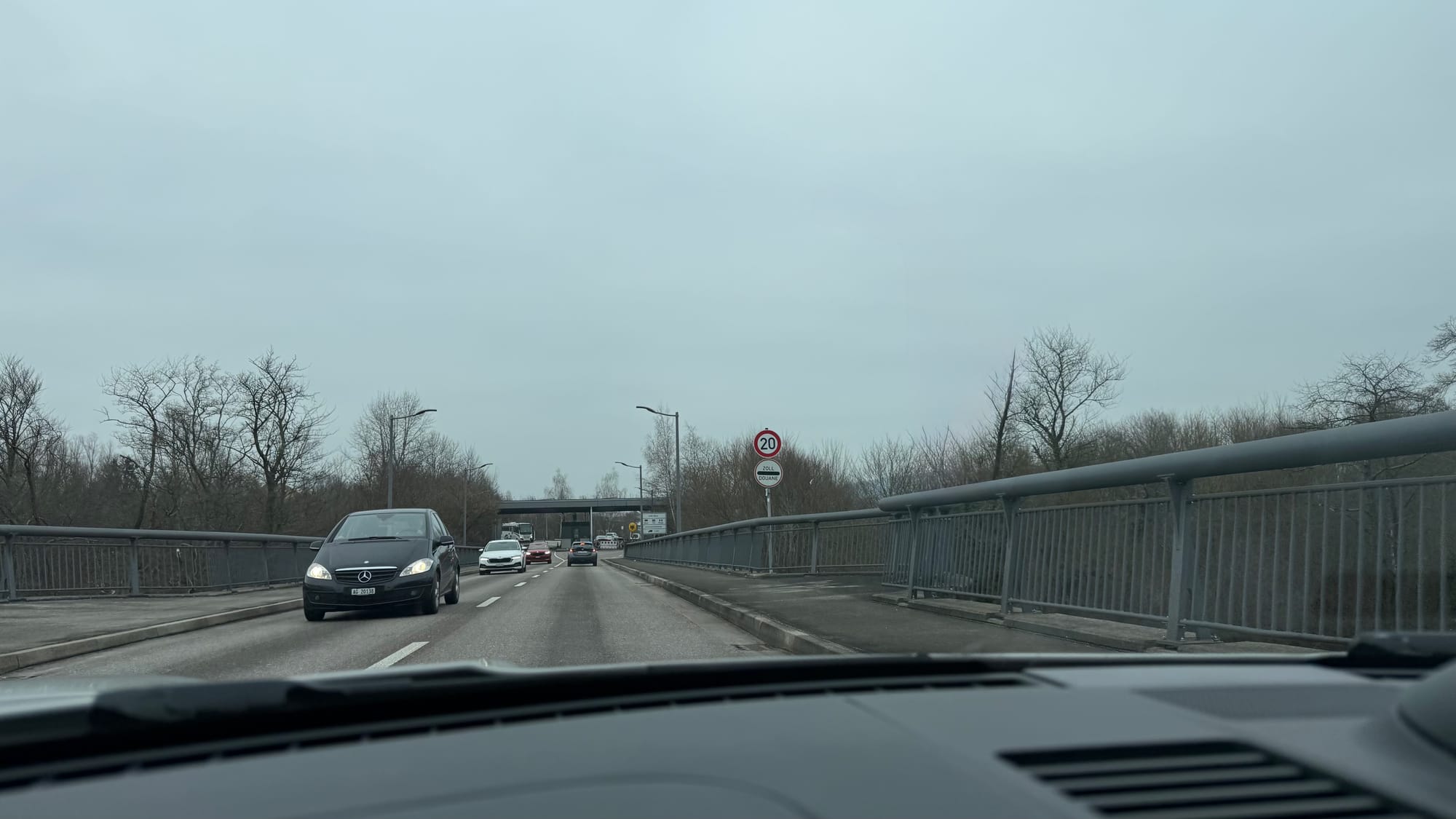
And twenty minutes later cross back into Germany.
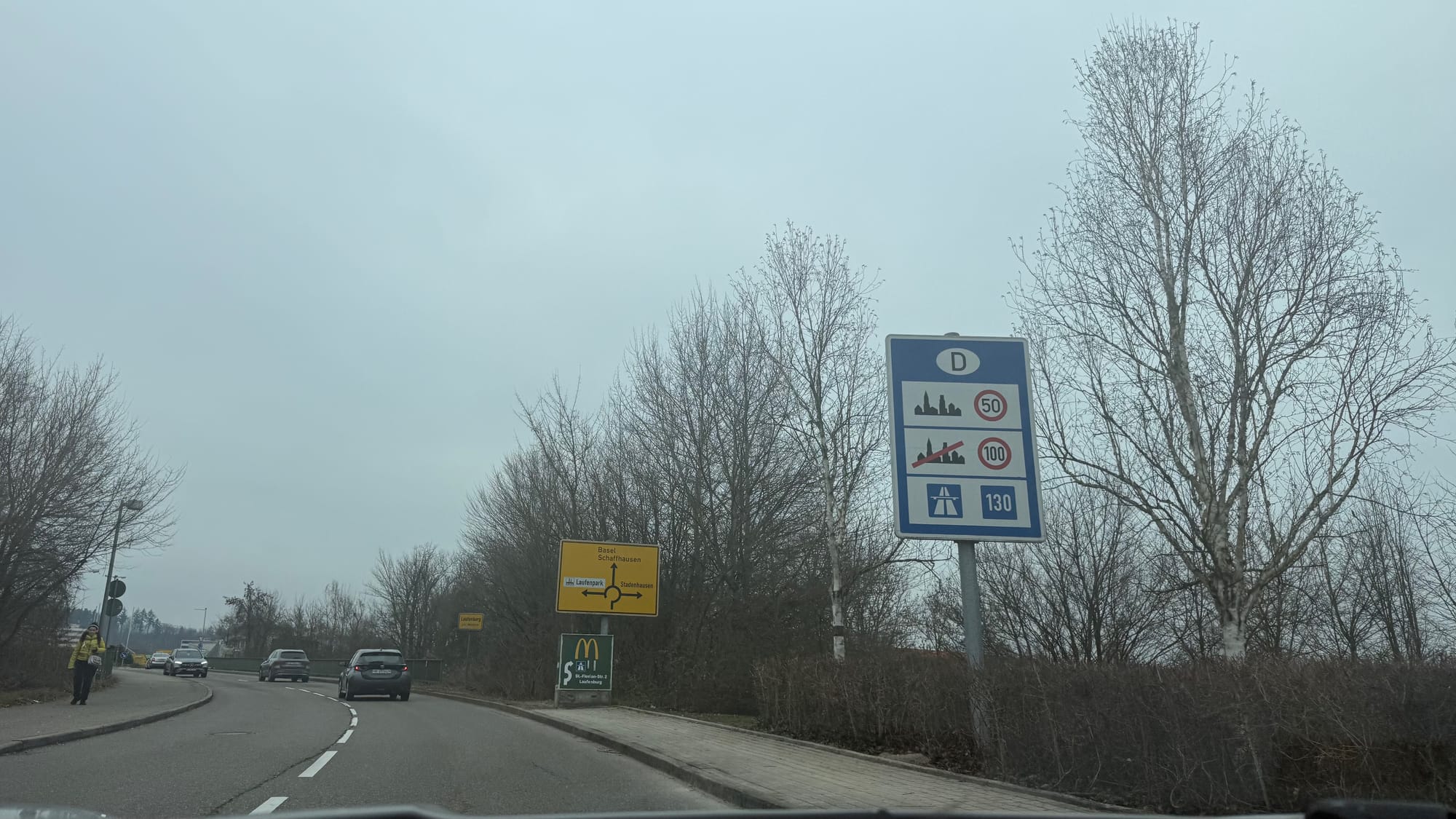
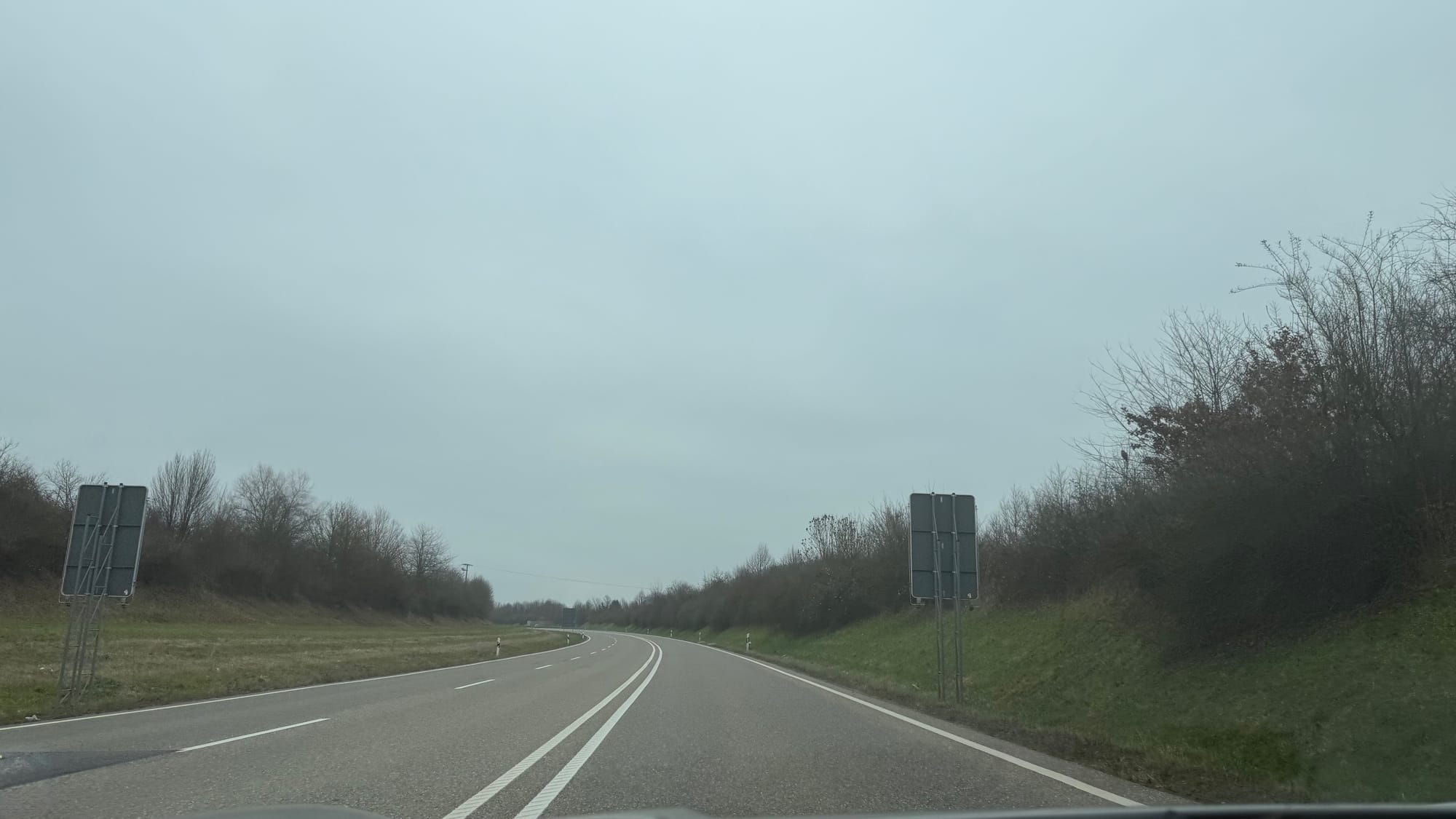
As we get closer to the B500 – away from the motorway network – the road traffic gets lighter.
Nuclear power
As we drive along the German/Swiss border we see the Leibstadt Nuclear Power Plant across the river in Switzerland.
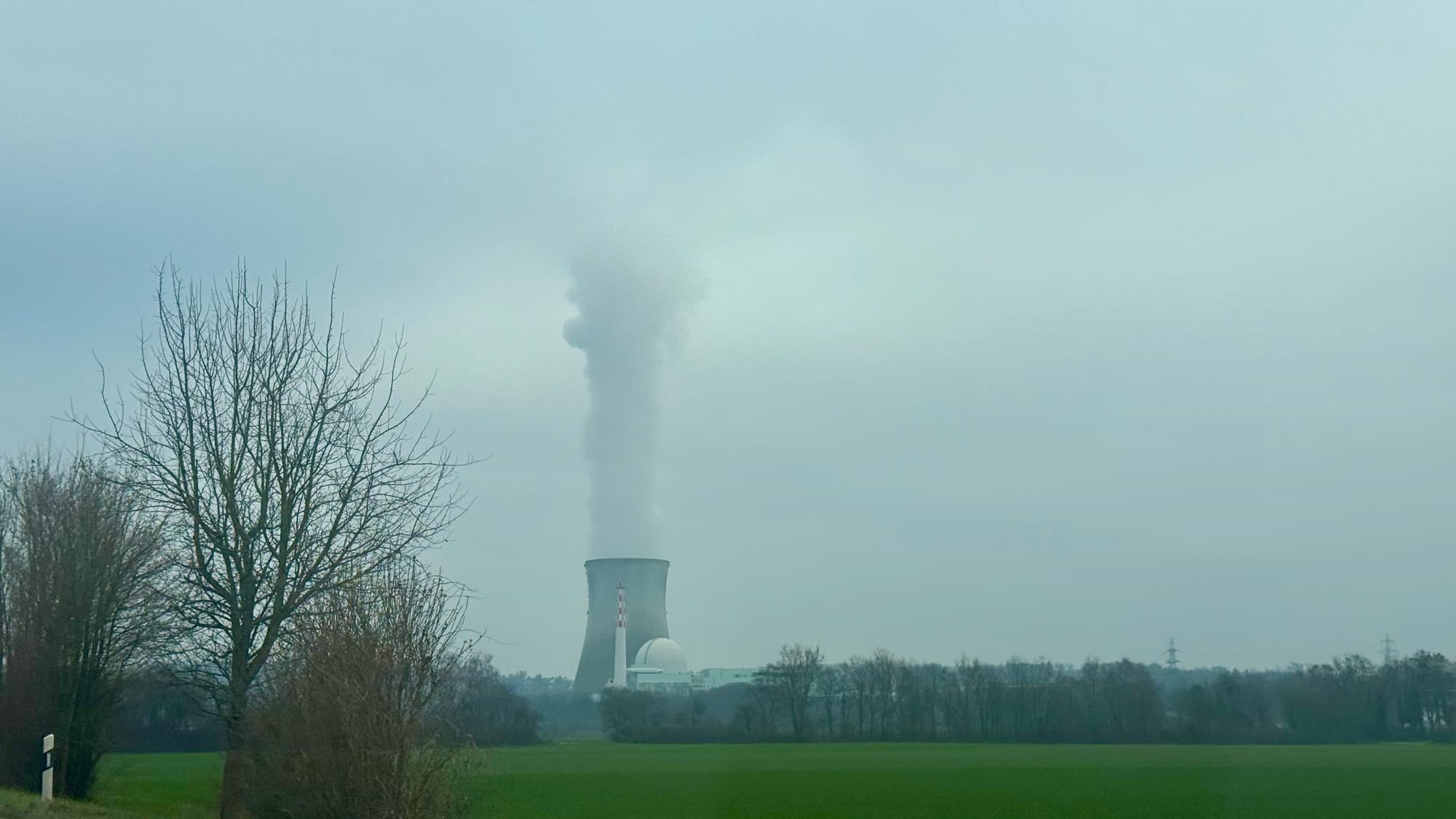
The state of Baden-Württemberg had three nuclear power stations itself but they have all since been decommissioned after the federal German government decided to phase our nuclear energy generation after the Fukushima accident in Japan.
In many ways a nuclear power station in Ireland would help a lot with our own climate goals, but it isn't very practical due to the small size of our grid and the relatively isolated nature of being located on a small island. Instead, our strategy is to build out our offshore wind capabilities.
In the meantime, we import excess nuclear energy currently from the United Kingdom and soon – it is currently being constructed – directly from France.
Finding the B500
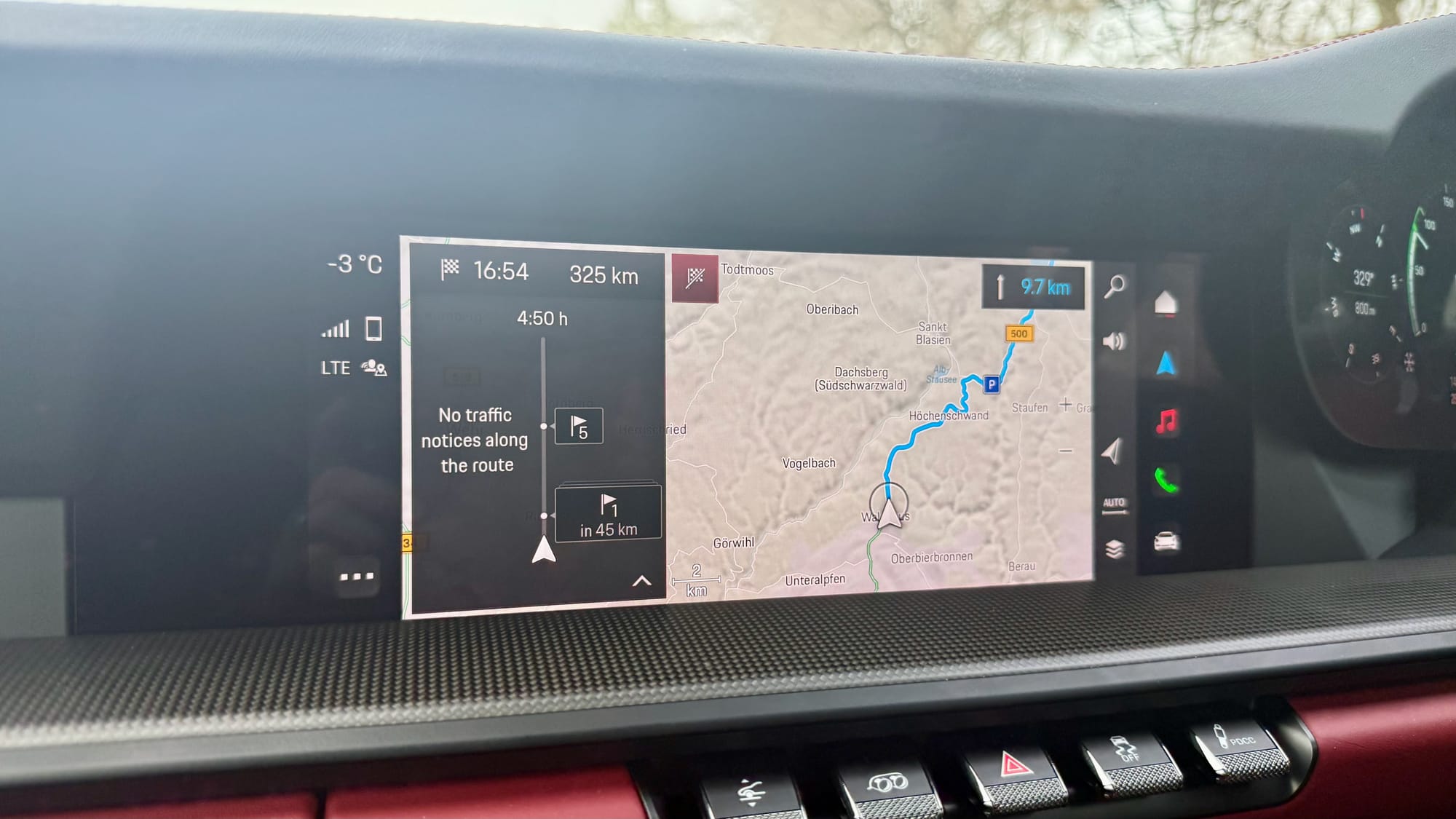
As we find the start of the B500 near Waldshut the outside temperatures drop to minus 3 celsius – the lowest we've experienced yet in this car.
With clear blue skies, strong winter sun and frosty clear air – we couldn't have planned for better weather we are getting this week.
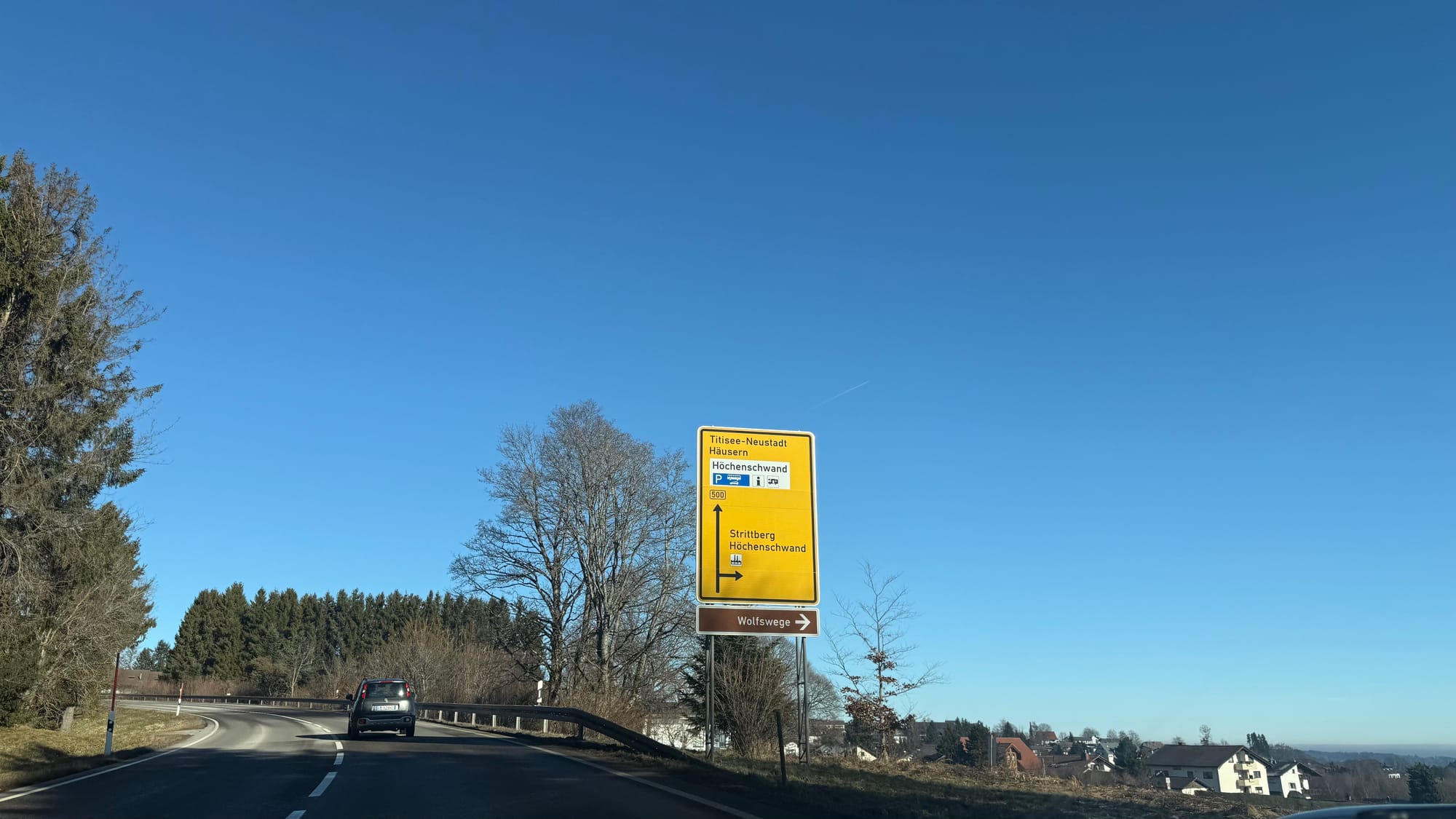
As we ascend the trees of the Black Forest proper.
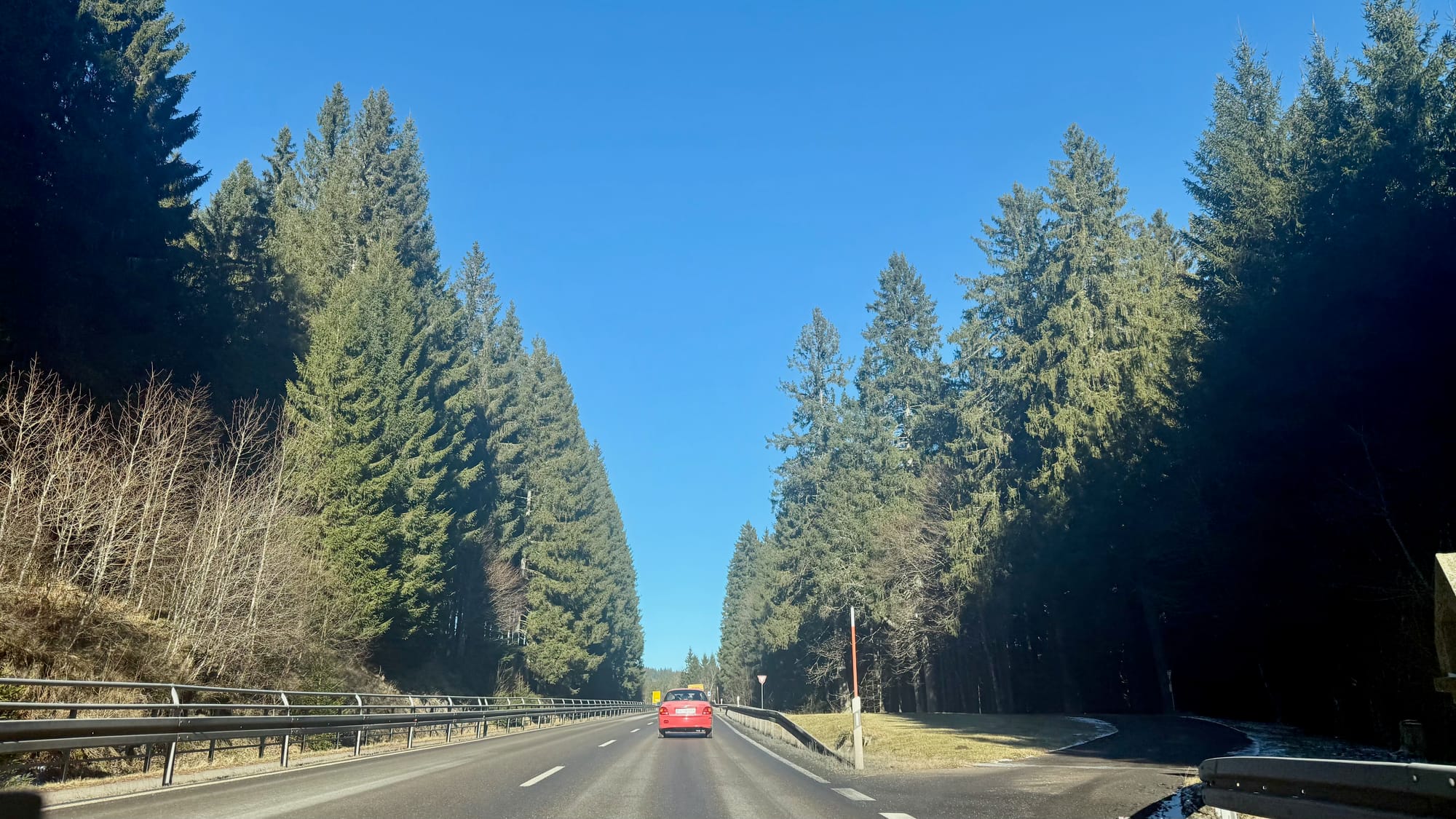
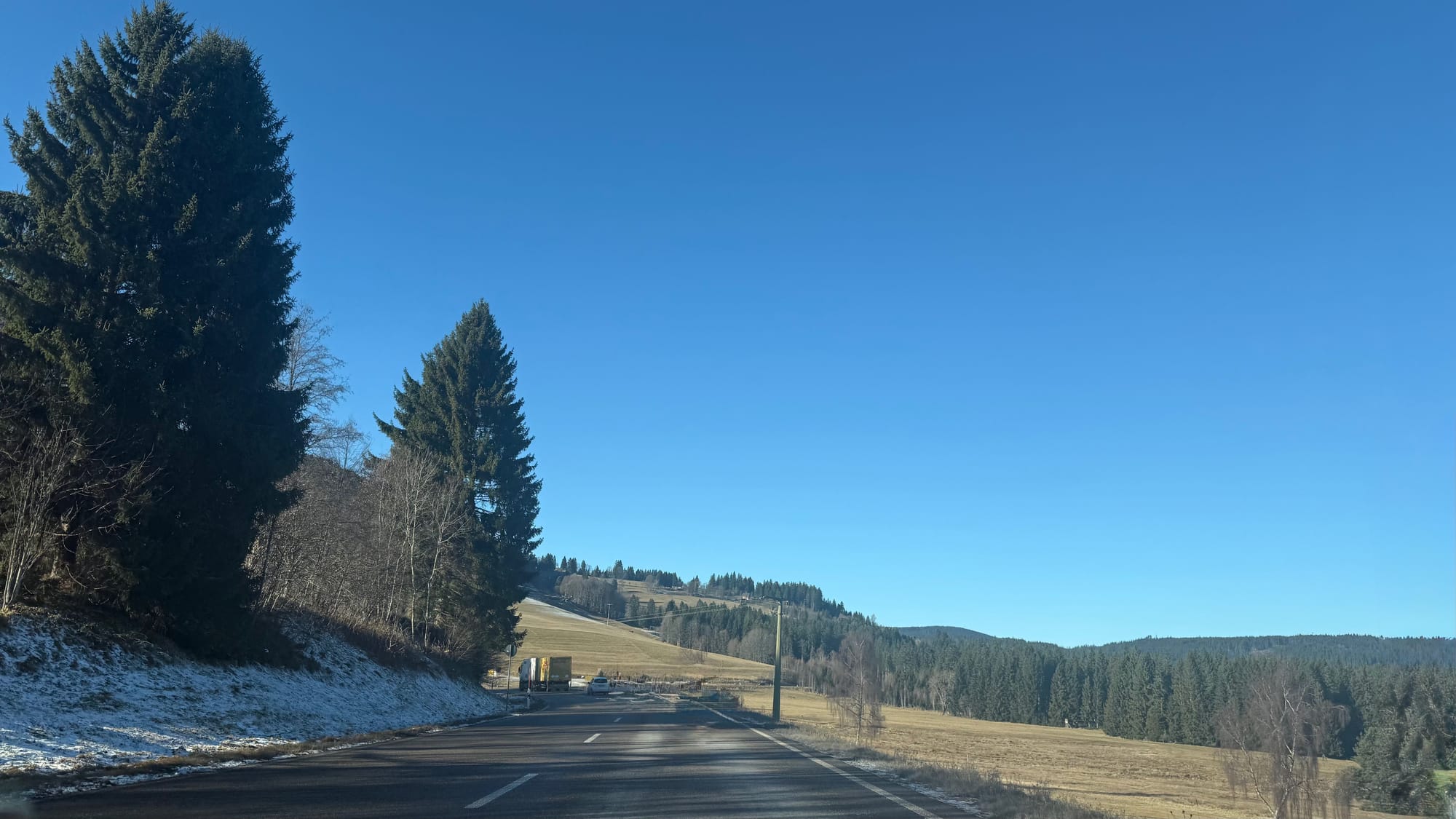
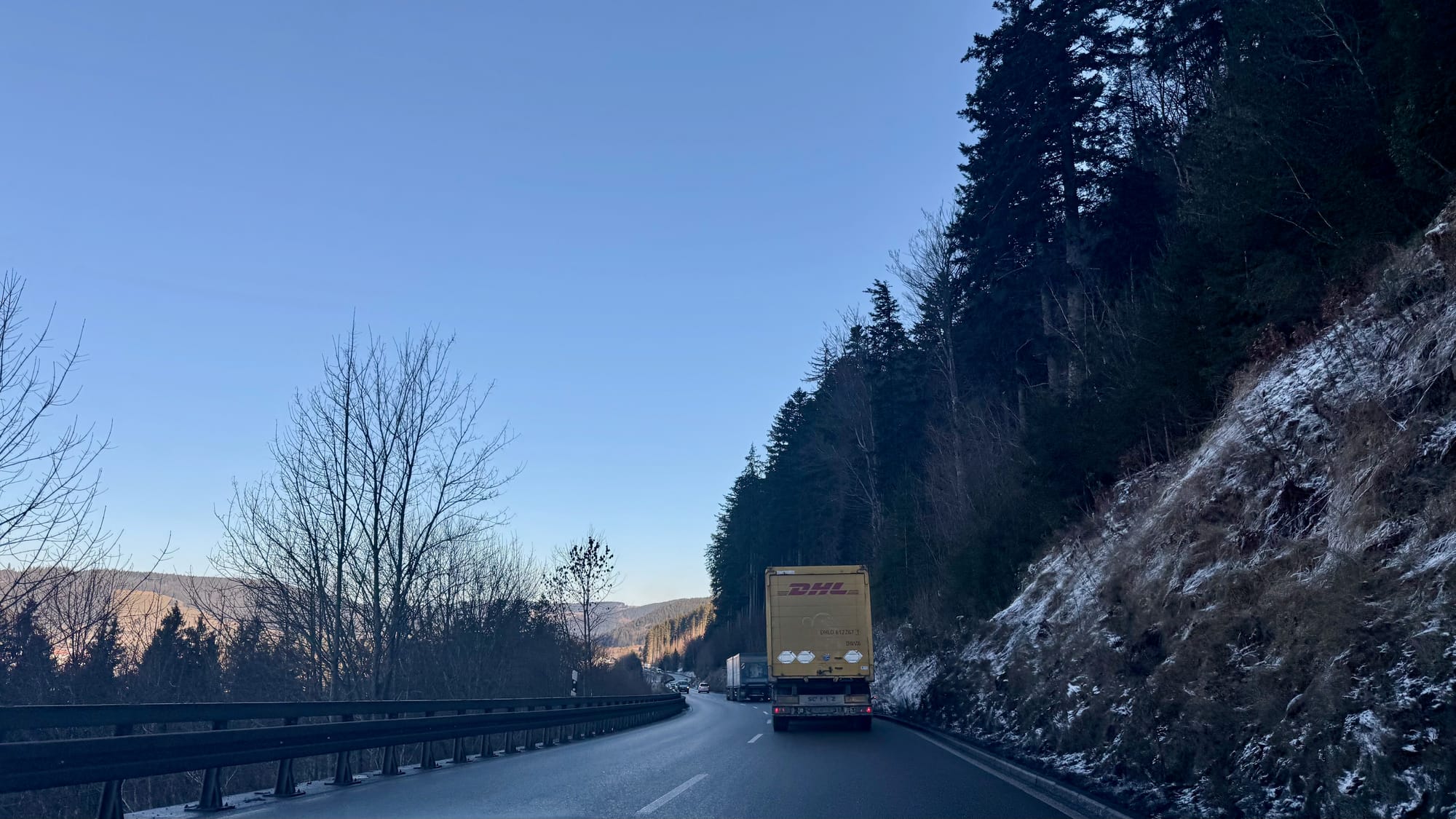
Sometimes getting stuck behind a truck is a reminder that this is still a "real area" where people live and work and not just a tourist trail.
Targa roof
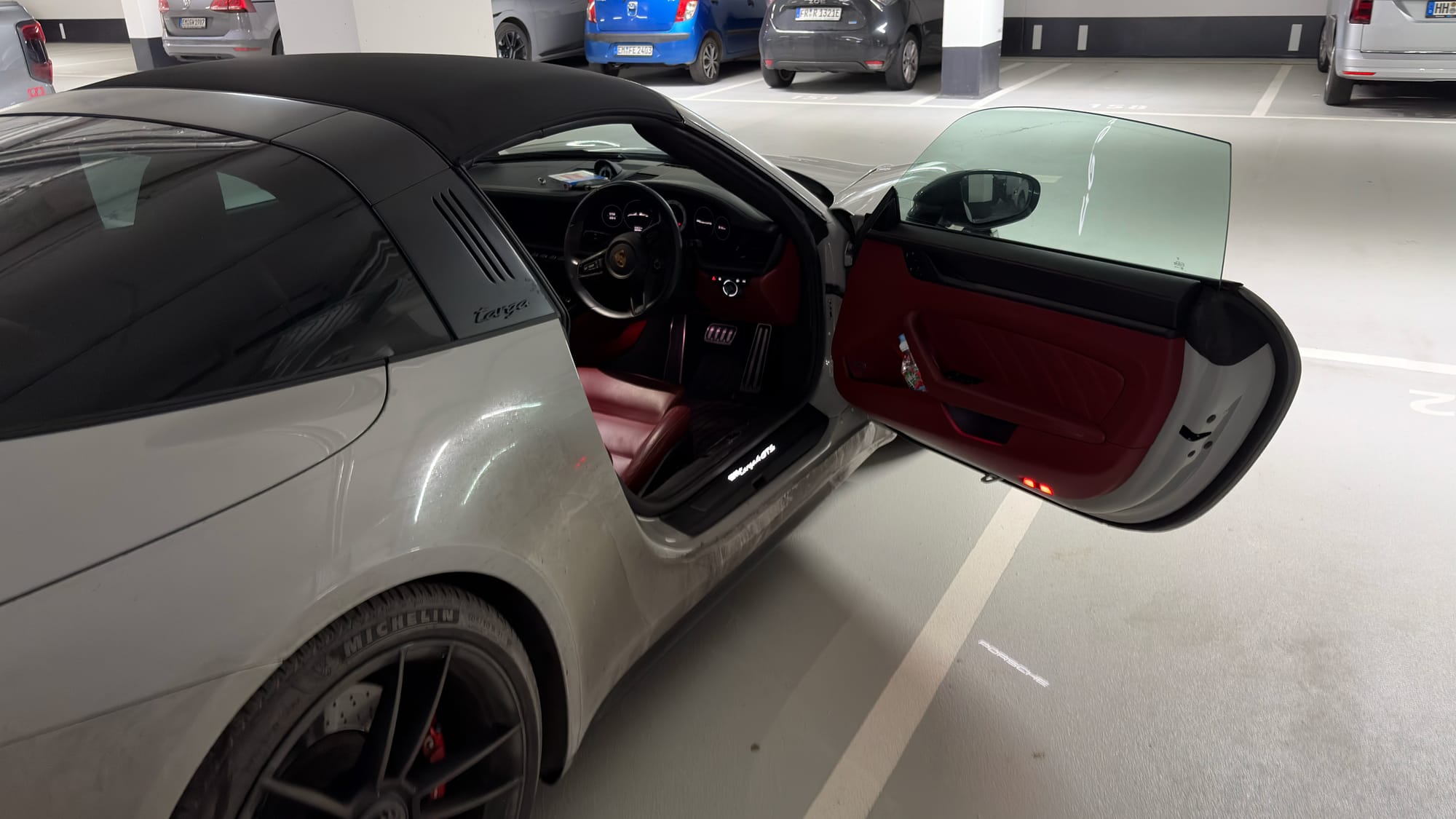
Despite the cold air temperatures, we decide to put down our roof for a true open-top winter driving experience. The 911 Targa is after all marketed as the "all weather" convertible by Porsche!
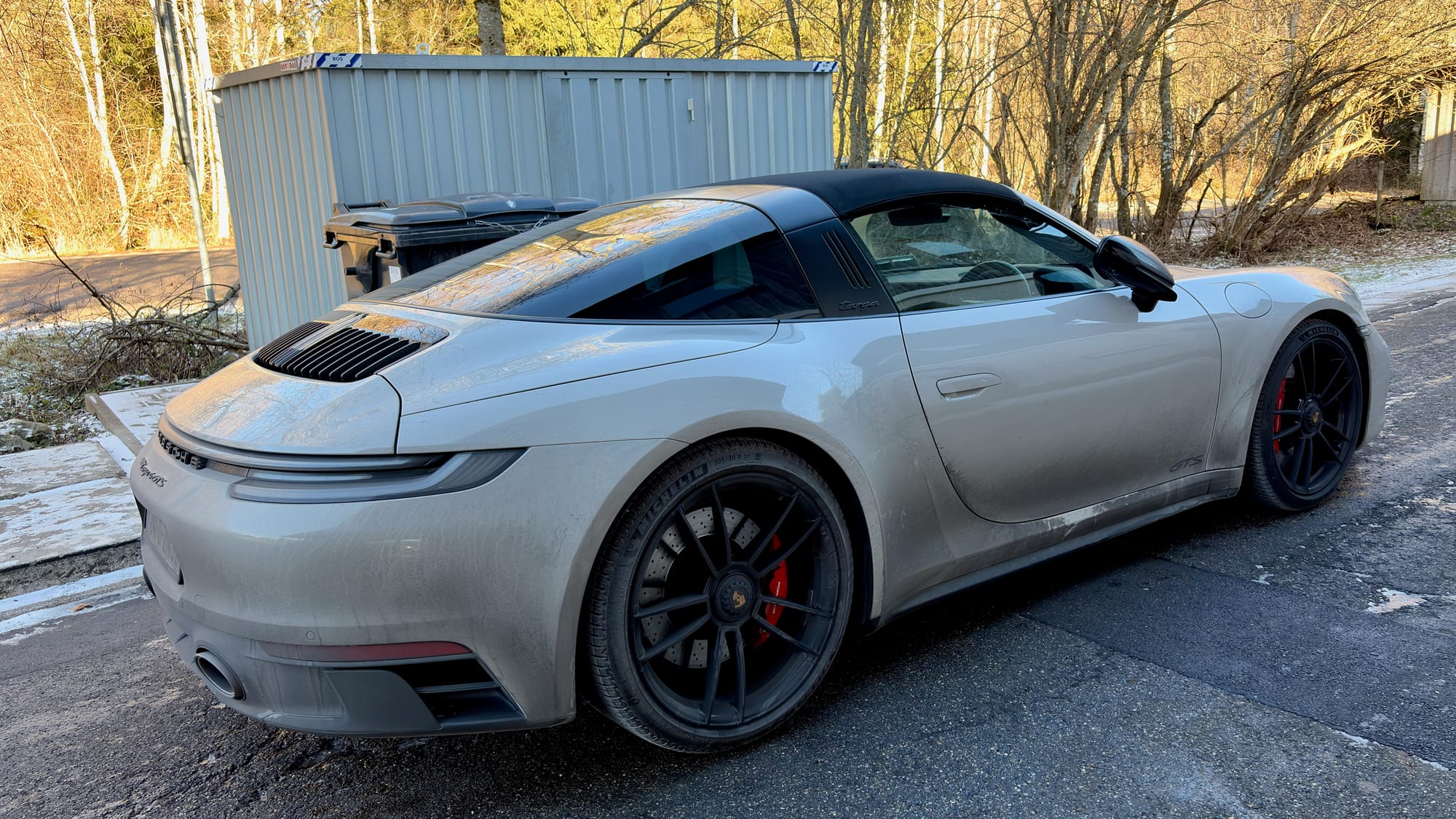
Despite us putting up and down the roof hundreds of times, since we got the car, this time, a piece of roof trim caught on the Targa bar while it was opening and ripped it clean off!
As we were standing outside the car opening the roof with the key fob, we witnessed it happening and not still sure how it happened.
Thankfully our car is due to go in for its 2-year/30,000 km service next week at Porsche Centre Dublin, so we'll get it looked at as a warranty item then. At least it is only a internal cosmetic issue and doesn't impact our trip in any way.
Back to the B500
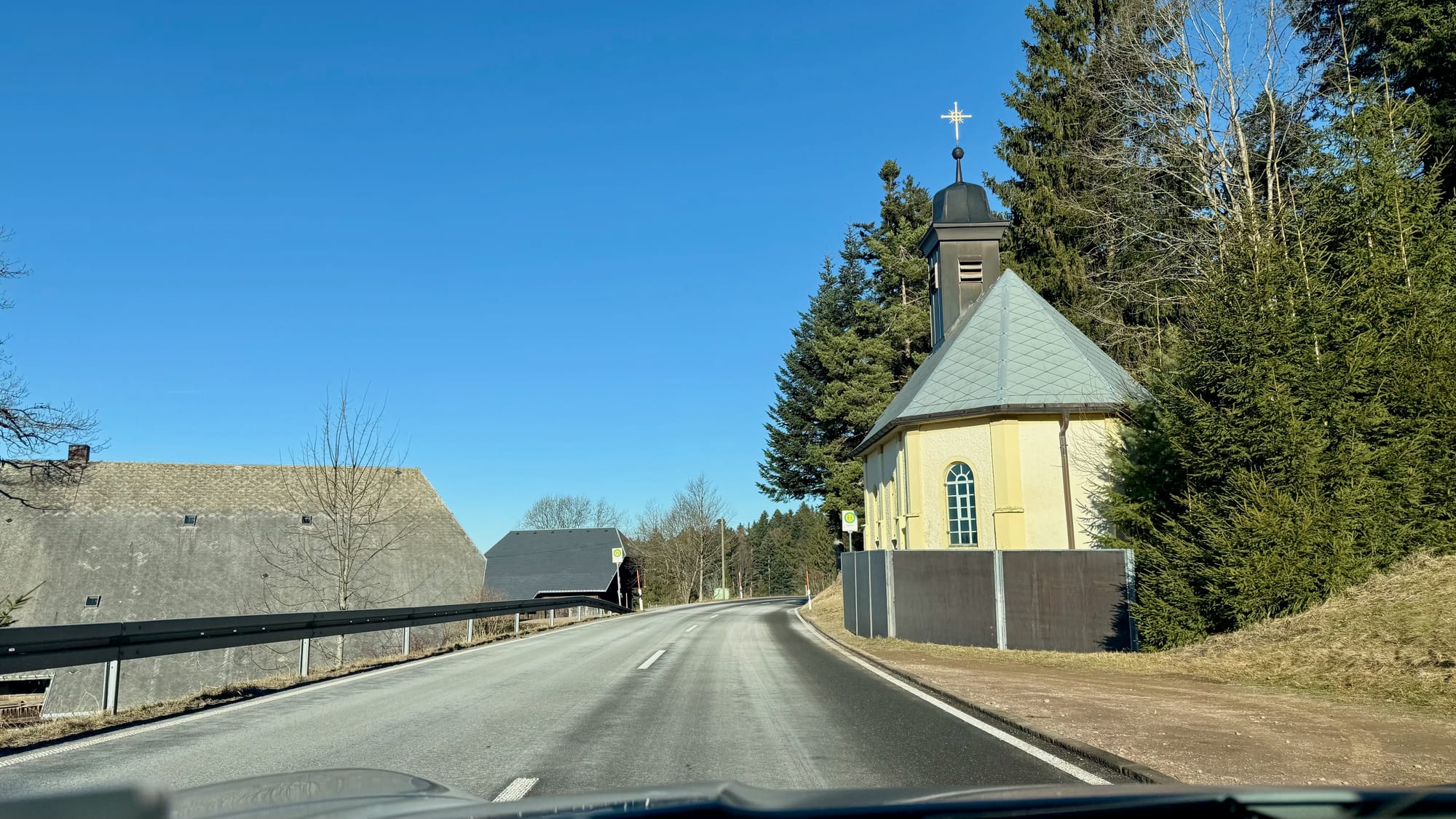
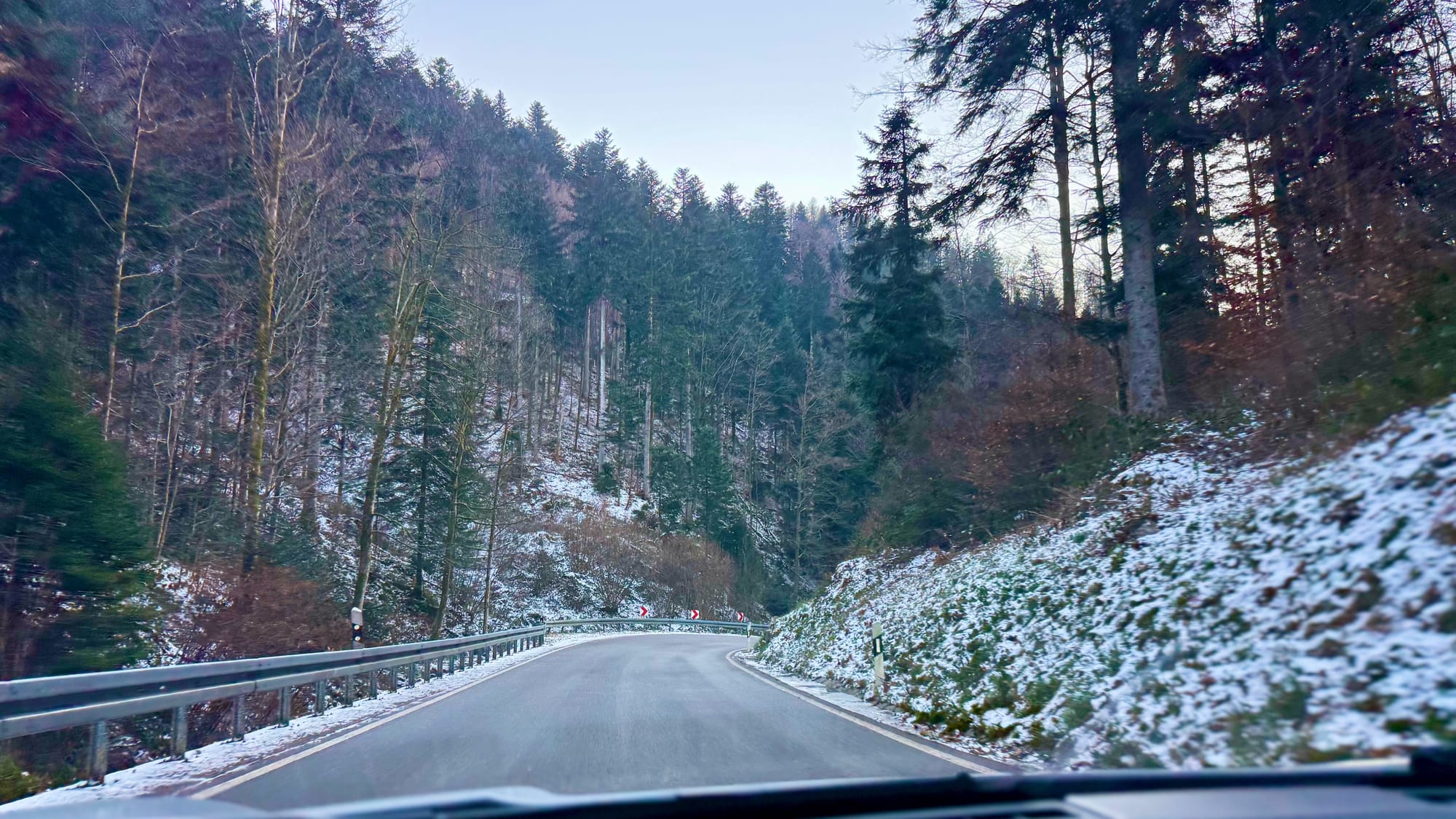
Thankfully despite the cold, it is so dry there isn't much ice on the road.
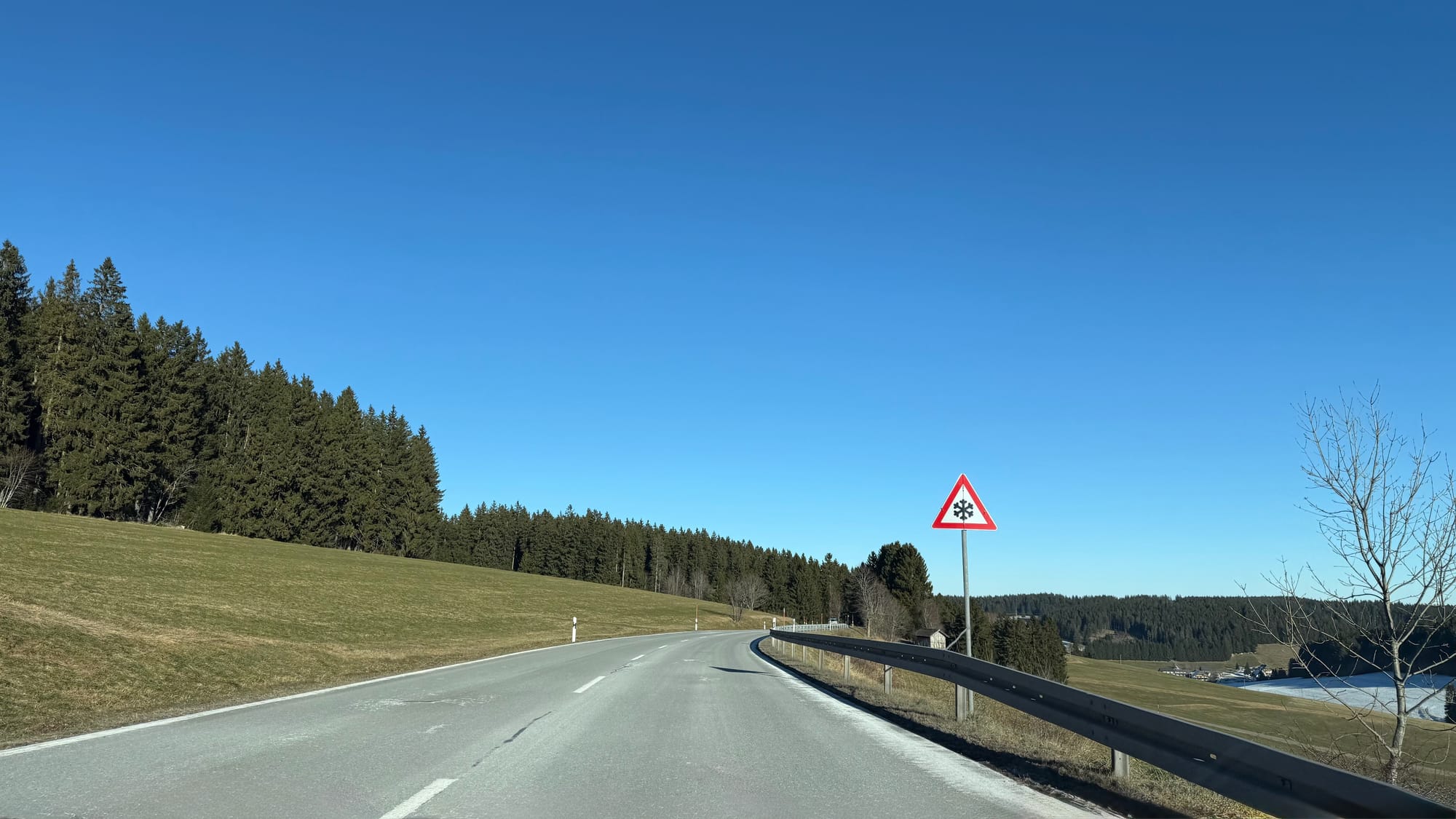
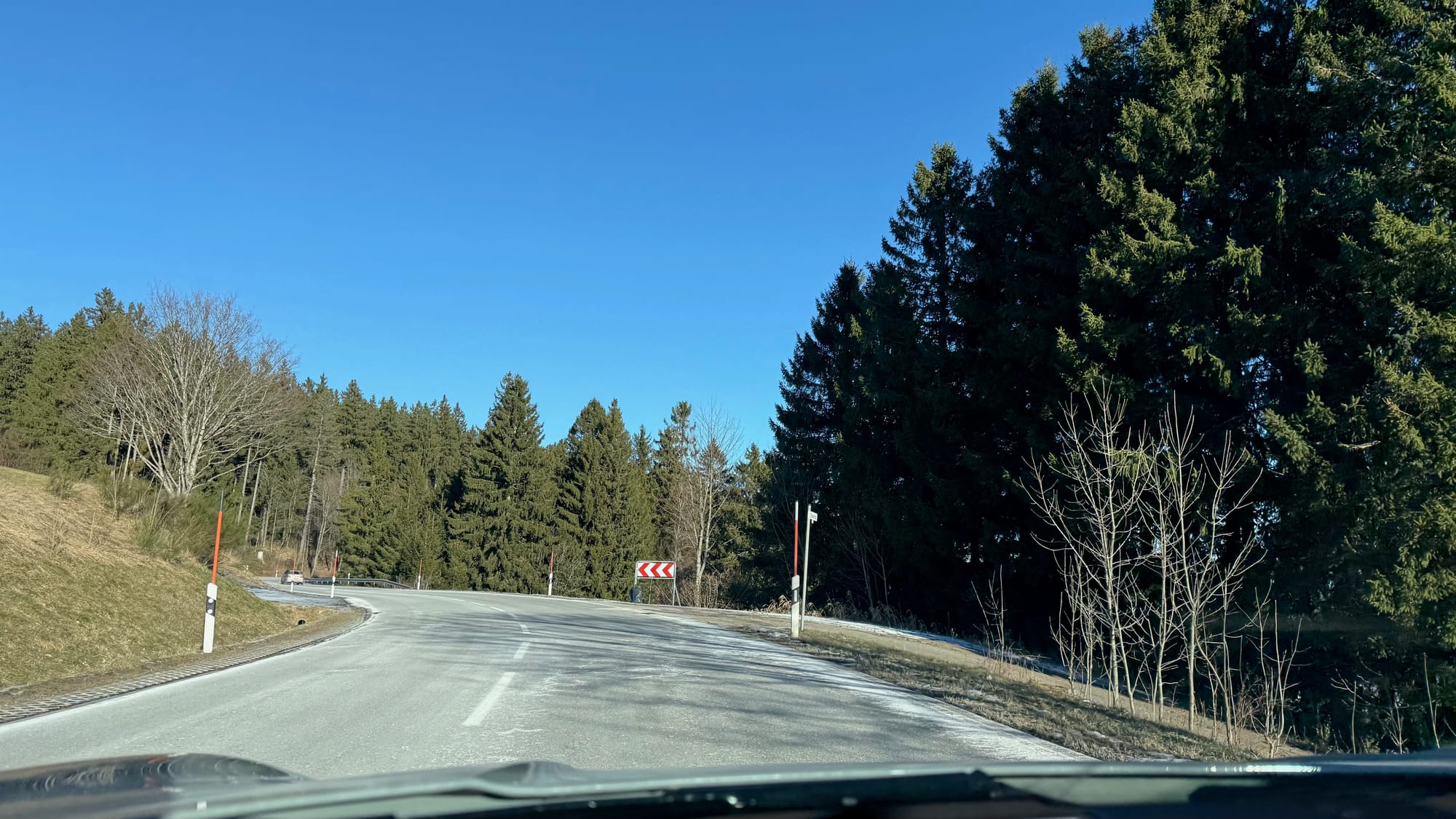
Very light dustings of snow – more frost really – line the side of the road in places where the sun can't reach.
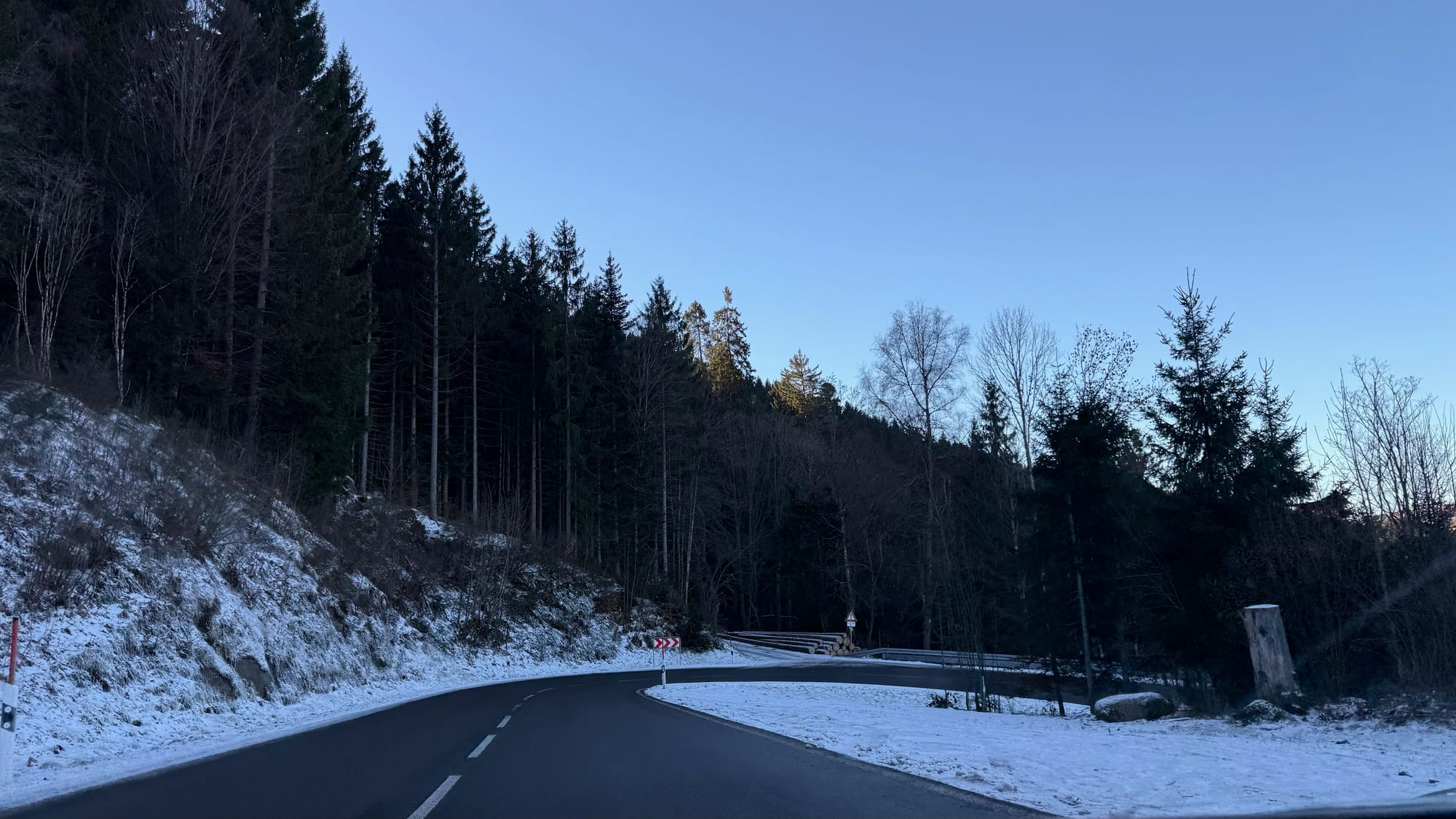
Triberg
We decide to stop off in Triberg for a late lunch.
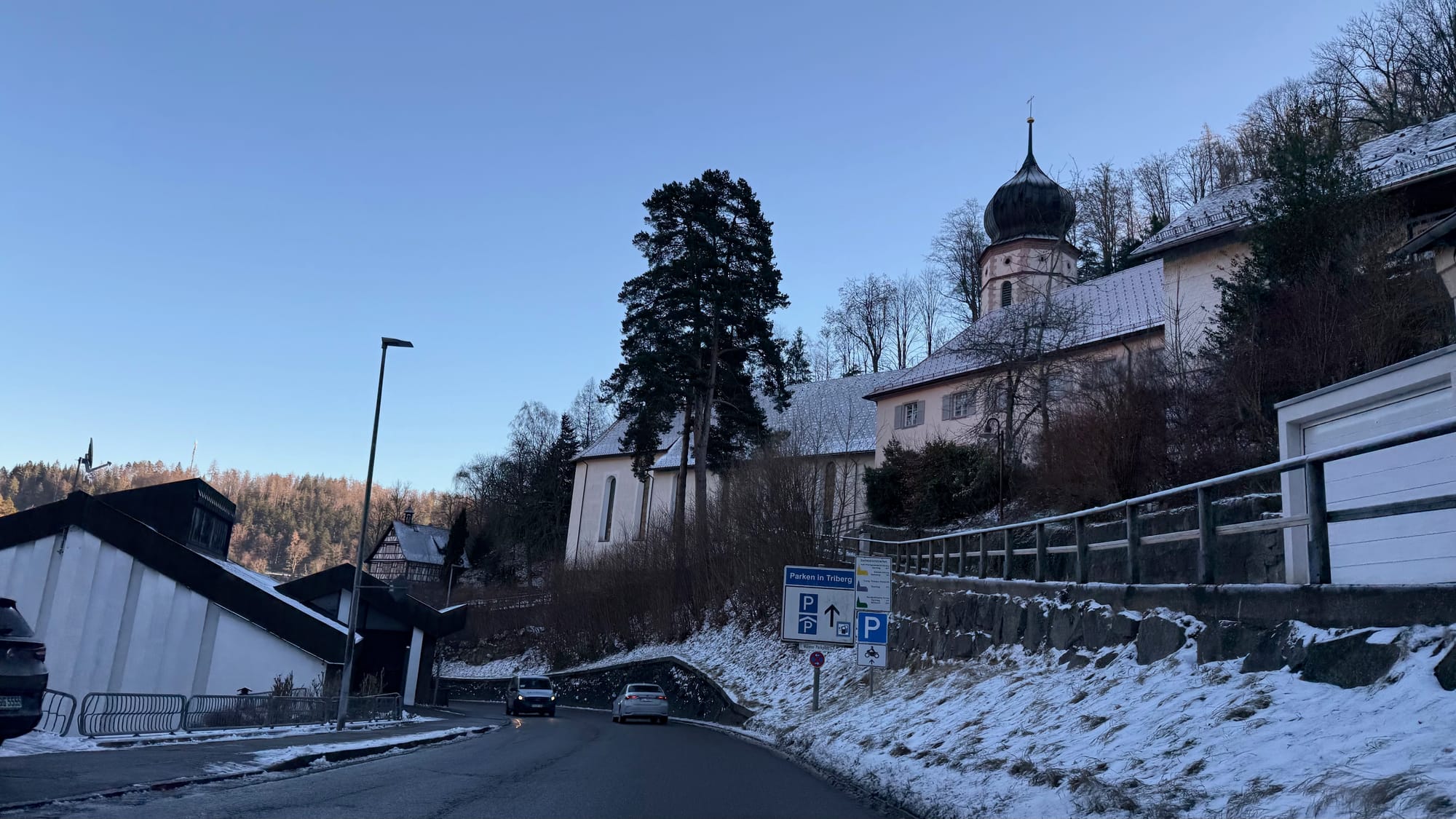
And find some on-street parking with the EasyPark app.
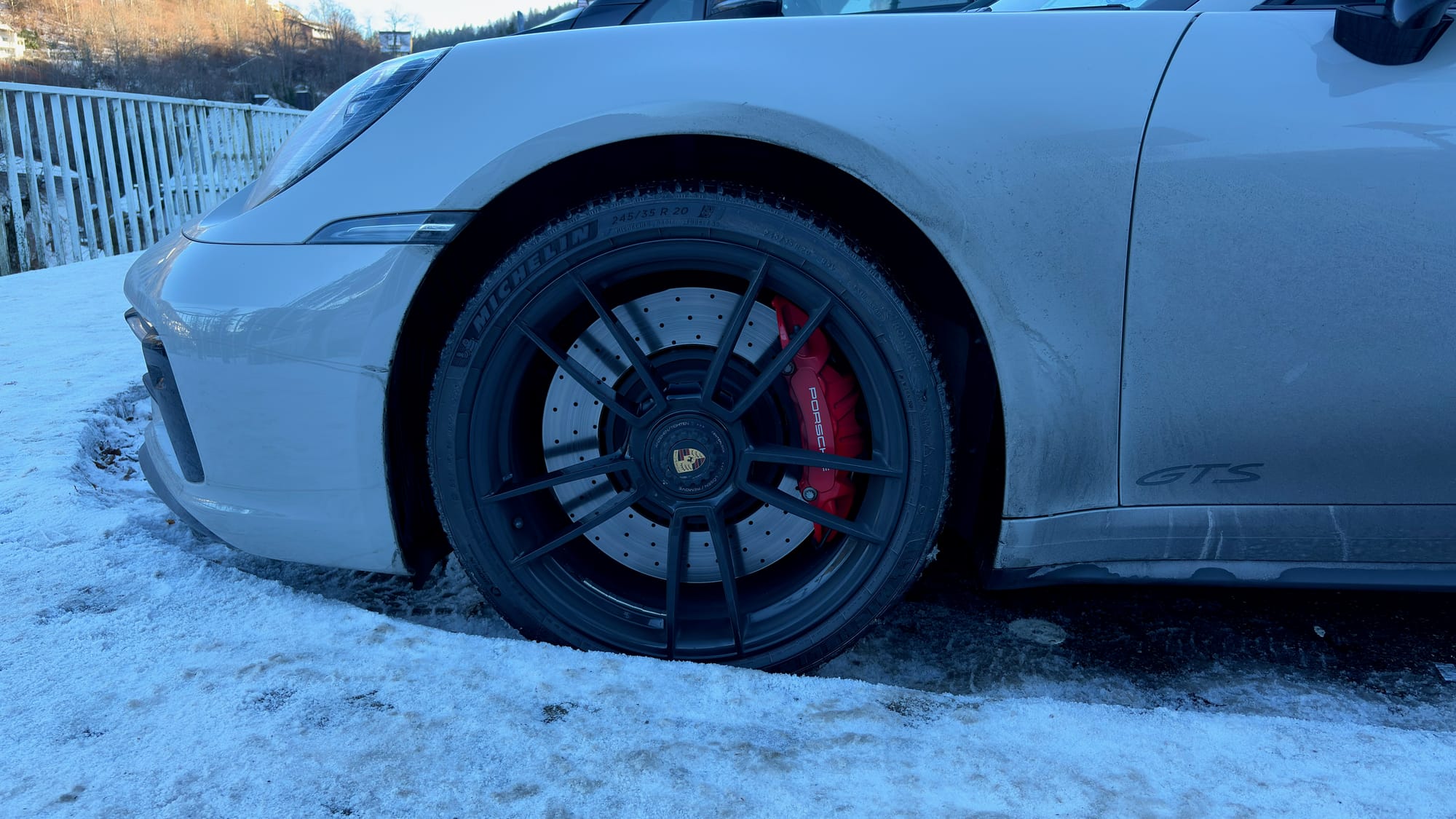
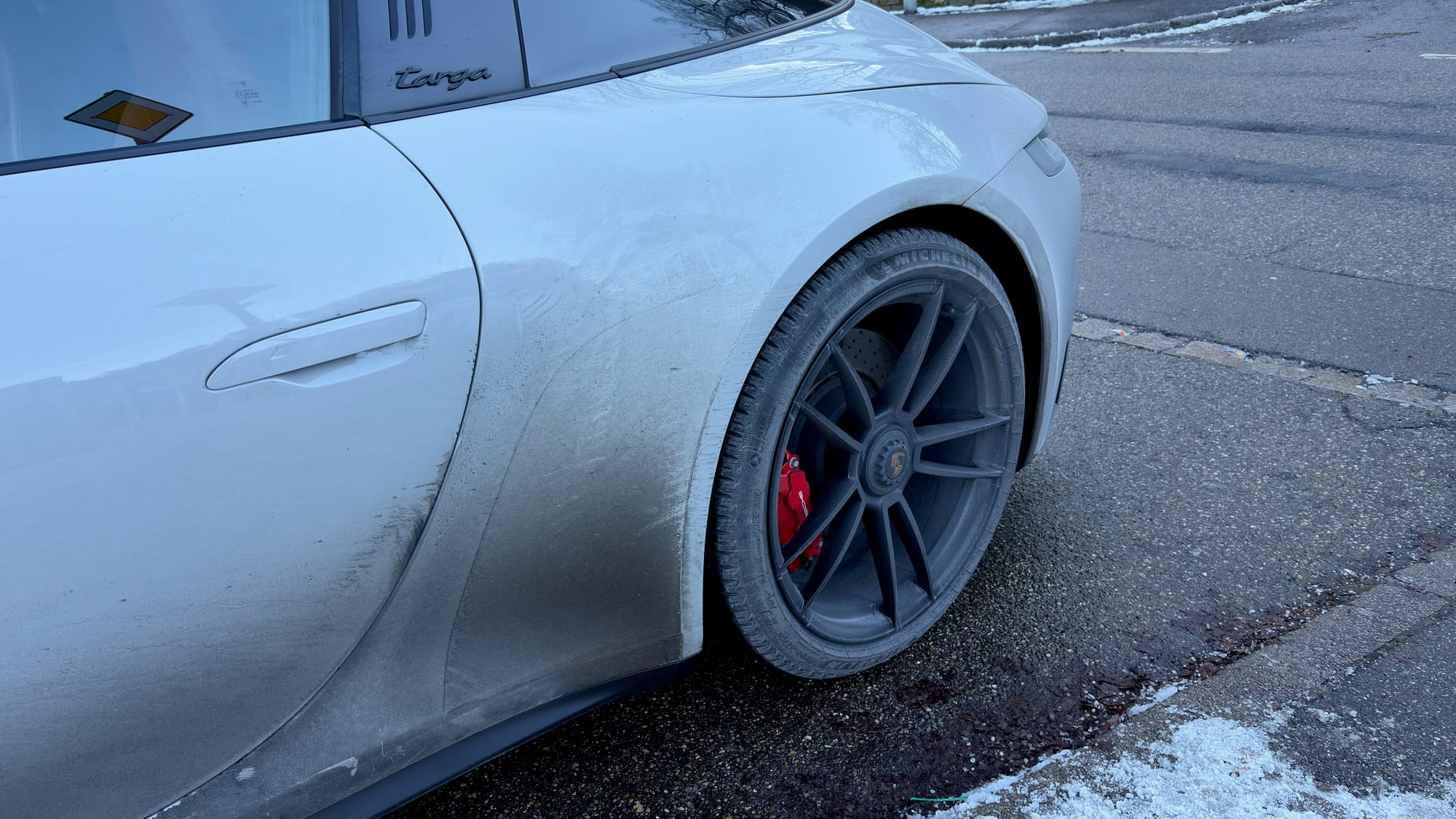
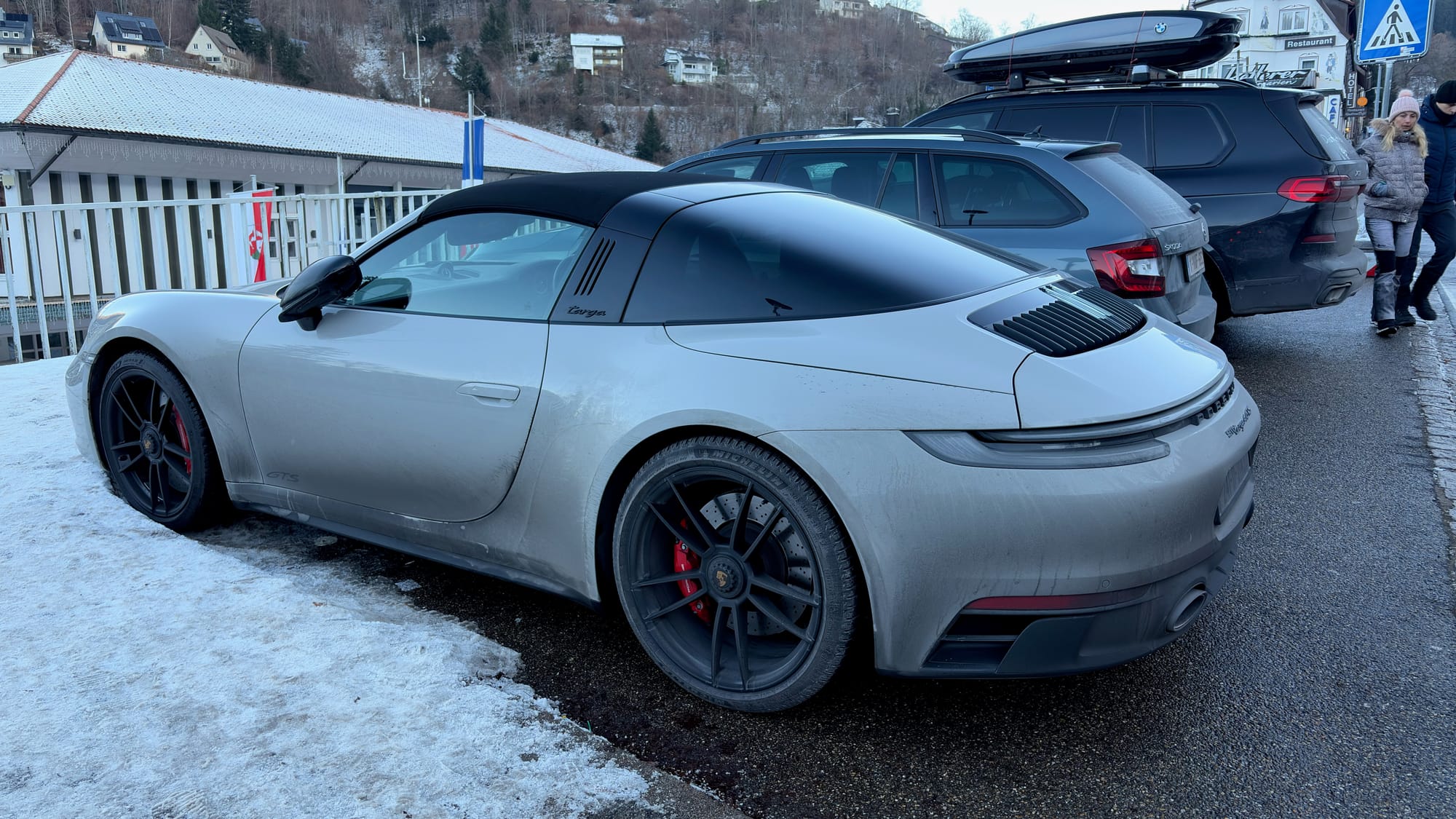
With our PPF and factory installed stone guard working hard to protect our paint. This is our adventure car after all!
Triberg is very much a "tourist trap" in the Black Forest.
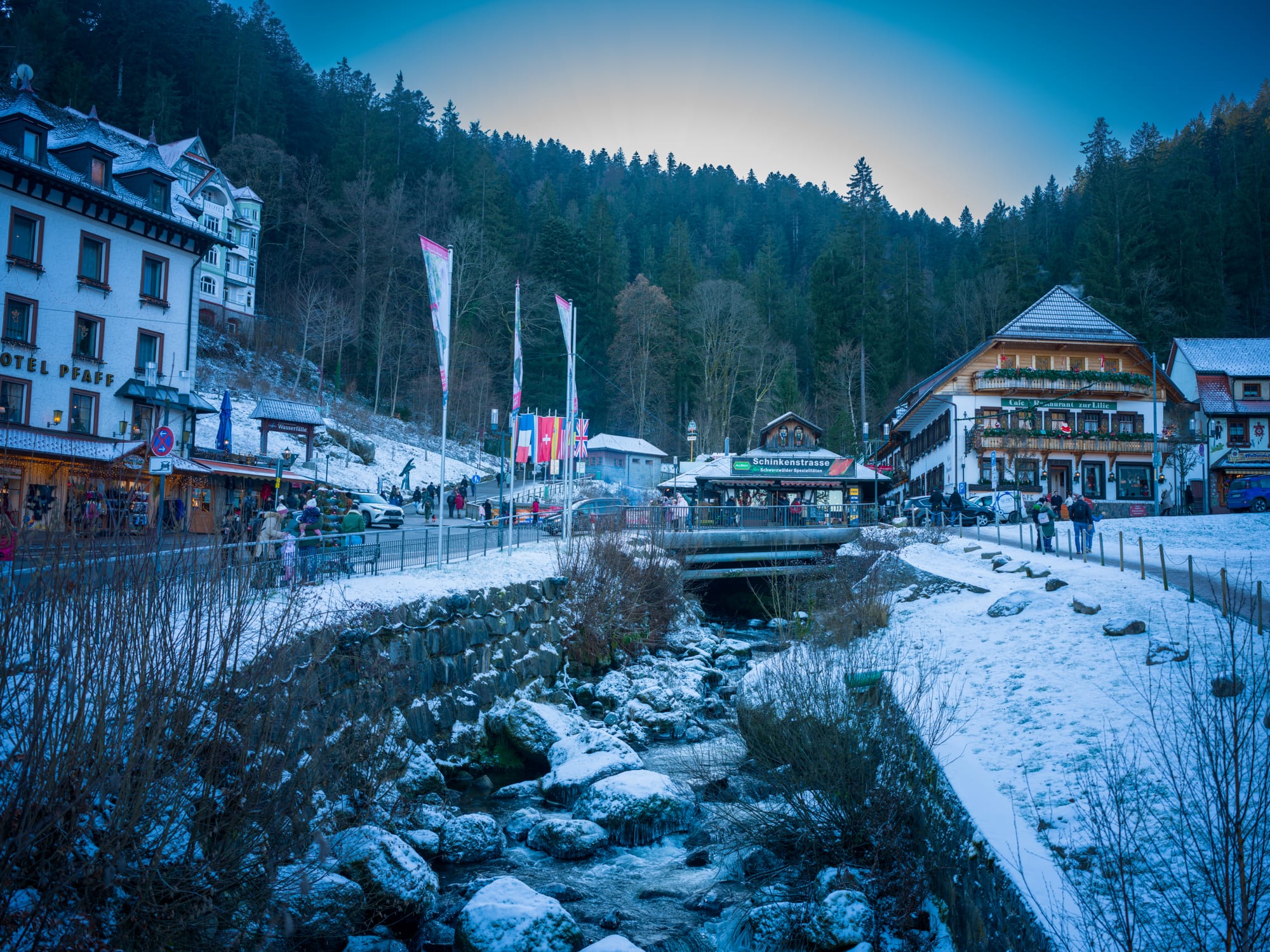
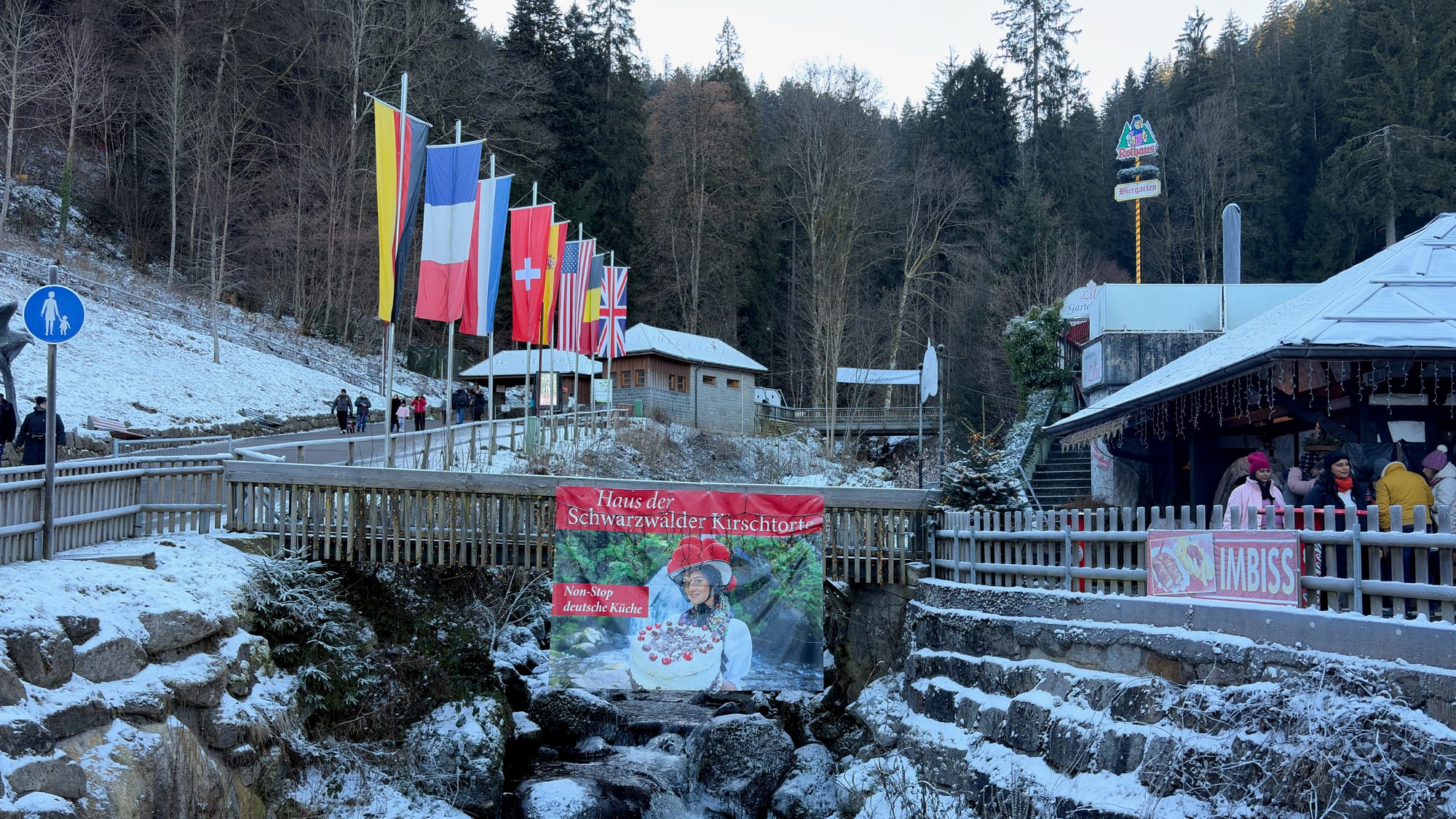
But the cuckoo clocks of this region are still a lot of fun.
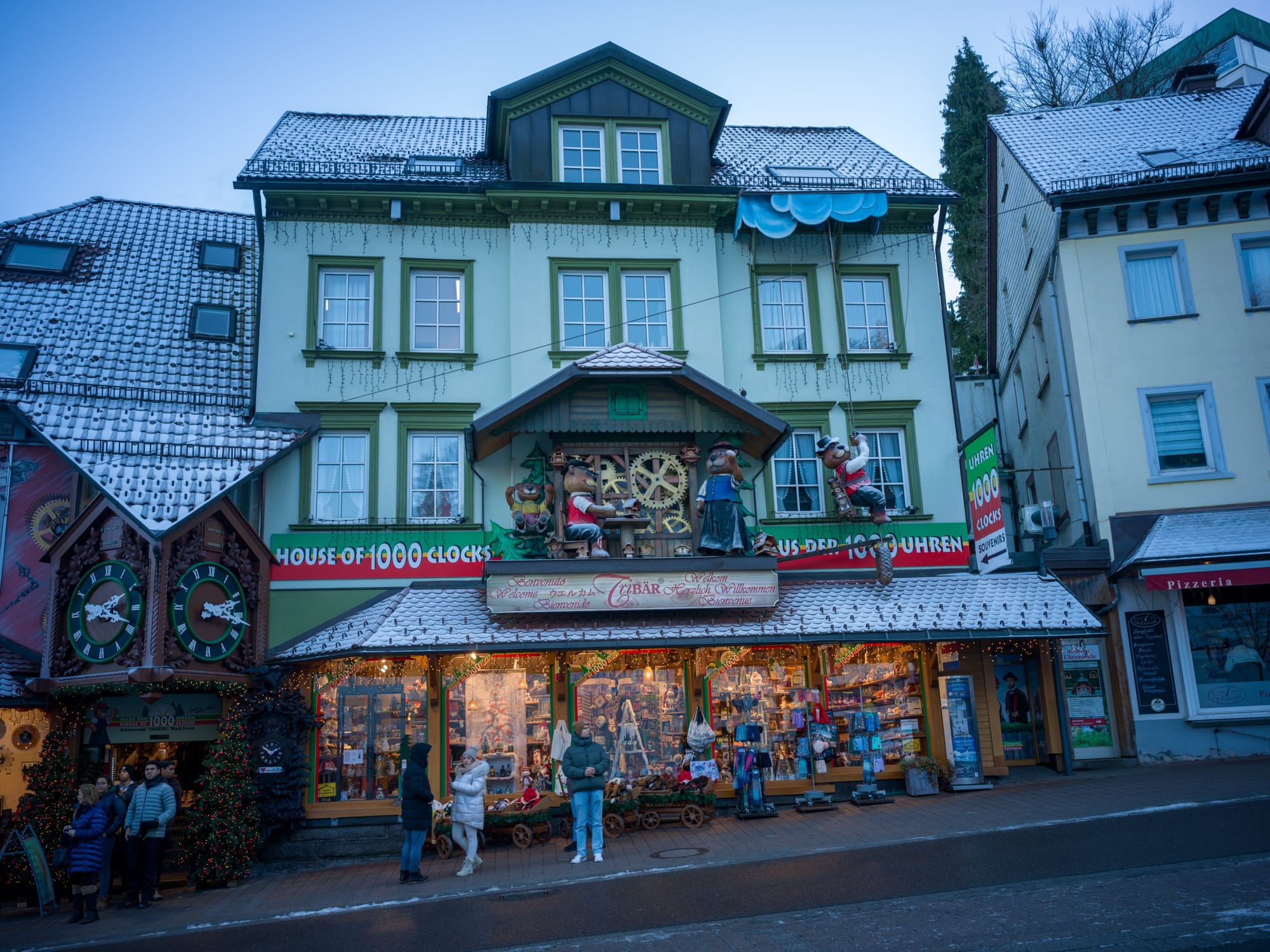
When lunch takes a little longer than planned the EasyPark app – via a "iOS Live Activity widget" makes it easy to extend from our table.
Returning back to our car after a tasty lunch of beef and pork schnitzel.
Twisty B500
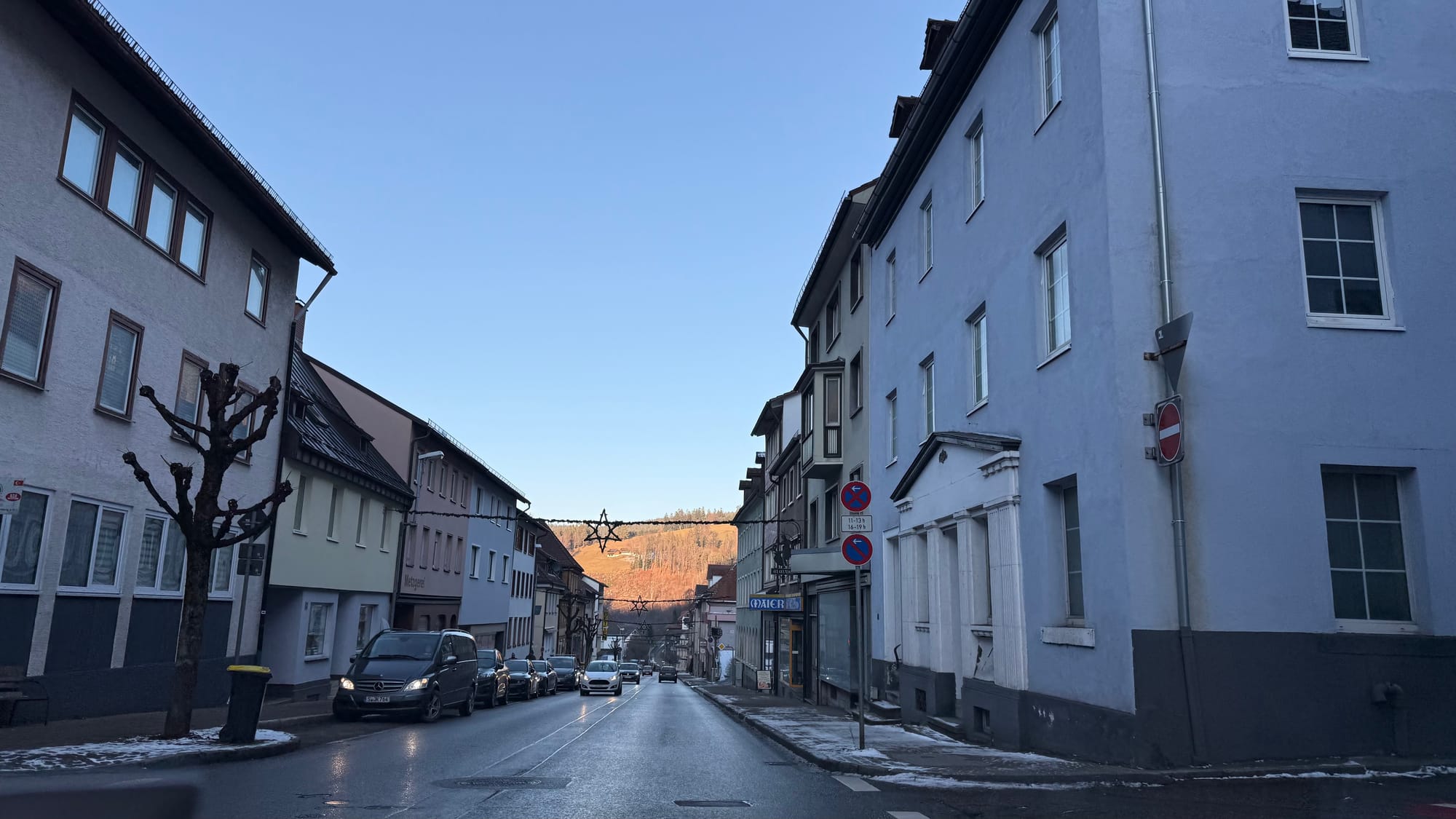
Leaving town as the light is starting to slightly fade in the early afternoon.
With the roof open, we notice the tunnels are slightly "warmer" inside.
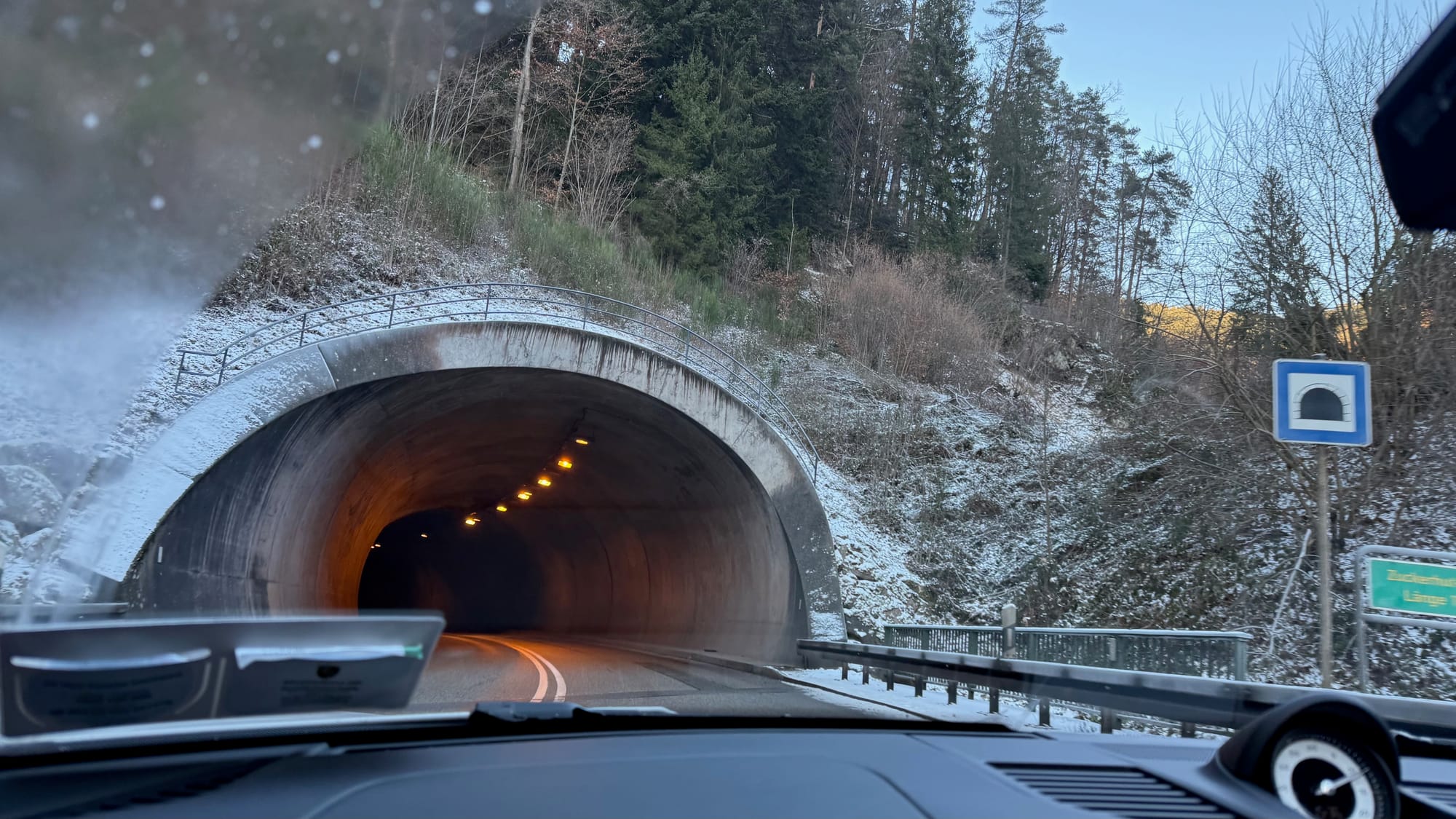
We pick up a convoy of three camper vans. Fortunately, since it's winter, this isn't too common. And easily dispatched with our "push-to-pass" button on our 911 Targa steering wheel – instantly unleashing everything our 500 horsepower flat-six has to offer for twenty seconds.
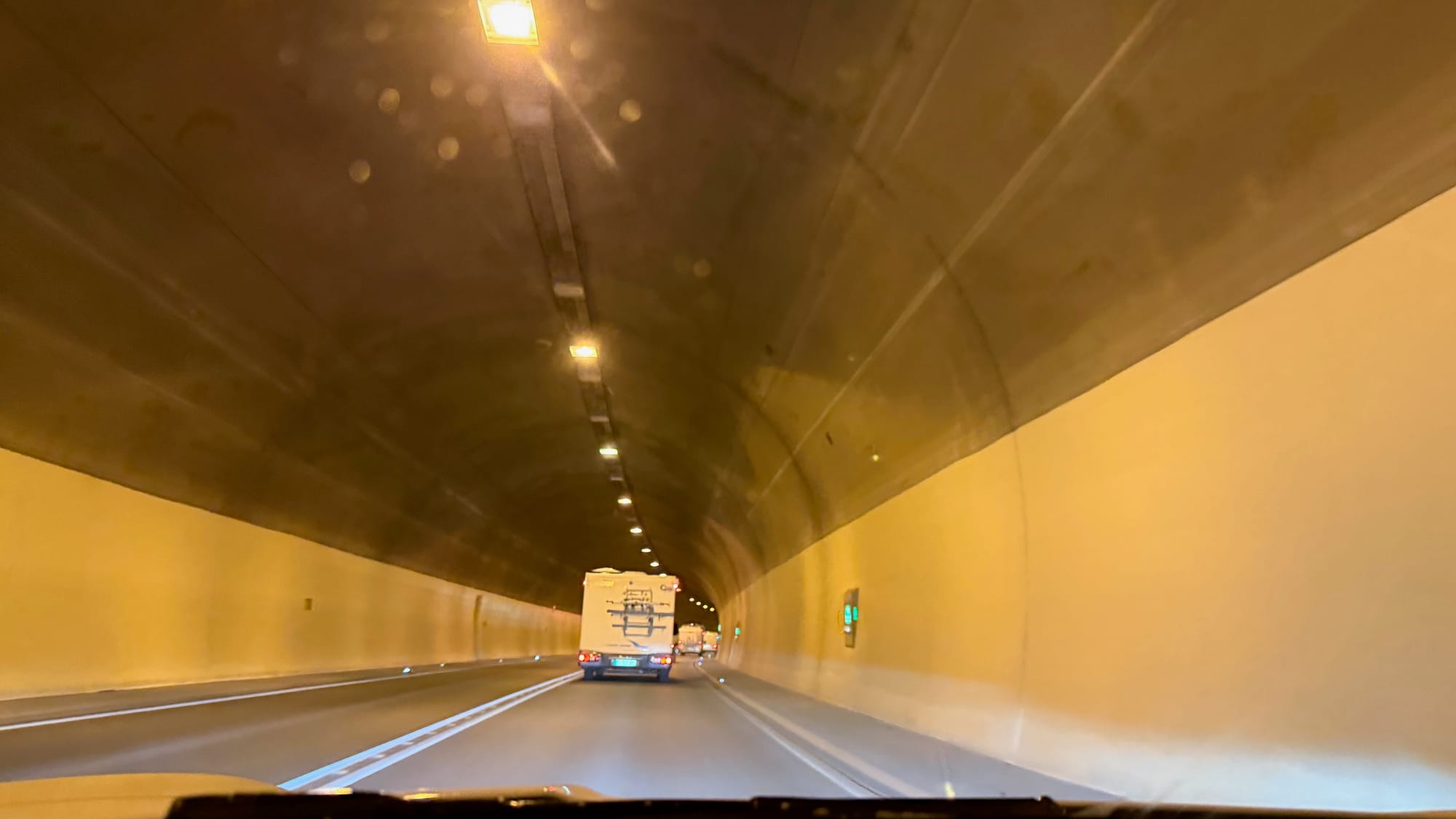
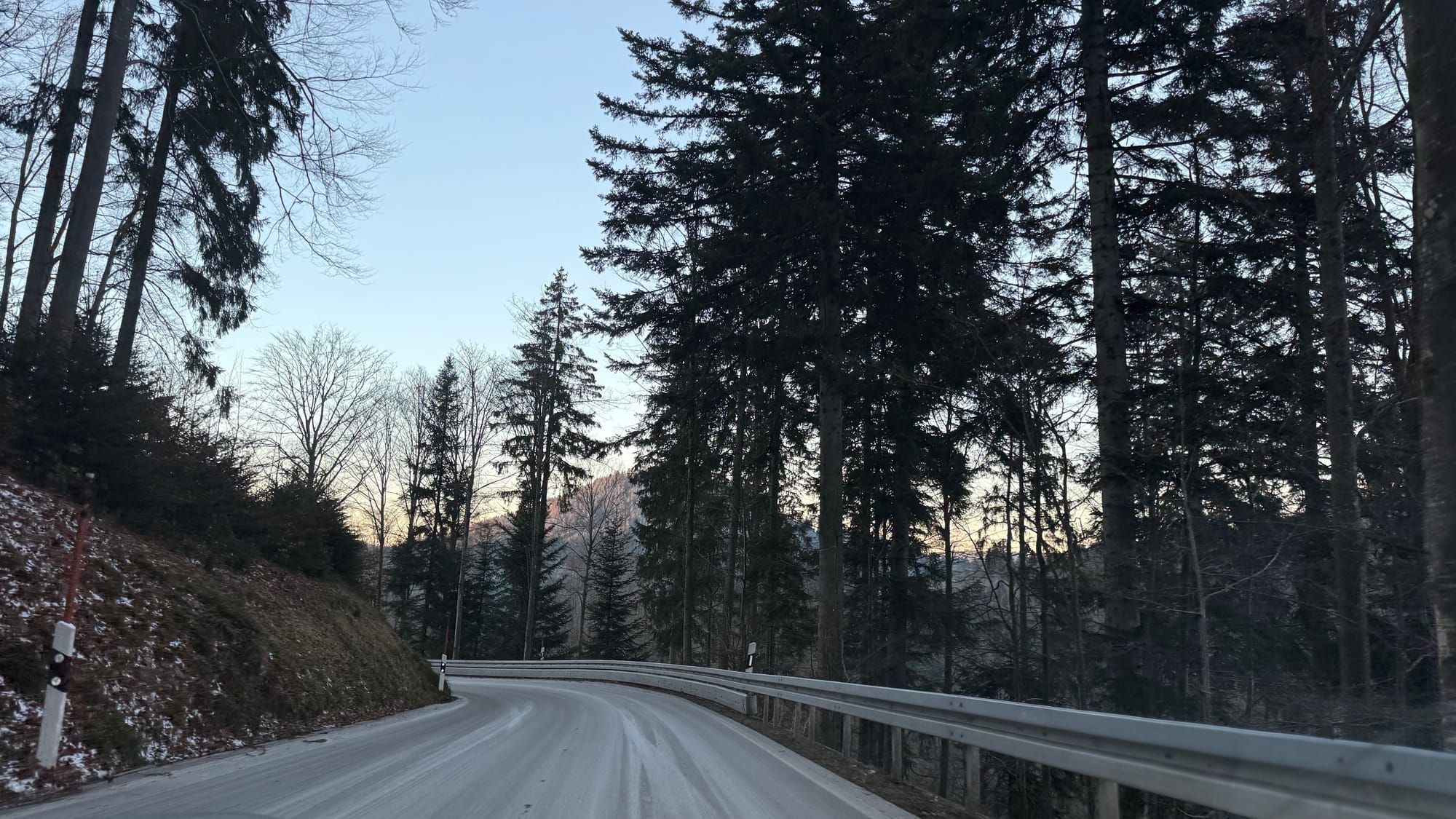
Some of the twists and turns on this section of the road are the best we've had all day.
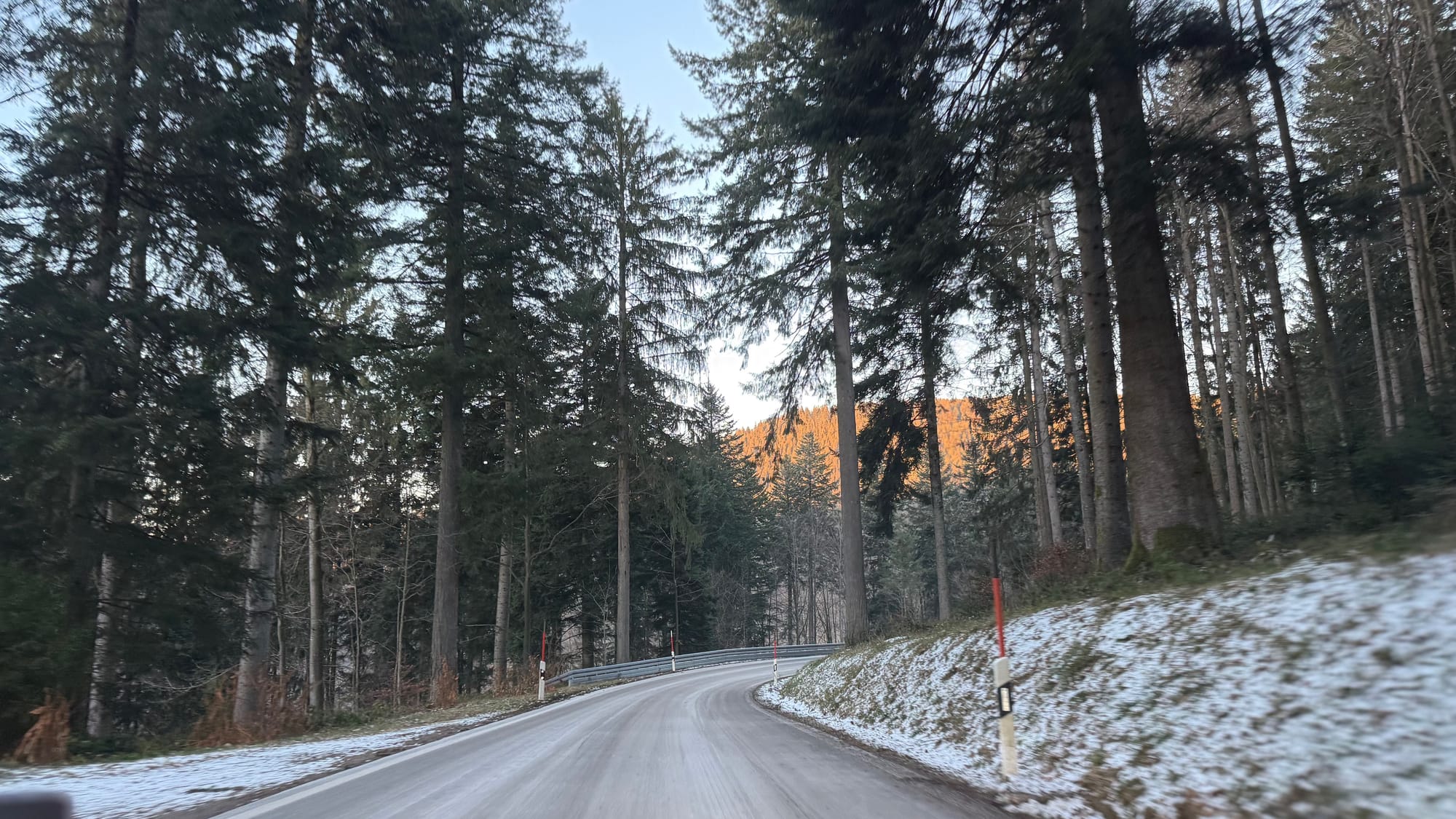
No traffic, twisty road, good surface, roof down, flat-six engine, sports exhaust, PDK manual paddles, rear-wheel steering, Shell V-Power 100 octane in the tank, PDCC keeping the car flat in the bends.
Can't ask for more!
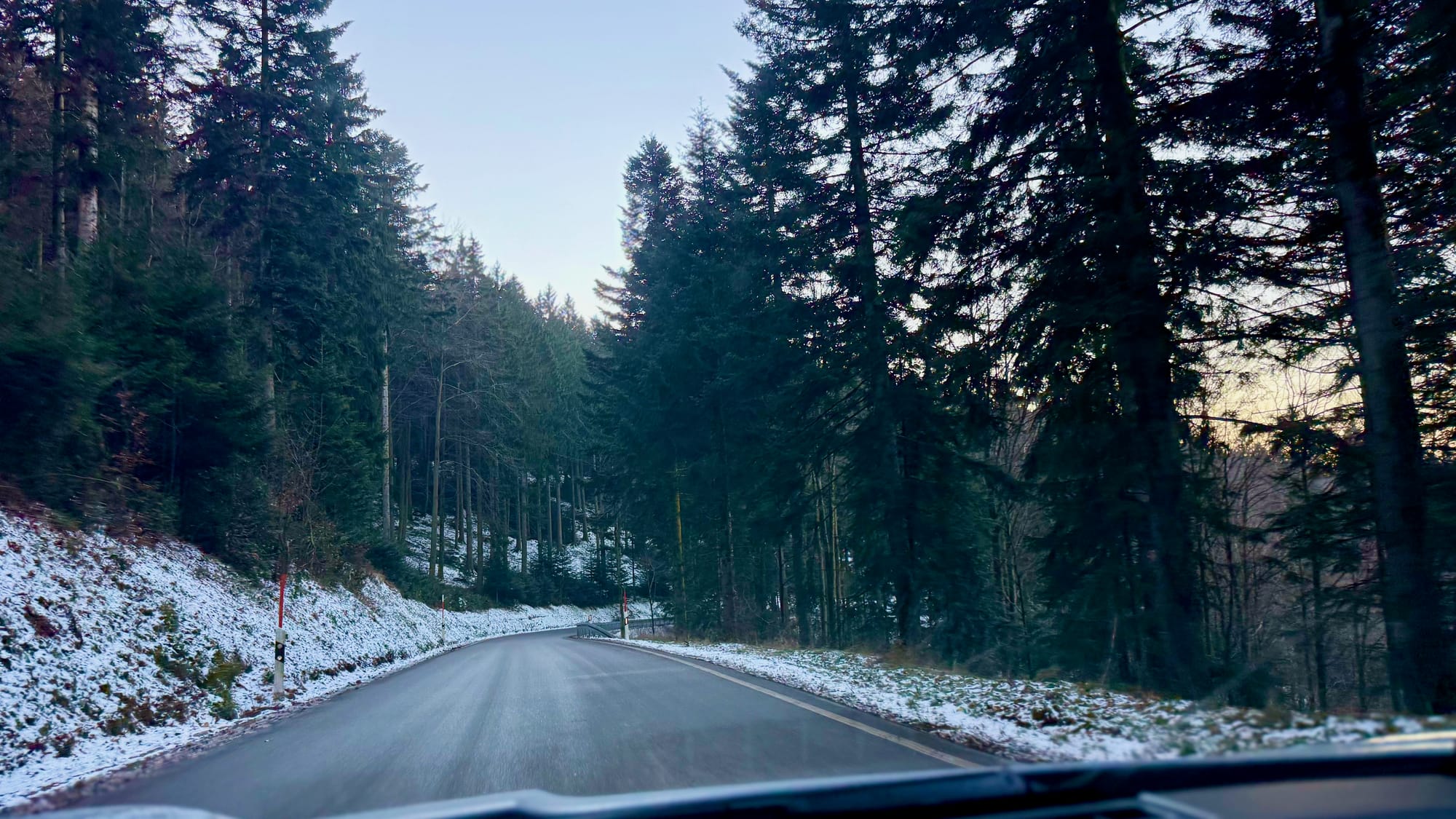
The 911 Targa seems to perform better than all the official statistics from Porsche suggest. The grip from the Michelin Alpin 5 NA2 tyres is reassuring.
Slowing down to 30 km/h going into the sharp corner, with the PDK changing down to third gear.
Then accelerating around and out of the corner to 100 km/h (the surprisingly high limit on this road) in around 1.5 seconds with the revs building quickly to 7,500 before switching up to fourth gear.
The 3.0 litre unit in this car is so willing to rev up and the PDK is happy to hold the revs high too – makes this such an enjoyable experience.
Once you get used to holding the revs up – the twin turbos do their job well – and despite not being a T-hybrid, there is little to discernible turbo lag.
It does require more active driving than our Taycan Turbo S – which being an EV, always has close to 100% of its torque at the ready.
The 911 Targa needs you to think about the gear you are in to keep the turbo boost in place.
But once you get used to it – re-learn to drive an ICE petrol engine – it is so rewarding.
We've been driving for about six hours and darkness is falling, so we decide to head back "early" to Freiburg along the A5 autobahn.
| Location | Litres | €/litre | Total € | Fuel Type | Octane |
|---|---|---|---|---|---|
| Freiburg, Germany | 57.99 | €1.969 | €114.18 | Shell V-Power | 100 |
Today we did 377 km over 5:59 hours, with an average speed of 64 km/h, consuming 10.1 litres/100 km.