Day 2: Hook of Holland (Netherlands) –> Copenhagen (Denmark)
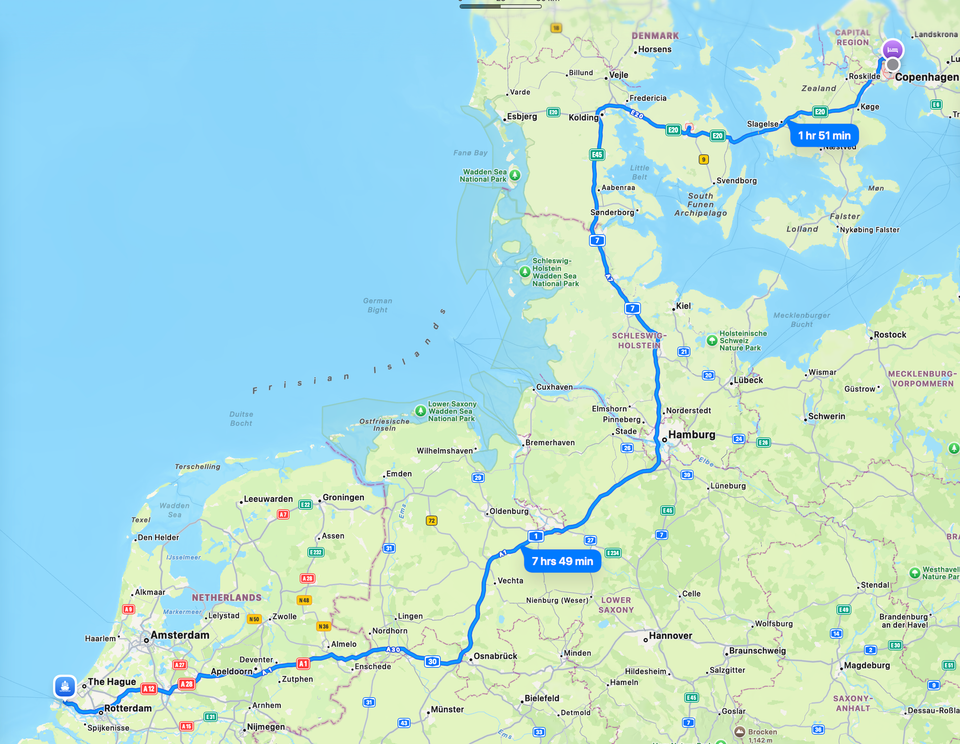
Today's drive is unavoidable: it's going to be a long one. At over 1,000 km, it's one of our longest single-day journeys we've ever done. Completing it puts us in position to reach Sweden tomorrow and begin our long northbound journey into the Arctic.
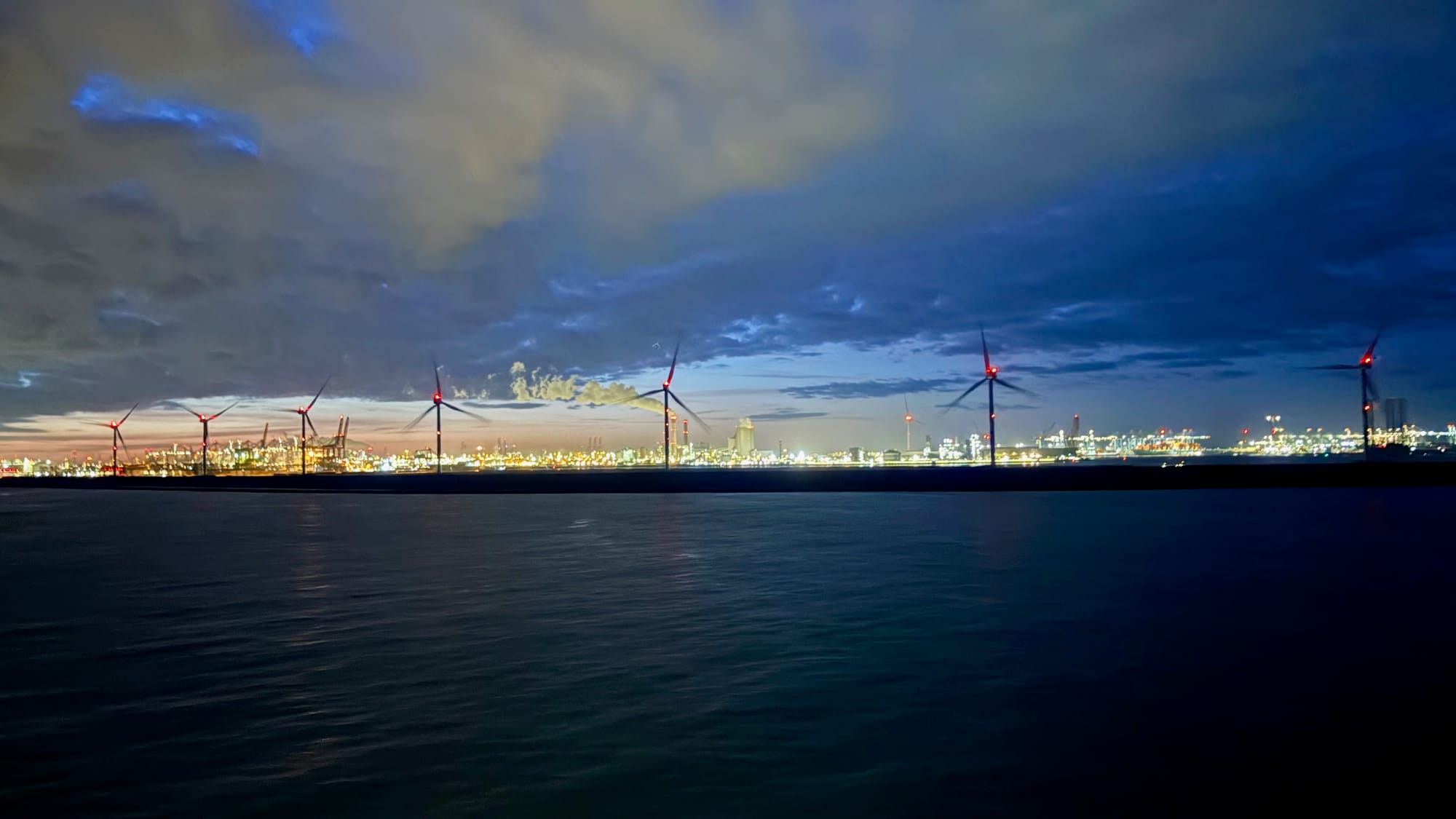
Arrival into Netherlands
After a peaceful crossing, we're jolted awake at 06:30 by a deliberately irritating "chirping birds" wake-up alarm, clearly engineered by the ferry companies in-house psychologists to rouse us from slumber.
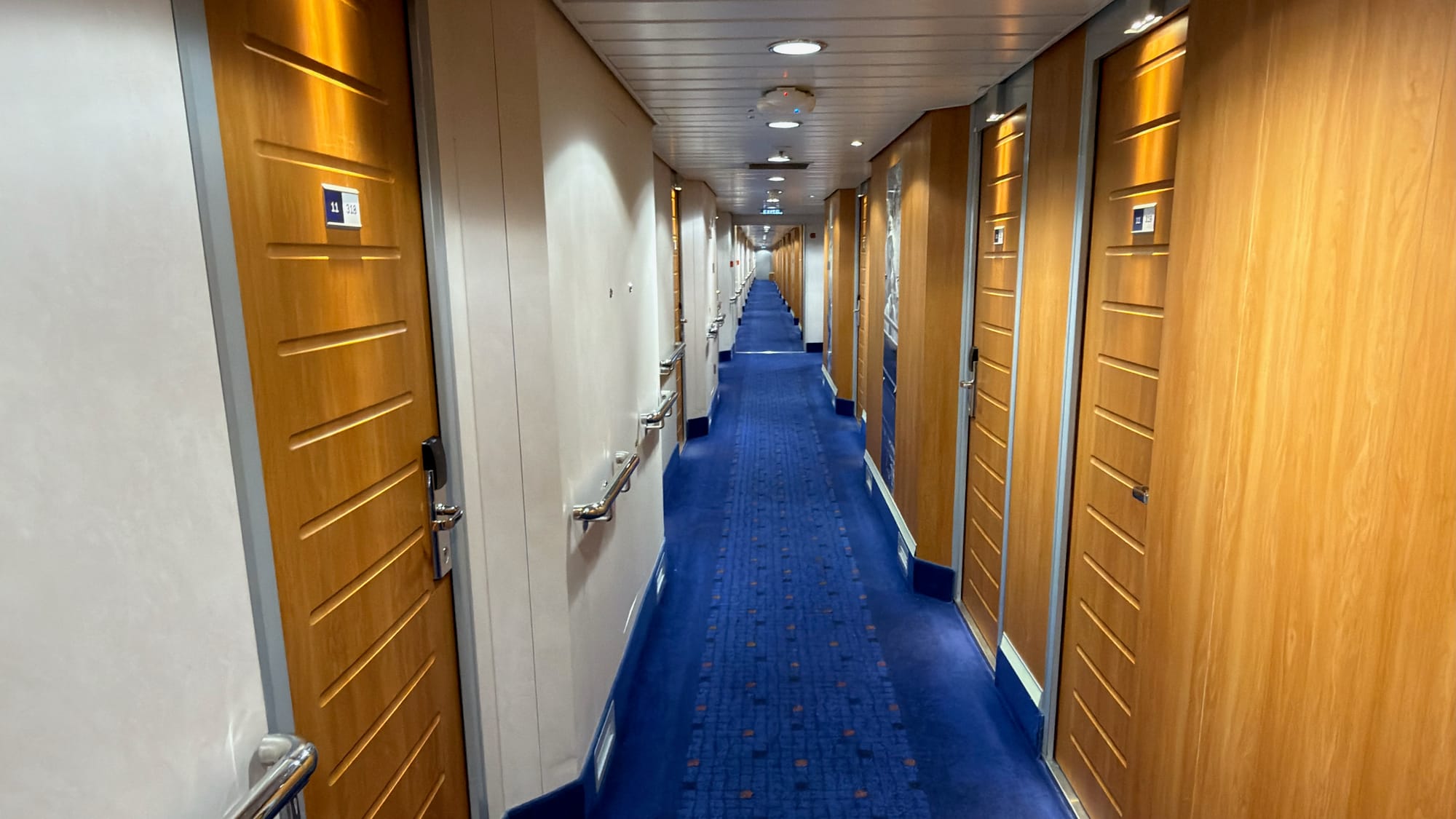
We head to the Stena lounge for breakfast. It's tough to eat too much so early—our bodies are still on Irish time at 05:30.
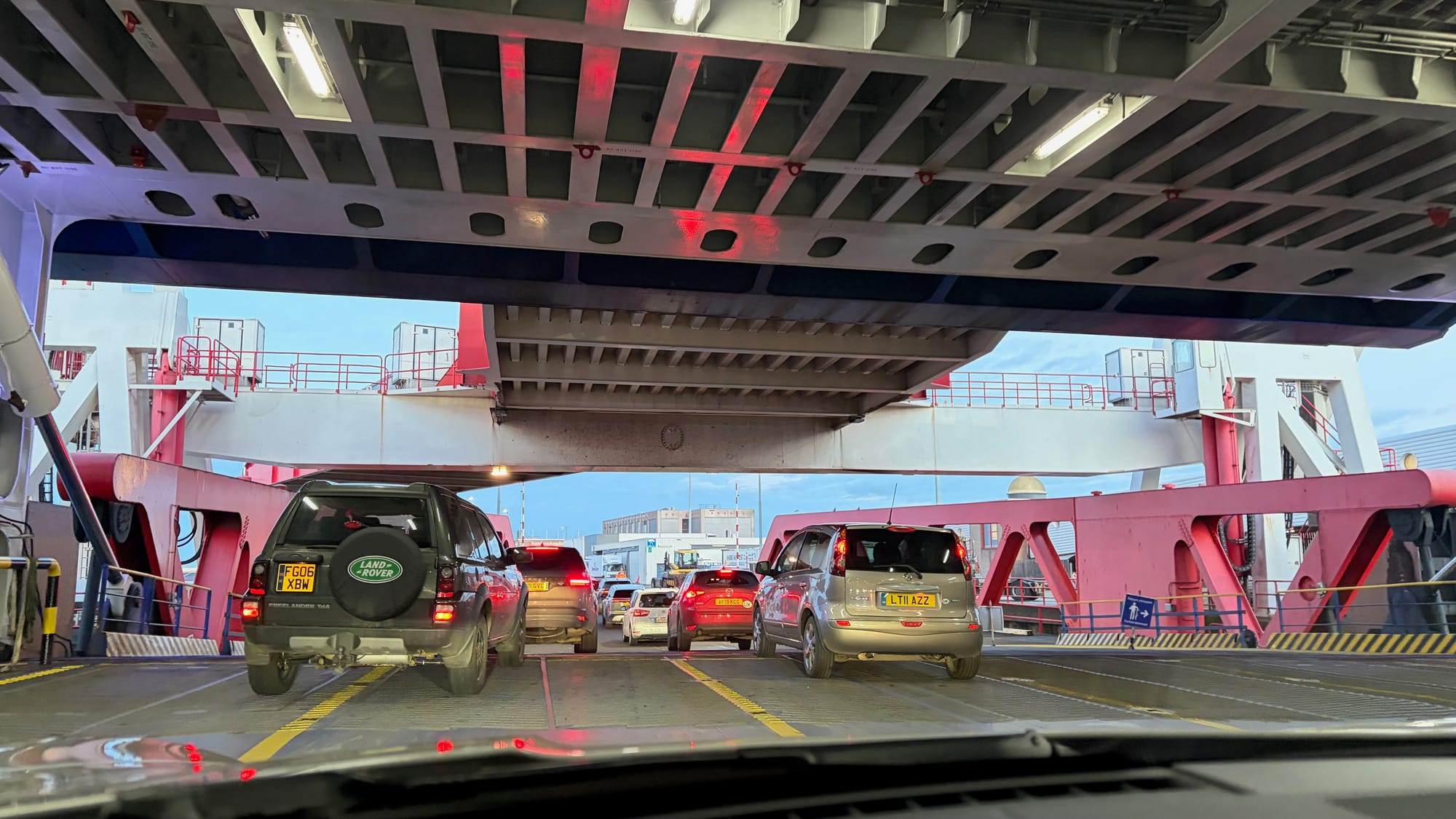
We climb down the steep stairs to the lower car-deck – with no issue from the PVTS+ tracking service which we had set for 10 hours before boarding – and we are soon driving off.
It is off-peak for this crossing and this helps us get through passport control quickly.
Once we exit the ship and the PCM can receive signals from navigation satellites, it is able to plot our long route and give us a distance and time estimate with high degree of accuracy: 1,012 km driven over 10 hours.
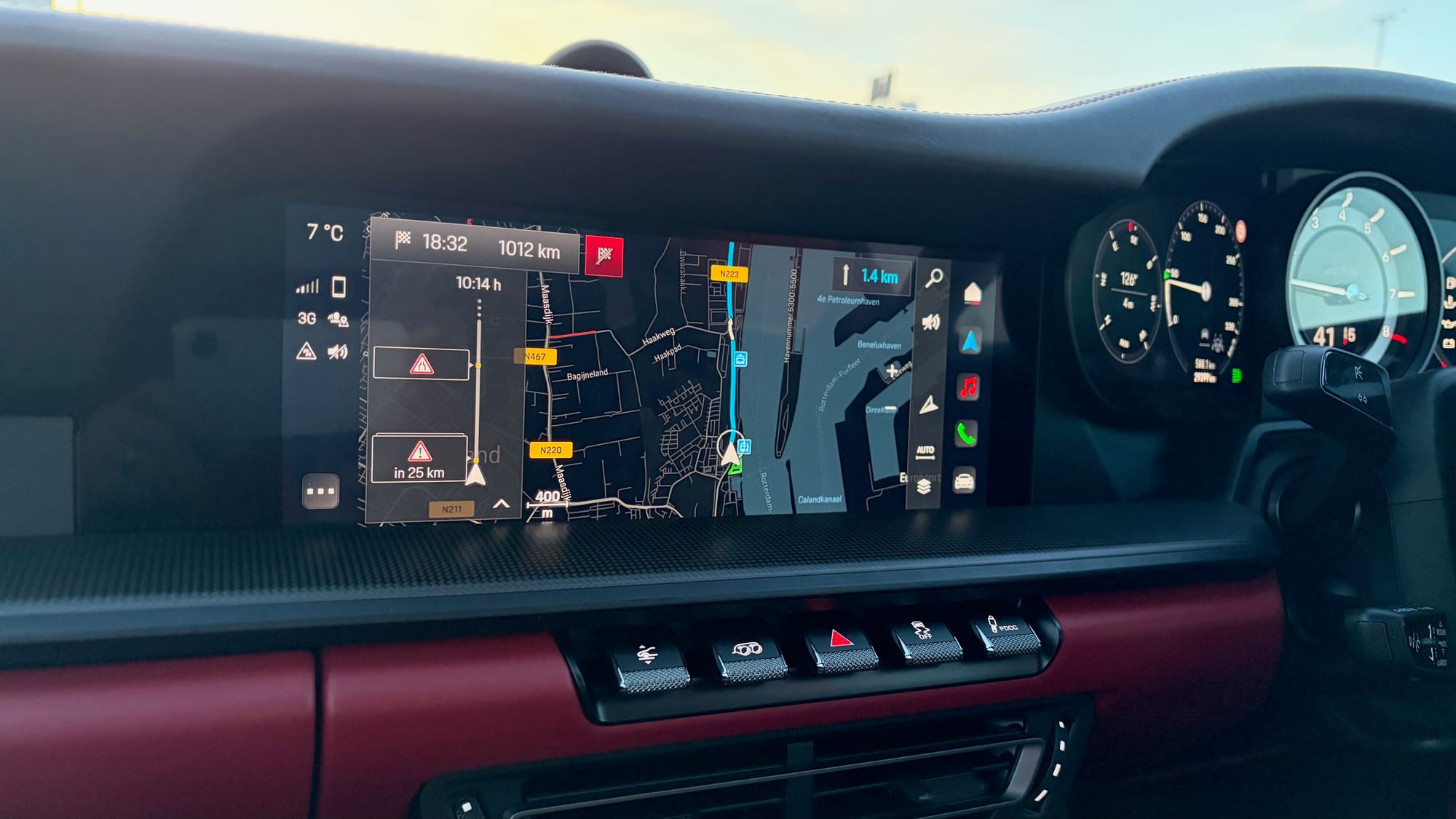
As we cross The Netherlands on the A1 motorway we hit intense fog that lasts for about 100 km.
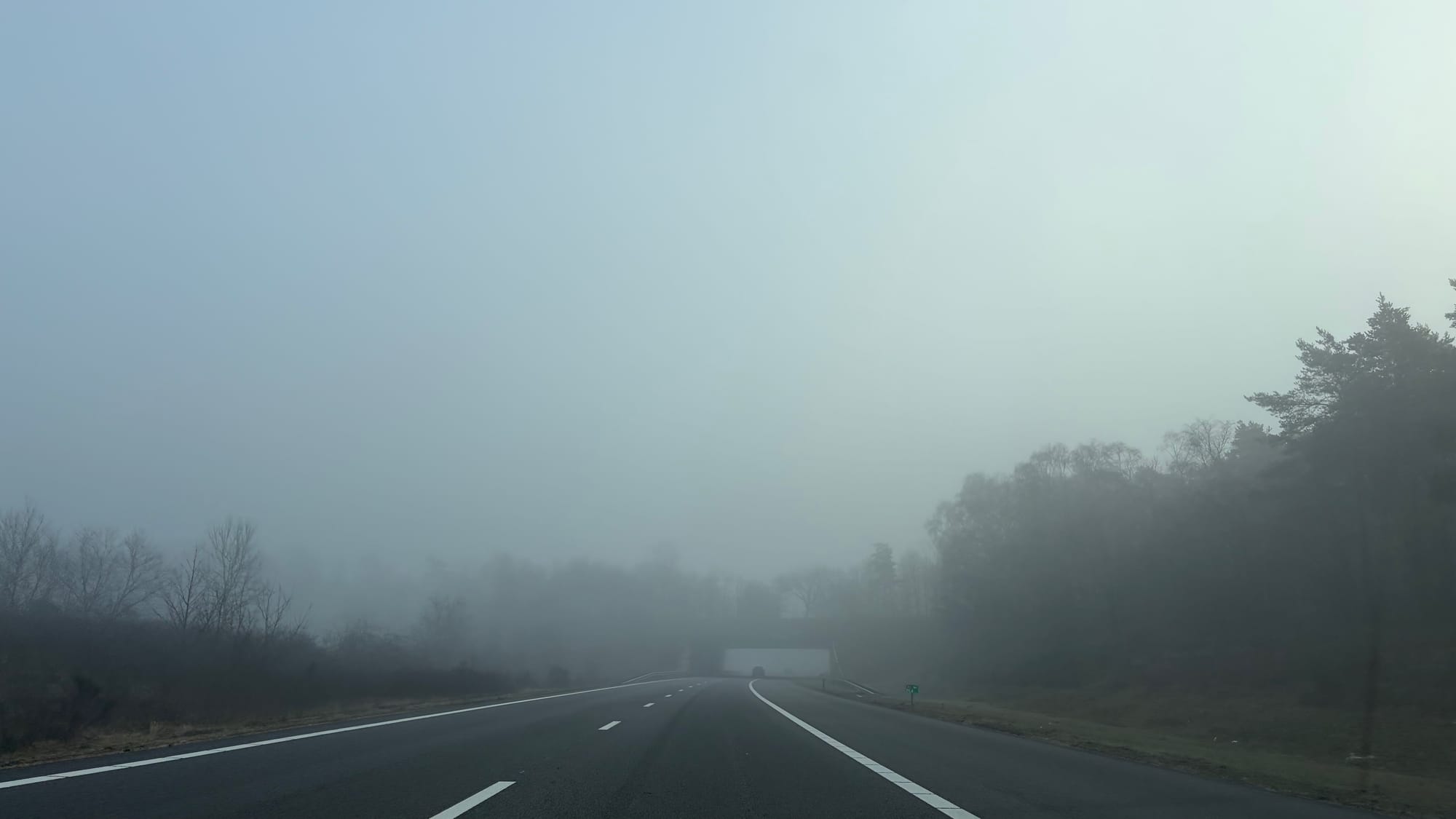
The combination of radar-based adaptive cruise control and Night Vision assist, which uses an infra-red camera, was incredibly helpful. It provided a sense of what was ahead even when visibility was reduced to 20 metres in some sections.
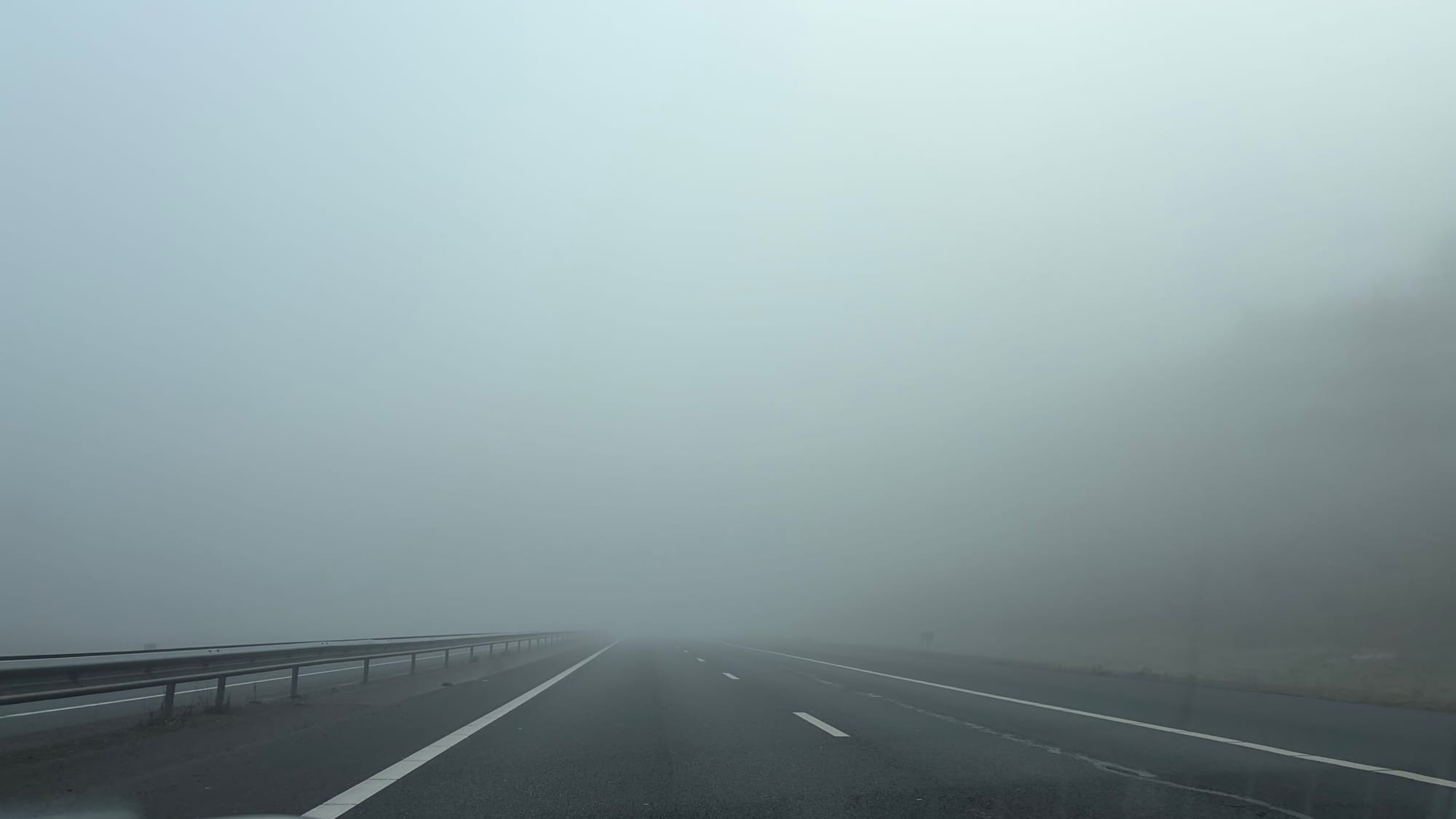
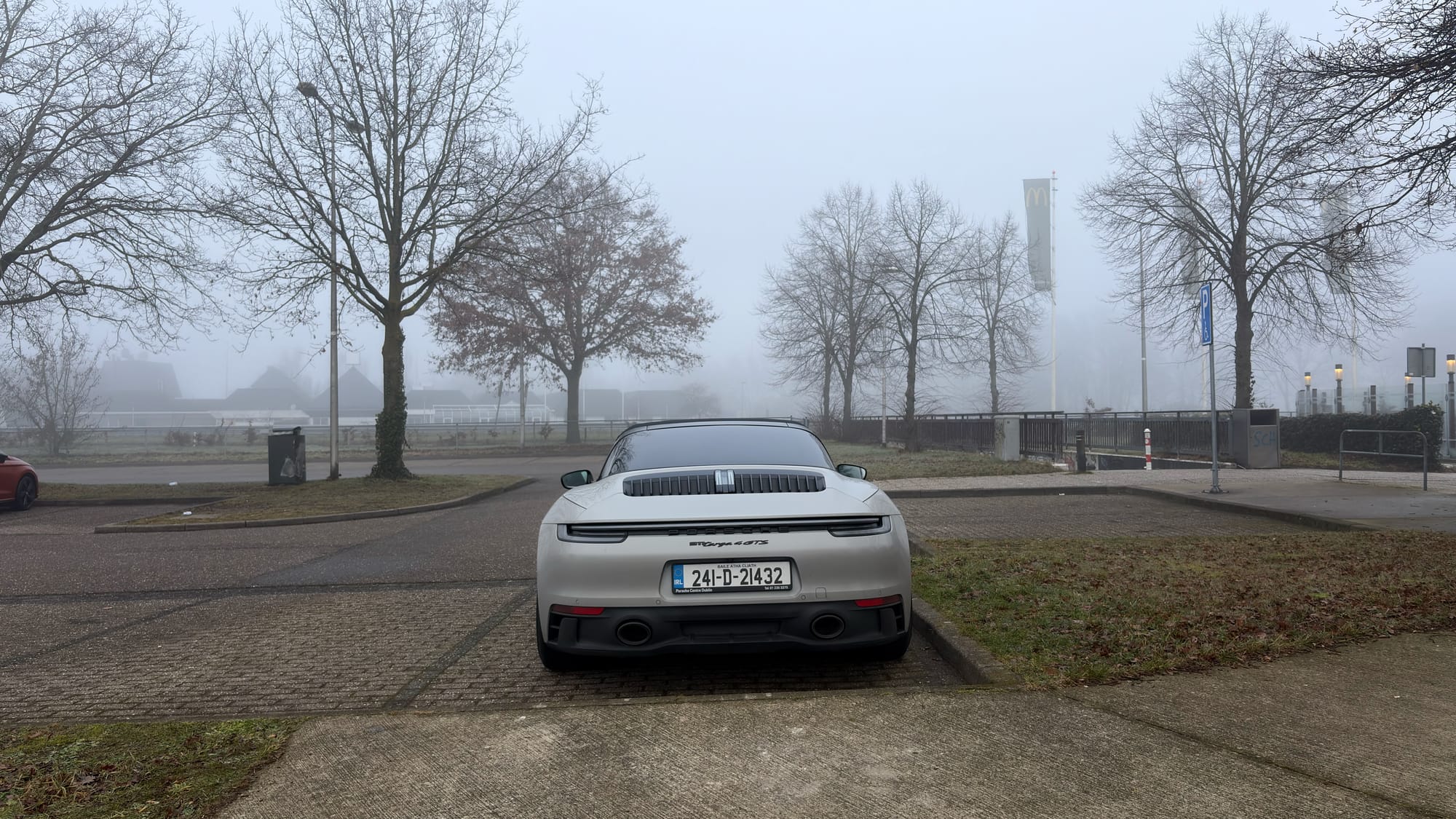
We force ourselves to take a break every two hours or so to stretch our legs and sometimes grab a bite. When we had an electric vehicle, charging meant we had to stop regularly.
However, driving a petrol car with a much longer range and more convenient refuelling options means we now have to make more careful decisions about when to stop.
German Autobahn
We're soon crossing into Germany, with the fog still present.
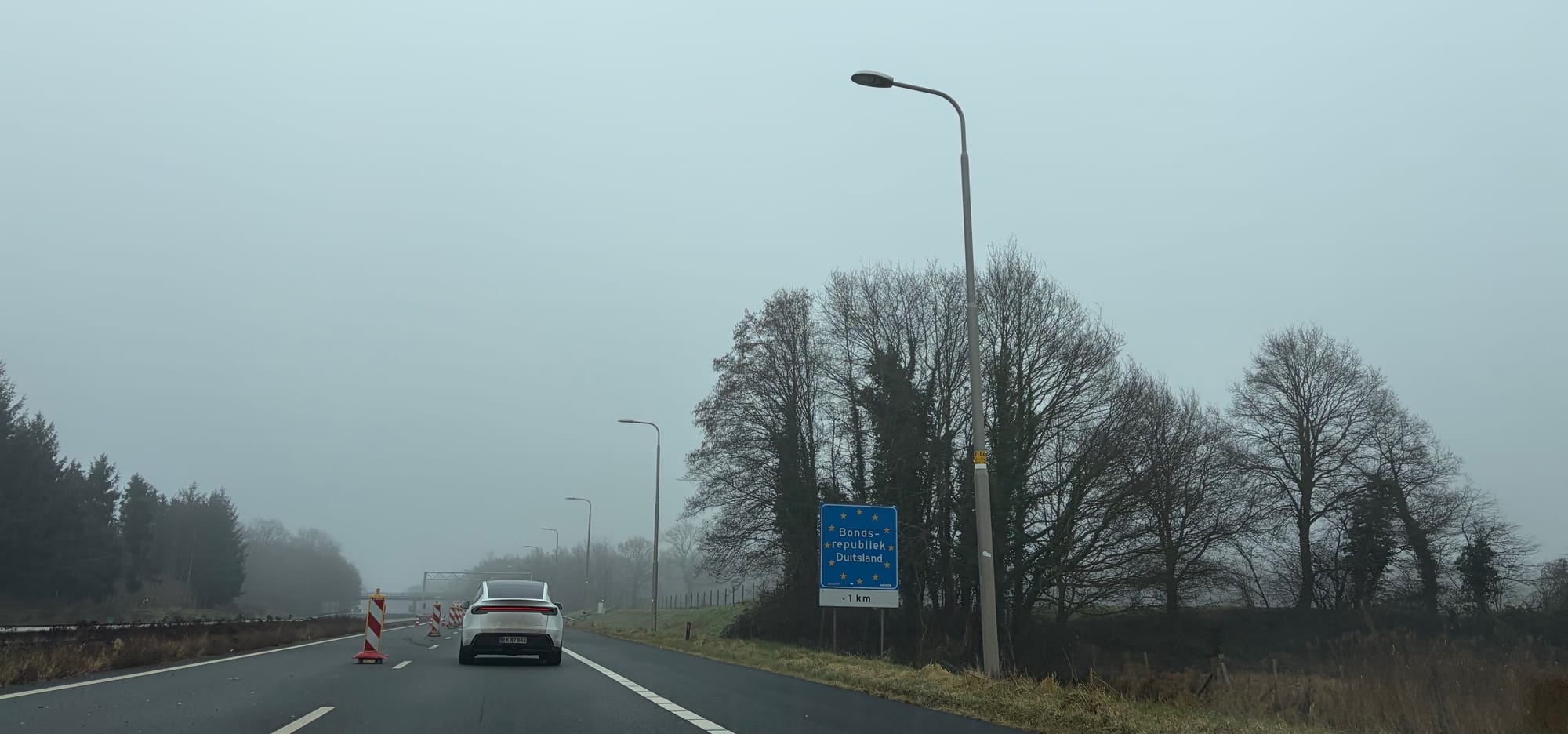
And onto the autobahn, which was surprisingly empty and allowed us to make good progress on our 1000km route. Our 911 Targa was perfectly suited for this environment cruising comfortably at 200km/h on adaptive cruise control.
The combination of Porsche Dynamic Chassis Control (PDCC) and rear-wheel steering makes for a very reassuring stability at high speed when changing lanes and taking the sweeping but fast bends.
We're on winter tyres so speeds should be reasonable and well within the tyre limits. However, even at 200 km/h you're only using two-thirds of the car's capabilities. At these speeds the car is just idling at 2,500 rpm in eighth gear.
Typical autobahn drive captured by Porsche Dashcam (no sound)
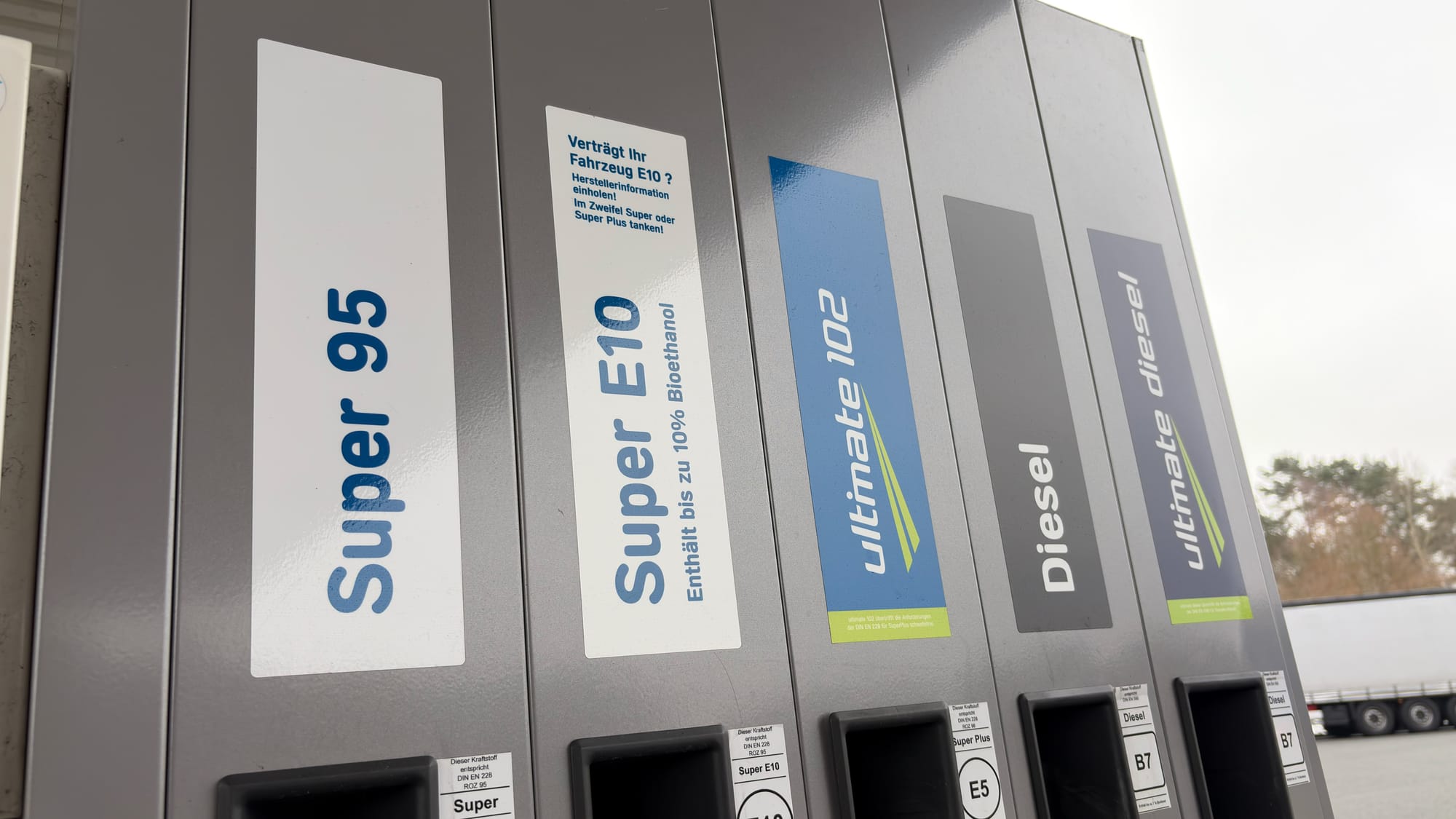
We stopped for some very expensive fuel at €2.70 per litre. Motorway fuel is always more expensive and we bought some 102 octane petrol from Aral. It's overkill for our car but better than the standard 95 octane available. This is the most we've ever spent on petrol.
We're travelling at high speeds for hours today so letting our high-compression engine run freely makes sense.
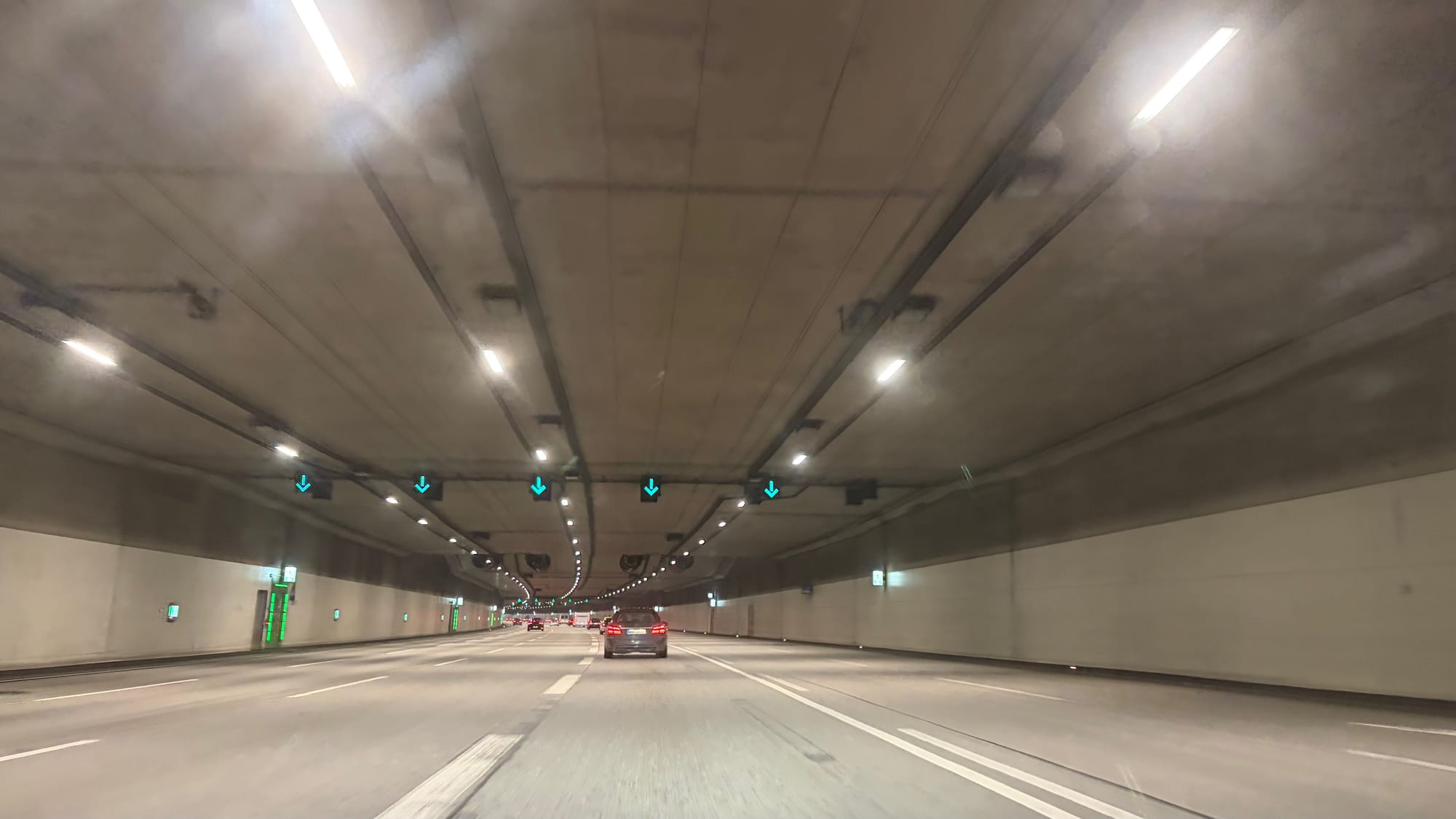
We usually encounter construction traffic delays at the Elbtunnel but this year it was a breeze and we navigated through without any stop-and-go traffic.
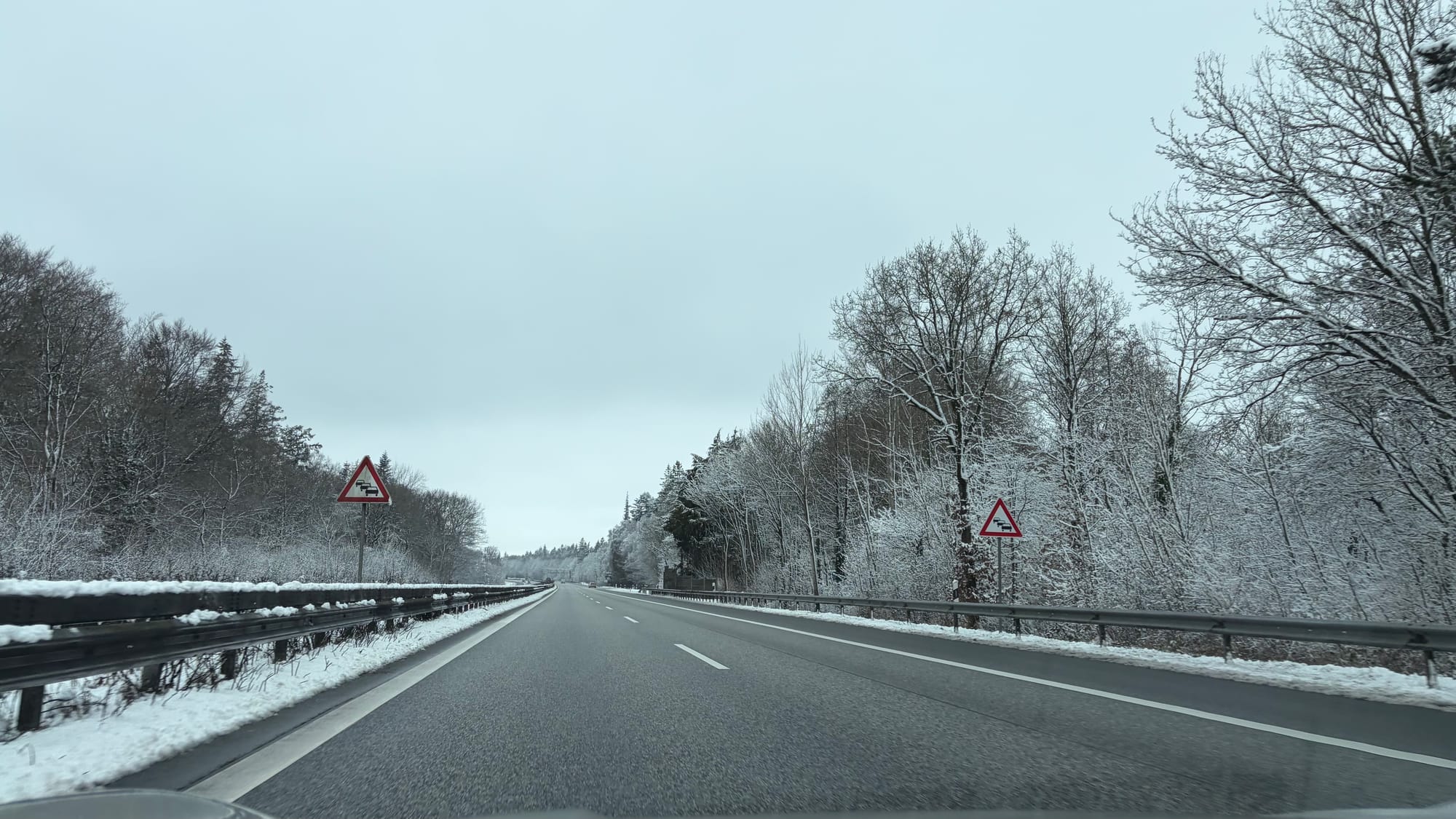
The section north of Hamburg is one of my favourite on the entire German autobahn network. It is usually relatively quiet, with the traffic of Hamburg behind us as we race at high speed towards the Danish border.
Crossing into Denmark
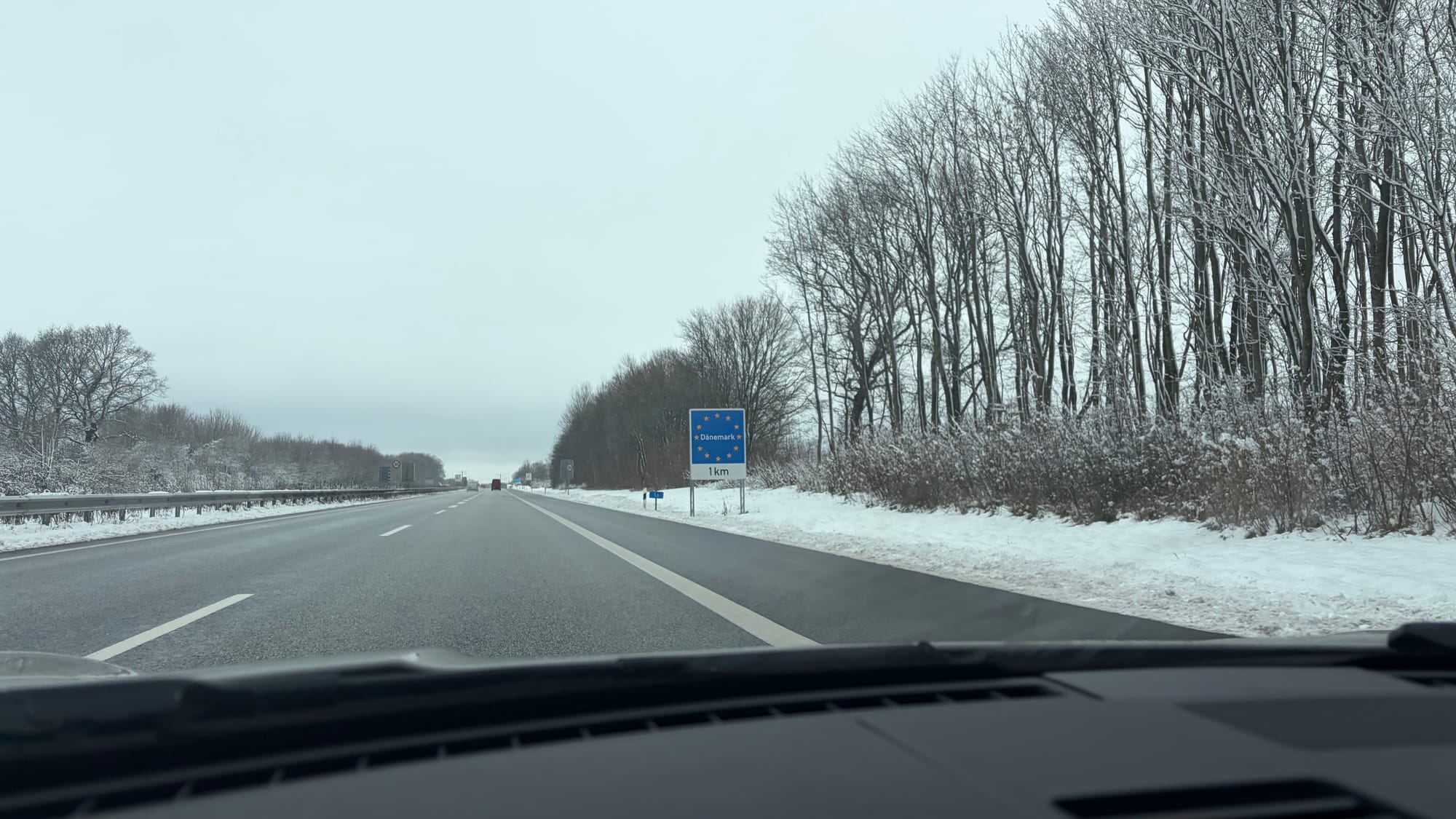
After a few hours of high-speed motoring we reach the Danish border.
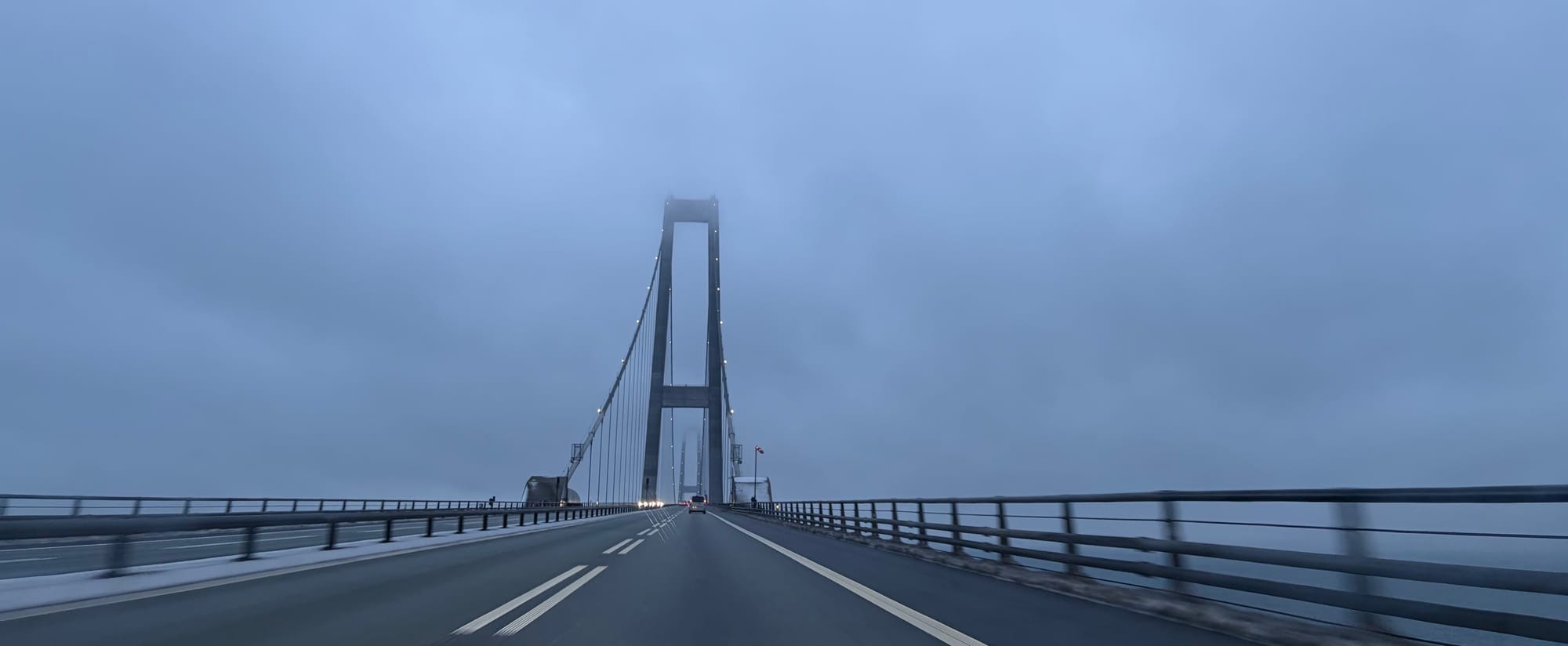
One of the highlights of today's route is crossing the Great Belt Bridge (Storebæltsbroen in Danish). It is a 18 km toll bridge linking the islands of Zealand and Funen.
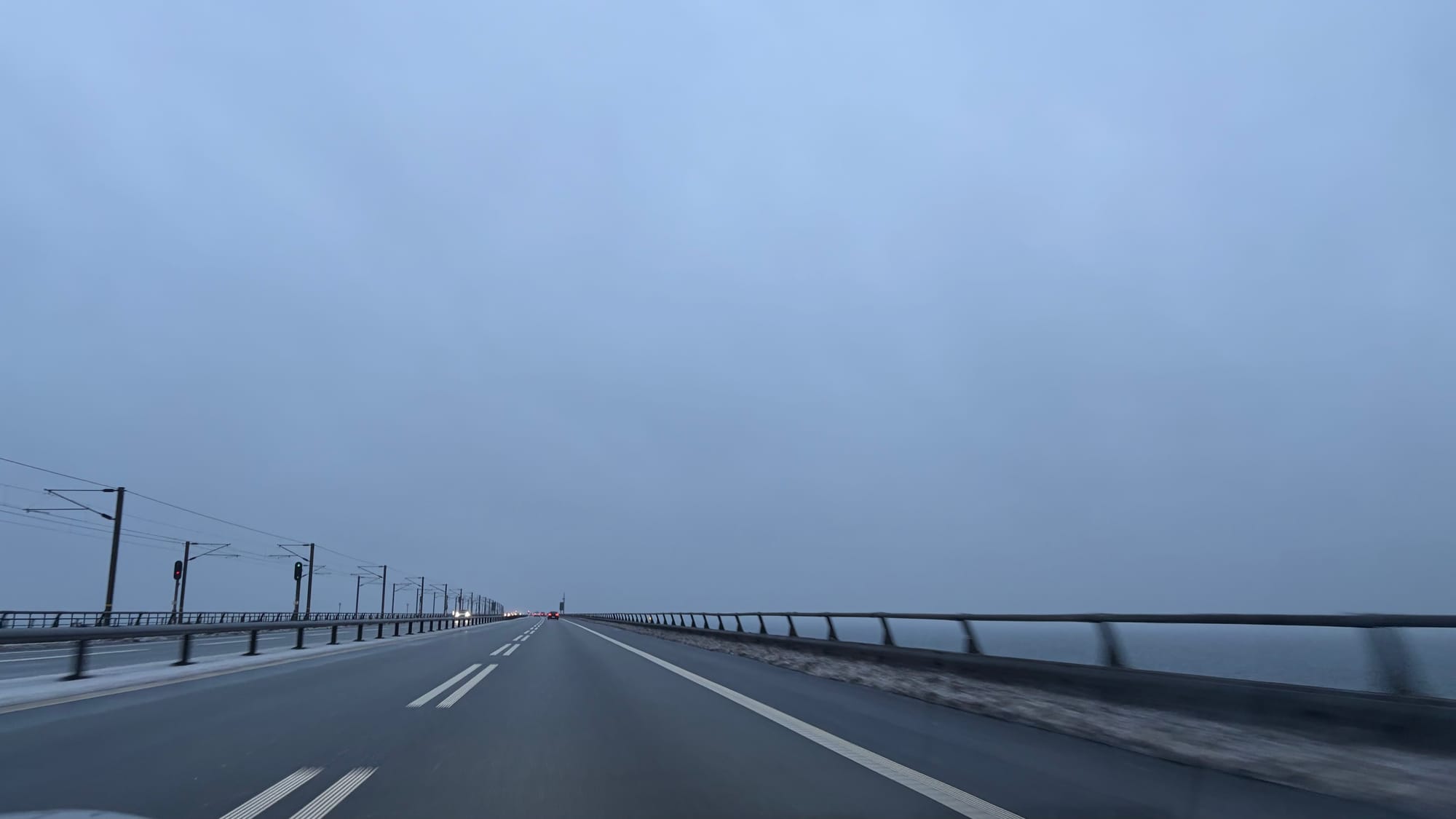
We've never driven over it but we've sailed under it countless times on our ferry journeys between Keel in Germany and Oslo in Norway. We'll be sailing under it again on our return trip to Ireland.
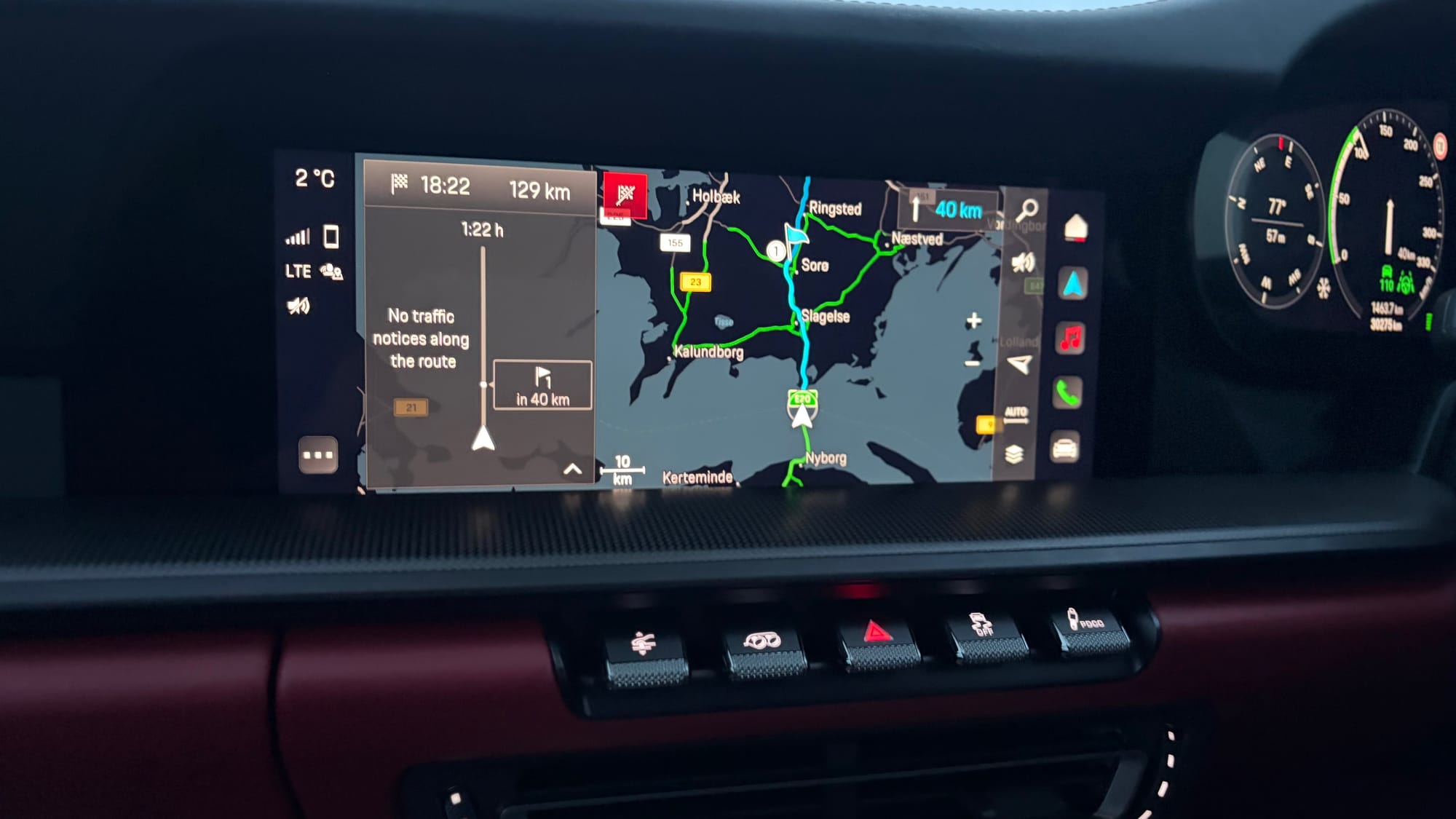
With all the high-speed driving it is time to top up our tank again, with some Danish 100-octane Shell V-Power.
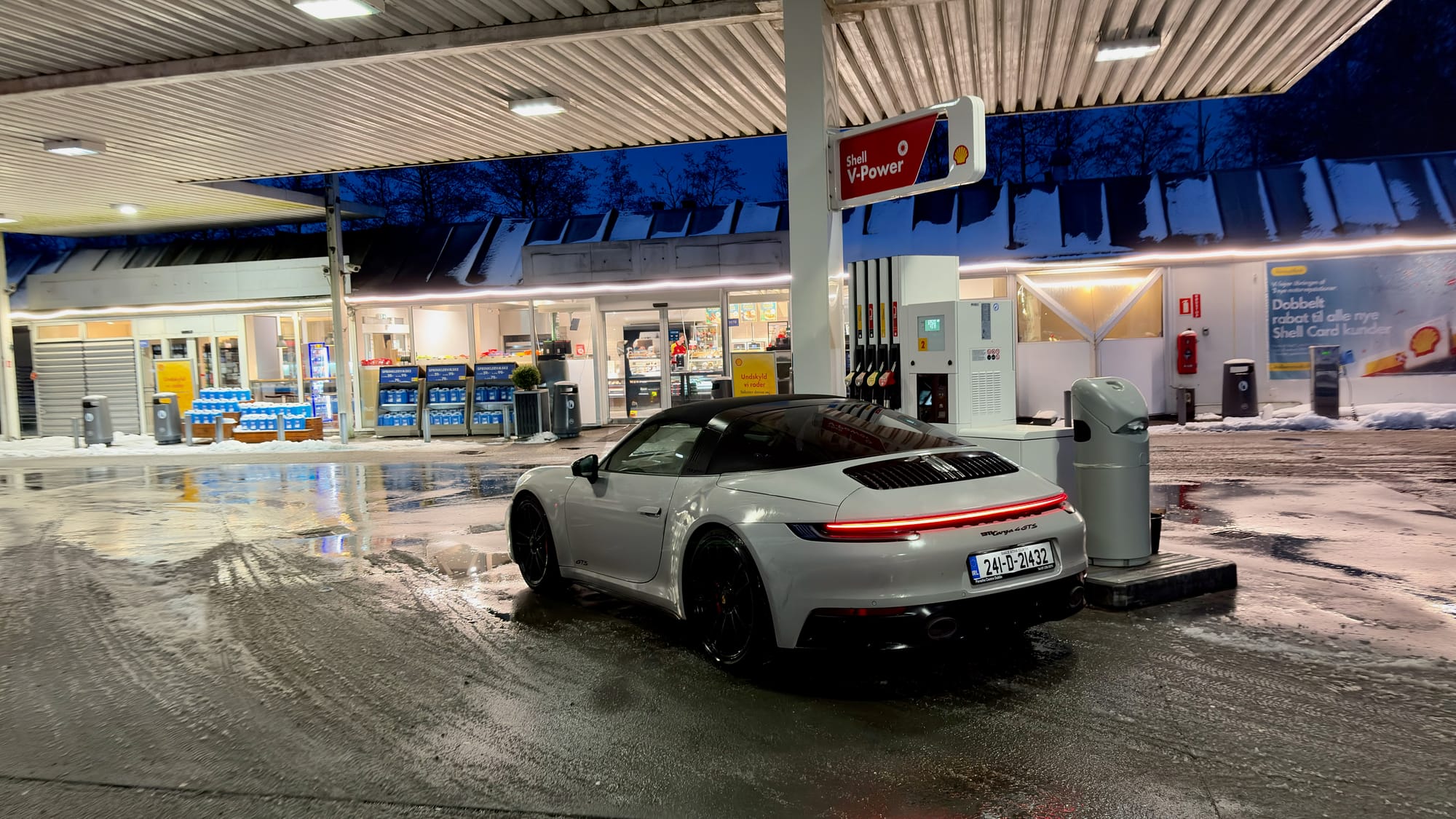
After topping up the fuel, it's another 100 km drive into Copenhagen where we'll be staying for the night. It's dark but traffic is light on a Sunday evening.
It's annoying that our hotel's restaurant and bar are closed for a staff party. We hadn't planned to eat in Nordhaven tonight and now we'll have to hunt down some food.
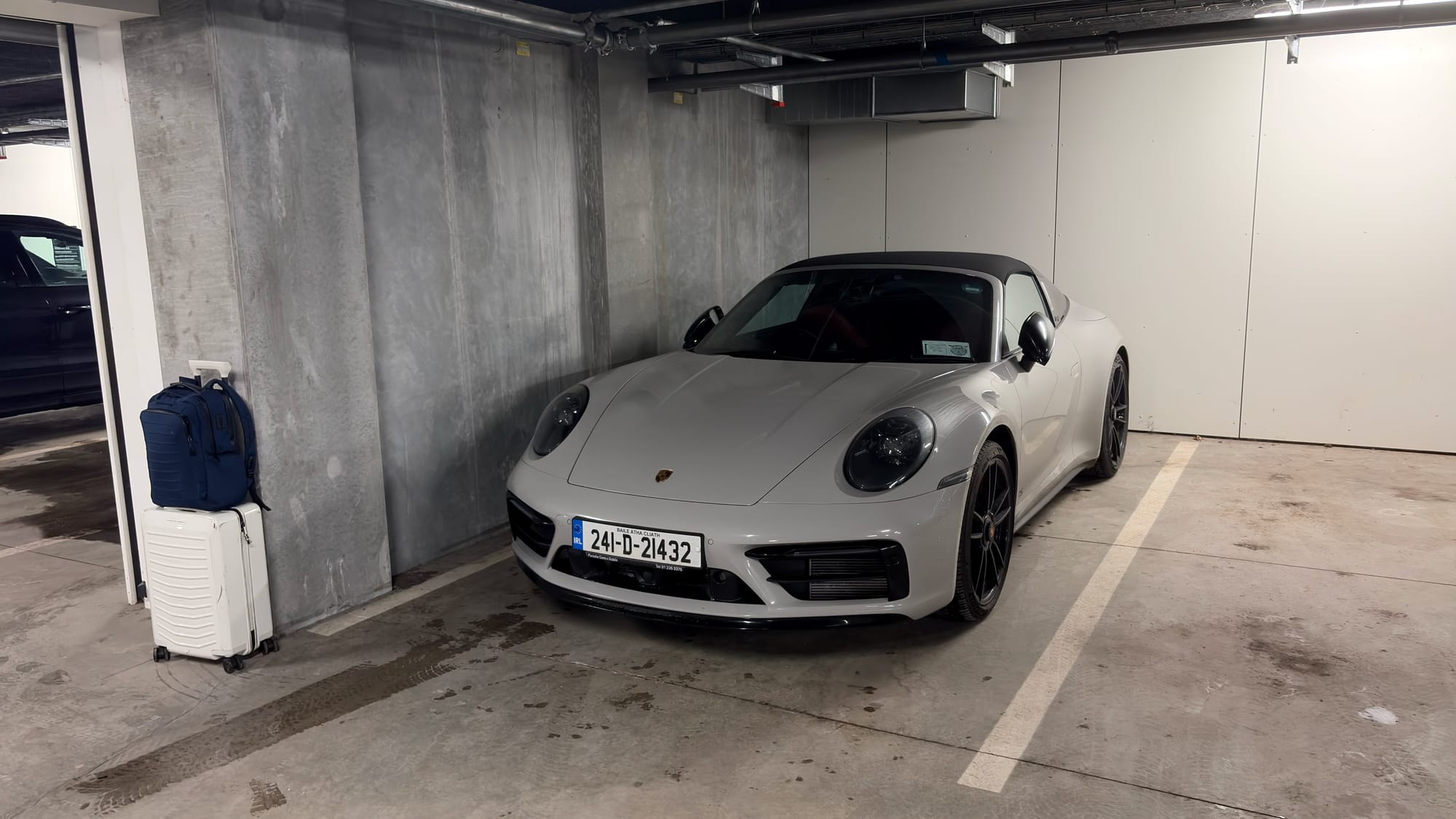
We arrived here at 18:34 – two minutes after our PCM calculated we would on leaving the boat this morning.
Stats
| Location | Litres | €/litre | Total € | Fuel Type | Octane |
|---|---|---|---|---|---|
| Dodenberg, Germany | 56.06 | €2.659 | €149.06 | Aral Ultimate 102 | 102 |
| Sorø, Denmark | 43.19 | €2.150 | €92.86 | Shell V-Power | 100 |
Today we did 1,005 km over 9:38 hours, with an average speed of 103 km/h, consuming 12.1 litres/100 km.